
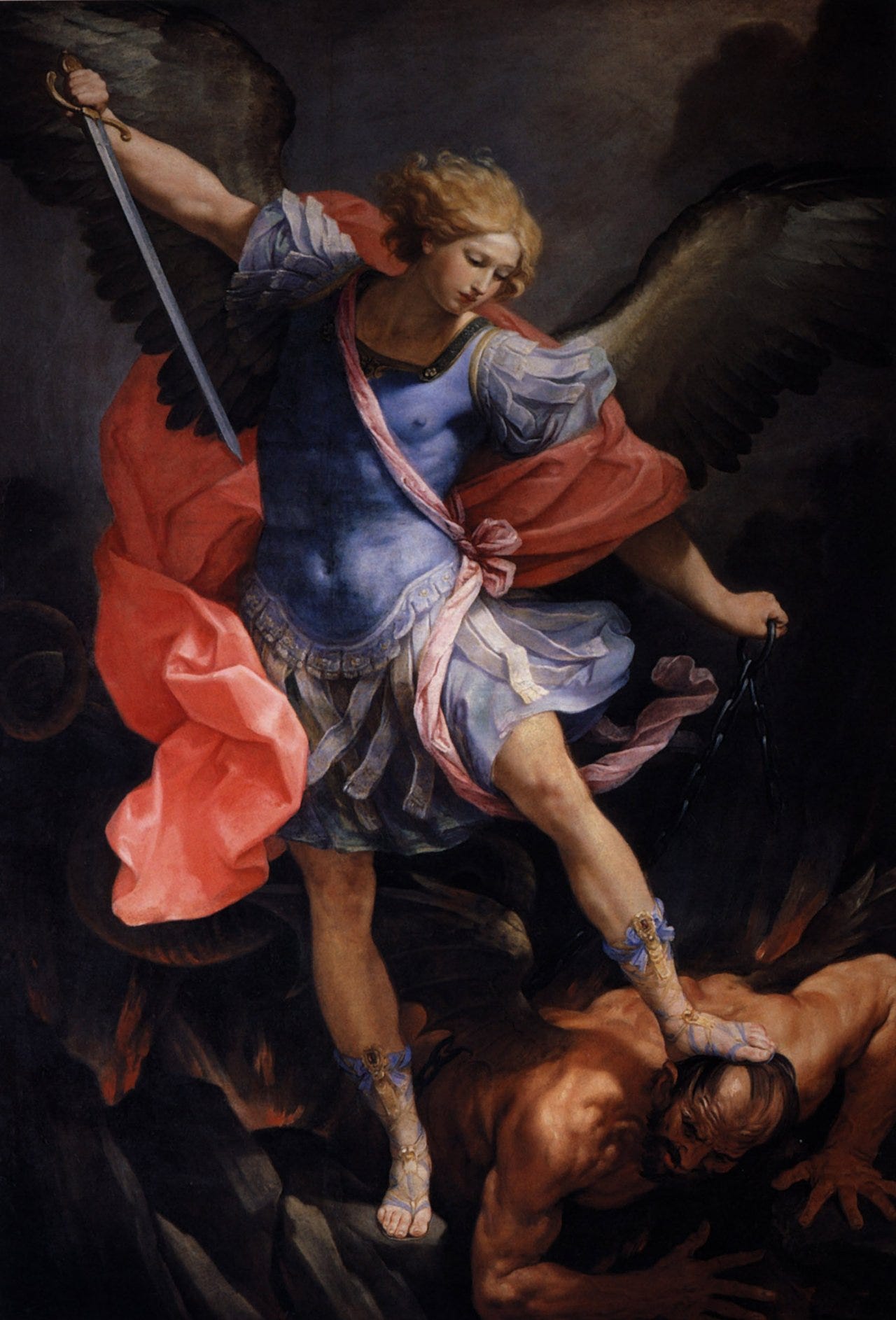
One angel in this list works for weeks as a hired guide, paid a laborer's daily wage, before he gives his real name. Another plays a motet that musicologists identified from the score a tired saint holds open for him. A third survives only because someone cut him out of the plaster before his church was rebuilt.
Cool Stories About Art is a newsletter to learn art the fun way.
Join 200,000+ readers and get:
10 new art stories / month
The entire archive of content (1,000+ articles)
Comment, ask questions, and chat with other readers
In Greek, the word angel means messenger, and the Bible says very little about what these messengers look like. Many of them appear simply as men. Only a few, such as the cherubim seen by the prophets, are given a described body at all, so the wings, the age, the face and the clothes were left for painters to invent.
That freedom is what keeps bringing artists back to the subject. An angel has no sitter to please, and no one can check its face against life. In exchange, it sets a hard practical problem: a body with wings still has to stand, fly or fall in a way the eye believes.
To earn a place here, a painting had to pass one of three tests. Its angel became the one people picture without knowing who painted it. Or its angel does something the Bible never asks of an angel, such as playing the violin or getting hurt. Or its painter found a new answer to the problem of the winged body. No country was given a quota, which is why Italian painters hold half the places.
Seen together, the twelve share one decision every painter had to make, between a living model and an imagined one. Some of these angels were built from a real teenager, a daughter, a photographed child or the wing of a bird. Others came from an idea their painter refused to look for on earth.
12. Raphael, The Two Cherubs of the Sistine Madonna (around 1512 to 1513)
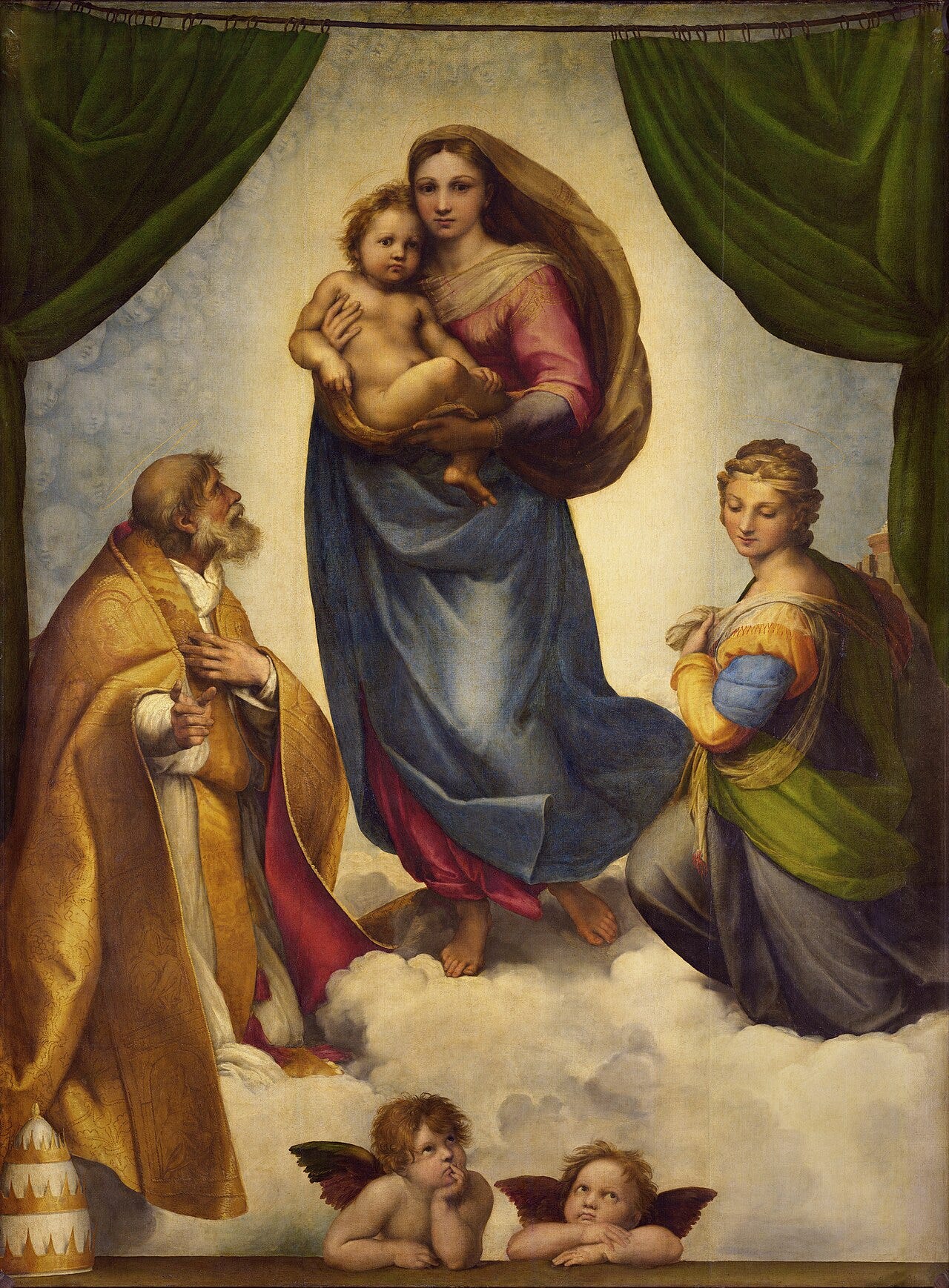
At the very bottom of the Sistine Madonna, two small winged boys lean their elbows on a ledge and look up. One rests his chin on his crossed arms. The other touches a finger to his lips.
Everything else in the picture happens above them. Raphael painted the altarpiece in Rome around 1512 and 1513 for San Sisto, a monastery church in Piacenza, in northern Italy. On a bank of clouds, the Virgin Mary steps forward with the infant Christ in her arms, between Saint Sixtus, a third century pope who died a martyr, and Saint Barbara, an early Christian martyr.
The two boys are what painters call cherubs, yet the cherubim of the Bible look nothing like them. The prophet Ezekiel gives them four wings and four faces, a man's, a lion's, an ox's and an eagle's, and medieval theologians ranked them second among the nine orders of angels.
The chubby winged child came from somewhere else entirely, ancient Rome. In the second century, Roman sculptors carved winged infants dancing and harvesting grapes along the sides of stone coffins, close cousins of Cupid, the archer still drawn on Valentine's Day cards.
The Middle Ages largely forgot these figures, until the Florentine sculptor Donatello brought them back in the 1420s. Italians called them putti, "little boys," and once painters began setting them in religious scenes, they borrowed the name of the biblical cherubs.
Raphael gives his pair full bodies and colored wings, and places them at the lowest point of the picture, the one closest to the people in the church. Like the congregation, they watch the vision from below. The boy with a finger at his lips looks exactly like a child waiting for a long Mass to end.
At a Glance
Artist: Raphael (Raffaello Sanzio), 1483 to 1520
Painted: Around 1512 to 1513
Medium: Oil on canvas
Size: 265 x 196 cm (104 x 77 in)
Where to see it: Gemäldegalerie Alte Meister, Dresden, Germany
11. Melozzo da Forlì, Music-Making Angel (around 1480)
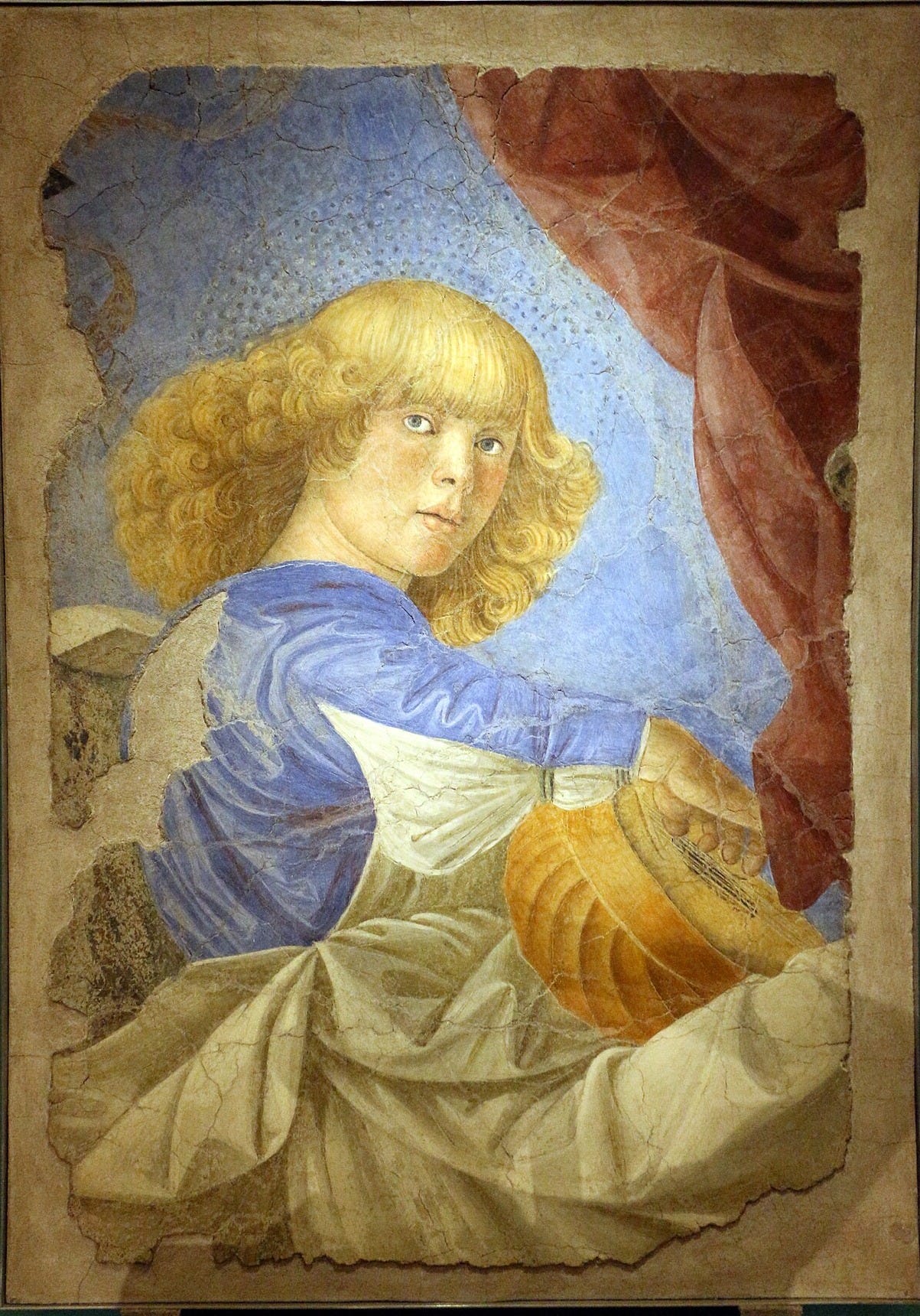
Thick blond curls frame the face of an angel who looks back over his shoulder, straight out of the picture, while his fingers pluck a small golden lute against a deep blue sky. His edges are ragged, and cracks run through the sky and across his sleeve.