
Joseph Ducreux (1735 to 1802) was a French portrait painter. In 1769, the French court sent him to Vienna, the capital of Austria, to paint the girl who would become Queen Marie Antoinette.
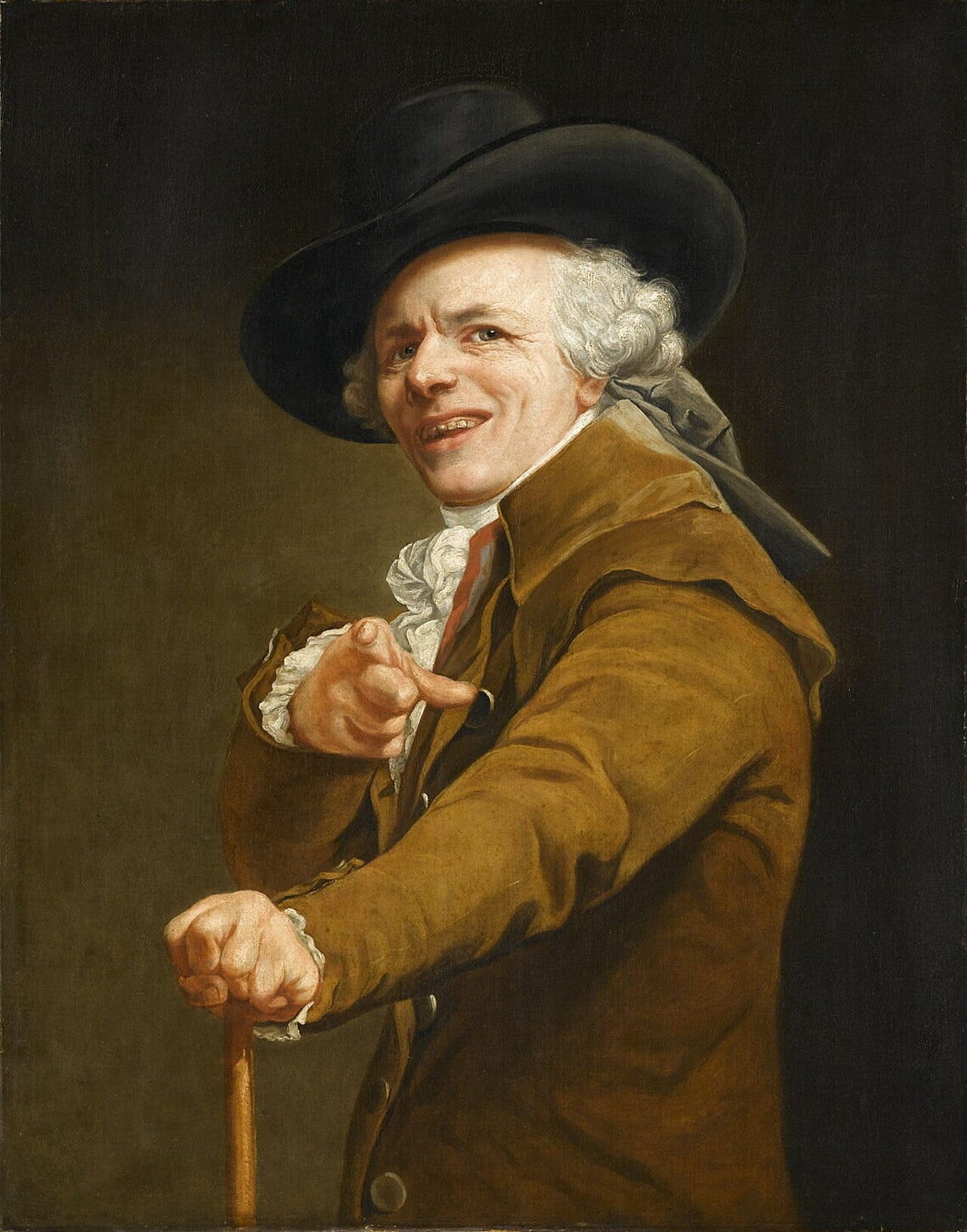
Ducreux is famous today for The Mocker, a self-portrait from around 1793 in which he grins and points at the viewer. Since 2009, The Mocker has been the face of a meme called Archaic Rap: a rap lyric is rewritten in old-fashioned English, such as "Disregard females, acquire currency," and printed over his grin.
Cool Stories About Art is a newsletter to learn art the fun way.
Join 200,000+ readers and get:
10 new art stories / month
The entire archive of content (140+ articles)
Comment, ask questions, and chat with other readers
The Mocker is one of more than thirty self-portraits. In others, Ducreux yawns, laughs, recoils in fright or presses a finger to his lips.
In this story, you'll find out:
what a portrait of a thirteen-year-old earned Ducreux in Vienna,
why the Salon, the great art show of Paris, refused the queen's painter,
which leaders of the French Revolution sat for him,
what remains of the story that Ducreux drew Louis XVI in prison,
which rap song gave the meme its first caption.
Joseph Ducreux grew up in a household that painted for a ruler. He was born in Nancy, the capital of Lorraine, a duchy now part of eastern France. His father, Charles Ducreux, was first painter to Stanislas Leszczynski, the former king of Poland who ruled Lorraine.
Trained by his father, Ducreux settled in Paris, married there in November 1760 at the church of Saint-Sulpice and painted portraits for a living.
Vienna and a girl of thirteen
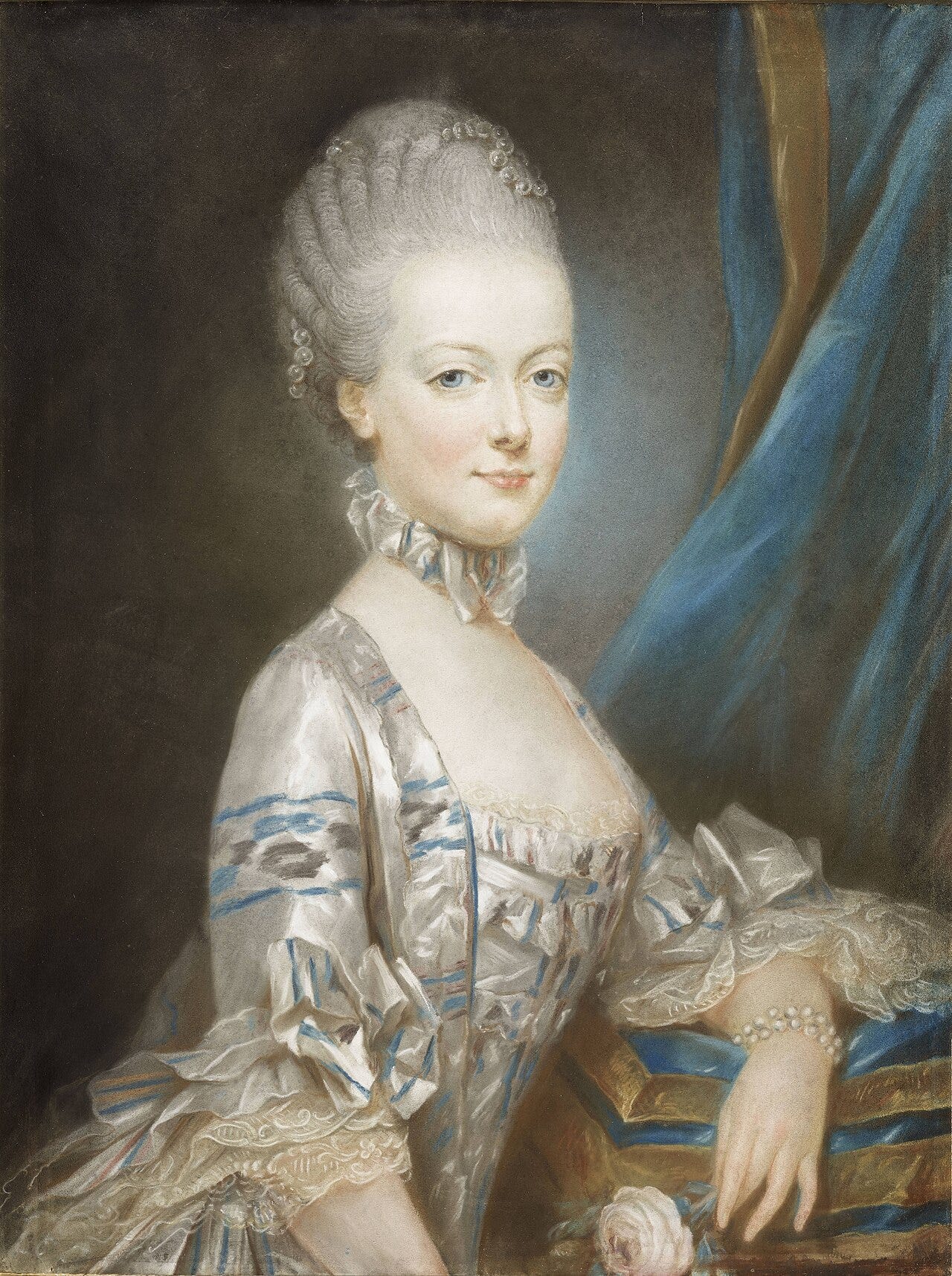
In 1769, the future Louis XVI, grandson of Louis XV, the king of France, was promised in marriage to Maria Antonia, the youngest daughter of Maria Theresa, the empress of Austria. Maria Antonia was thirteen, and France would later call her Marie Antoinette.
Versailles, the palace where the French court lived, wanted a faithful picture of the girl before the wedding, and chose Ducreux to paint her.
Maria Antonia would become queen of France and die on the guillotine in 1793. What would become of the man who painted her once the Revolution began?