
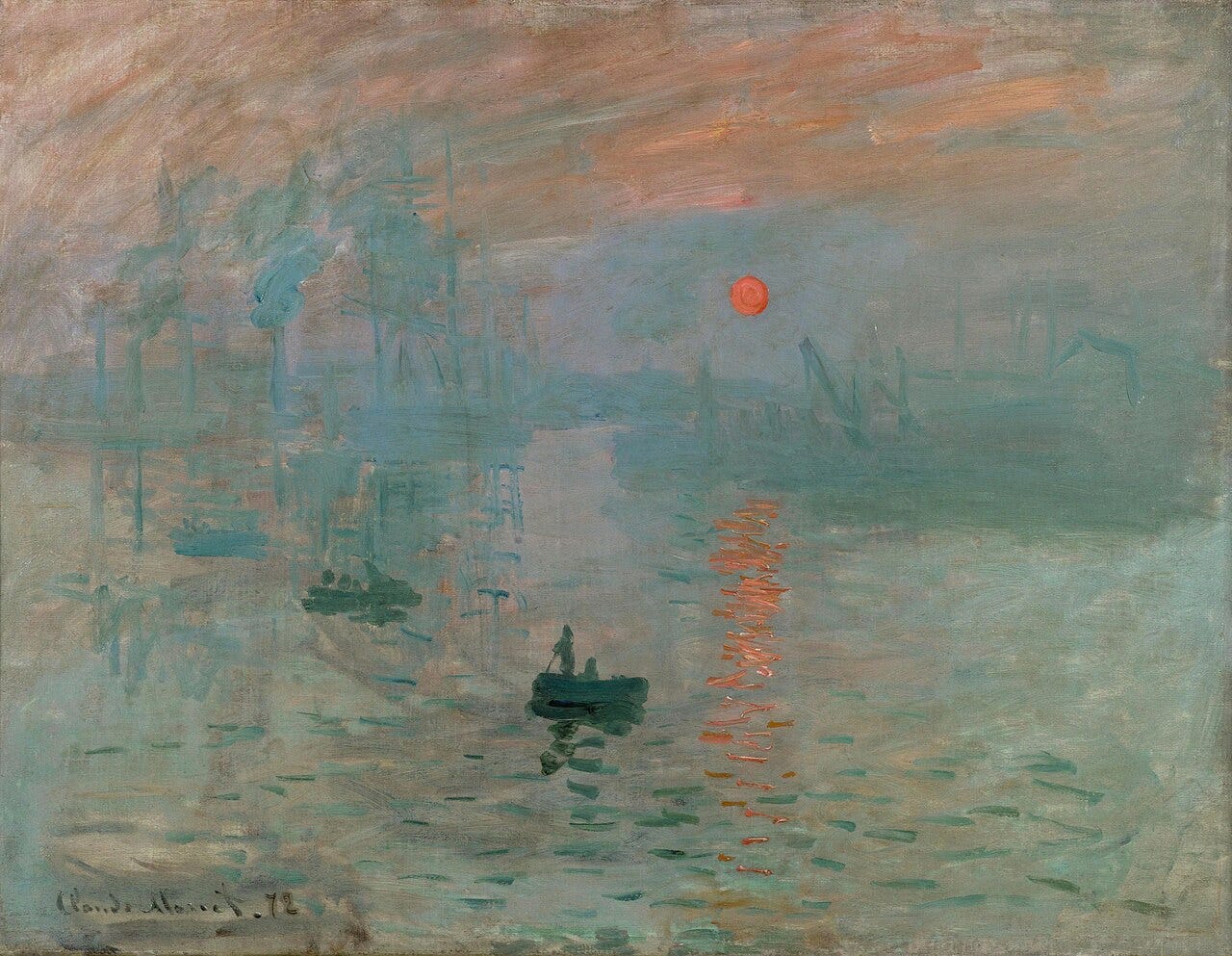
Claude Monet was a French painter and the central figure of Impressionism. He was born in Paris on November 14, 1840, and died at Giverny on December 5, 1926. The movement even takes its name from one of his canvases, Impression, Sunrise. Monet spent his life painting what light does to a single place as the hours and the seasons change: a harbor, a field of grainstacks, the front of a cathedral and, at the end, the pond in his own garden, where he painted the water lilies he is best known for.
His life was much harder than that gentle reputation suggests. Monet went through years of real poverty, lost his first wife when she was only 32 and slowly lost his sight. In his last years, he could not bring himself to hand over the water lilies he had promised to France.
Cool Stories About Art is a newsletter to learn art the fun way.
Join 200,000+ readers and get:
10 new art stories / month
The entire archive of content (1,000+ articles)
Comment, ask questions, and chat with other readers
Monet grew up far from Paris, in Le Havre, the port at the mouth of the Seine on the Normandy coast, where his family moved around 1845. As a teenager he was known in town for his caricatures. He drew the local notables with huge heads on small bodies and sold the drawings through a framing shop, which displayed them in its window.
The same window displayed paintings by Eugène Boudin, a landscape painter from the region, and that is how the two met, in 1856 or 1857. Boudin painted outdoors, in front of the sea and the sky, and he took the young caricaturist out with him to do the same. It was Monet's first experience of painting directly from nature. Painting outdoors, in front of the motif, remained his way of working for the rest of his life.
What You'll Discover
What Monet wrote after jumping into the Seine.
How a critic's joke named Impressionism.
What he noticed while his wife was dying.
Why he painted the same grainstacks again and again.
What cataracts did to his colors.
Why he would not hand over the water lilies.