
Francesco Hayez's The Kiss is read as a patriot's farewell. A young volunteer embraces the woman he loves before leaving to fight Austria, and love of country wins over private feeling.
Hayez painted it in Milan in 1859, the year Piedmont and France went to war against Austria, for Count Alfonso Maria Visconti di Saliceto. The reading rests on the medieval costume, a dagger and a foot on a staircase, and colors that echo two flags.
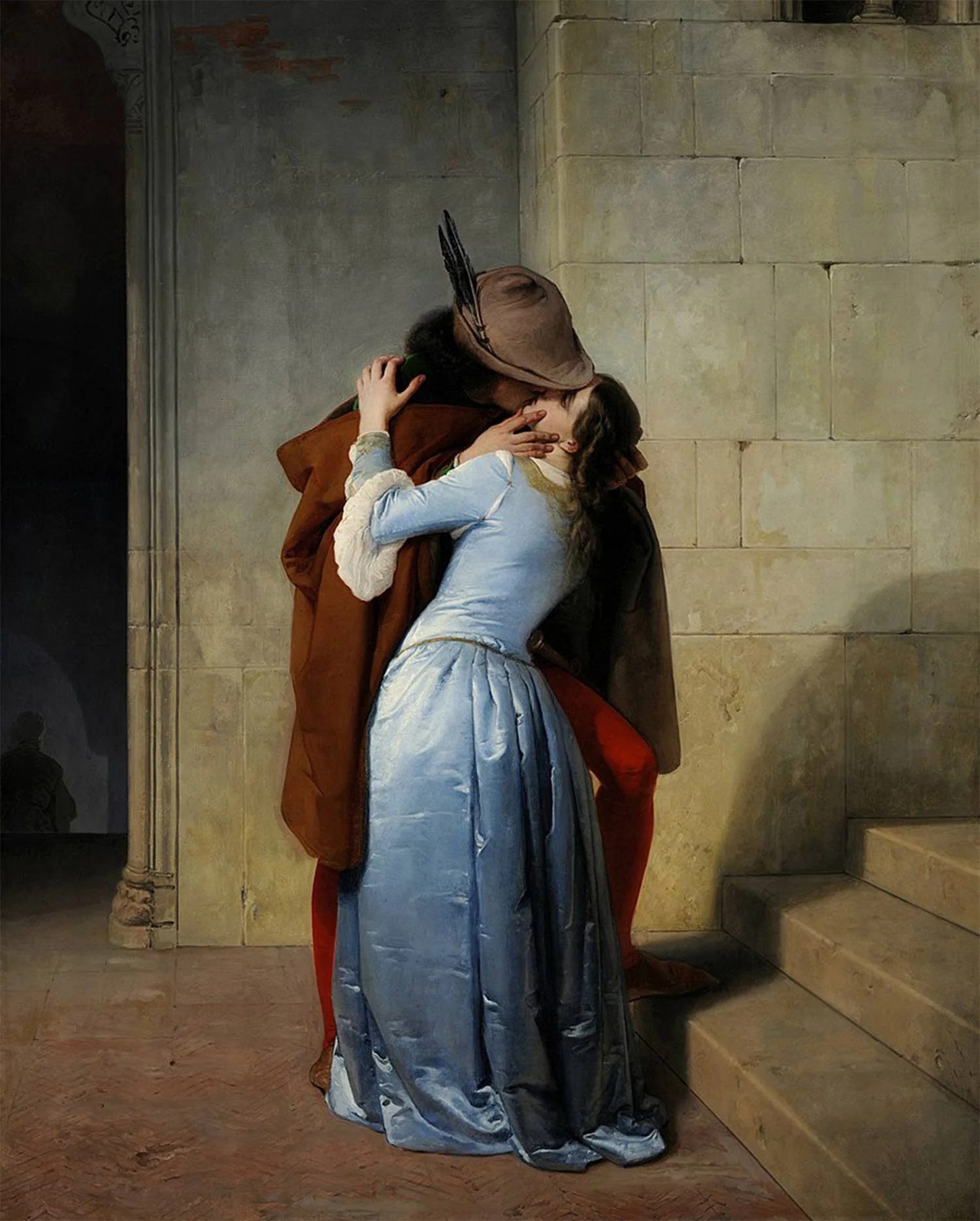
The canvas shows a young man and woman in medieval dress, locked in an embrace on a stone staircase. The 1859 original hangs in the Pinacoteca di Brera, Milan's art gallery.
Cool Stories About Art is a newsletter to learn art the fun way.
Join 200,000+ readers and get:
10 new art stories / month
The entire archive of content (140+ articles)
Comment, ask questions, and chat with other readers
That farewell, though, was put into words later. When the picture went on show at Milan's Brera Academy on September 9, 1859, it was called The Kiss, with two subtitles, "Episode of Youth" and "Costumes of the Fourteenth Century." Those words name no war, no volunteer and no Italy.
Italy was not yet a country. It was divided into several states, and Austria ruled Lombardy, the region of Milan, and Venetia, the region of Venice. In 1859 the kingdom of Piedmont, in the northwest, ruled from Turin by King Victor Emmanuel II, went to war with France as its ally.
Three months before the show, their armies beat the Austrians at the battle of Magenta, and Napoleon III, emperor of the French, rode into Milan beside Victor Emmanuel II. By July, Austria had agreed to give up Lombardy.
The war had freed Milan but not the rest of the north. Venice, the city where Hayez was born, stayed Austrian.
The farewell entered the title only in 1872. That year the writer Federico Dall'Ongaro called the picture The Volunteer's Kiss, after the young men who had volunteered to fight Austria in 1848.
He had in mind the first Italian war of independence, which began that year, and the battles of Curtatone and Montanara. There, on May 29, 1848, a battalion of Tuscan students had stood against the Austrian army.
So the volunteer got his name long after 1859. Reading Hayez's medieval scenes as messages about the present, however, was a much older habit in Milan.
Why Hayez put the lovers in the Middle Ages
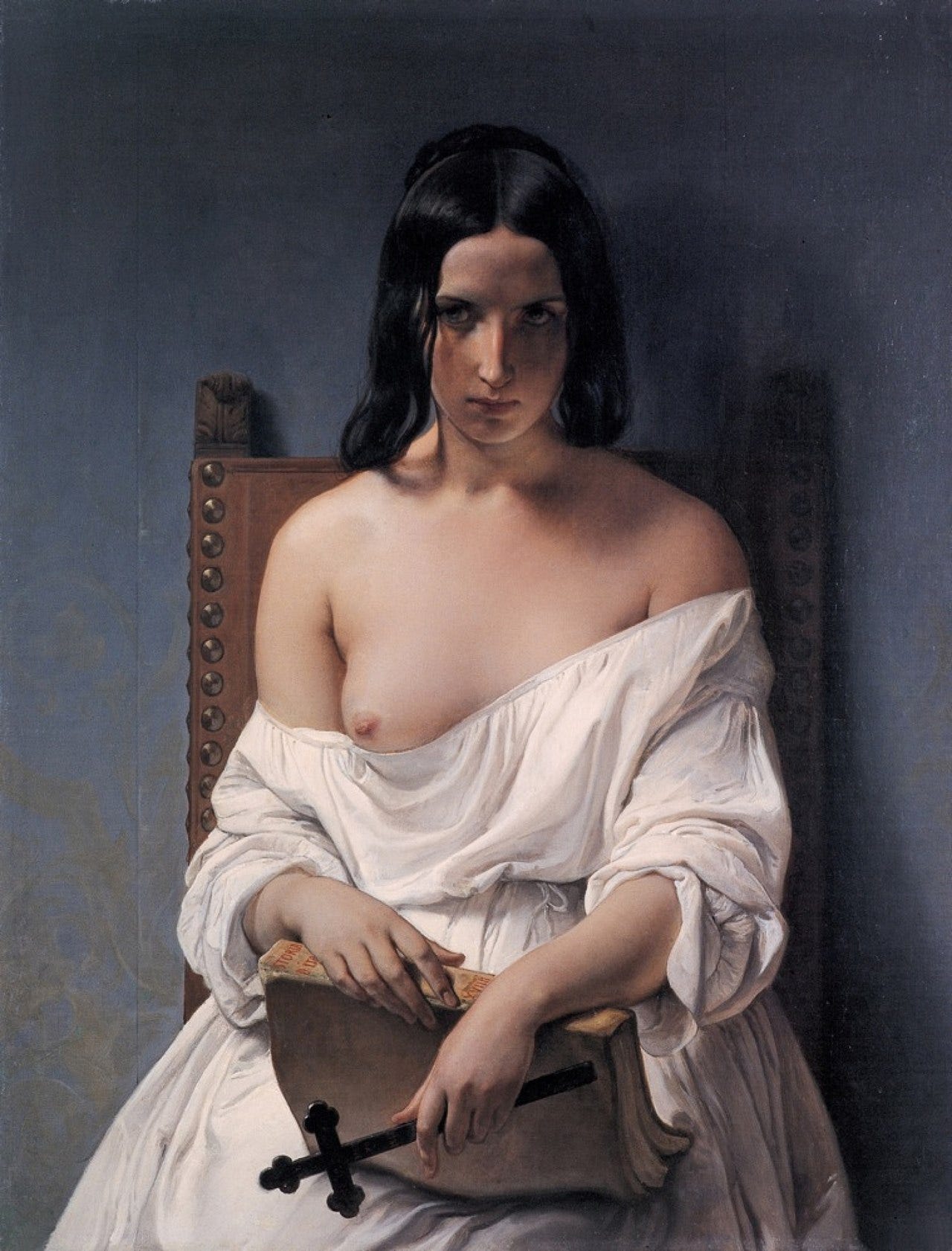
That habit started with Hayez himself. For decades he had painted scenes from the Italian past in a Milan ruled by Austria, and his public had learned to look behind the old costumes. What he lived through in 1848 made that double language sharper still.
What You'll Discover
What the man's left foot gives away.
Who else seems to be in the building.
How many Kisses Hayez painted.
Which chocolate box the lovers ended up on.
What the colors were meant to say.