
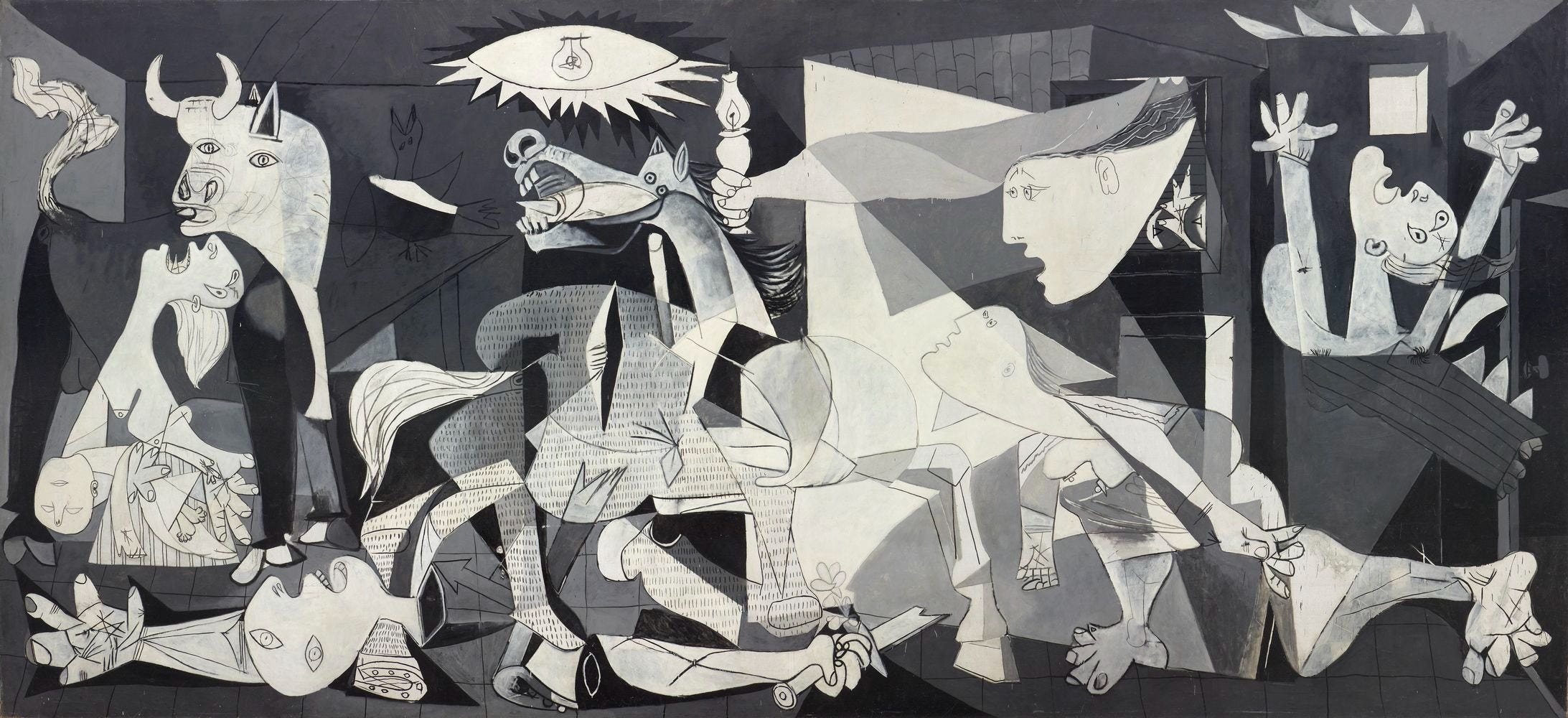
Guernica is Pablo Picasso's response to the air raid that struck Guernica, a Basque town, on April 26, 1937. Planes sent by Hitler's Germany and Mussolini's Italy bombed it for General Franco's side in the Spanish Civil War.
The painting means anger at the killing of civilians from the air, and it shows that anger with no color at all, only blacks, whites and grays. Picasso named his target, the military caste, and once said the bull stood for brutality, not fascism.
Cool Stories About Art is a newsletter to learn art the fun way.
Join 200,000+ readers and get:
10 new art stories / month
The entire archive of content (140+ articles)
Comment, ask questions, and chat with other readers
The Spanish Republic, the elected government then fighting Franco's rebellion, had turned to Picasso, a Spaniard settled in Paris, for a mural for its pavilion at the World's Fair the city held in 1937.
The canvas he delivered measures about 3.5 meters high and 7.8 meters across, twice the height of a tall man and more than four times his length lying down.
Yet the raid itself is nowhere on it. No aircraft crosses the sky and no bomb falls, only the title ties the picture to a town, and none of the figures carries a label.
The bombing is a matter of record. Almost everything else in the picture, from the bull to the lamp, has to be read, and the readings do not agree.
The mural Picasso meant to paint
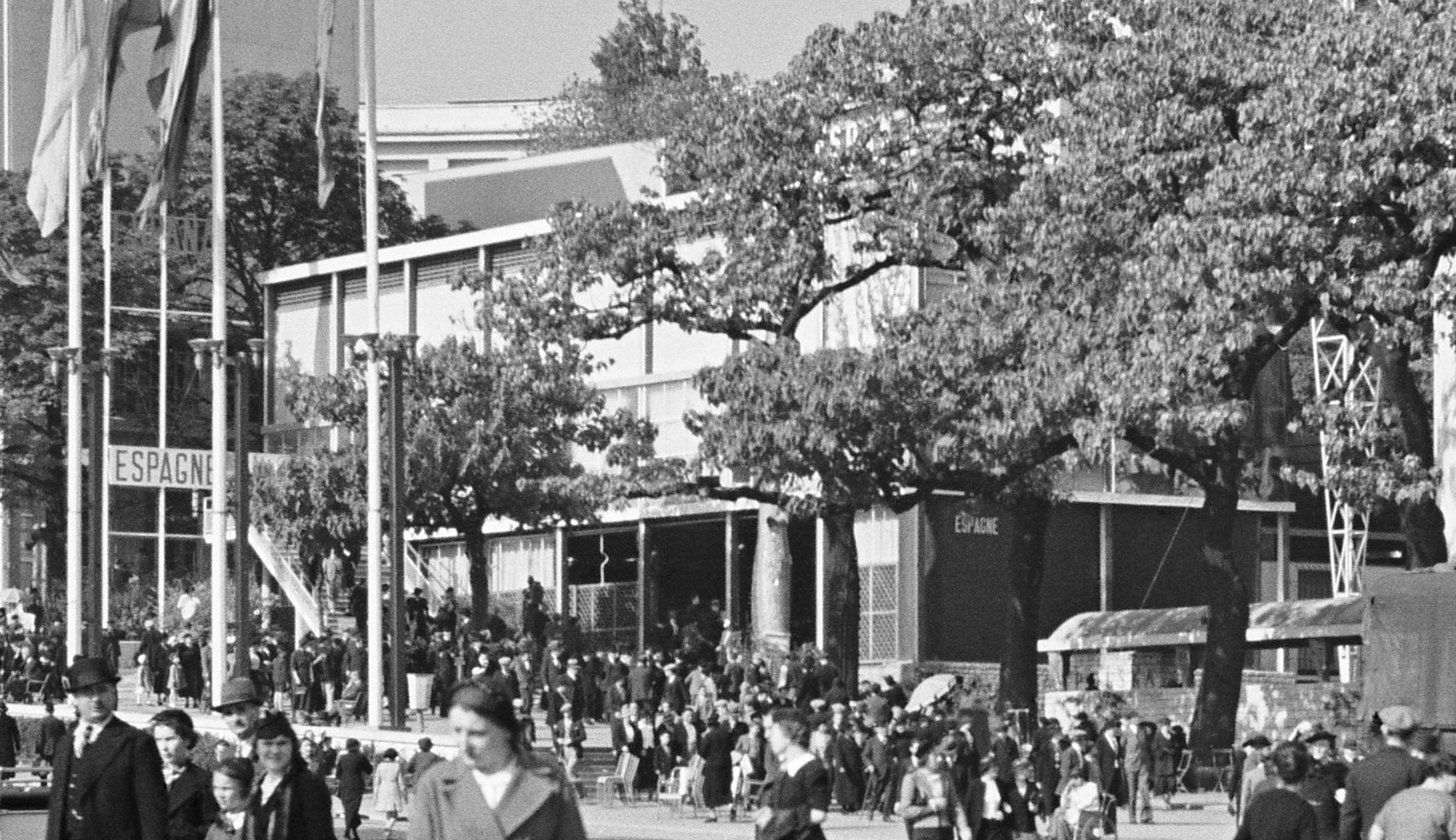
The picture began as something else entirely. When the Republic's request reached him, Picasso was not planning a war scene. For months he worked on a very different subject, and it took a report from northern Spain to make him give it up.
What You'll Discover
What happened in Guernica on market day.
Which figures have no agreed meaning.
Why Spain waited until 1981 to see it.
What Picasso said the painting was for.