
Abstract art is art that does not try to show a recognizable person, place or object. It works with color, shape, line and texture alone, and those elements become the subject of the picture. Painters such as Wassily Kandinsky, Piet Mondrian and Kazimir Malevich made it known across Europe between about 1910 and 1920.
The word itself explains the idea. Abstract comes from the Latin abstrahere, to draw away, and these painters drew away from the visible world. The Fauvists and Cubists just before them had already used colors that did not match nature and broken objects into geometric parts, yet they still started from something the eye could see: a face, a bottle, a landscape.
Cool Stories About Art is a newsletter to learn art the fun way.
Join 200,000+ readers and get:
10 new art stories / month
The entire archive of content (1,000+ articles)
Comment, ask questions, and chat with other readers
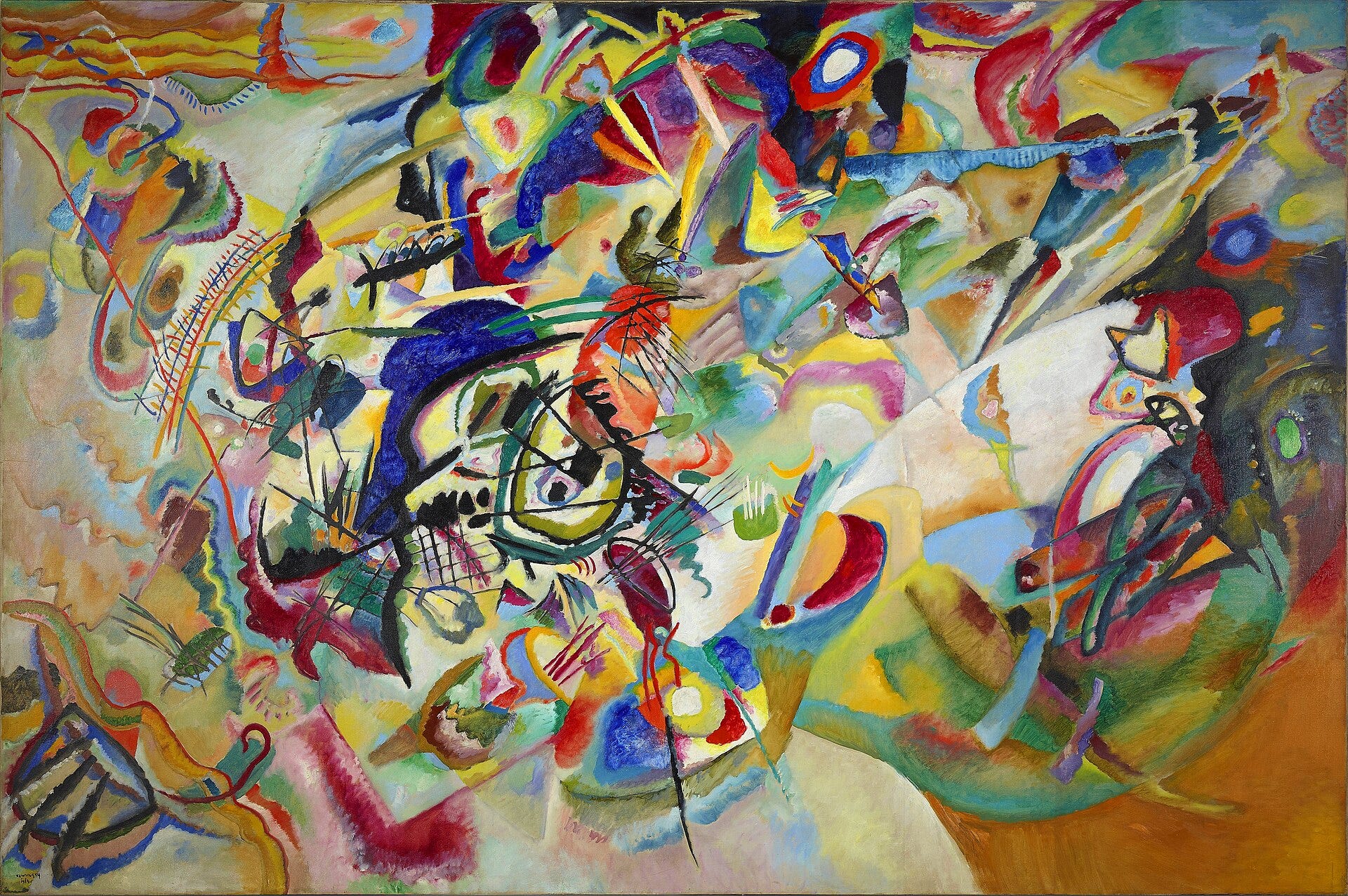
Drawing away sounds easy, as if a painter only had to stop painting things and let the brush wander. Kandinsky's Composition VII, the canvas above, suggests the opposite. At first sight it looks like an explosion of color laid down in one go. He painted it in 1913, after preparing it in more than thirty drawings, watercolors and smaller canvases.
Kandinsky himself is usually named as the inventor of abstract painting, and that part of the story is less certain. Several years before him, a Swedish painter was already making large canvases with no recognizable subject. She made sure they would stay hidden long after her death, and for decades the history of abstract art was written without her.
What You'll Discover
The canvas Kandinsky did not recognize.
The Swedish painter who started years earlier.
How Mondrian turned a tree into lines.
Why a black square hung in a corner.
What changed when abstraction reached New York.