
Chiaroscuro is the way a painter uses light and shadow to make a flat surface look solid. Light falls on a body from one side. The parts turned toward it are bright, the parts turned away sink into shade, and between the two the tones change step by step. Read together, those steps tell the eye that a cheek is round, that the nose sticks out and that the eyes sit in hollows.
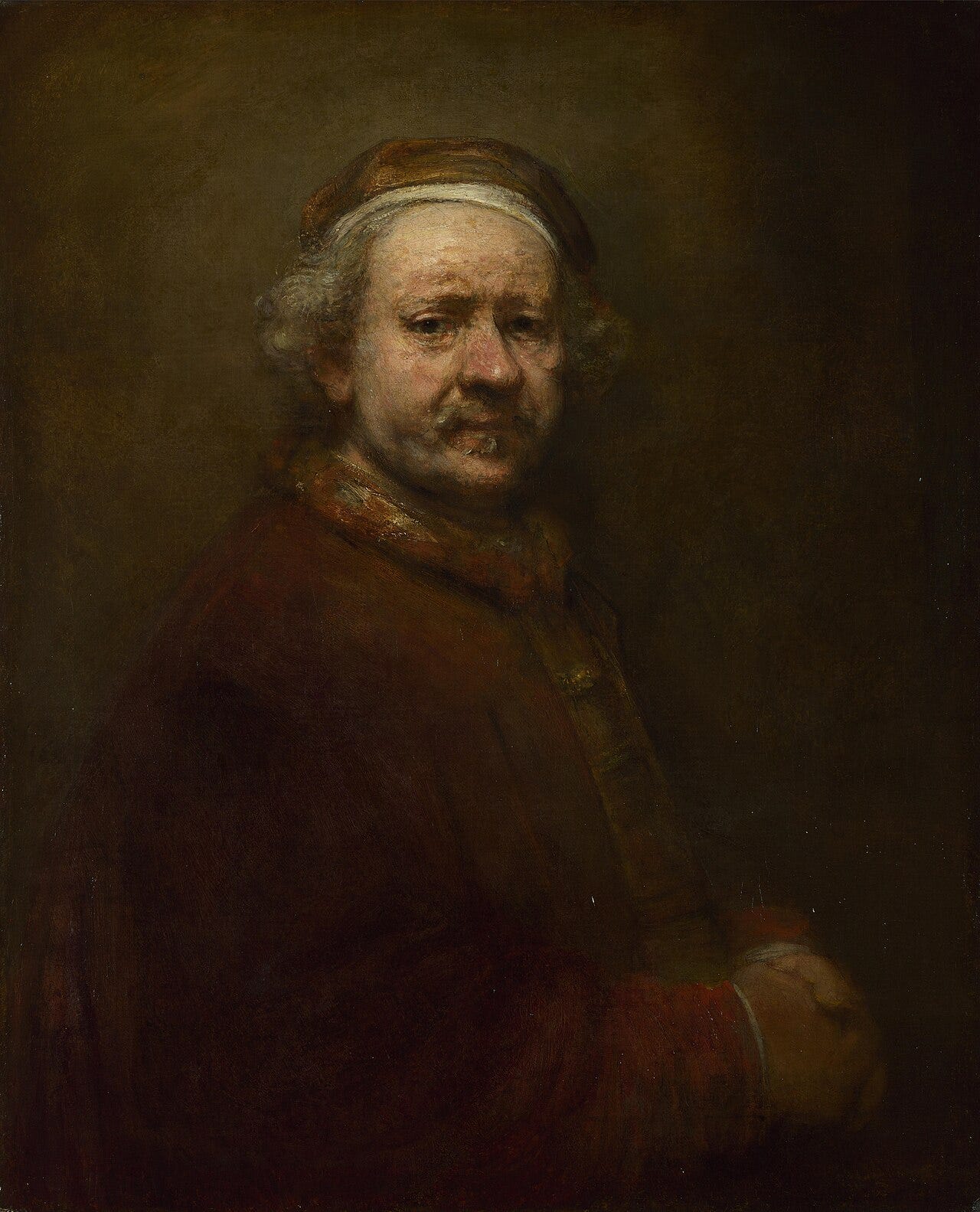
The word is Italian. It joins two adjectives, chiaro, "light" or "clear," and scuro, "dark." Every picture has light and dark areas, so the word is used for works in which the contrast between them is what makes the forms look solid. Rembrandt's late self-portraits are a good example: the face comes forward out of a dark brown background, with the light falling on the forehead and the nose.
Cool Stories About Art is a newsletter to learn art the fun way.
Join 200,000+ readers and get:
10 new art stories / month
The entire archive of content (1,000+ articles)
Comment, ask questions, and chat with other readers
Painters, though, were not the first to use the word. In 1516, a printmaker named Ugo da Carpi petitioned the Senate of Venice for a privilege, a legal protection that stopped others from copying his work. What he wanted to protect was what he called a new method of printing "in chiaro et scuro," in light and dark. He presented it as his own invention. The Senate granted the privilege that year, and in 1518 Pope Leo X granted him a second one.
His method printed pictures from several carved blocks of wood, and the result imitated a kind of drawing that artists of the time also called chiaroscuro: sheets of blue or brown paper on which the highlights were added in white gouache. Painters had been building forms out of light and shadow long before Ugo was born. The word itself only became common for paintings by the late seventeenth century.
What You'll Discover
How a block of wood could print light.
When painters took over the word.
Leonardo's recipe for lighting a face.
Where chiaroscuro ends and tenebrism begins.
What Rembrandt did with paint in his last year.