
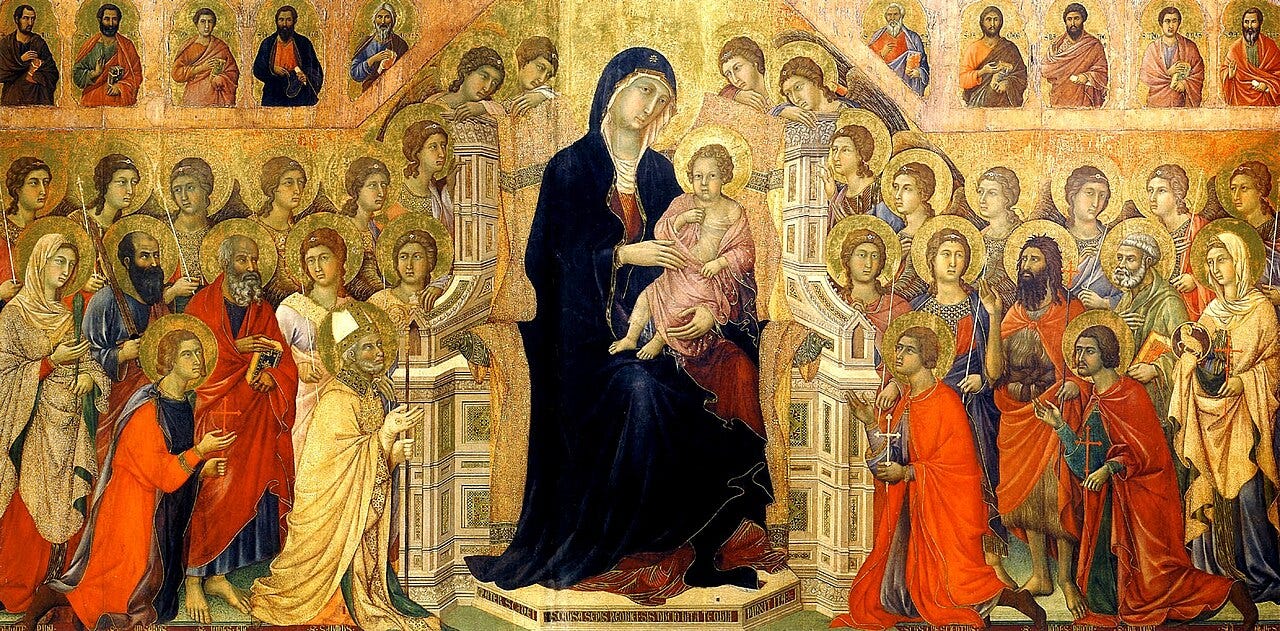
Tempera is paint made by mixing ground pigment with egg yolk and a little water. The painter lays it on in thin coats, usually on a wooden panel covered with a smooth white ground, and it dries quickly to a hard, slightly matte film. It was the paint of most early Italian pictures on wood, from the gold altarpieces of Siena to Piero della Francesca's Baptism of Christ, before oil paint gradually took its place.
The name itself says nothing about eggs. It comes from an old word for mixing, and egg yolk was only the most common of several things painters used to hold their colors together.
Cool Stories About Art is a newsletter to learn art the fun way.
Join 200,000+ readers and get:
10 new art stories / month
The entire archive of content (1,000+ articles)
Comment, ask questions, and chat with other readers
Around 1400, a Florentine painter named Cennino Cennini wrote down how the paint was used, in a handbook meant for young painters learning the trade. His instructions go further than most readers would expect. He tells the painter which eggs to choose, and the answer depends on the age of the person being painted.
He also asks for something stranger under every face: two coats of green. On some of the oldest panels in museums, that green has come back to the surface.
Five centuries later, an American painter in his twenties used a tempera made without egg, bound with a protein from milk, to tell the story of a whole migration, and he painted it one color at a time.
What You'll Discover
Where the word tempera really comes from.
Which eggs Cennini told painters to use.
Why some old painted faces now look green.
Why tempera pictures are built from tiny strokes.
What school tempera has to do with eggs.
How one painter colored sixty panels at once.