
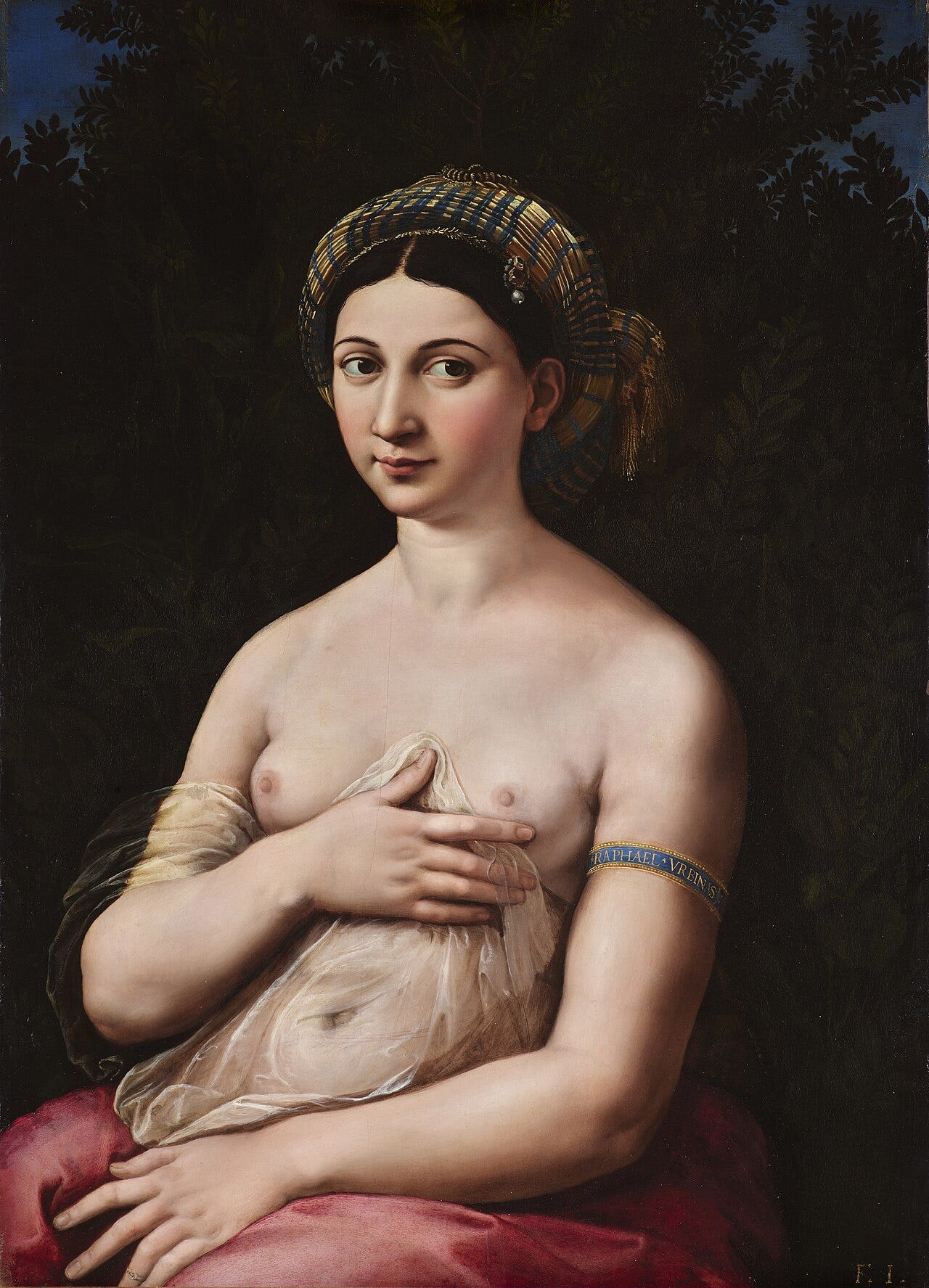
Tradition says the woman in La Fornarina is Margherita Luti, a baker's daughter from Rome who was Raphael's lover, but nobody can prove it. The title, "the baker's girl," dates only from the eighteenth century, and every source that names her was written after Raphael died.
Raphael painted her around 1518 to 1519, shortly before his death at thirty-seven. The young woman sits half undressed, her right hand raised to her breast, her left hand resting in her lap, a blue and gold turban wound around her hair. Around her upper left arm, a gold band carries his signature: Raphael of Urbino.
Cool Stories About Art is a newsletter to learn art the fun way.
Join 200,000+ readers and get:
10 new art stories / month
The entire archive of content (140+ articles)
Comment, ask questions, and chat with other readers
Since 1642 the picture has been in the Barberini collection, assembled by the family of Pope Urban VIII. It now hangs in their palace in Rome, Palazzo Barberini.
The doubts begin with the title. Giorgio Vasari, the painter who wrote the first great collection of artists' lives and published Raphael's in 1568, never calls her the Fornarina. In fact he never names the woman at all.
What he does say is that Raphael was a very amorous man. He also mentions a portrait of a woman the painter loved until his death. That remark, as the next section shows, is where the name Margherita first attached itself to Raphael's lover.
How the baker's daughter got her name
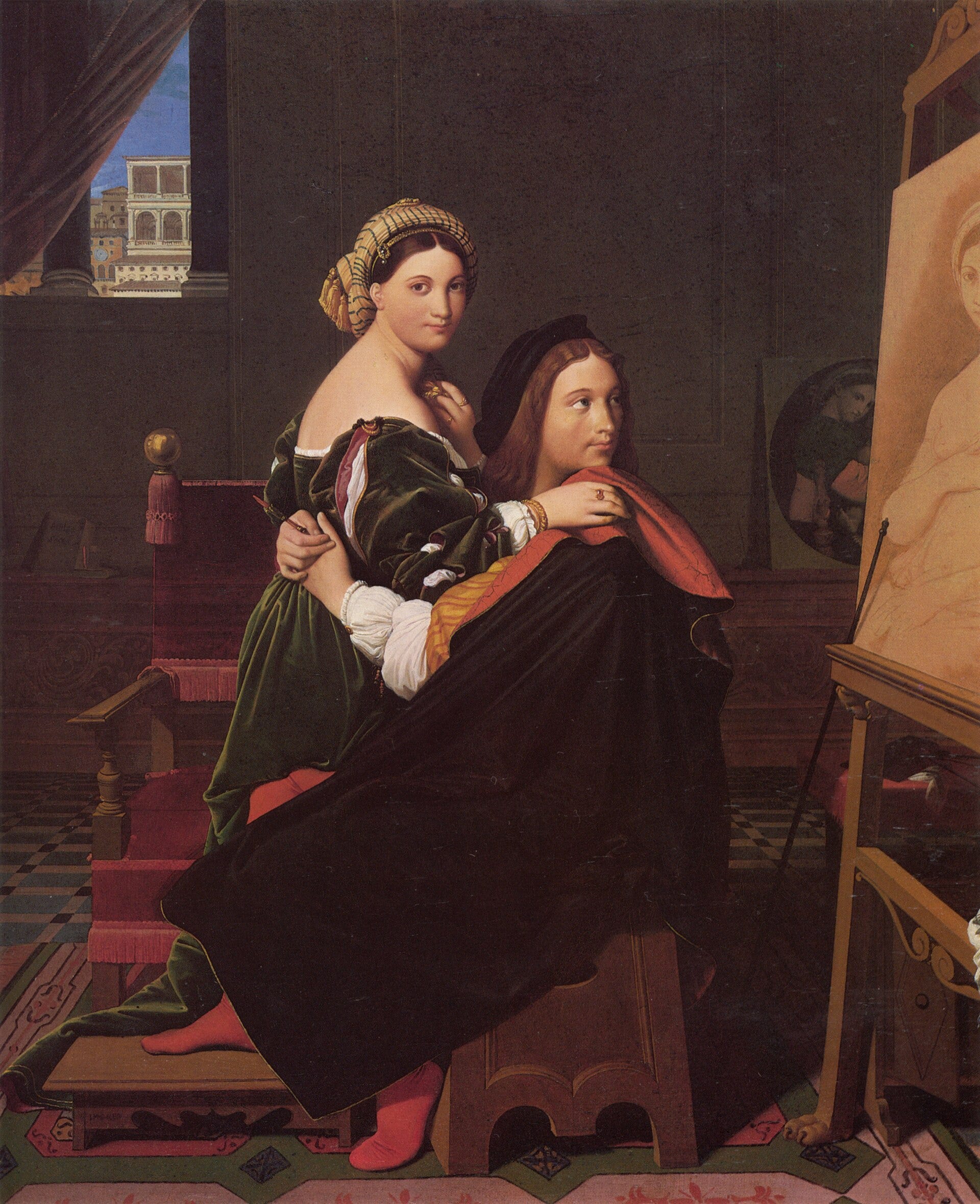
In the sixteenth century, a reader wrote the name Margarita in the margin of a copy of Vasari's book, beside that remark…
What You'll Discover
What the one surviving record says.
What the X-ray found on her hand.
Who Raphael was supposed to marry.
What really killed him.