
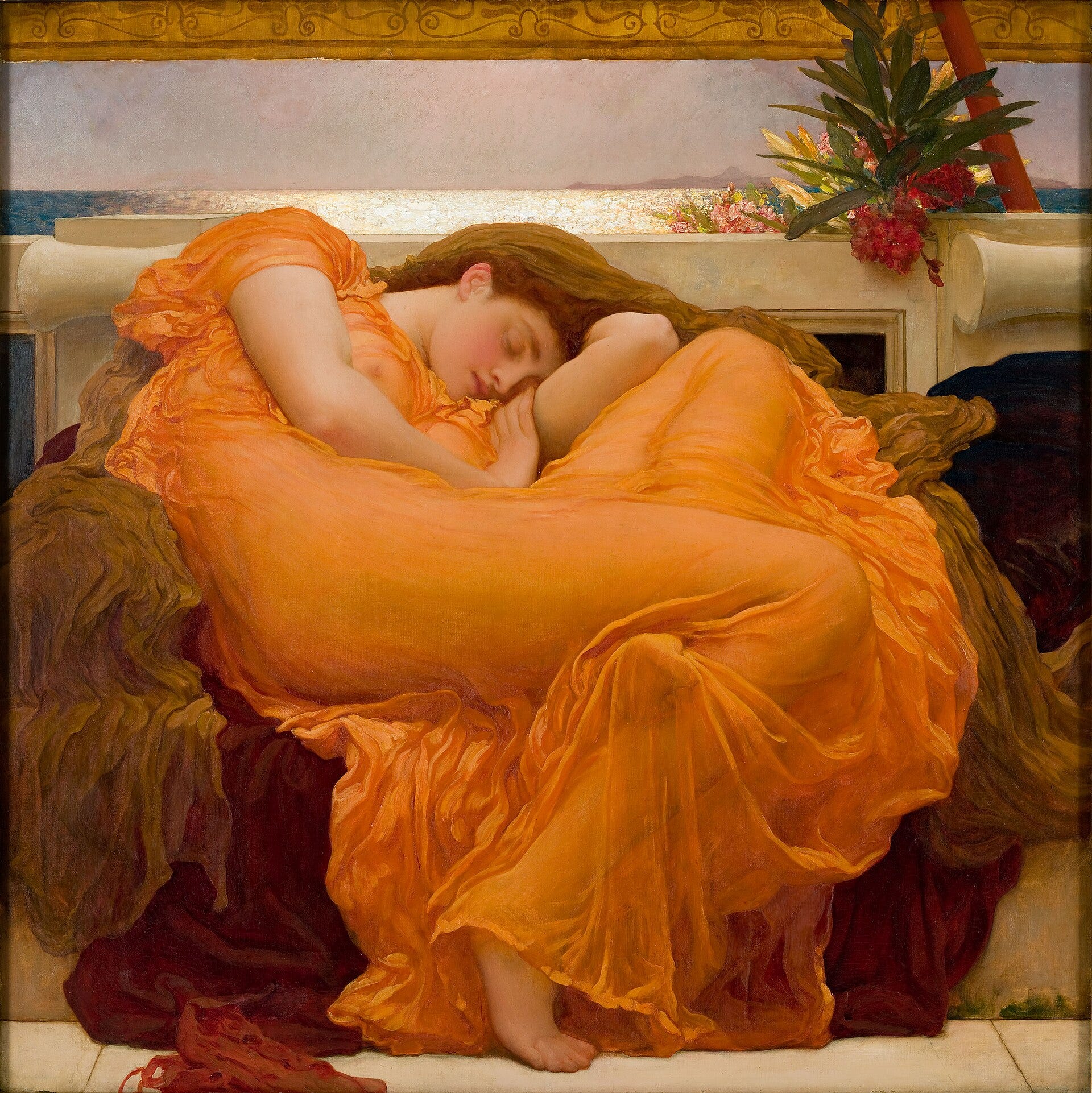
Flaming June is famous for a sleeping woman in a blaze of orange, for a pose that echoes Michelangelo, and for how close it came to being lost. Frederic Leighton, a painter of Queen Victoria's Britain, finished it in 1895, the year before he died.
It was last shown in public in 1930, then dropped out of sight for more than thirty years. When it resurfaced in London in 1962, almost nobody wanted it.
Cool Stories About Art is a newsletter to learn art the fun way.
Join 200,000+ readers and get:
10 new art stories / month
The entire archive of content (140+ articles)
Comment, ask questions, and chat with other readers
Today it belongs to the Museo de Arte de Ponce, a museum in Puerto Rico. Admirers call it the "Mona Lisa of the Southern Hemisphere," a loose label for an island that lies north of the equator.
Its road to Ponce began in south London. In 1962, builders working on a house on Clapham Common found the canvas behind paneling over a fireplace, according to local historians. How it got there is not known.
The builders thought the frame might be worth something, so they carried it to an art and framing shop on Battersea Rise, a street nearby. There the picture went for £60, because the frame was judged to be worth more than the painting inside it. In 1895, its first buyer had paid just over £1,000.
A pose borrowed from Michelangelo
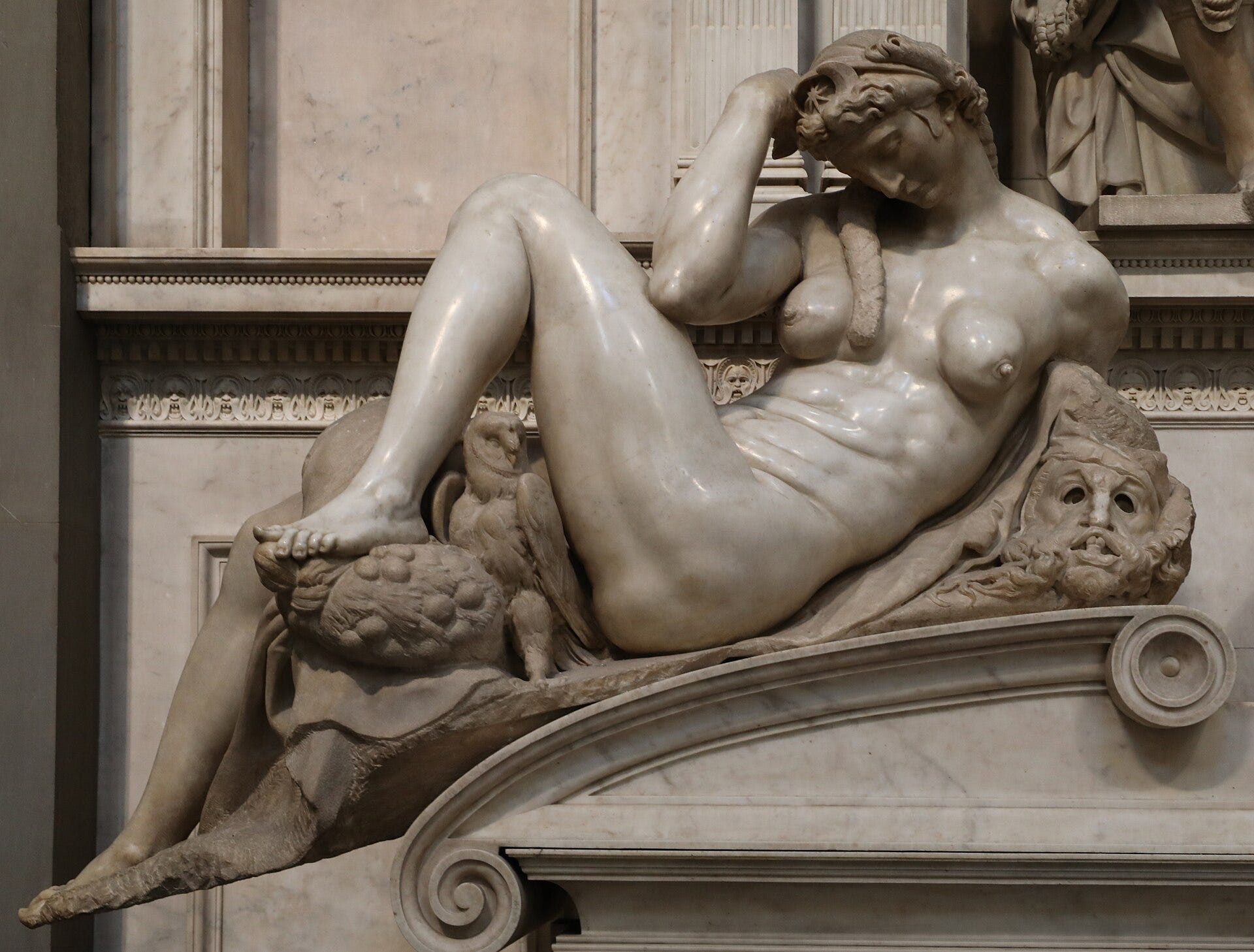
The picture shows a woman asleep on a marble terrace, in a sheer orange dress, with the Mediterranean glittering behind her…
What You'll Discover
Who may have posed for her.
What Leighton painted out.
Why it vanished for thirty years.
Who finally rescued it.