170 000+ readers. Learn art the fun way.
This is a preview. Paid subscribers get the full story.
You’ll also get:
10 new stories every month
The full archive (130+ Art stories)
Your personal art guide. Comment, ask questions, DM me anytime
iPhone user? Subscribe at coolstoriesabout.art, not via the app. Apple adds 30% to the price.
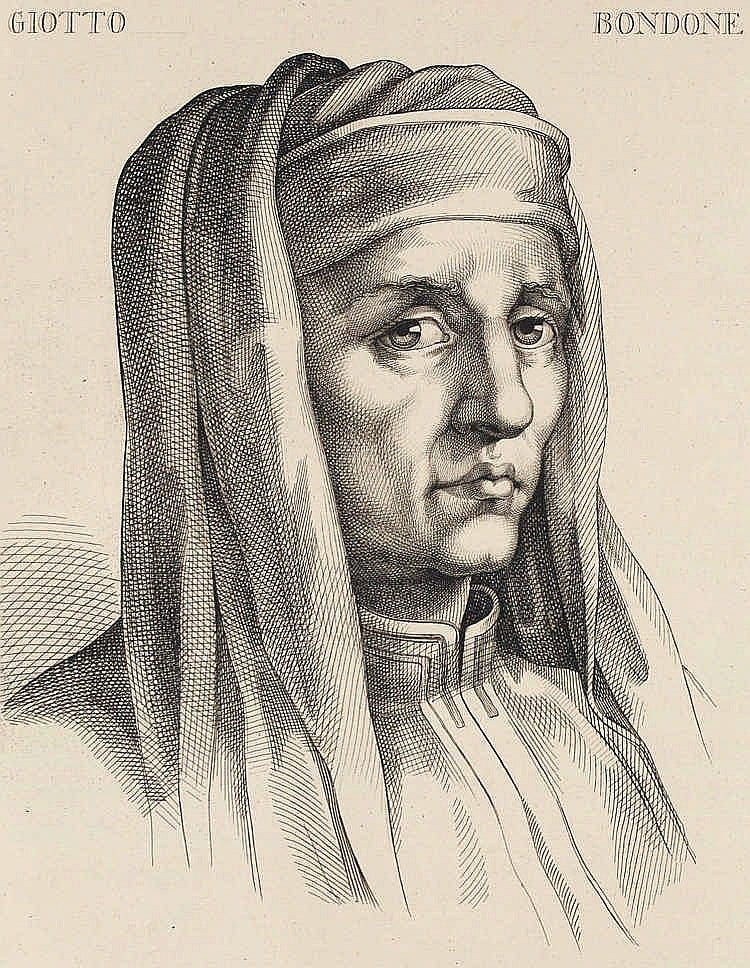
Giotto: before him, painting felt nothing
For a thousand years, painted faces in Europe are masks. Fixed eyes, identical mouths, flat bodies on gold backgrounds. Byzantine art has imposed its codes: frontality, rigidity, no individual expression.
A Christ from the 8th century looks exactly like a Christ from the 12th. Four hundred years without moving.
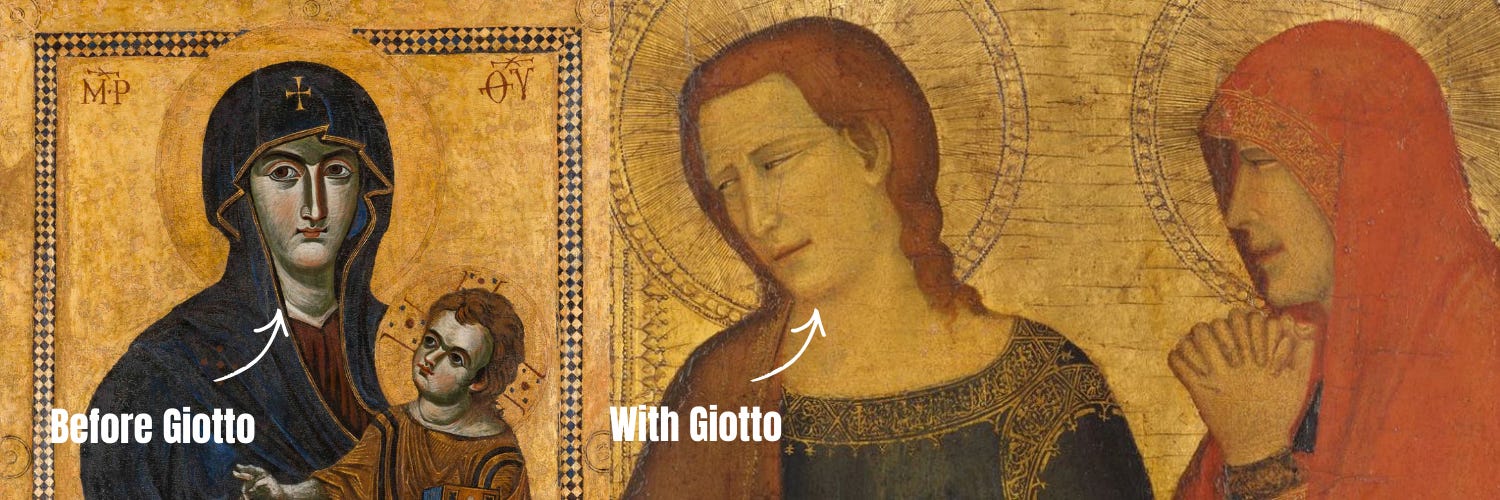
In 1305, a 38 year old Florentine painter receives the commission to cover the walls of a private chapel in Padua, the Scrovegni Chapel. He paints the life of Christ in 37 scenes. But it’s not the story that changes everything. It’s the way he tells it. For the first time in the West, figures have volume.
Their feet touch the ground.
Their clothes fall according to gravity.
And above all, their faces express something.
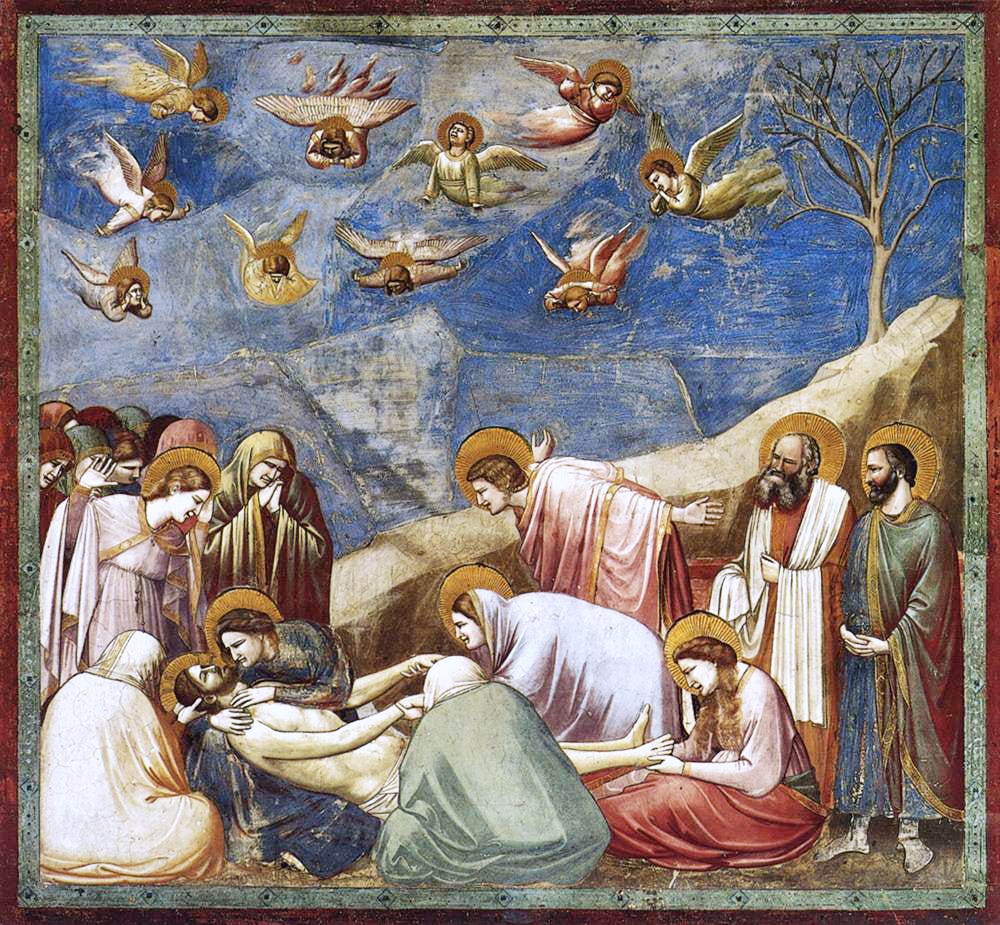
Look at the Lamentation of Christ. The body of Jesus lies on the ground, held by his mother.
Mary presses her face against her dead son’s, mouth to mouth, in a gesture of intimacy with no precedent in medieval painting. Around them, each figure expresses a different shade of grief. Saint John leans backward, arms spread wide.
A woman cradles the dead man’s head in her hands.
Now look at the ten small angels in the sky. Each one has a distinct expression. One wrings his hands. Another covers his face.
A third screams, mouth wide open. Giotto painted ten different ways of suffering in a space of a few centimetres.
Six centuries of Western painting begin in this chapel in Padua.
Discover my new newsletter !

Keep learning art the fun way


Adam Elsheimer: the first Milky Way in the history of art
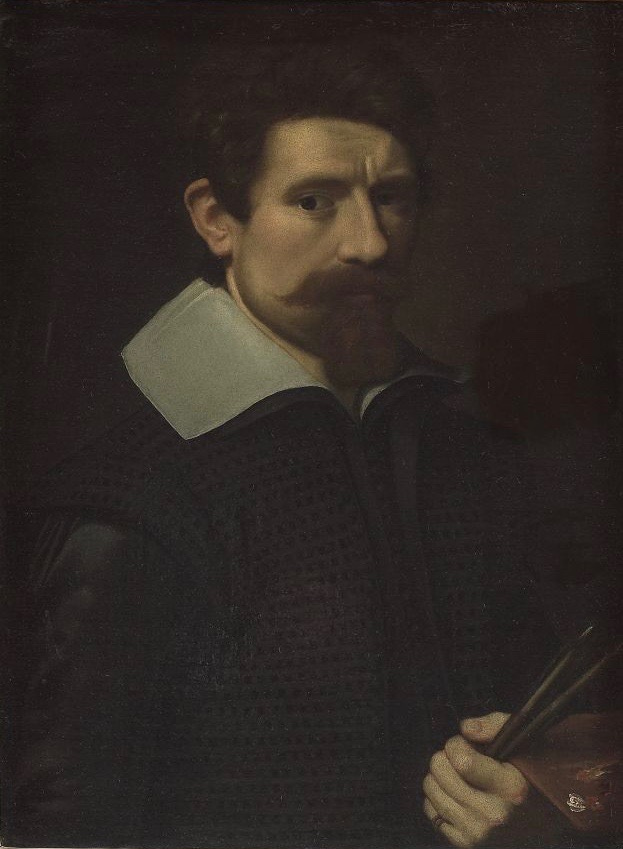
Before 1609, night in painting is a convention. You darken the background, scatter a few stars as white dots, and light the figures as if an invisible theatre lamp followed them everywhere. Nobody truly looks at the night sky and tries to reproduce it.
Adam Elsheimer, a German painter living in Rome, looks. He is 31. Galileo points his telescope at the sky the same year.
The firmament ceases to be a metaphysical abstraction and becomes an object of observation.
Elsheimer paints a biblical scene that dozens of artists have painted before him: the Flight into Egypt. Mary, Joseph, the child, a donkey, the night. The subject is unremarkable. The result is not.
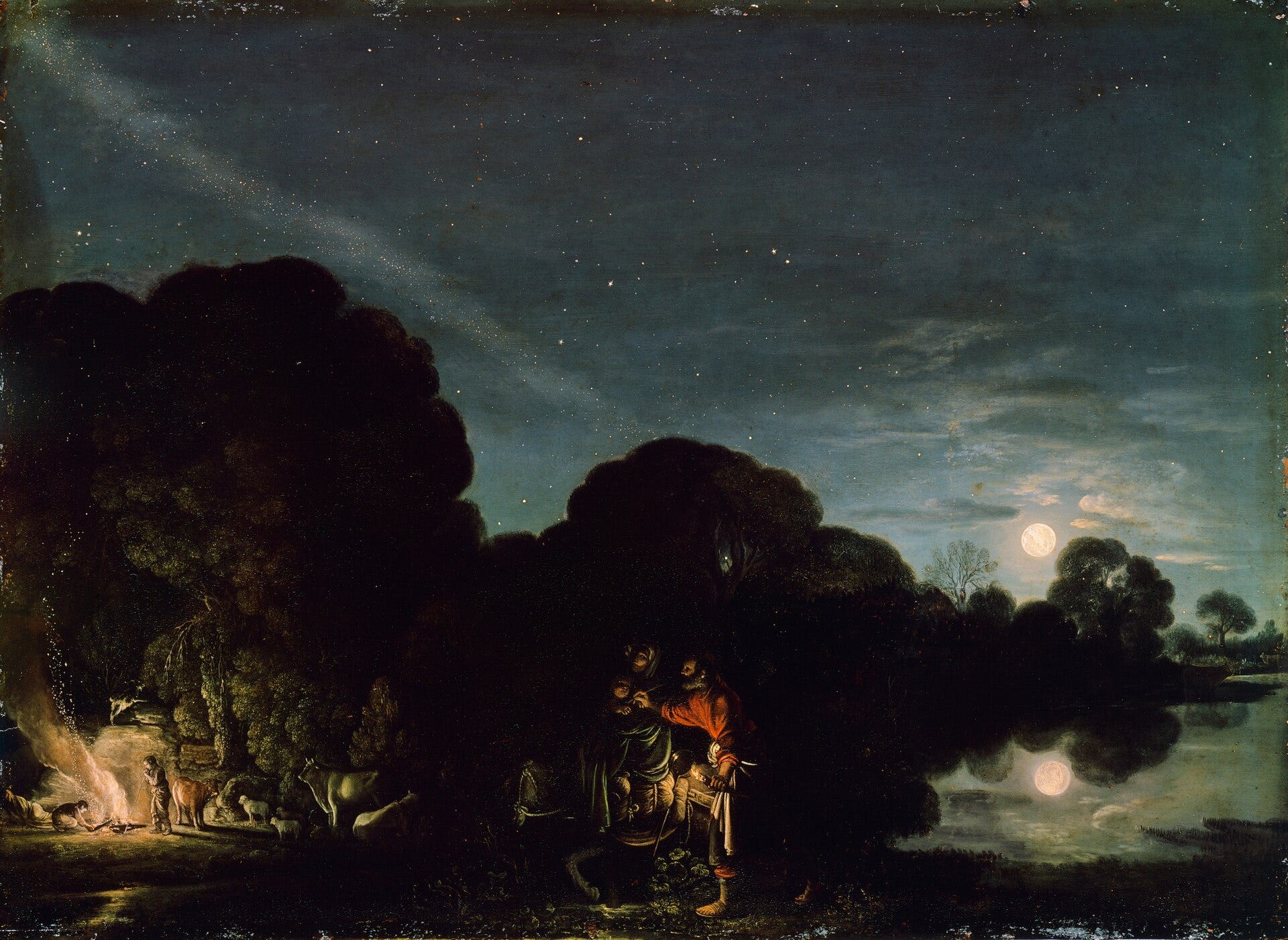
The painting measures 31 by 41 centimetres. A small copper panel. It contains four distinct light sources: the full moon reflecting on the lake, a shepherds’ campfire on the right, Joseph’s torch in the foreground, and the sky itself. Because Elsheimer’s sky is the first accurate sky in the history of painting.
The Milky Way stretches across the firmament as a milky band, not as decoration. The constellations are identifiable. The moon shows its craters.
Rubens tries to acquire the panel. Hendrick Goudt turns it into an engraving that circulates across Europe. Rembrandt will paint his own version.
Elsheimer dies at 32, penniless. The inventor of the nocturne dies in the dark.
Caravaggio: one light source, and everything changes
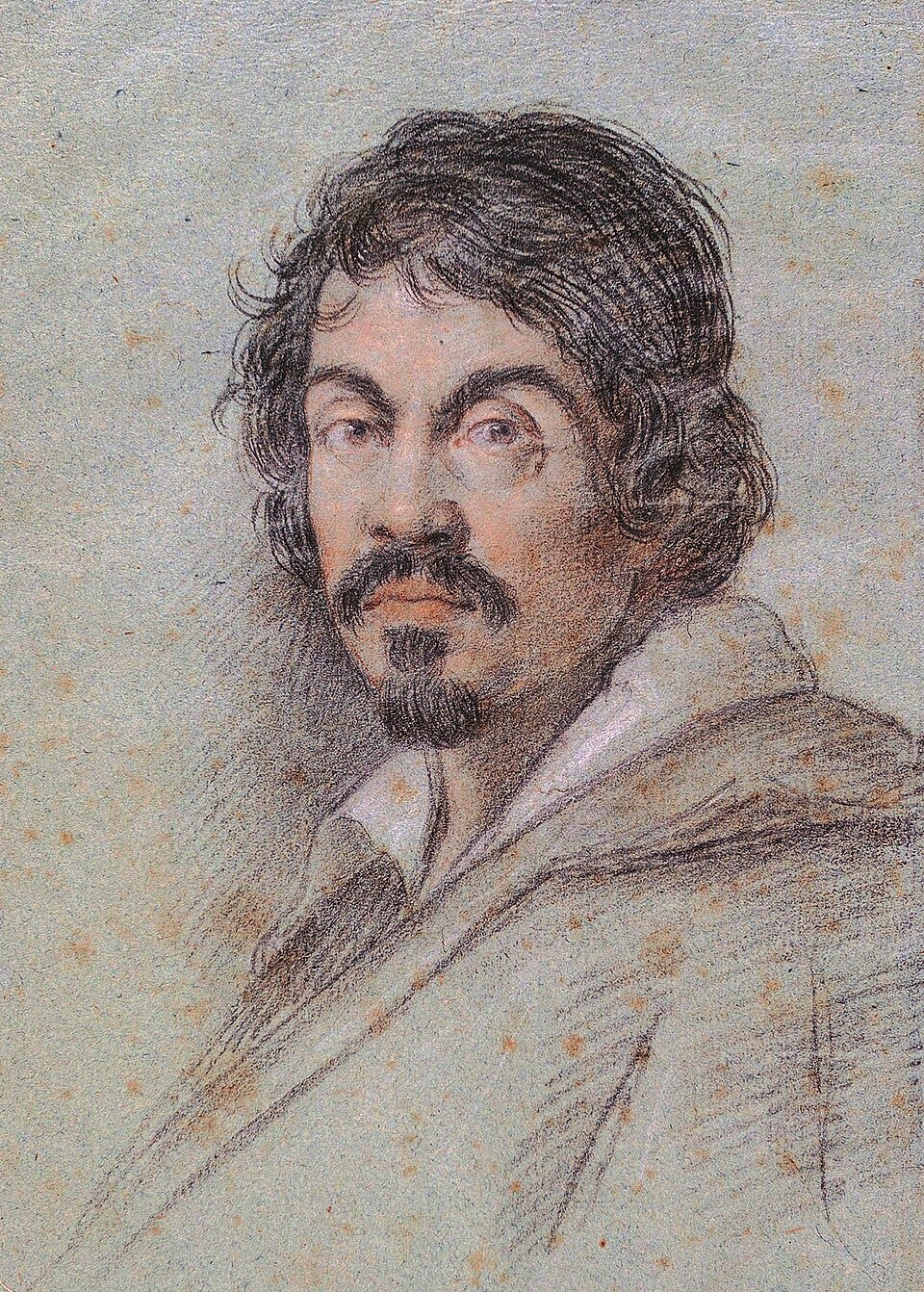
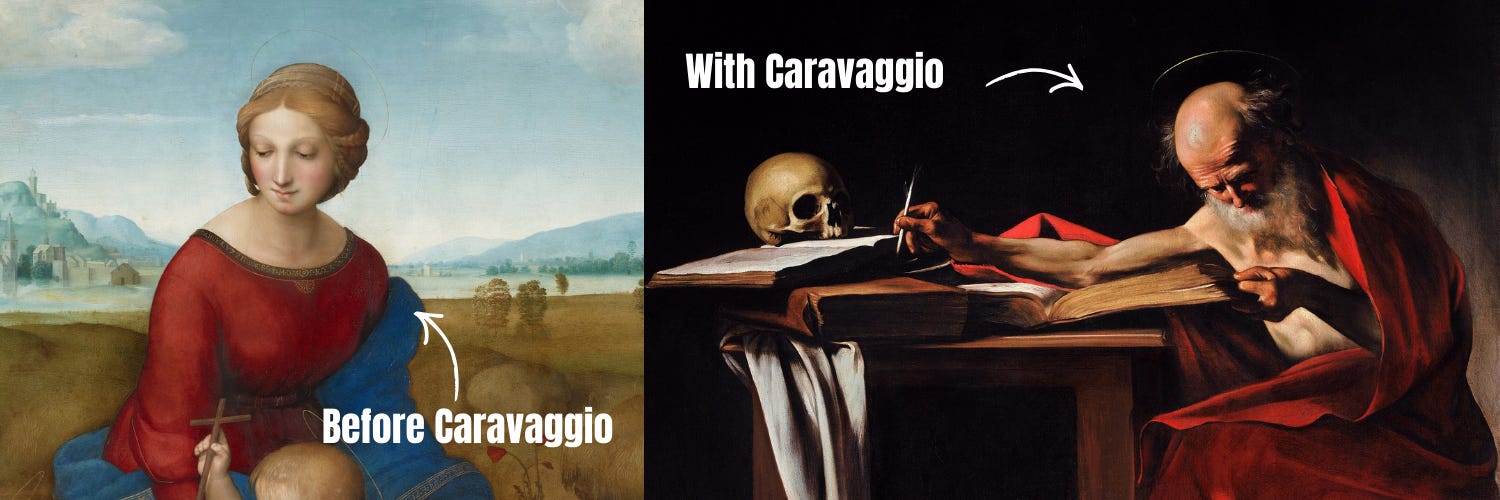
Before Caravaggio, light in painting comes from everywhere, soft, diffuse. Renaissance painters bathe their scenes in ideal clarity. Leonardo blurs. Raphael harmonises. Light serves beauty.