
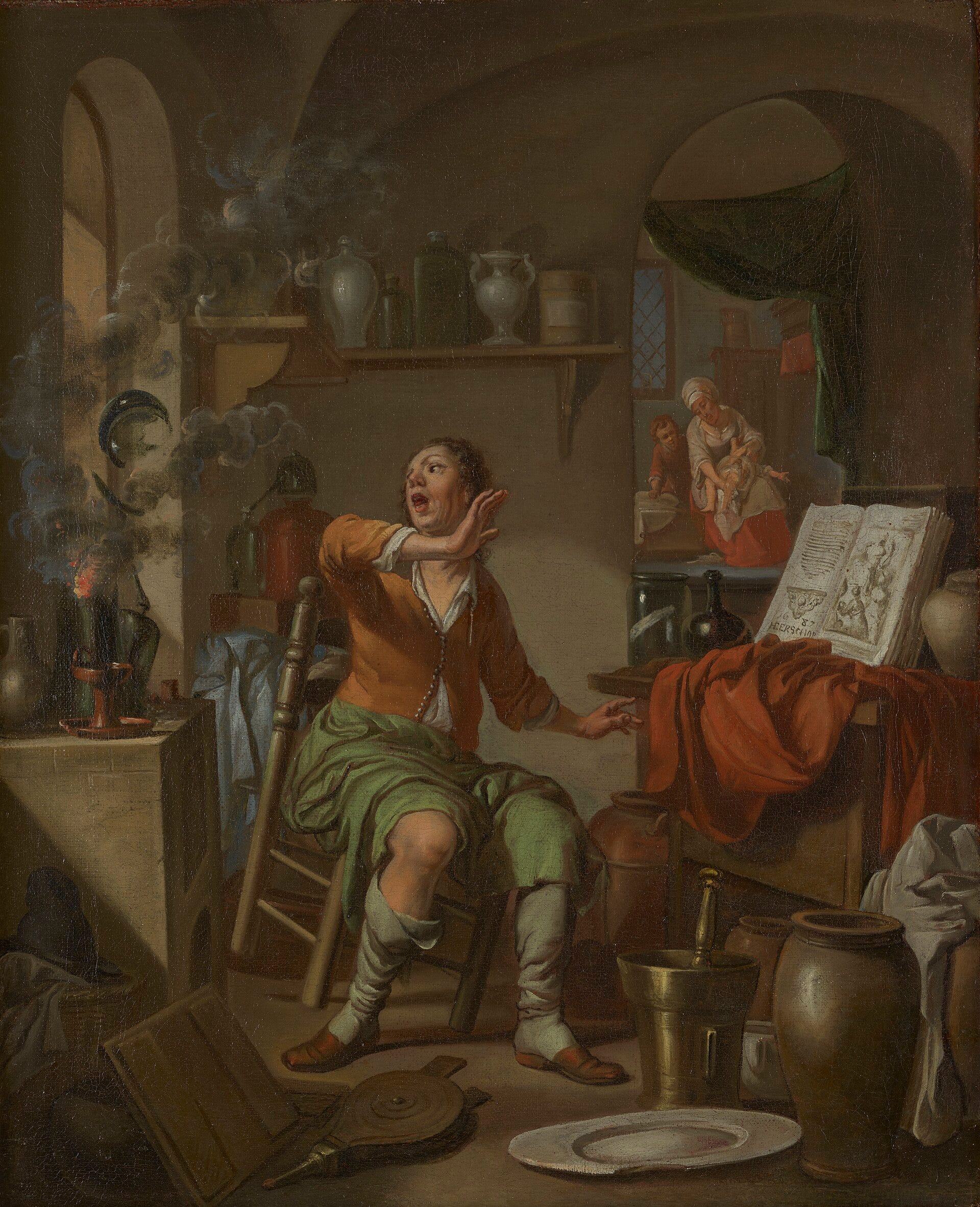
For three hundred years, painters returned to the same cramped room: a brick furnace, a pair of bellows, glass flasks, and a man trying to turn cheap metal into gold. At first they painted him as a fool who starves his family. Later he became a patient scholar, and a Florentine prince even posed at the furnace with his sleeves rolled up.
Cool Stories About Art is a newsletter to learn art the fun way.
Join 200,000+ readers and get:
10 new art stories / month
The entire archive of content (140+ articles)
Comment, ask questions, and chat with other readers
What the Alchemists Were Really After
Alchemy was the attempt to transform matter, above all to turn lead or copper into silver and gold with the help of a substance called the philosophers' stone. For painters, the subject came with its own stage set: fire, glass, smoke, and a man who bets everything on an experiment.
Behind the stage set, the work was real. Alchemists distilled, filtered, dissolved and heated metals with the same stills and furnaces that apothecaries and assayers used. That is why the equipment in these pictures is often accurate, and why chemistry grew out of the alchemists' workshops.
Each image chosen here shows an alchemist in his laboratory, at work or just after it, and emblems or scenes of pure magic were left out. What changes from one image to the next is the judgment passed on the man at the furnace, who may be a fool, a scholar or a chemist before his time.
12. Giovanni Stradano, The Alchemist's Laboratory (1570)
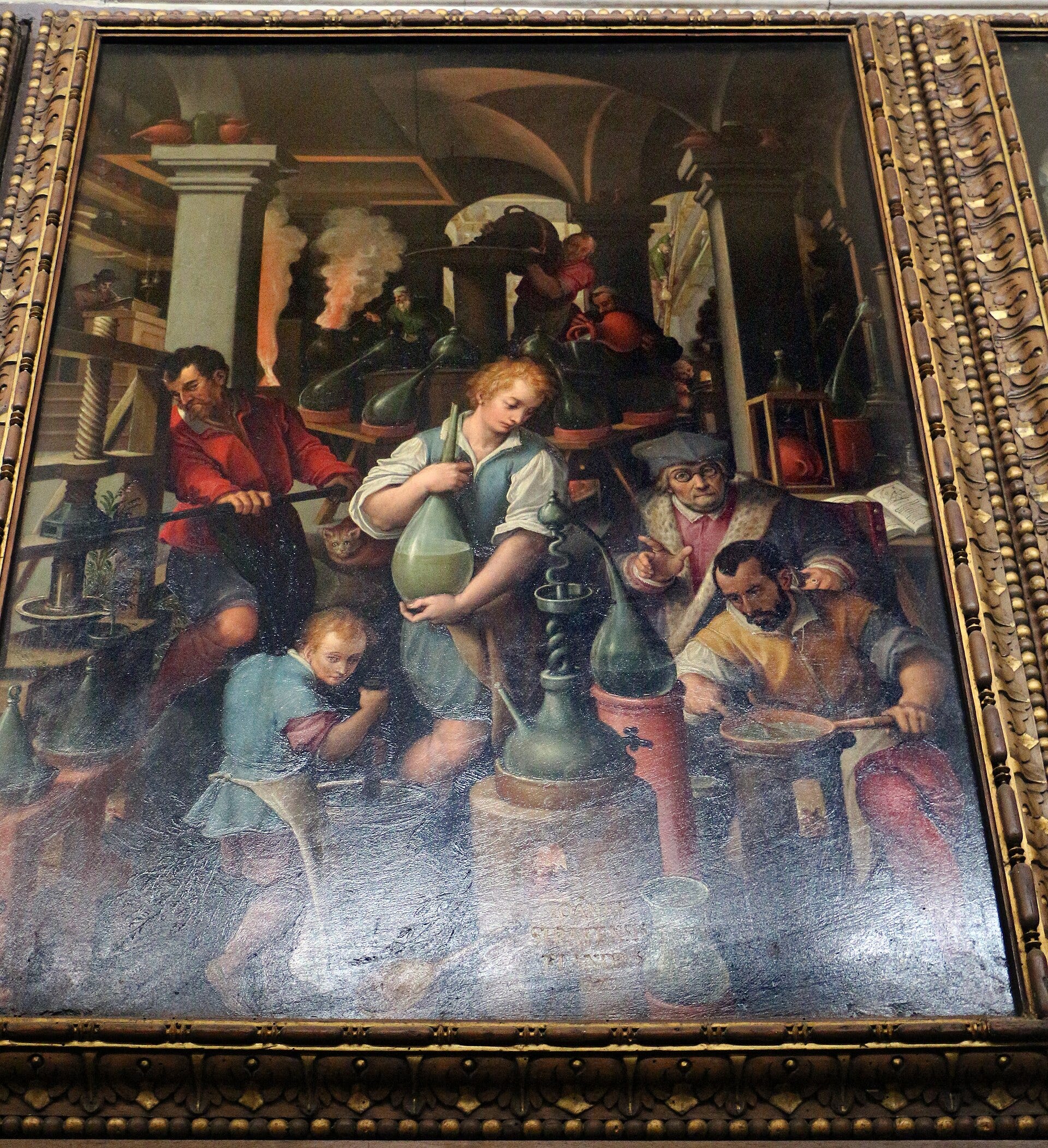
The young man stirring a vessel at the lower right of this crowded workshop wears a plain doublet and has rolled up his sleeves. Around him, workers tend brick furnaces and handle glass flasks and stills. The young man is Francesco I de' Medici, heir to the rulers of Florence, and he appears here as one of the workers.
The picture belongs to his studiolo, a small private room in the Palazzo Vecchio, the Medici seat in Florence. Its painted panels serve as the doors of cupboards where Francesco kept minerals and natural curiosities. Giovanni Stradano, a Flemish painter who had settled in Florence, painted this panel in 1570.
The laboratory he shows was real. Francesco's father, Cosimo I, a passionate alchemist himself, had built it inside the palace.
Francesco did not figure in the first design, though. In the preparatory drawing, an anonymous craftsman stood in that corner, and the prince was added later, probably at the request of Vincenzo Borghini, the scholar who planned the program of the room. To make space, a furnace worker was painted out, and a physician in spectacles, cap and fur-trimmed gown took his place behind the prince.
That change reveals a division of labor that anyone who has worked in a laboratory will recognize. The physician in spectacles directs and touches nothing, while the workers feed the fires, distill and stir. A prince could have posed beside the learned man. Francesco chose the side of the hands.
His furnaces did more than pose for a picture. In 1574 his main experiments moved to the Casino di San Marco, a building put up for them, and one of their results was the first European imitation of Chinese porcelain, known today as Medici porcelain.
At a Glance
Artist: Giovanni Stradano, born Jan van der Straet (1523 to 1605)
Painted: 1570
Medium: Oil on slate
Size: Not published
Where to see it: Studiolo of Francesco I, Palazzo Vecchio, Florence
11. Jan Matejko, Alchemist Sendivogius (1867)
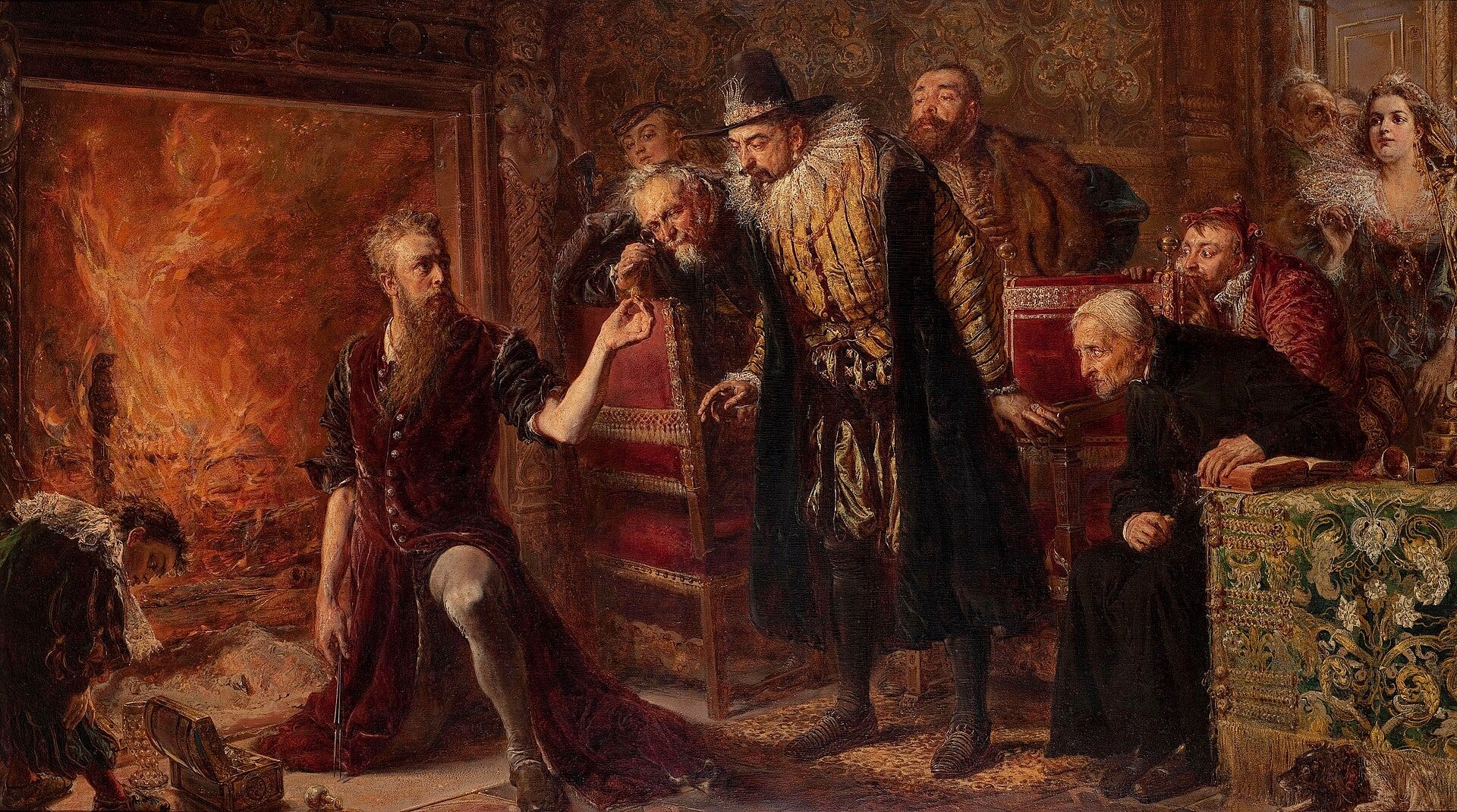
Under a low vault lit by a furnace, an alchemist in a fur-trimmed robe raises a crucible, and a king in black leans in with his courtiers to see what it holds. The scene takes place in Kraków, early in the 1600s. The man with the crucible had already lost his gold-making powder once, stolen from him while he was locked in a tower.