
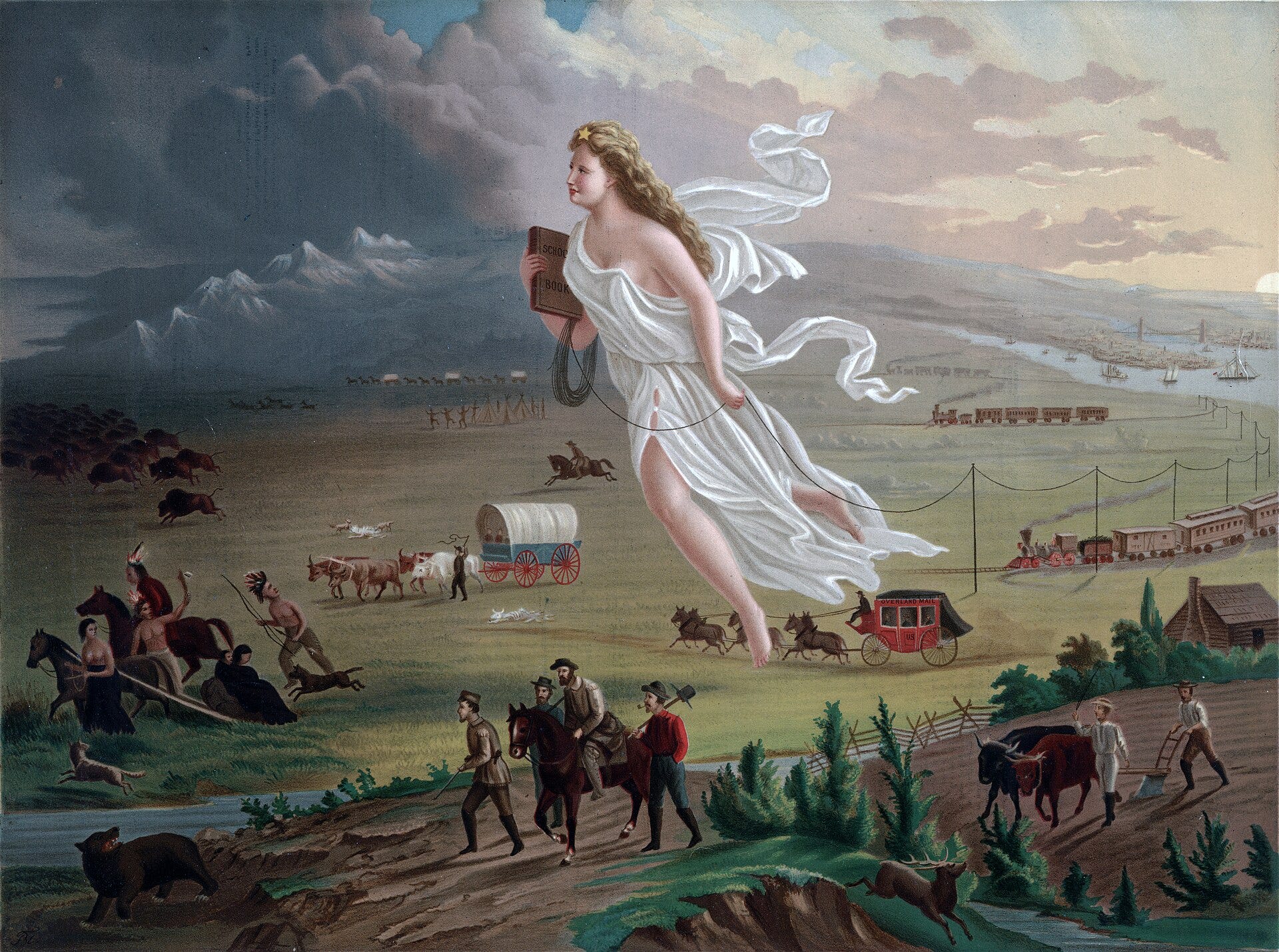
American Progress is an 1872 painting by John Gast, a painter and lithographer based in Brooklyn. Above the plains, a giant woman in a white gown floats west with a schoolbook in one hand and a telegraph wire in the other. Behind her, trains, a stagecoach, wagons and farmers come out of a bright city in the east.
On the left, under dark clouds, Native peoples, bison and a bear move out of the frame. George A. Crofutt, the guidebook publisher who commissioned the work, described the scene in 1874 as the march of "Progress," and he called the star on the woman's forehead the "Star of Empire."
The picture became famous through copies. Crofutt printed it in his travel guides and gave a color print to his subscribers, and it is now a standard image in American history lessons, where many people know it as a picture of "Manifest Destiny." The original is at the Autry Museum of the American West in Los Angeles.
Cool Stories About Art is a newsletter to learn art the fun way.
Join 200,000+ readers and get:
10 new art stories / month
The entire archive of content (140+ articles)
Comment, ask questions, and chat with other readers
What is happening in the American Progress painting?
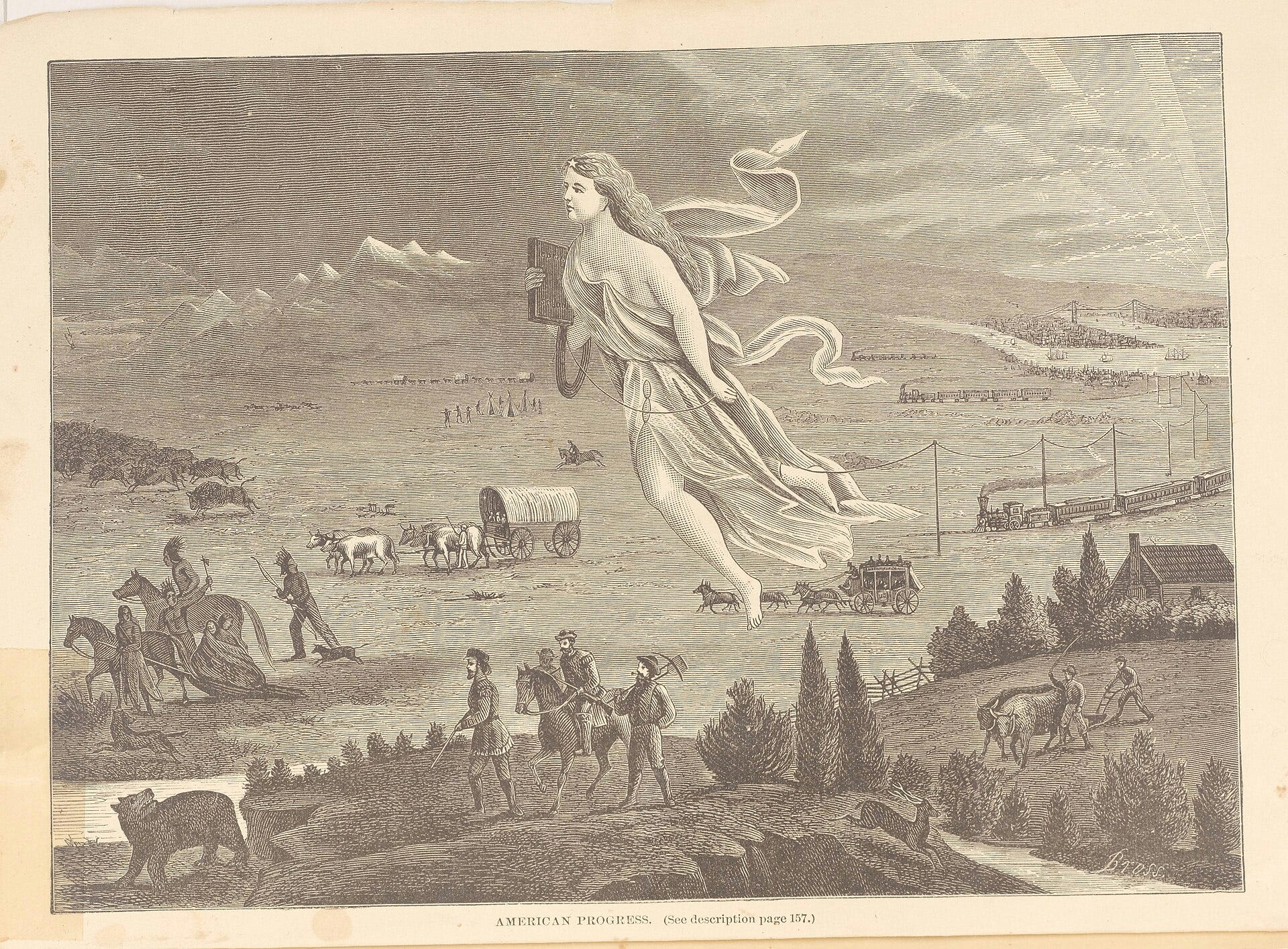
In 1874, travelers who bought a popular guidebook to the American West found this scene facing its title page, and on page 157 the publisher had written out what each figure in it was meant to say…
What You'll Discover
Why the original is smaller than most people imagine
The publisher who explained every figure in print
Who the floating woman is, and what she carries
What happened on the Plains around the year it appeared
Where the painting hangs now, and what hangs beside it