


170 000+ readers. Learn art the fun way.
This is a preview. Paid subscribers get the full story.
You'll also get:
10 new stories every month
The full archive (130+ Art stories)
Your personal art guide. Comment, ask questions, DM me anytime
iPhone user? Subscribe at coolstoriesabout.art, not via the app. Apple adds 30% to the price.
Cushing, Maine. July 12, 1939.
A car comes up a dirt road between two fields that run down to the sea.
At the wheel, a 17 year old girl who learned to drive a few weeks ago.
Her name is Betsy James. She has spent her summers here since she was a child.
Beside her, a boy she met this morning. He turns 22 today.
His name is Andrew Wyeth.
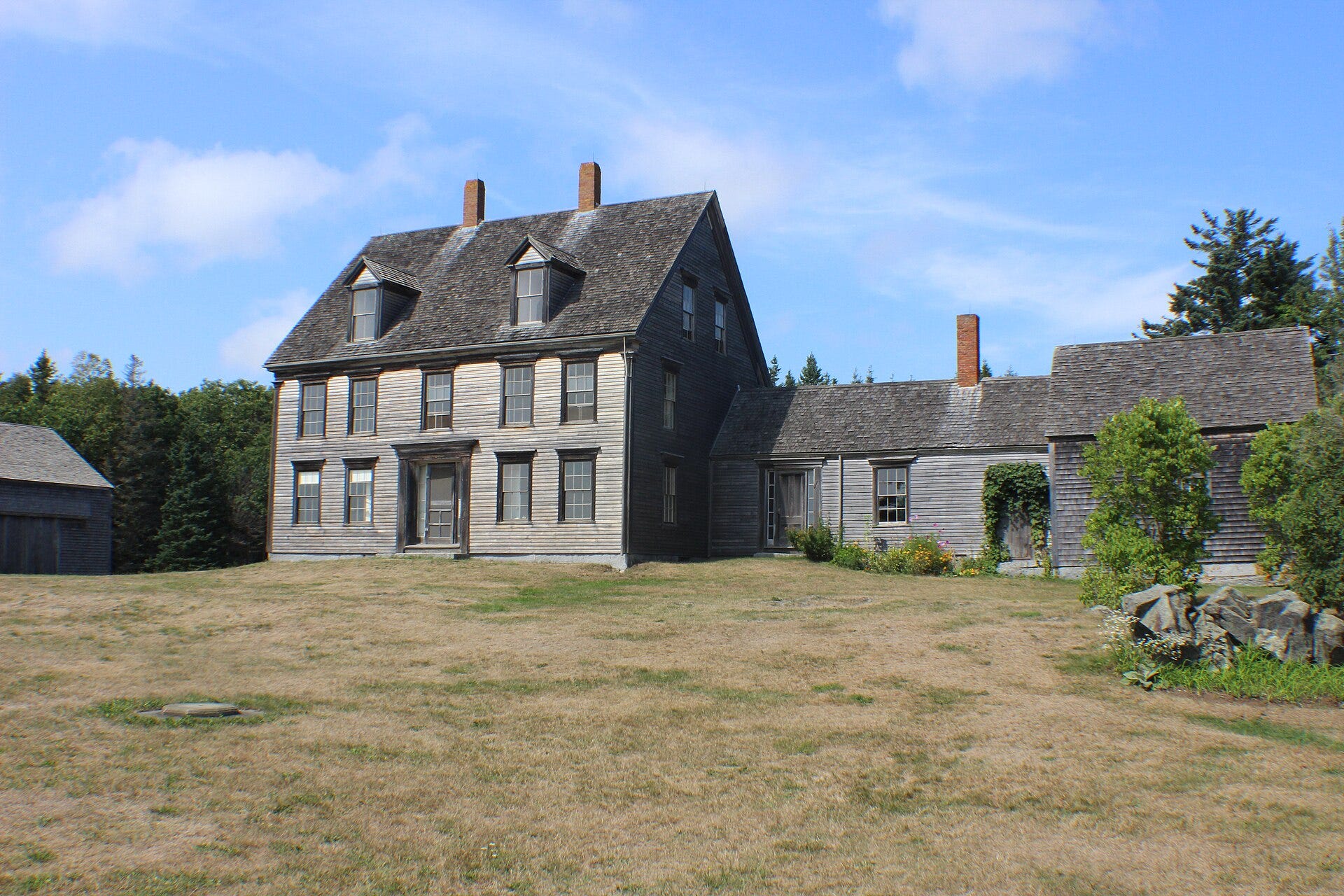
At the end of the road, a gray wooden house. Tall, unpainted, fourteen rooms, standing alone at the top of a slope. Barns around it, and nothing else all the way to the horizon.
A man comes out of the fields to greet them. Alvaro Olson, soil on his hands. This land has belonged to his family since the 1750s, and he works it alone.
In the kitchen, a woman is sitting. His sister, 46, who keeps the house and speaks to them in a steady voice, without getting up.
Anna Christina Olson.
That day, Wyeth barely looks at her. All he sees is the house.
The light coming through the bare windows. The proportions of the building. That field falling toward the water without a single tree to stop it.
Ten months later, he marries Betsy.
Discover my new newsletter !

What She Refuses
The Olsons open their door to no one. Not to neighbors, not to the curious.
To him, they open it.
The first years, he comes with Betsy. Then he comes alone.
Then he has the run of the house, a room upstairs where he carries up his panels, and the right to work there whenever he likes.
In that house, he is not Andrew Wyeth. He is Andy.
He comes back every summer. He will make close to three hundred works here.
He paints Christina sitting at the kitchen table. By the window, with the geraniums. On the stone doorstep, in profile, looking out at the field.

She is always sitting, and she never stands up.
As a child, Christina walked. Then the legs began to give way, and by her thirties they no longer carried her at all.
The nerves break down, the muscles waste away, and it never stops. It is Charcot Marie Tooth disease.
There is no electricity in the house, no running water, an oil lamp and a wood stove.
She cooks there, she does the washing, she keeps all fourteen rooms.
She moves along the ground. Palms flat, forearms pushing, her body following, her legs dragging behind.
That is how she goes from one room to the next, how she gets down the stairs, how she gets out into the grass.
Someone brings her a wheelchair. She will not have it.
People offer an arm, something to lean on, to carry her. She refuses that too.
Alvaro gave up lobster fishing in 1922 to take over the family land. He has slept under the same roof as her ever since, and she asks nothing of him either.
Nine summers go by like that.

May 1948. Wyeth is upstairs, at the window.
Below, the field runs down toward the sea. The grass is tall, dry, still flattened by winter.
A figure is set down in it, a long way from the house. A pale pink dress among the stalks.
It is Christina. She has gone down to the bottom of the slope to pick flowers for the house, and she is coming back up.
She sets her palms flat in the grass. She pushes with her forearms. Her body follows.
She stops. She rests her head a moment. She starts again.
A yard. Another yard.
In places the grass comes almost to her shoulders. She disappears into it, then comes out again a little higher up.
There is about a hundred yards between her and the door. She is 55. It takes her long minutes.
Wyeth does not go down.
If he crossed the field to lift her up, she would send him back to the house. Sharply.
So he stays at the window.
He does not take his eyes off her, until she disappears below the sill.
That evening, he has dinner with Betsy.
He barely speaks. He is still up there, behind the glass.
Halfway through the meal, he pushes back his chair and leaves the table.
In that field, there was nothing he could do for her.
He is going to spend the summer helping her another way.