
Antonio Berni was an Argentine painter, born in Rosario in 1905, who died in Buenos Aires in 1981. He became known in the 1930s for huge canvases of the unemployed, then for two invented characters, a slum boy named Juanito Laguna and a seamstress turned prostitute named Ramona Montiel.
He built their stories from real garbage, and in 1962 he won the grand prize for printmaking at the Venice Biennale.
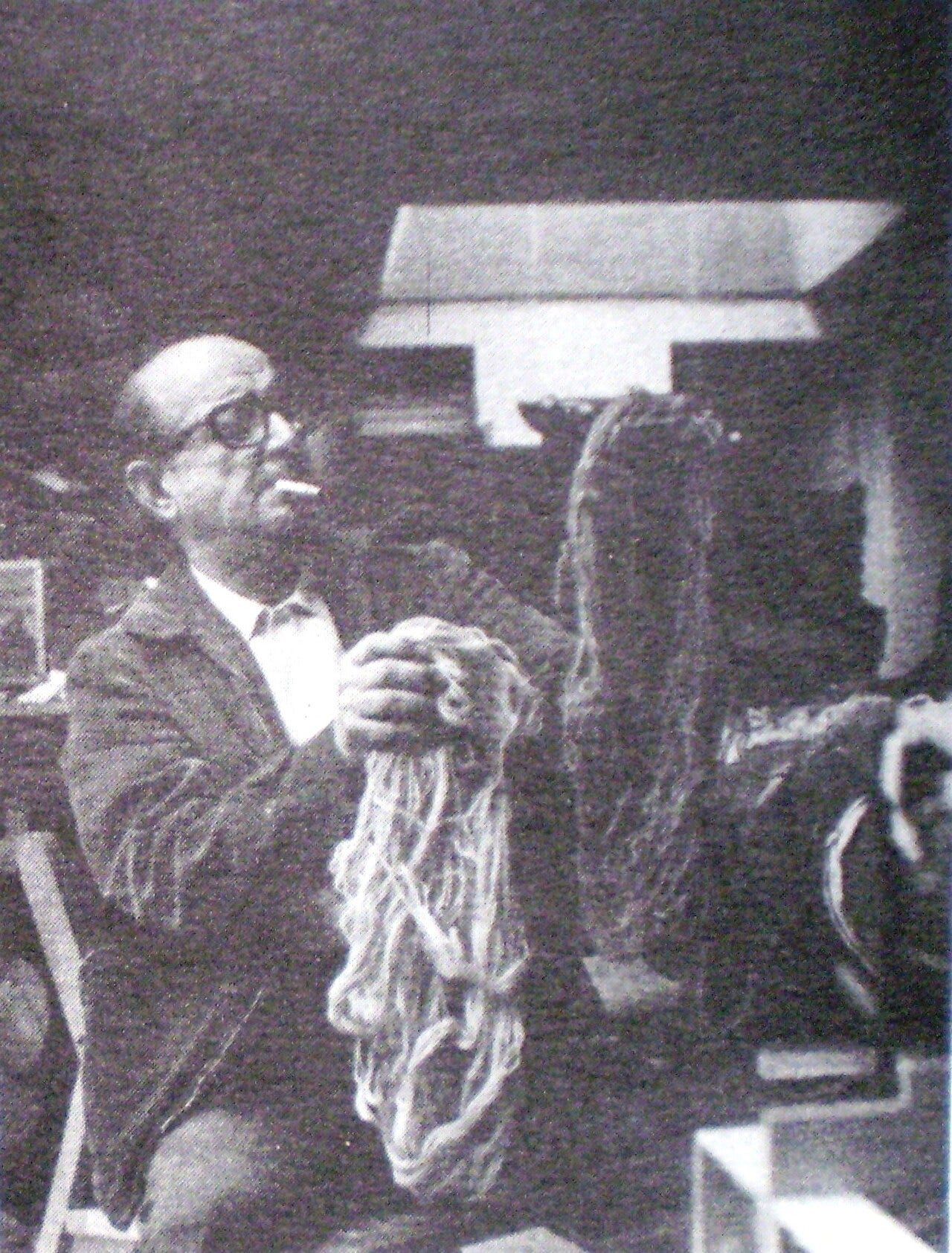
The scrap in those collages was the real thing. Berni picked up tin, cardboard, broken toys and burnt wood in the shantytowns where his characters lived, and fixed it to large wooden panels.
Cool Stories About Art is a newsletter to learn art the fun way.
Join 200,000+ readers and get:
10 new art stories / month
The entire archive of content (1,000+ articles)
Comment, ask questions, and chat with other readers
Berni began as a painter of people. In the 1930s he painted the unemployed on burlap at the scale of a mural, and in August 1936 he wrote in the magazine Forma that life in the tower of pure aesthetics had become uncomfortable and untenable.
In the late 1950s he started working with what he found in the unpaved streets and on waste ground: old wood, empty bottles, iron, cardboard boxes, sheet metal. He told Le Monde in 1967 that a visit to a poor town had changed the way he saw and interpreted reality.
What came out was Juanito Laguna, the son of a metalworker, growing up on the marshy ground of Flores, on the edge of Buenos Aires. Juanito, Berni said, was a boy who is poor, not a poor boy. The character carried him to Venice in 1962, and soon Juanito had a counterpart.
What You'll Discover
Why a Paris surrealist painted the unemployed.
What happened when Siqueiros came to town.
Where Juanito's materials really came from.
What his Venice prize actually paid for.
Who Ramona's suitors were.
What the monsters were made of.