
Most Norman Rockwell collector plates sell for a few dollars today, far less than buyers paid for them in the 1970s and 1980s. They were made in large quantities and sold as investments, and the investment never paid off.
A plate in a cupboard today is a keepsake. When it was sold, it came with a different promise.
Cool Stories About Art is a newsletter to learn art the fun way.
Join 200,000+ readers and get:
10 new art stories / month
The entire archive of content (1,000+ articles)
Comment, ask questions, and chat with other readers
The promise was not a lie while it lasted. In August 1987, the Christian Science Monitor described the Bradford Exchange, in a Chicago suburb, as the world's largest marketplace for limited edition plates. It worked like a stock exchange and quoted a high, a low and a closing price.
The Monitor counted nine million plate collectors worldwide, 6.7 million of them in the United States. One of its examples was a Scarlett O'Hara plate from the Knowles company, issued in 1978 at $21.50 and worth $275 or more by 1987.
Plates did go up. Then they stopped.
Who turned plates into an investment?
A company in a Chicago suburb called the Bradford Exchange did, more than anyone. It began in the early 1970s as a gallery for collector plates, and by the early 1980s it was posting live price quotations, as if each plate were a share.
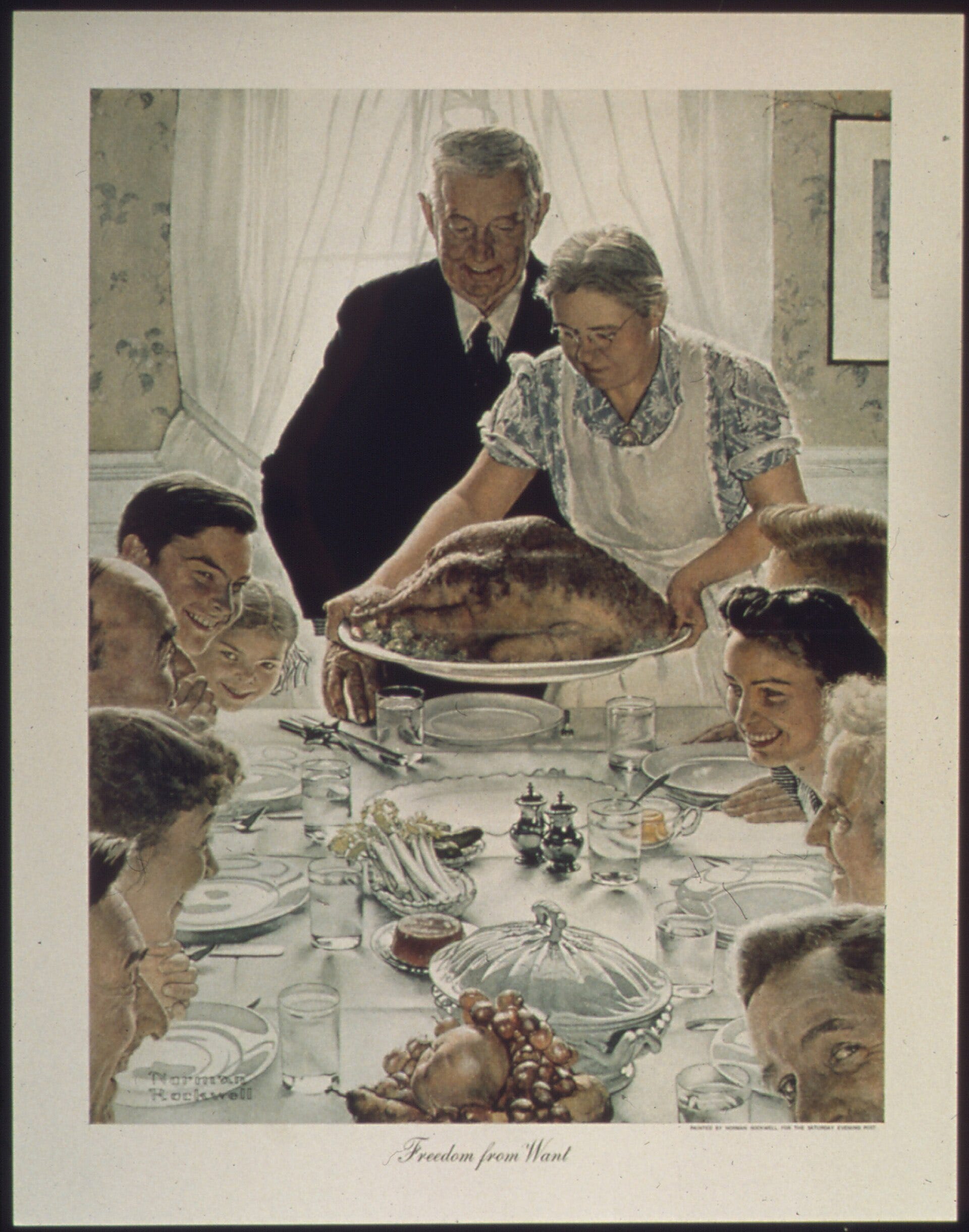
Rockwell fitted the pitch. Gorham issued a Four Seasons series of Rockwell plates in 1971. In 1977 the Edwin Knowles China Company introduced its Heritage Collection of Rockwell plates, certified by the Rockwell Society of America.
The Monitor reported that trading on the secondary market, where owners sold to each other once an edition had closed, was up more than 300 percent since 1982. Plates worth over $100 million had changed hands on the Exchange in 1986 alone.
The article mentions no downturn. By Harry Rinker's account, one was only a few years away.
What You'll Discover
Why the buyers disappeared.
What a set of twelve fetched.
What the original paintings fetch.
Which plates did gain value.