

170 000+ readers. Learn art the fun way.
This is a preview. Paid subscribers get the full story.
You'll also get:
10 new stories every month
The full archive (130+ Art stories)
Your personal art guide. Comment, ask questions, DM me anytime
iPhone user? Subscribe at coolstoriesabout.art, not via the app. Apple adds 30% to the price.
At the Van Gogh Museum in Amsterdam, the crowd in front of this painting never thins.
Tour groups follow each other all day long, guide in front, flag raised so no one gets lost. The room is never empty. This is probably the most reproduced bedroom in the entire history of painting.
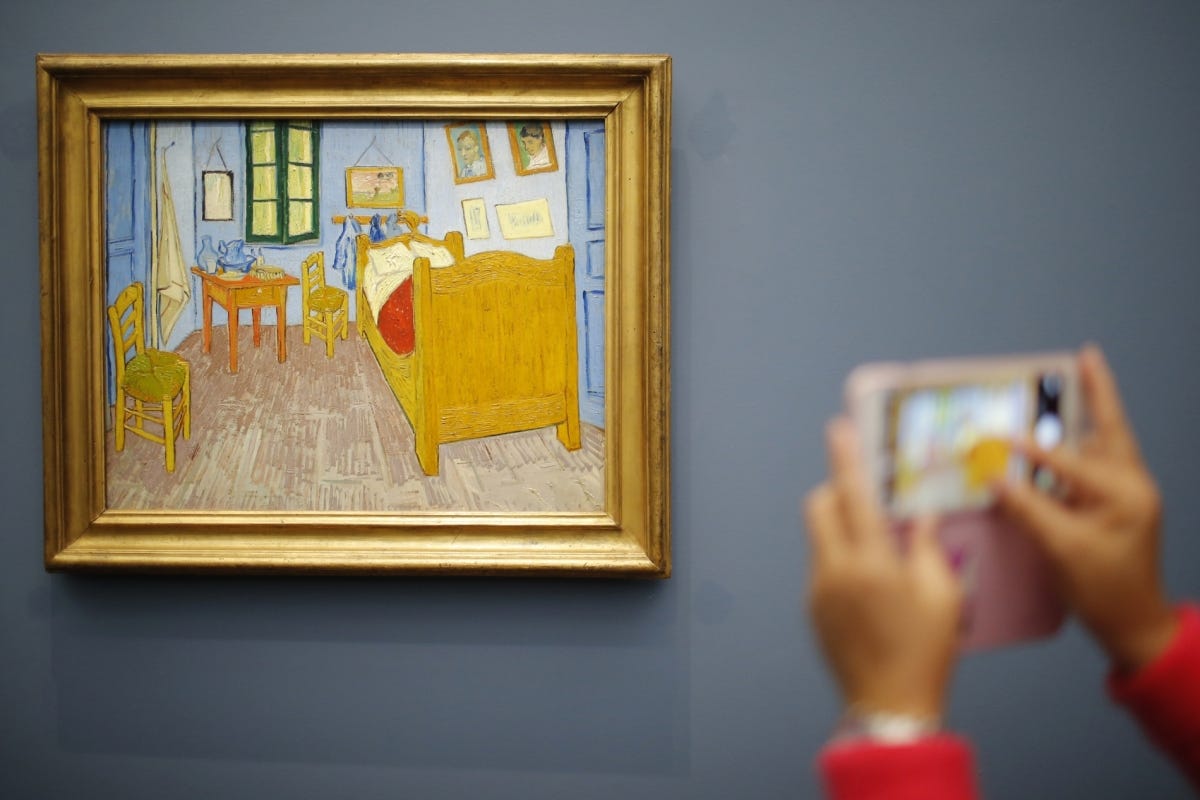
Vincent van Gogh painted the canvas in three days, from October 16 to October 18, 1888, in Arles, in the first real home he could call his own at the age of 35.
He had repainted the front of the house yellow himself, and that is the name he gave it: the Yellow House. While he is painting the bedroom, he writes to his brother Theo: "looking at the picture should rest the mind, or rather, the imagination."
He is trying to express "absolute rest."
Everything is tidy, organized, peaceful. The house is ready. But for whom?
The bed
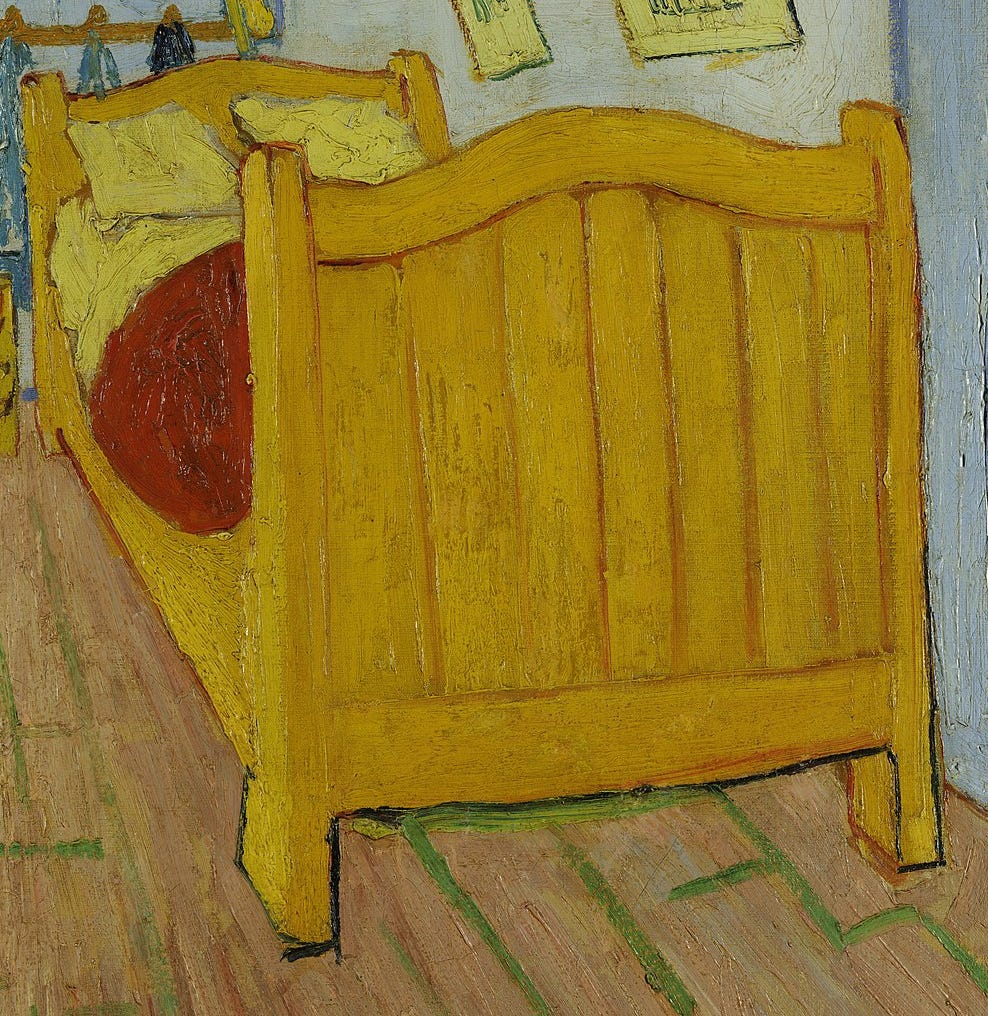
Massive, made of pale pinewood, it takes up the entire lower half of the painting, framed in thick black lines like a Japanese print, to express its solidity.
Vincent did not always have it. He had been renting this house since May 1, 1888, but lived there for four months without being able to sleep in it, with no money to buy furniture.
He kept renting a room for 5 francs a week at the Café de la Gare a few steps away, where he slept on a mattress. During the day, he would walk back to the Yellow House to paint. The room stayed empty, no bed, no table.
He finally moved in on September 17, on a mattress laid on the floor.
Twelve days later, he leaves the house, crosses Place Lamartine, and walks down the street to a carpenter's workshop in Arles. He comes back with this bed.
150 francs. The monthly rent for the entire house is 15 francs. Ten months of rent for a single piece of furniture. For a man who has never sold a painting in his life, and who depends on the money sent to him every month by his younger brother Theo, an art dealer in Paris.
It is a double bed. Two pillows are placed on it, side by side.
That evening, the bed is set up against the right-hand wall. The next day, the room next door is also furnished: a second bed, in walnut, simpler, a chest of drawers, a chair. Vincent walks from one room to the other, checks the layout, moves a piece of furniture, adjusts the curtains.
The two chairs
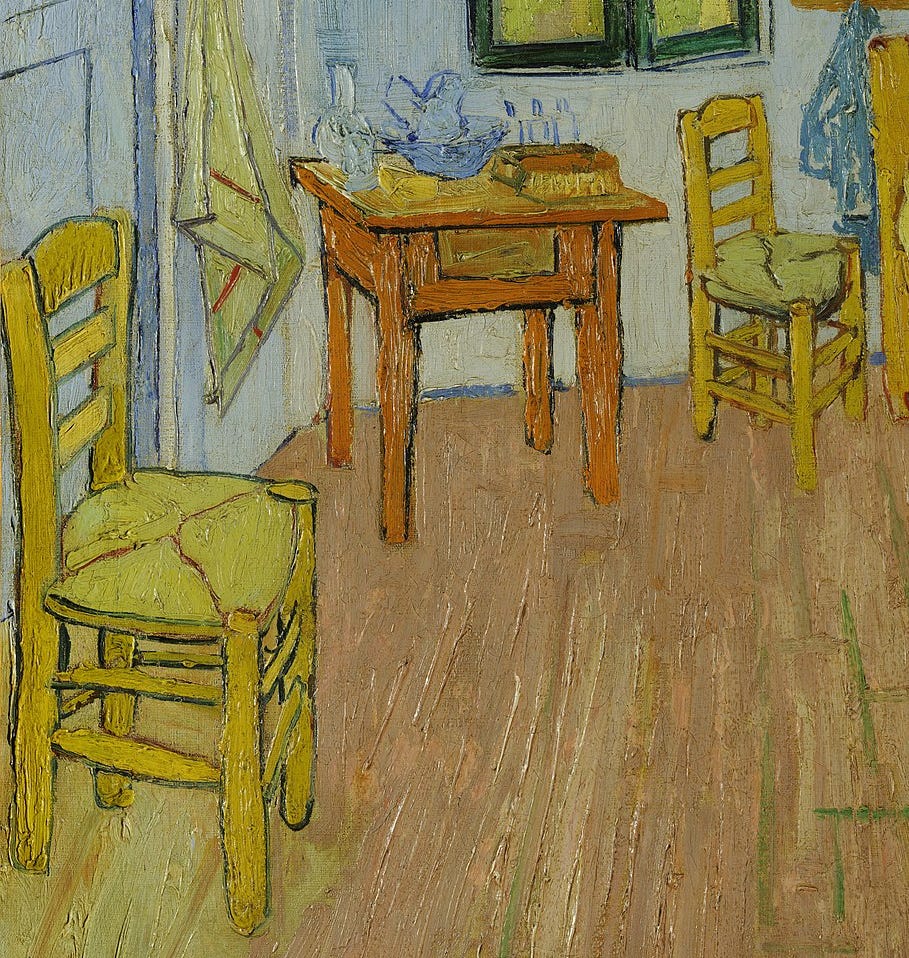
Identical. Yellow wood, woven straw seats, peasant build with uneven legs. Plain country furniture, locally made.
Vincent valued this craftsman's identity, and disliked the upholstered furniture of Parisian salons.
One chair stands near the head of the bed. The other against the back wall, next to a small washstand. The other ten are placed throughout the rest of the house.
One of these chairs will be painted by Vincent a few weeks later, in a canvas that will become one of the best-known of his entire body of work. This chair is going to matter.
The hat, the smock


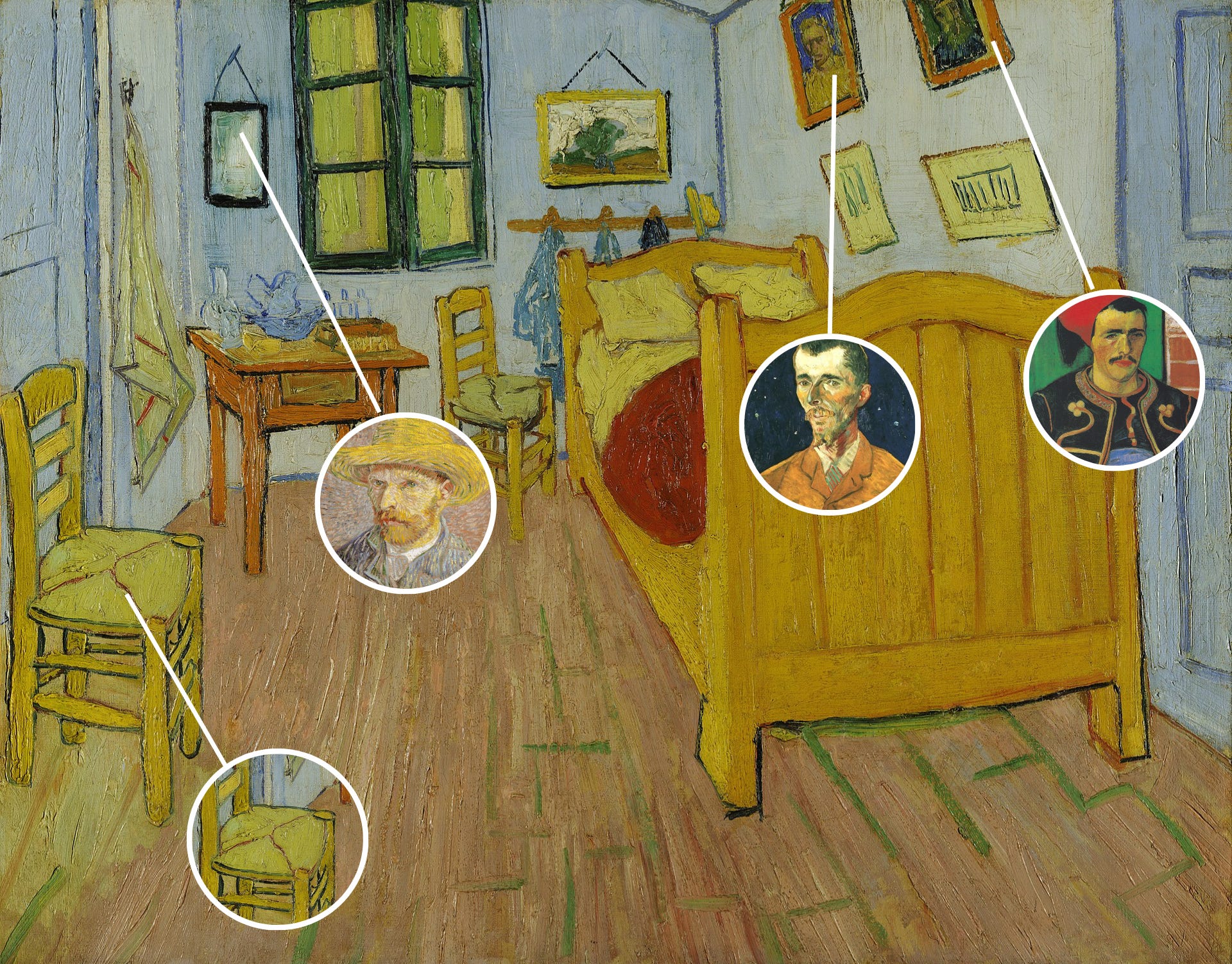
On the right-hand wall, next to the head of the bed, nails driven into the plaster hold the only personal items in sight.
A wide-brimmed straw hat. A heavy painter's smock, cut like a worker's coat, painted in deep blue.
Vincent goes out every day to paint in the fields around Arles with this gear, the easel and the wet canvas under his arm. The hat also serves him at night: he sticks lit candles around the brim to paint outdoors in the dark.
That is how he painted, three weeks earlier, on the banks of the Rhône a few steps from his house, his first Starry Night, with Place Lamartine in the foreground and the Big Dipper above. The month before, in the same setup, the Café Terrace at Night.


The mistral, the wind from the Rhône, is so violent that he has to anchor his easel with metal stakes to keep it from flying away.
He comes back from the fields covered in paint, dust and pollen. The locals call him "the redheaded madman." He doesn't speak Provençal, and he writes to Theo: "whole days go by without my saying a word to anyone."
The poet and the lover
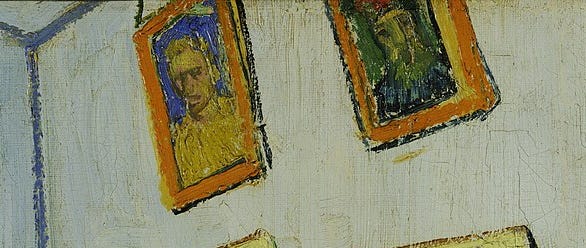
On the same right-hand wall, two small canvases hang one above the other. Vincent painted them himself in the summer of 1888.
The portrait above shows Eugène Boch, a 33-year-old Belgian painter living in Fontvieille, a few kilometers from Arles. Vincent admired his thin face, which reminded him of Dante. He painted Boch against a starry night sky. He called him "The Poet."
The portrait below shows Paul-Eugène Milliet, a Zouave second lieutenant stationed in Arles. A robust young man, to whom Vincent was giving drawing lessons. Red kepi on an emerald background.
Milliet was known for his many love affairs throughout the town. Vincent called him "The Lover."


The poet and the lover. Vincent sleeps under the faces of his two friends from Arles. During the eight months he has just spent here, he has also painted his doctor, the postman, the grocer, and the café owner Madame Ginoux. He is methodically documenting the few human presences he has managed to gather.
At 35, this is the first house where he can have visitors.
In the room next door, four sunflowers hang on the walls, two pairs that face each other. Vincent painted them in a single week, at the end of summer.
Discover my new newsletter !

Keep learning art the fun way


The room that tilts
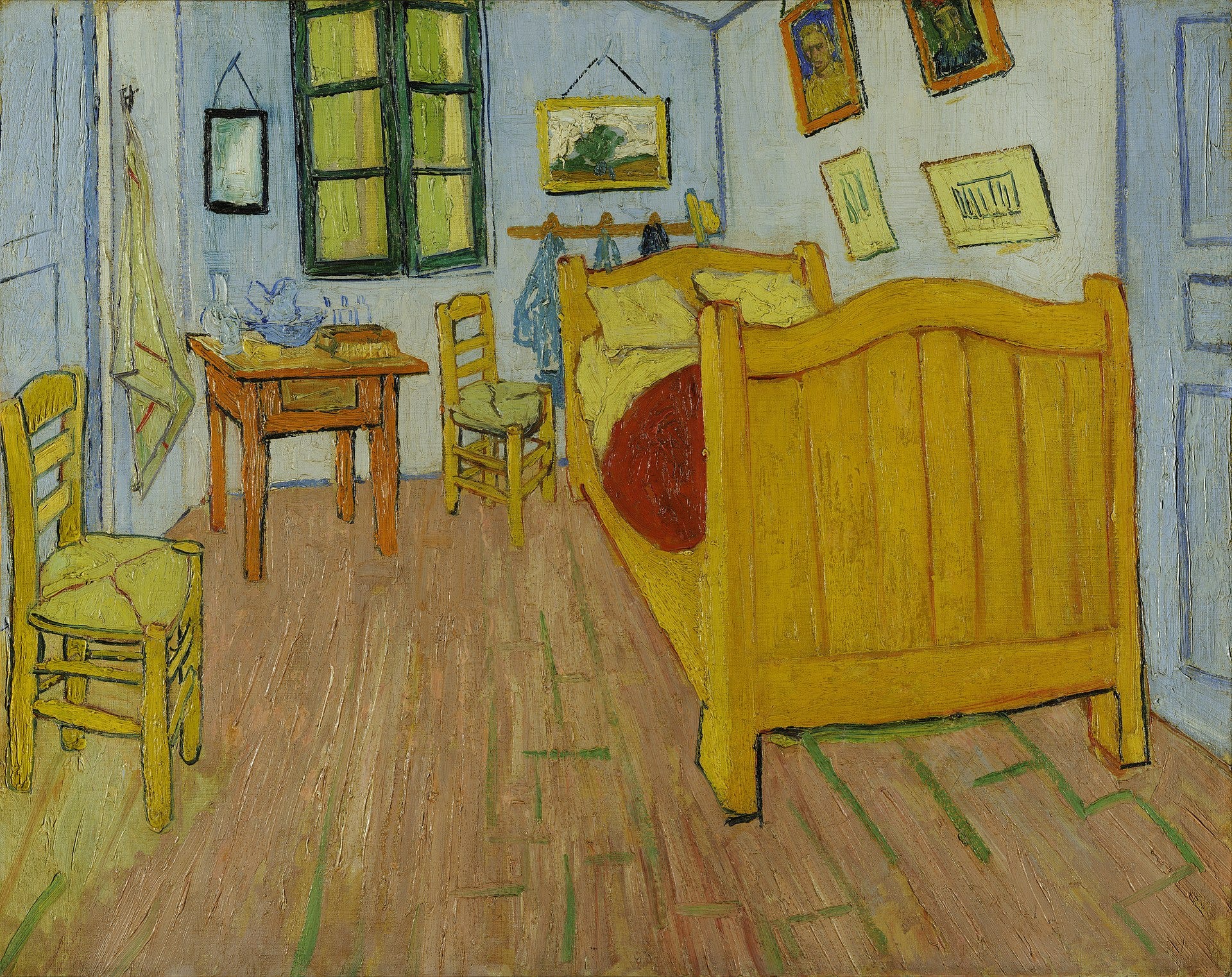
The floor seems to slide toward the viewer. The back wall meets the side walls at a strange angle. There are no cast shadows. The colors are flat, with no shading.
For a century, critics saw all of this as clinical proof of mental instability. They were wrong.
Vincent collected Japanese prints with passion. At his death, more than 600 prints by Hokusai, Hiroshige and Utamaro will be found in his belongings.
These prints painted in flat colors, with no light-and-shadow effects, with strong outlines and a perspective that flattens space instead of digging into it. Vincent called them "the crepons," after the crepe paper they were printed on.
While he is painting the canvas, he writes to Theo: "I wanted to make things simple, the way they are in the crepons." The geometry that looks like madness is in fact a careful plan.
The closed window
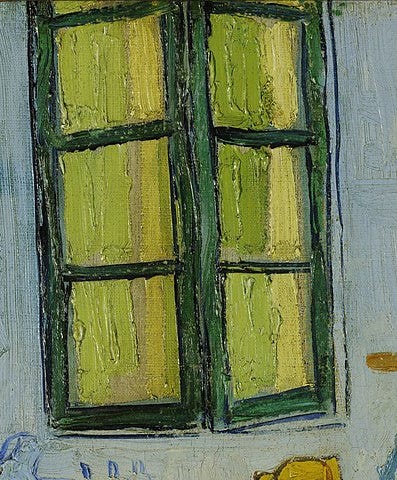
At the back of the room, half hidden by the washstand, a double-leaf window painted in emerald green. The inner shutters are almost fully closed. No direct light gets through.
Yet the window looks out onto Place Lamartine and onto the city he has been painting in recent weeks.
But here, Vincent decides to shut it all out. He writes to Theo: "there is nothing in this bedroom with closed shutters." And: "this is to take my revenge against the forced rest I had to endure."
A few days earlier, he had been confined to bed by nervous exhaustion. He had slept sixteen hours straight.
On October 16, he gets up, takes out a canvas, sets his easel against the bed, and starts painting the room he is in. He finishes it on October 18.
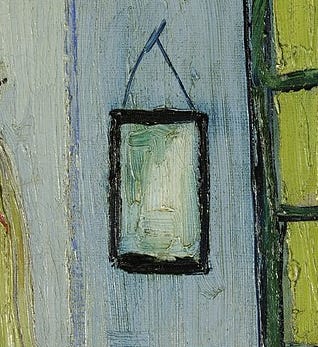
Above the washstand, a small black-framed mirror. It is in front of this mirror that he has painted himself a dozen times since arriving in Arles.
Five days
In mid-October 1888, in the Yellow House, everything is moving fast.
In three weeks, Vincent has spent the equivalent of twenty months of rent on furniture. He has painted four sunflower canvases in a single week to decorate the room next door. He has had the house connected to the gas network so he can paint at night. He has repainted the front of the house yellow.
On October 18, he finishes this bedroom. Nothing is missing.
Five days later, at four in the morning, someone knocks on the front door…