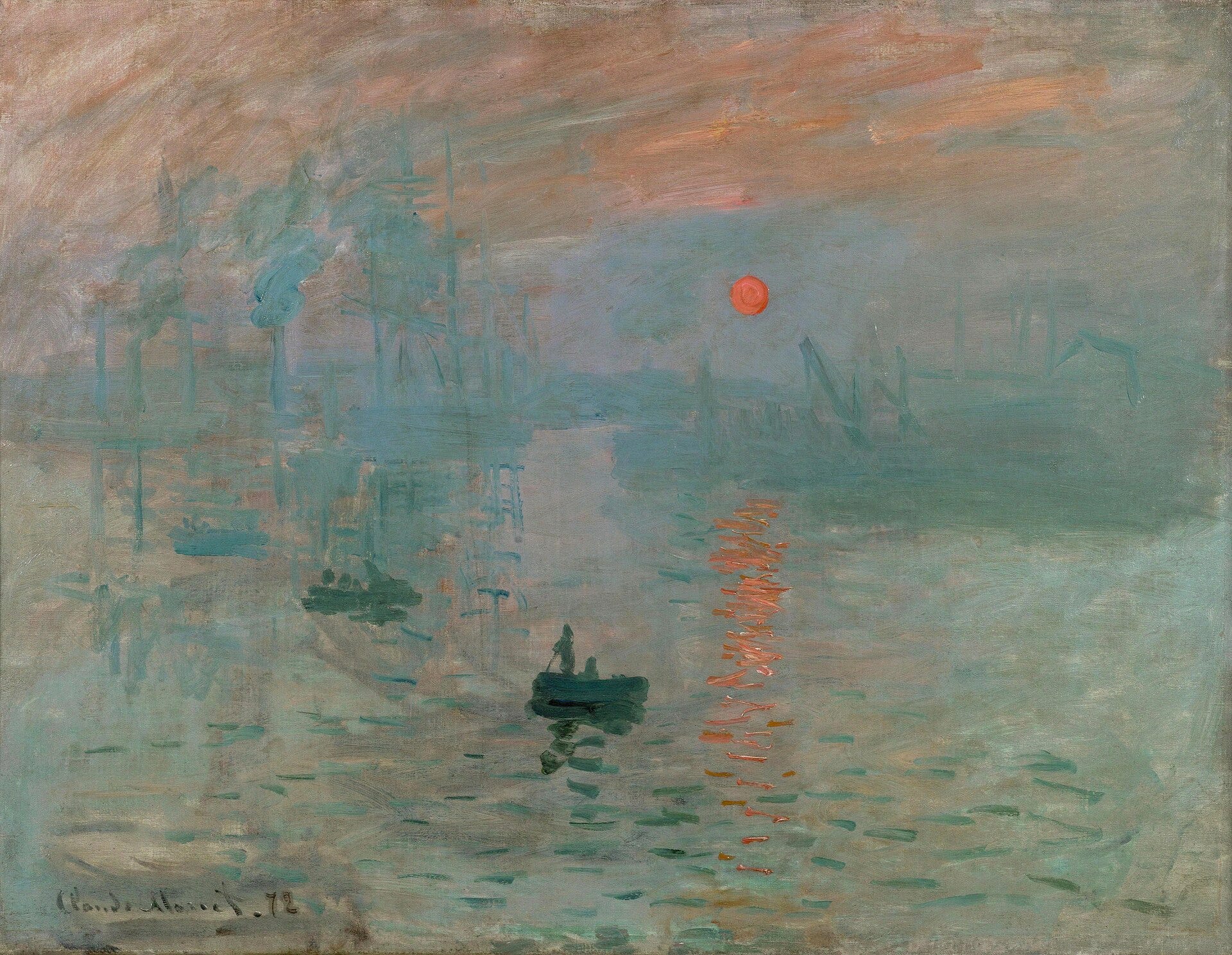
Painting has moved through twenty movements from the fall of Rome to the 1960s, each one a reaction against the one before it. This guide lines them up in the order they happened, from monks painting for God to Warhol painting soup cans, with the paintings that defined each one.
I have written a full guide to each movement already, twelve or more paintings apiece. This page puts them in the order they happened, not alphabetical order, so every entry shows what it was pushing against.
My honest opinion: most people stop learning art history around Impressionism. The second half of this list, everything after 1880, is where painting gets stranger and more worth knowing.
Gothic and Medieval
For a thousand years, from the fall of Rome to the start of the Renaissance, most European painting served one client, the Church. Faces stayed flat on purpose, gold stood in for heaven, and almost nobody signed their name.
Giotto is usually the hinge figure, the first painter to give faces real weight and grief. Twelve works from this thousand year stretch show exactly where that shift starts.
Renaissance

The Renaissance began in Florence in the fourteen hundreds and spread across Italy and then Europe over two centuries. It gave painting linear perspective, real anatomy and a break from flat gold backgrounds.
The Mona Lisa, The Last Supper and The Birth of Venus all come from this one movement. Fourteen of them, including The School of Athens, are gathered in famous Renaissance paintings.
Northern Renaissance
While Florence was painting bodies, the Renaissance north of the Alps went the other way, obsessing over detail instead of scale: a candle flame, a brass pot, a single hair on a dog's back.
Famous Northern Renaissance paintings collects twelve examples of that obsession with the small and the exact.
Baroque
Baroque followed the Renaissance in the sixteen hundreds and traded balance for drama: hard light, violent movement, blunt subject matter.
Caravaggio's Calling of Saint Matthew, Rembrandt's Night Watch and Velazquez's Las Meninas all belong here, thirteen paintings in total, most with a murder, a trial or a scandal attached. The full set is famous Baroque paintings.
Dutch Golden Age
At the same time, painters in the newly independent Dutch Republic were selling to shopkeepers and sea captains instead of kings and popes, so ordinary life became a subject worth painting for its own sake.
Vermeer worked inside this market. Twelve paintings from that one century are collected in famous Dutch Golden Age paintings.
Rococo
After the weight of the Baroque, painting turned light, pastel and a little naughty. Rococo favored gardens and flirtation over Caravaggio's shadows.
Fragonard's The Swing is the one everyone recognizes without knowing its name. It is one of twelve icons in famous Rococo paintings.
Neoclassicism
Rococo's pastel gardens went out of fashion fast once the French Revolution arrived. Neoclassicism replaced them with Roman togas, straight lines and political messages painters actually meant.
Jacques Louis David painted the Revolution itself, twice, in The Death of Marat and The Oath of the Horatii. Twelve paintings that turned ancient Rome into propaganda are in famous Neoclassical paintings.
Romanticism
Romanticism threw out that same cool reason in favor of raw feeling: storms, shipwrecks, freedom, nightmares. It ran through the late seventeen hundreds and early eighteen hundreds, chasing the terror and glory of nature rather than describing it calmly.
Twelve of the greatest, now in the public domain, are in famous Romantic paintings.
The Pre Raphaelite Brotherhood
In 1848, seven British art students, none out of their twenties, decided painting had gone soft since Raphael and set out to fix it. Their paintings glow with jewel color, doomed heroines and buried meaning.
Twelve that still haunt people today are gathered in famous Pre Raphaelite paintings.
Realism
By the middle of the eighteen hundreds, a group of painters got tired of gods, kings and pretty lies, and started painting the world as it actually was: peasants, laborers, the poor and the plain.
Twelve icons of that shift, ordinary life treated as seriously as any myth, are in famous Realism paintings.
Impressionism
Between 1872 and 1897, a group the critics mocked rebuilt what a painting was allowed to look like: a train station full of steam, a Sunday dance, a barmaid staring past the viewer.
I think it is the movement most people picture first when they hear the word art, and the one they know least once you look past the first ten paintings. Twelve that changed painting are in famous Impressionist paintings.
Post Impressionism
Post Impressionism is not one style but four painters who each decided Impressionism had not gone far enough. Van Gogh built color into a private code, Cézanne rebuilt objects out of geometry, Seurat painted in dots, Gauguin left France chasing the paradise he had in his head.
The Starry Night belongs here, not to Impressionism, a mix up I see constantly. Twelve works that pushed past the quick brushstroke are in famous Post Impressionist paintings.
Symbolism
Symbolist painters turned their backs on the visible world and painted the inside of the mind instead: dreams, death, desire and myth. It grew alongside Impressionism while wanting almost the opposite thing from painting.
Twelve dreams and nightmares are collected in famous Symbolist paintings.
Art Nouveau
Art Nouveau was the last great decorative style before the modern world took over, a burst of curling lines, flowers and dreaming women that swept across Europe's posters, buildings and paintings alike around 1900.
Klimt is its most famous painter, though the movement started in graphic design before it reached canvas. Twelve works that defined it are in famous Art Nouveau art.
Fauvism
Fauvism lasted about four years, 1904 to 1908, built almost entirely out of Matisse and Derain painting side by side in the south of France in colors nobody had agreed were realistic.
A critic called them fauves, wild beasts, and meant it as an insult. Twelve paintings from the shortest major movement on this list are in famous Fauvist paintings.
Expressionism
Expressionism threw out the calm, correct picture and put feeling straight onto the canvas, in loud color and jagged line. It took hold in Germany and Austria in the early nineteen hundreds.
Twelve iconic works are in famous Expressionist paintings.
Cubism
Cubism broke a painting into pieces and showed several angles of the same object at once, something no painter before Picasso and Braque had tried on purpose.
It started analytical and nearly monochrome, then turned playful and collaged. Twelve paintings, in the order they were painted, are in famous Cubist paintings.
Surrealism
Surrealism put dreams, fears and free association on canvas, from Dali's melting clocks to Magritte's men in bowler hats. It built a whole visual language for the unconscious mind in the 1920s and 1930s, then handed that language to everyone who came after.
Twelve dreams made real are in famous Surrealist paintings.
Abstract
Abstract painting threw out the visible world completely and painted pure color, line and feeling instead. Kandinsky's storms and Malevich's squares both belong to this movement, which took hold in the early nineteen hundreds and never really left.
Twelve that left the real world are in famous Abstract paintings.
Pop Art
By the 1950s and 1960s, painters were taking soup cans, comic strips and movie stars and putting them on gallery walls at full scale. Pop Art treated advertising and mass production as subjects worth painting seriously, the most recent major turn on this chain.
Twelve that turned ads into art close out this list, at least until the next movement earns its own page. Famous Pop Art paintings has all twelve.
The chain keeps going after Pop Art, movements are still forming today. But the span of this list is worth sitting with on its own: from the first Gothic altarpiece to Warhol's soup cans is about six hundred years. From Impressionism to Pop Art alone is well under a century.
Looking for a painter instead of a movement? The full list is in artists. Looking for a single term explained, like sfumato or chiaroscuro? That is the glossary.
Also worth knowing
Four more movements did not fit cleanly into the chronological chain above, either because they ran alongside a bigger movement or because they cover centuries in one entry rather than a decade or two. Still real, still worth their own page.
Mannerism stretched and distorted the Renaissance on purpose, once painters felt they had nothing left to prove about realism. Twelve paintings are in famous Mannerist paintings.
Academic art was the official, Salon approved style of the 1800s, the one Impressionism was reacting against. Twelve paintings are in famous Academic paintings.
Orientalism is the 1800s European gaze on North Africa and the Middle East, a genre historians now read critically as well as visually. That history is in famous Orientalist paintings.
Byzantine painting covers close to a thousand years of icons and mosaics, most of it made by artists who never signed their names. That span is in famous Byzantine paintings.
Quick answers
What was the first major art movement in painting? Historians usually start with the Gothic period, roughly the twelve hundreds to the fourteen hundreds, before the Renaissance breaks from it.
What is the difference between Baroque and Rococo? Baroque is dramatic and dark. Rococo, which followed it, is light, pastel and playful.
What is the difference between Impressionism and Post Impressionism? Impressionism painted quick impressions of a real scene. Post Impressionism, the generation right after, used the same loose brushwork to build personal systems of color, geometry or symbol instead of copying what was in front of the painter.
Which art movement is the most famous? Impressionism is usually the one people picture first, though the single most famous painting in the world, the Mona Lisa, comes from the Renaissance.
What came right before the Renaissance? The Gothic and medieval period, roughly a thousand years of church commissioned painting before Florence changed the rules.
What is the shortest major art movement in painting? Fauvism, which lasted only about four years, 1904 to 1908.
How many art movements are there in painting? Historians count anywhere from a dozen to more than forty, depending on how finely they split them. This guide covers the twenty most searched for and most taught.