
Auguste Rodin (1840 to 1917) was a French sculptor born in Paris, the creator of The Thinker, The Kiss and The Burghers of Calais. Bronzes of his Gates of Hell stand at the Musée Rodin in Paris and at the Rodin Museum in Philadelphia.
In 1900, Rodin filled a pavilion of his own in Paris with about 150 of his works. By 1912, the Metropolitan Museum of Art in New York had opened a gallery devoted to him alone.
Yet the École des Beaux-Arts, the state art school in Paris, turned Rodin away three times. Later, critics accused him of cheating on his first great statue, and the writers who had ordered his monument to the novelist Balzac refused to accept it.
Cool Stories About Art is a newsletter to learn art the fun way.
Join 200,000+ readers and get:
10 new art stories / month
The entire archive of content (140+ articles)
Comment, ask questions, and chat with other readers
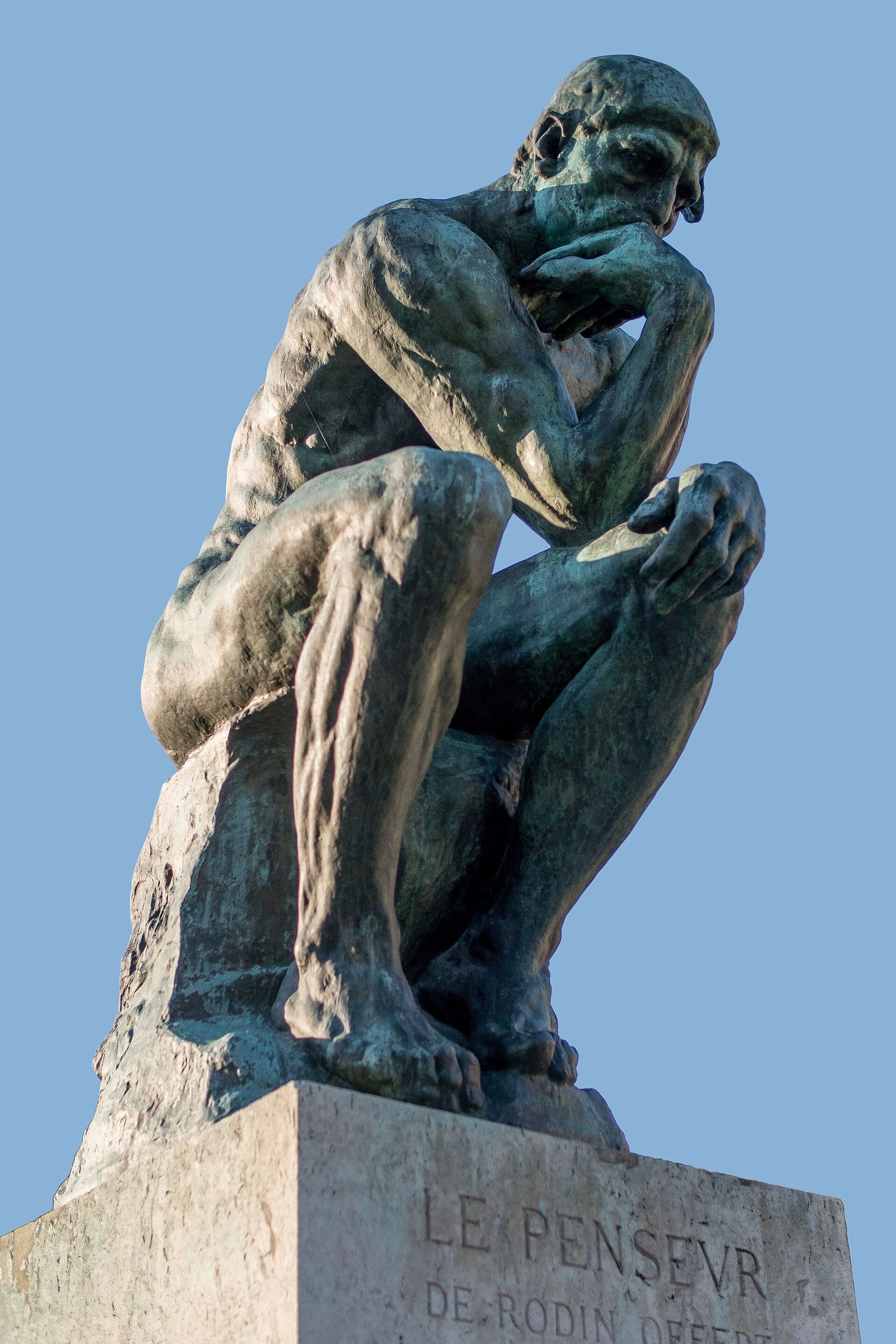
Auguste Rodin was born in Paris on November 12, 1840, into a family with little money. His father worked for the Paris police, and the family lived near the rue Mouffetard, a working-class street of the city.
Young Auguste drew all the time. In 1854, he entered the Petite École, a state school of drawing and mathematics that trained future craftsmen, and he won a first prize in drawing.
Rodin wanted more than a craftsman's trade. He wanted to be a sculptor, and in Paris the surest road to that career ran through the École des Beaux-Arts, the great state school whose students won the official prizes and the first public commissions.
As a teenager, Rodin took the entrance exam of the École. He failed, tried twice more, and each time the school said no.
So Rodin earned his living as a craftsman, carving ornaments in stone and plaster for other people's buildings.
How did a boy turned away three times by the École des Beaux-Arts become the leading sculptor of his age?
In the rest of the story
Why a young Belgian soldier had to pose naked for a photographer.
The two lovers Rodin removed from his giant doors of Hell.
Six men who walked out of a starving town with ropes around their necks.
What the writers who ordered a statue of Balzac called it.