
Figures seen from behind have a German name, Ruckenfigur, and one painter owns the idea: Caspar David Friedrich. The trick is simple and it never stops working. You cannot see the face, so you borrow it. Here is how the device was invented, used and stolen.
Learn art the fun way
What exactly is a Ruckenfigur
A figure placed with its back to the viewer, looking into the picture at the thing we are meant to look at. Not a person we observe, a person we stand behind.
The German word simply means back figure. It became a term of art because of one painter’s obsession with it around 1818.
The German word means back figure. The device works because the viewer is given a stand in: you cannot read the face, so you borrow the posture and look where they look.
The term entered art history through German scholarship in the twentieth century, not from Friedrich himself. He never used the word, and neither did his contemporaries.
Why Friedrich made it famous
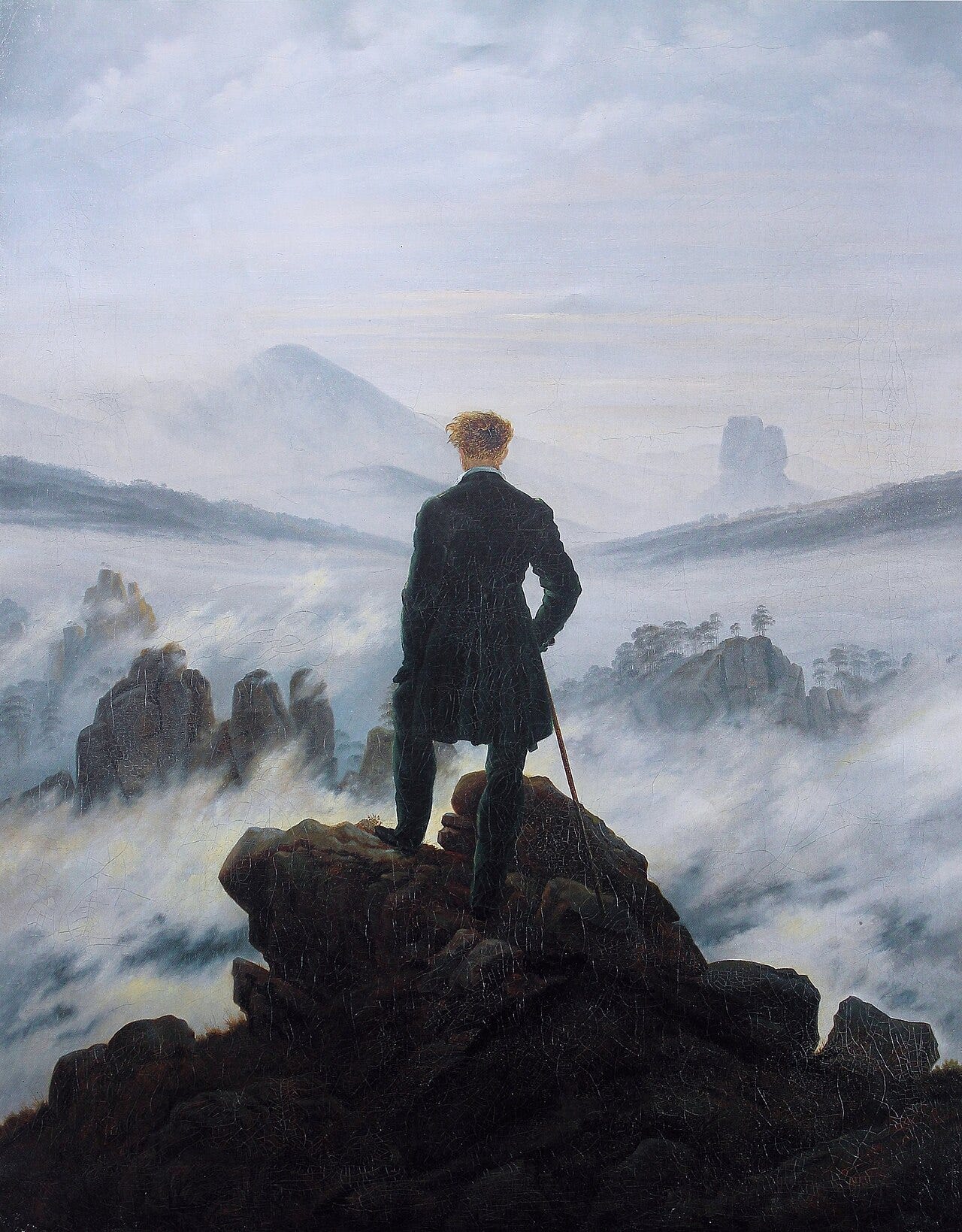
Wanderer above the Sea of Fog puts a man on a rock with his back to us, facing cloud. We never see his expression, so the painting cannot tell us what to feel.
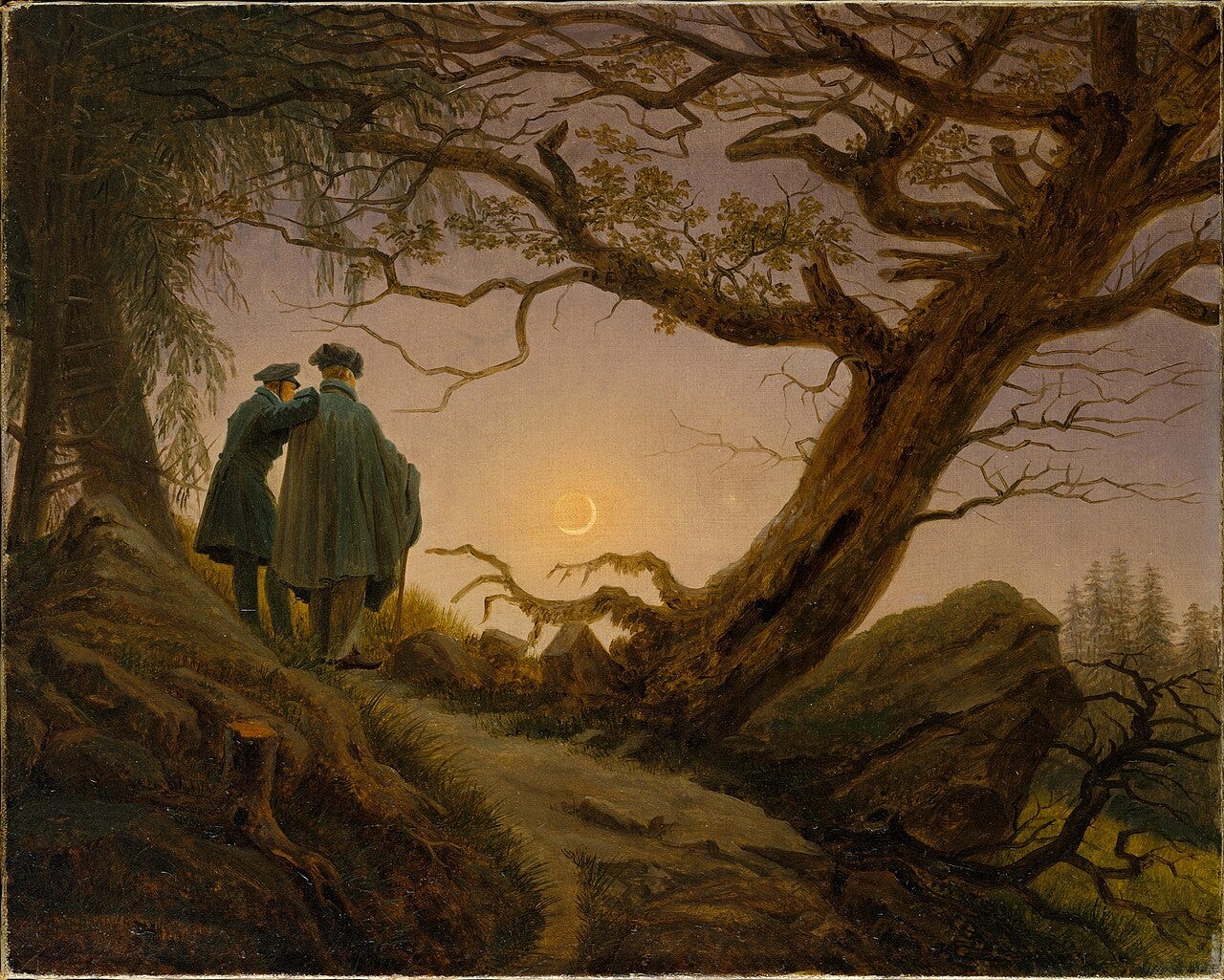
That refusal is the whole point. Friedrich used the device dozens of times: two men watching the moon, a woman at a window, monks on a shore. I go into his whole story in Caspar David Friedrich.
He used it in around a dozen major paintings from about 1808. Wanderer above the Sea of Fog, painted around 1818, is the one everyone reproduces, and the man in the green coat has never been identified.
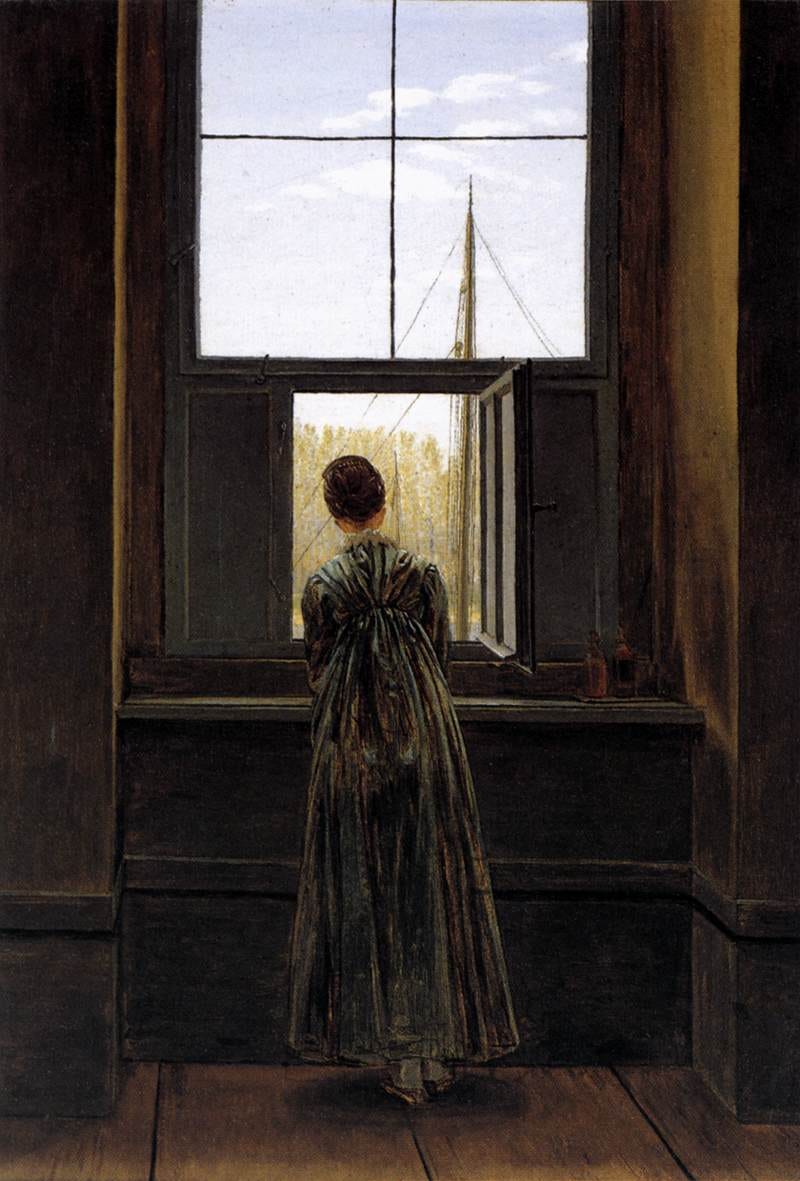
He painted his wife Caroline from behind in Woman at a Window in 1822, looking out at a mast on the Elbe. It is the same device shrunk to a domestic scale, and it is one of the few pictures where we know who the figure is.
Did anyone use it before him
Yes, but as a stage device rather than a subject. Renaissance and Baroque painters put a back turned figure at the edge of a crowd to lead the eye inward, a repoussoir.
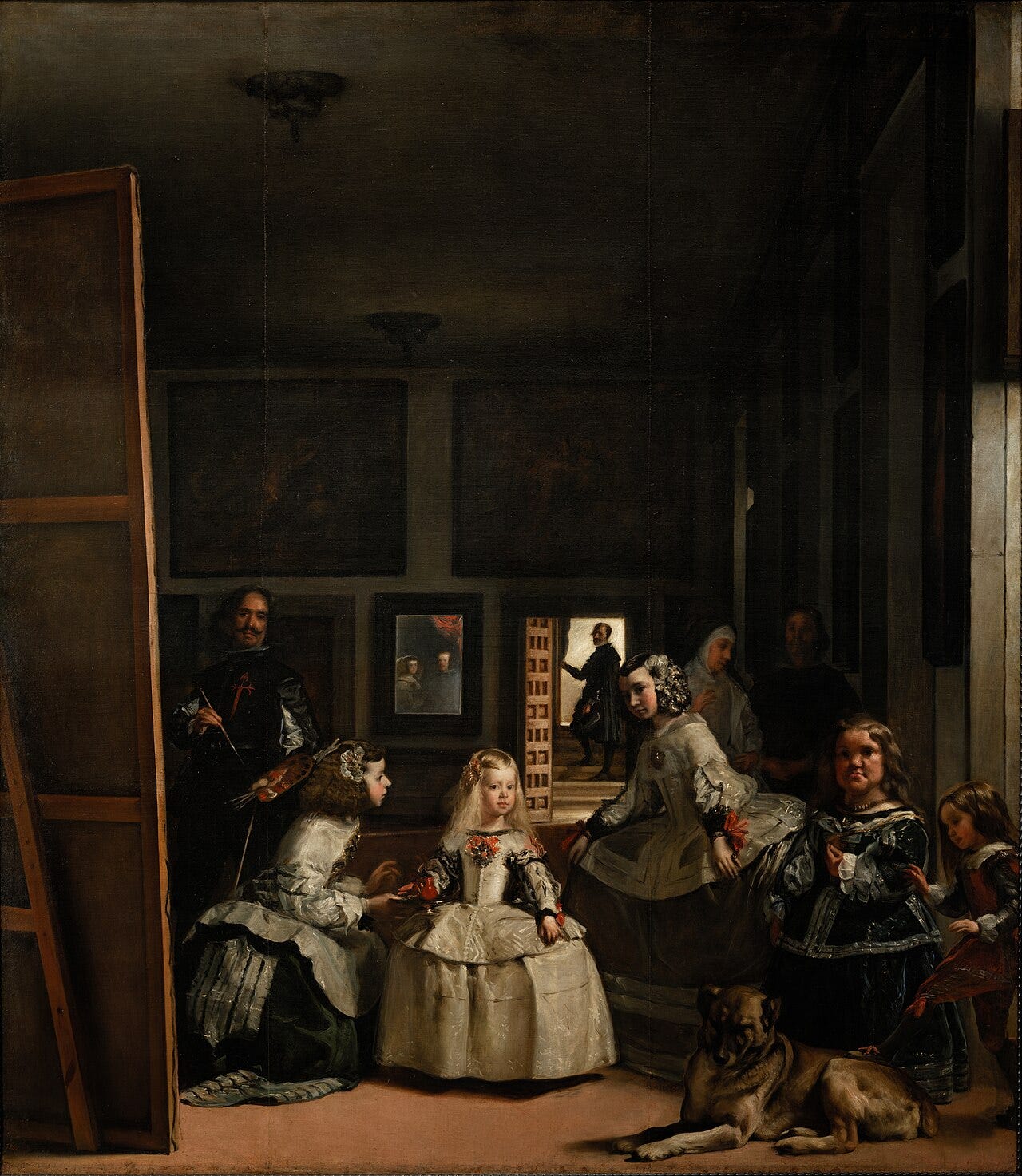
Velazquez does it in Las Meninas with the figure in the doorway. Vermeer does it with the map reader’s shoulder. The difference is that in Friedrich, the back turned figure is the picture. Velazquez More of it in Diego Velazquez.
Yes. Dutch seventeenth century painters put figures with their backs turned in church interiors and streets, and Velazquez did it in Las Meninas with the man in the doorway. Friedrich made it the subject rather than a device.
Where it shows up after Friedrich
Hopper uses it constantly: a woman at a window, a man at a diner counter, a figure looking at the sea. Same device, no romanticism, more loneliness.
Hammershoi built an entire career on the back of one woman in one Copenhagen apartment. Hopper The full account is in Edward Hopper.
Hopper uses it constantly, and so does Hammershoi, whose wife Ida is painted from behind in room after room. In both cases the turned back is what makes the room feel private and the viewer feel like an intruder.
Whistler used it in his nocturnes, and Seurat put dozens of back turned figures into A Sunday on La Grande Jatte, all facing the water. The crowd looks at the river and we look at the crowd.
The version that became a movie shot
Every time a film puts a character in the lower third of the frame staring at a landscape, that is Friedrich’s composition, and directors say so openly.
The Wanderer alone has been reused on book covers, album sleeves and posters so often that the pose reads instantly as contemplation.
The over the shoulder framing in film does the same job, and directors from Tarkovsky to Malick have cited Friedrich by name. The composition survived the jump from canvas to camera without changing.
The one that reverses the trick
Magritte painted a man in a bowler seen from behind, facing a mirror, and the mirror shows his back again. The device is turned into a joke about never seeing a face at all.
That refusal of the face runs through his whole work, apples included. More of it is in hats in art.
A Bar at the Folies Bergere puts the barmaid facing us and her back in the mirror at the same time, so we get both views and neither adds up. Manet turns the device inside out.
Questions people ask about back turned figures
What does Ruckenfigur mean? German for back figure: a person painted from behind, looking into the scene, so the viewer looks with them.
Who invented it? Nobody invented it, but Caspar David Friedrich turned a compositional trick into the subject of the painting around 1818.
Why does it work? Because a hidden face cannot tell you what to feel. The viewer fills in the emotion, which makes it theirs.
Which painters use it most? Friedrich, then Hammershoi and Hopper, and after them nearly every film director who frames a character facing a view.
Where can I see the Wanderer? The Hamburger Kunsthalle in Hamburg, which owns it and rarely lends it.
Two collections for looking further
The Met and the Rijksmuseum both hold Romantic landscapes where you can watch the device at work in the corner of larger scenes.
One thing I would add: Friedrich almost never painted a face turned toward the viewer in his mature landscapes. In a career of about 40 years, that is a remarkably disciplined refusal.
This subject is one thread in a wider theme. See how it fits into Portraiture and the Human Figure in Art.