
Balance in art is how a painting distributes visual weight. There are three main kinds: symmetrical, where the two halves mirror each other, asymmetrical, where unequal masses still feel stable, and radial, where everything spins out from a center.
Balance in 30 seconds
Symmetrical balance mirrors left and right. It reads as sacred, official, and calm.
Asymmetrical balance offsets a big mass with a small one that has more pull: a face, a bright color, an empty space.
Radial balance arranges everything around a center point, like a wheel or a rose window.
Visual weight is not size. A tiny red dot can outweigh a gray mountain.
Painters break balance on purpose. A picture slightly off keeps your eye working.
Symmetry: Raphael, The School of Athens (1509-1511)
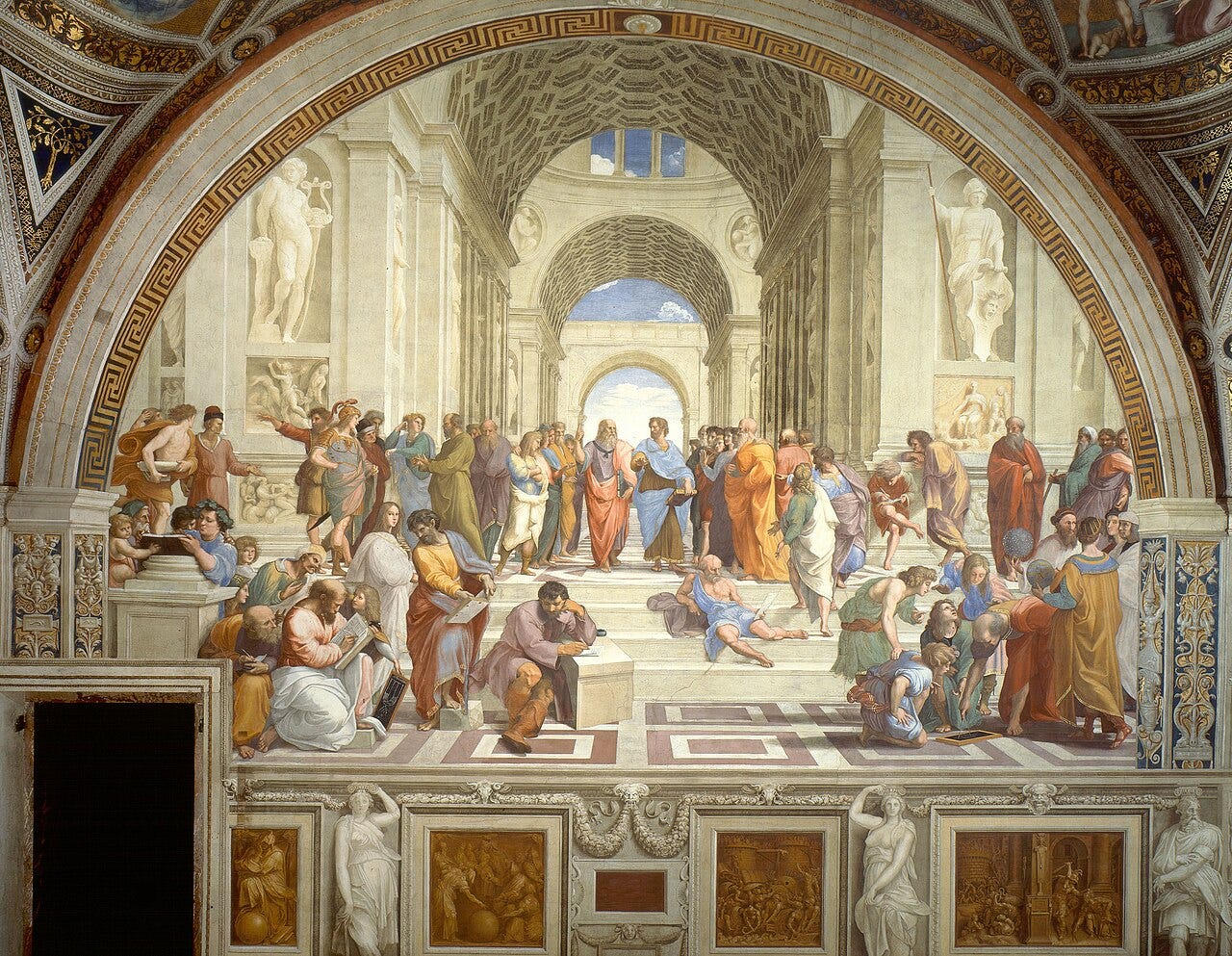
The architecture is a perfect mirror, arch behind arch, folding around Plato and Aristotle at the exact center. Raphael used symmetry the way courts use a throne: to declare where importance sits.
He slipped one latecomer onto the marble steps: a brooding Heraclitus with the face of Michelangelo, added after Raphael saw the Sistine ceiling next door.
Symmetry: Leonardo, The Last Supper (1495-1498)
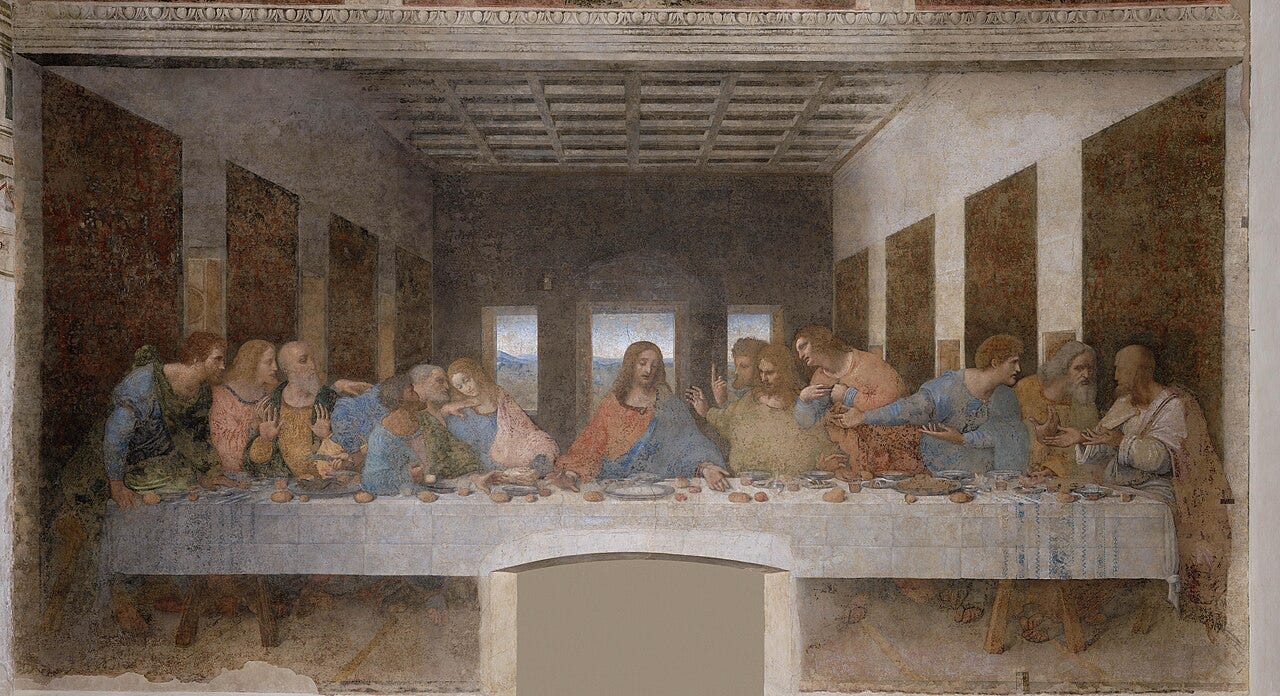
Christ forms a calm triangle at dead center, the vanishing point at his head, while the apostles erupt in four matched groups of three on either side. Order in the middle, panic at the edges. Leonardo balanced a scandal like an equation.
We unpacked every detail of it, group by group, in our story on The Last Supper.
Symmetry: Jan van Eyck, The Ghent Altarpiece (1432)
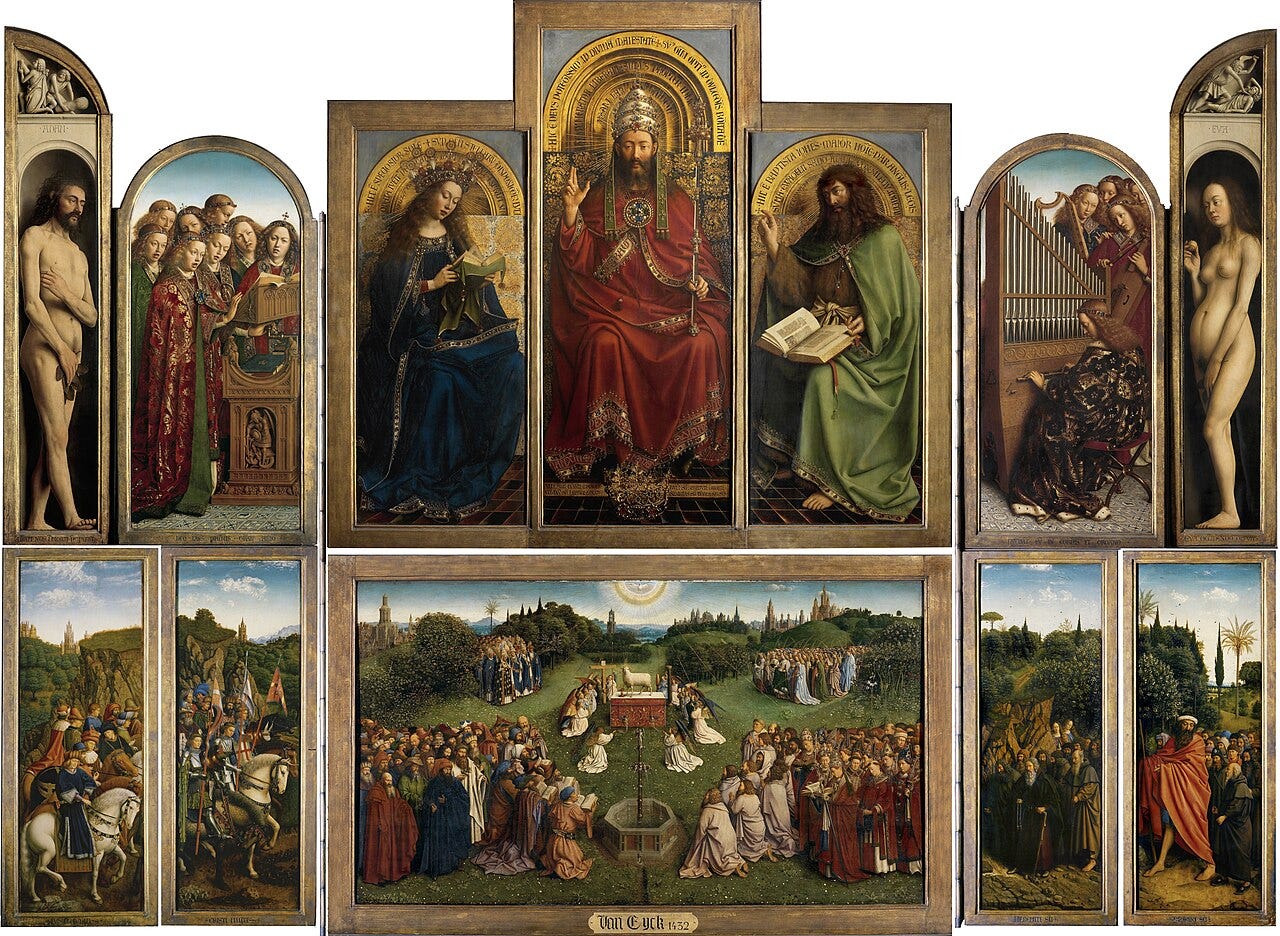
A strict sacred axis stacks God, the dove, and the Lamb straight down the middle, with matching wings of saints on both sides. Van Eyck built symmetry as theology: nothing holy sits off center.
It is also the most stolen artwork in history, stolen seven times. One panel, the Just Judges, vanished in 1934 and has never been found.
Learn art the fun way


Asymmetry: Degas, In a Café (L’Absinthe) (1876)
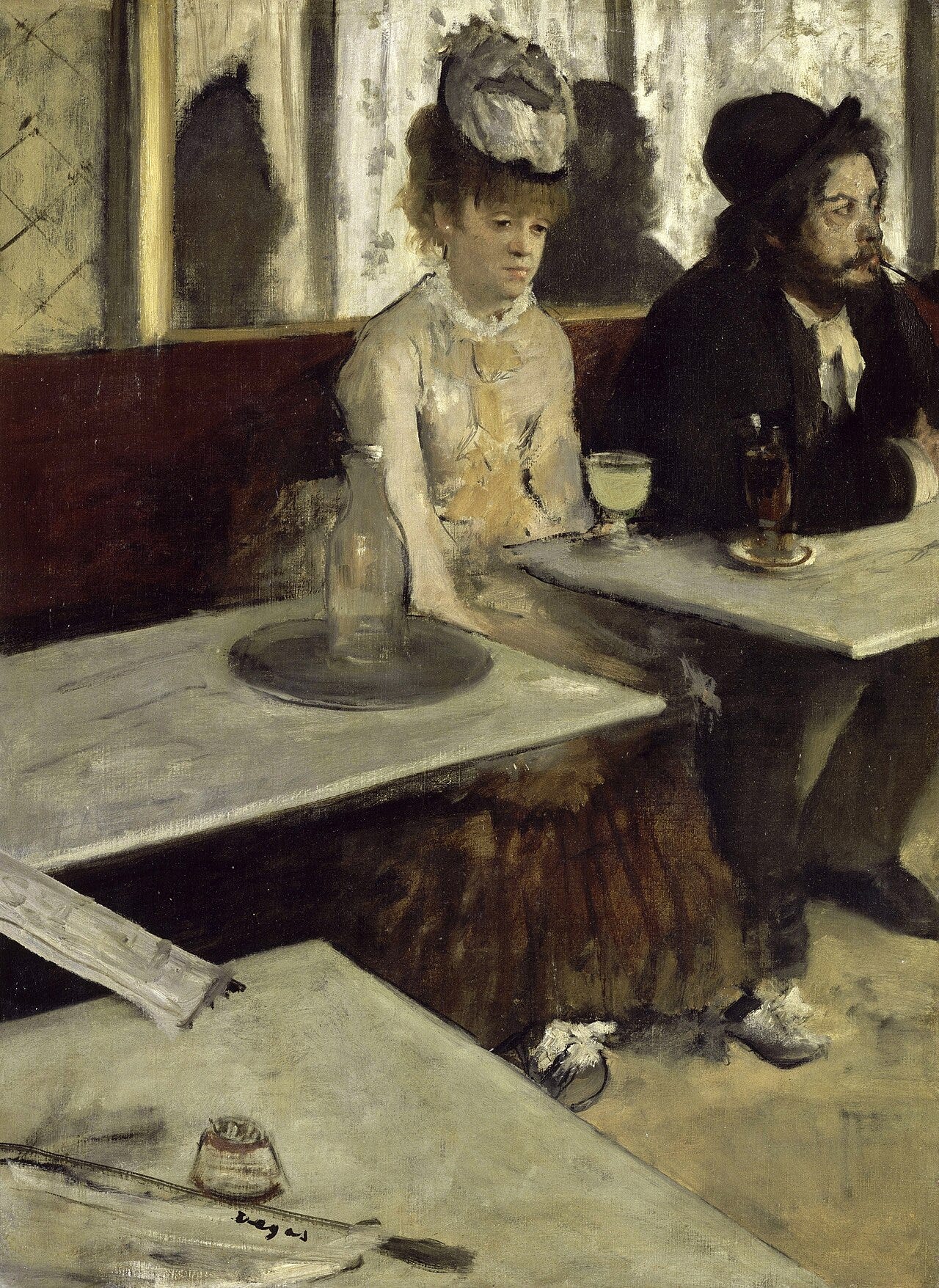
The two figures are shoved into the upper right, and the whole front left of the picture is empty marble tabletops. Degas learned those tilted, cropped viewpoints from photography and from Japanese prints, and the emptiness weighs as much as the people.
At its London auction in 1892 the picture was hissed in the saleroom, and when it went on show the next year the press scandal grew so loud that its embarrassed new owner quickly sold it on.
Asymmetry: Hokusai, The Great Wave off Kanagawa (c. 1831)
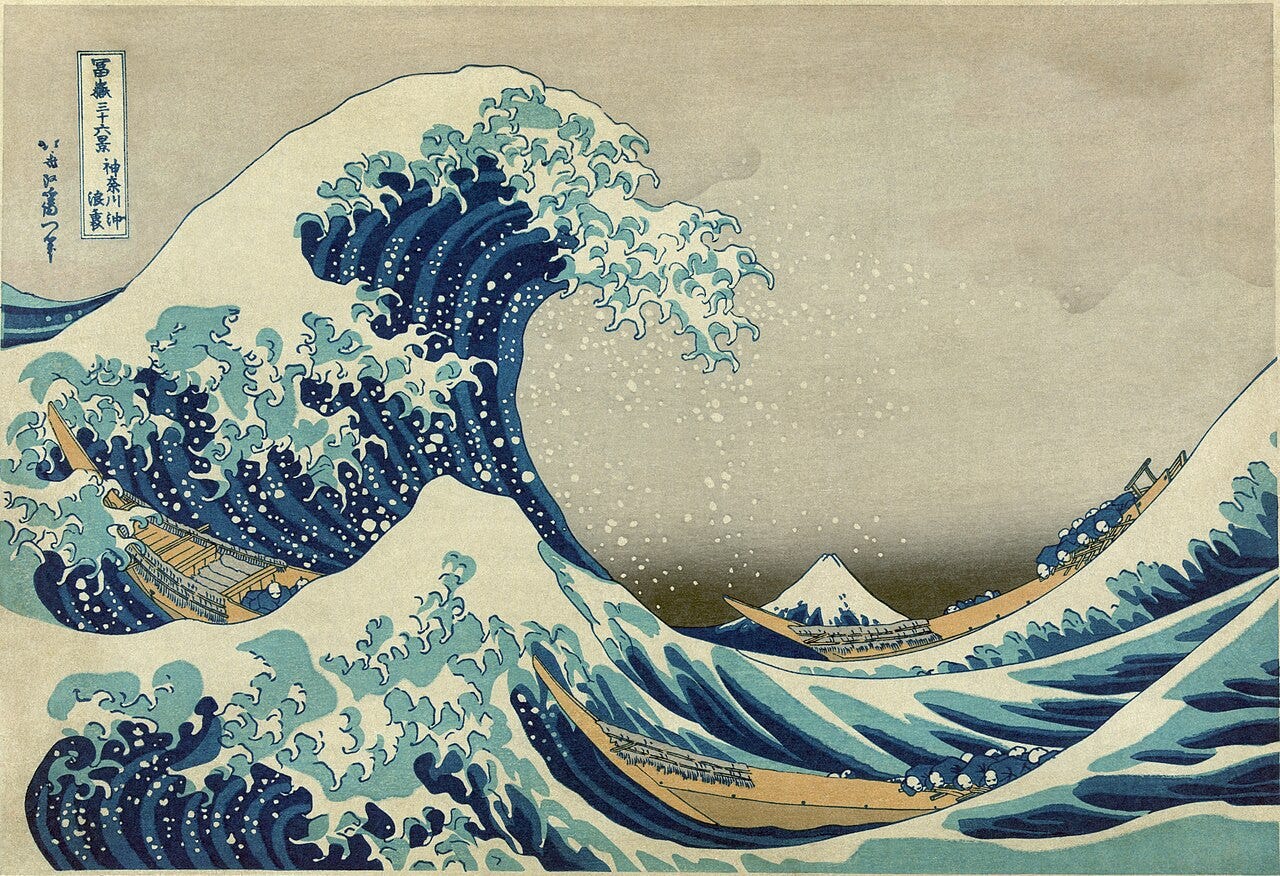
All the mass towers on the left; the counterweight is a tiny, distant Mount Fuji on the right. The imbalance is the motion: your eye keeps falling with the wave. Hokusai made instability feel inevitable. Beyond the Wave itself, that single print takes its place among twelve landmark Japanese paintings and prints worth knowing.
Asymmetry: Whistler, Nocturne in Black and Gold, The Falling Rocket (1875)
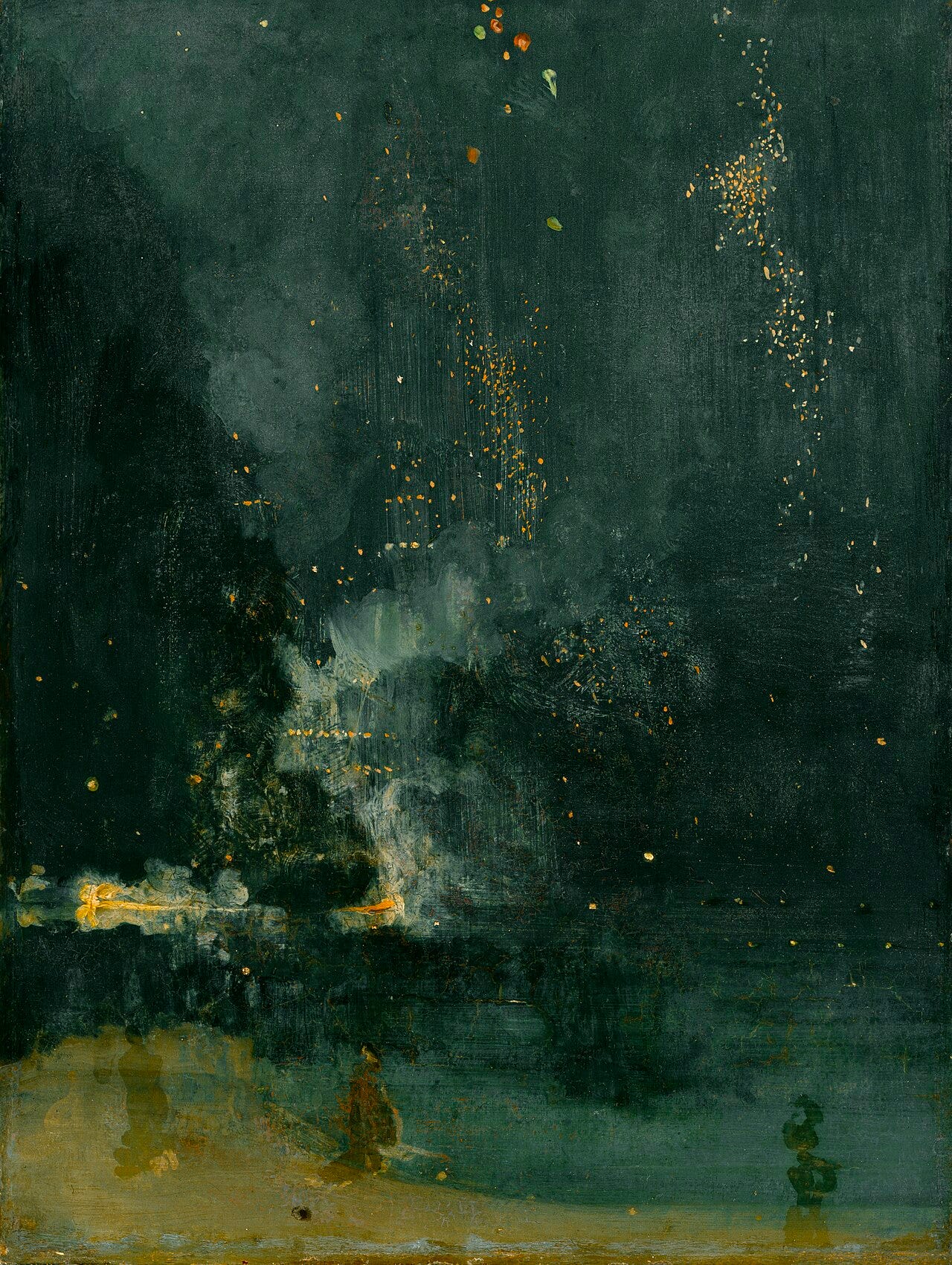
No center, no anchor: a dark riverbank low on one side and a drift of falling sparks scattered across the night. Whistler balanced the picture on tone alone.
The critic John Ruskin accused him of flinging a pot of paint in the public’s face. Whistler sued for libel, won, and was awarded exactly one farthing.
Radial: the north rose window of Notre-Dame (c. 1250)
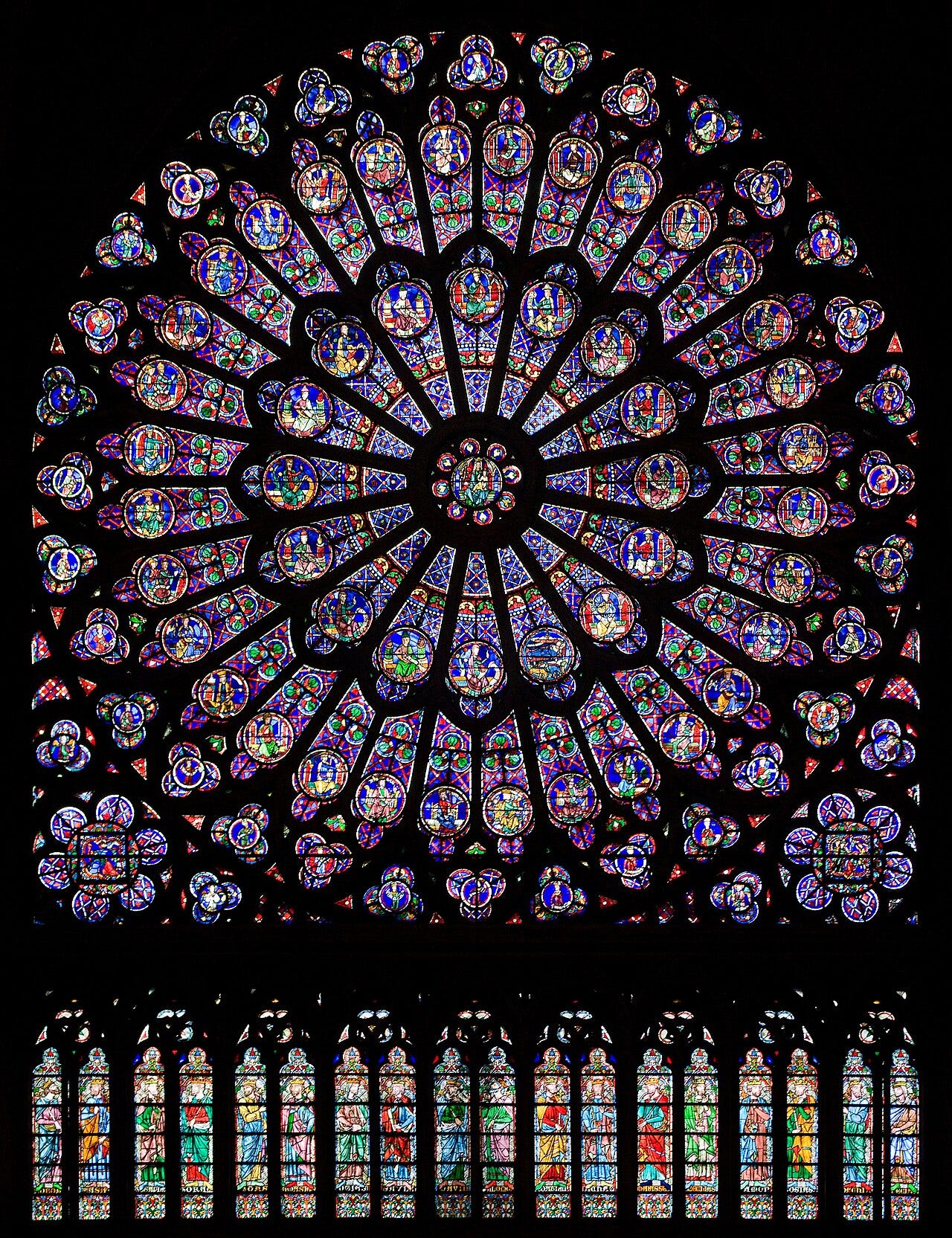
Radial balance is the geometry of heaven: dozens of stone petals and glass medallions wheeling around the Virgin at the hub, drawn with little more than a compass and a rope.
The north rose still holds much of its 13th century glass, and it survived the fire of 2019.
Radial: a Tibetan sand mandala
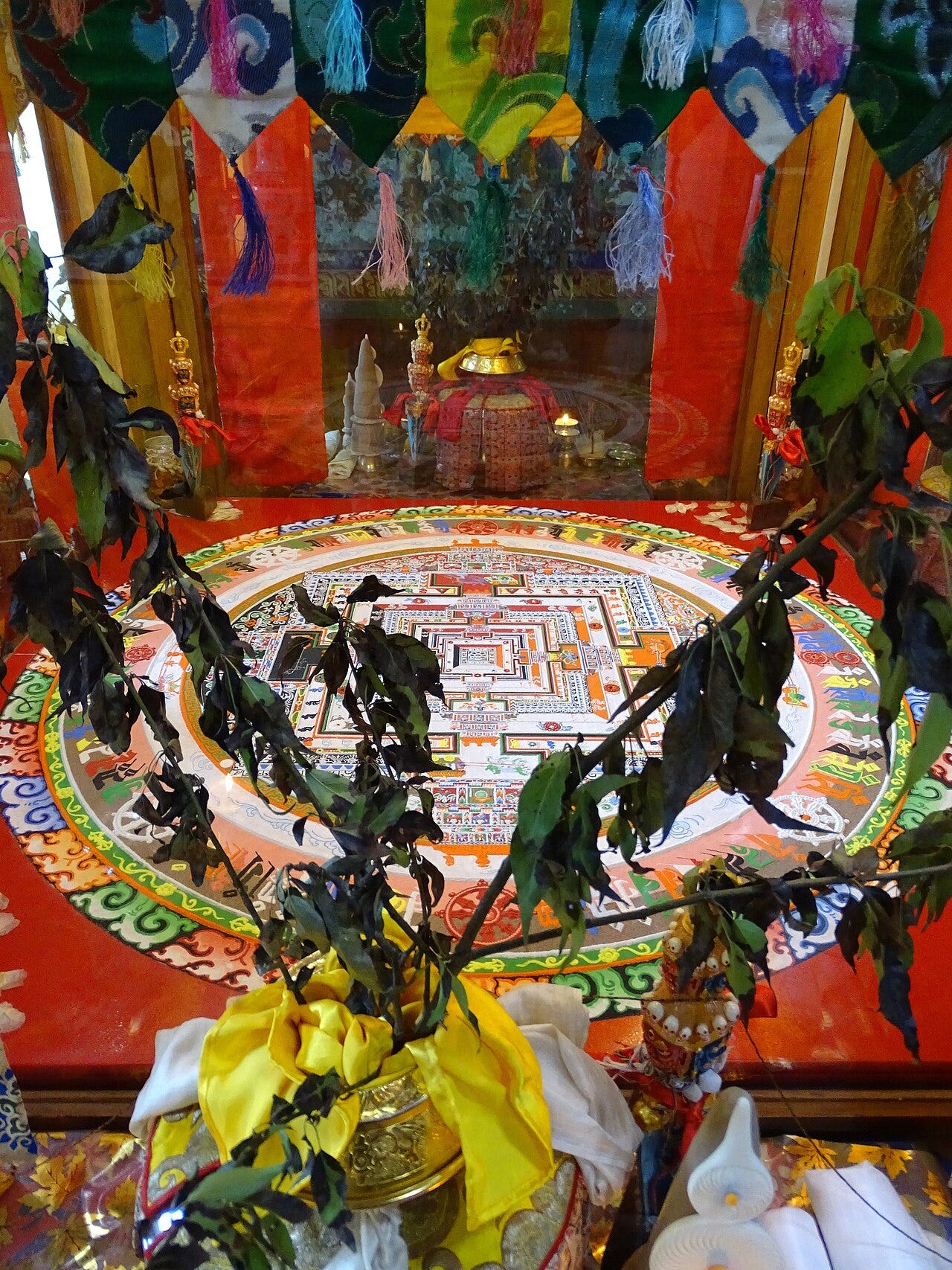
A mandala is radial balance made into a discipline: every grain of colored sand mirrored through the center, quadrant by quadrant, over days of work.
Radial: Robert Delaunay, The First Disc (1913)
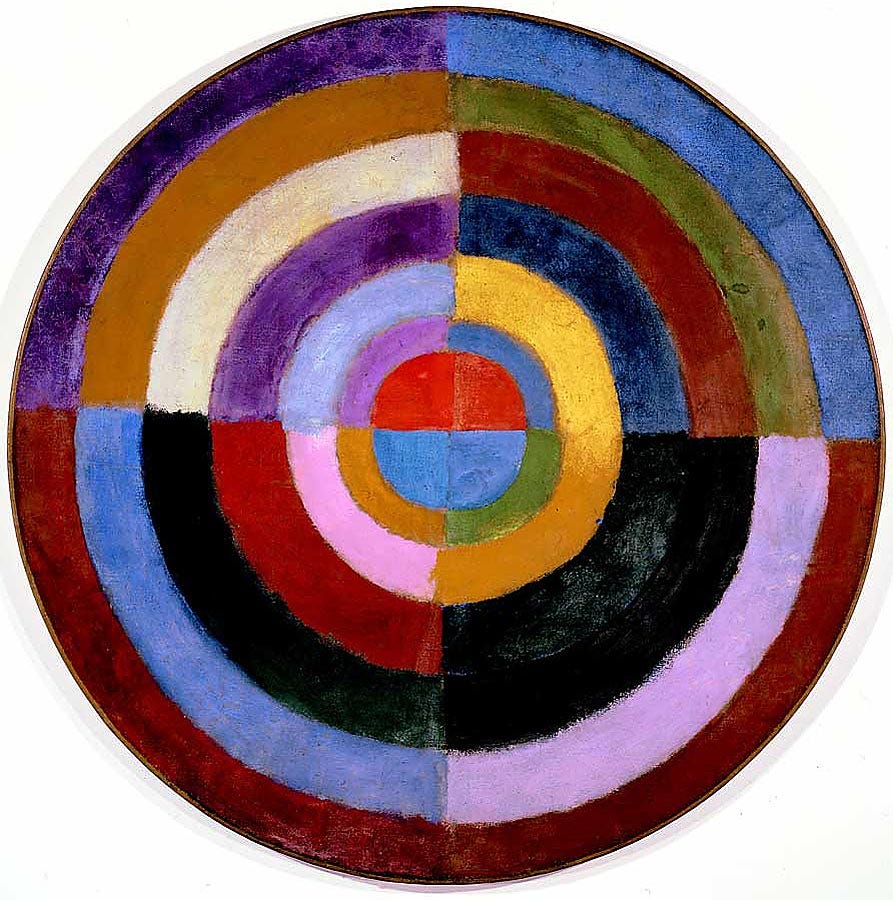
Concentric rings of color with no up, no down, no subject. Delaunay took the rose window’s geometry and threw away the saints, leaving pure rotation. It stands among the first fully abstract paintings in France.
The double: Titian, Sacred and Profane Love (1514)
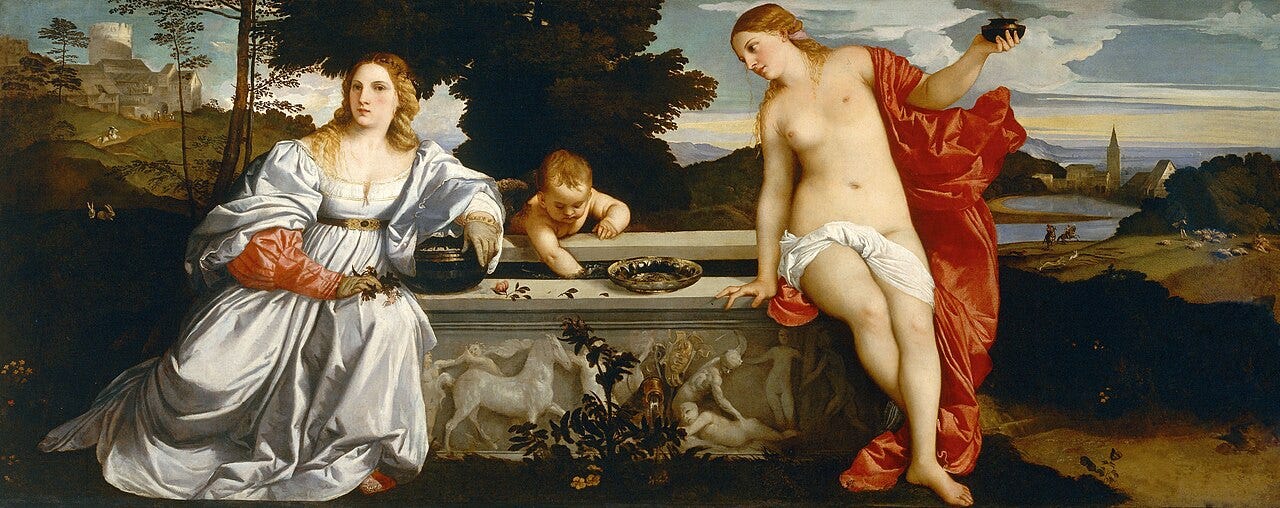
Two women, nearly twins, seated at the two ends of one marble fountain: one dressed, one nude, with a child stirring the water between them. Titian balanced the canvas like a scale, and five centuries later scholars still argue about which figure is which.
Frida Kahlo pulled the same trick in The Two Fridas in 1939, two versions of herself holding hands, hearts exposed and connected by one artery.
Broken symmetry: Botticelli, The Birth of Venus (c. 1485)
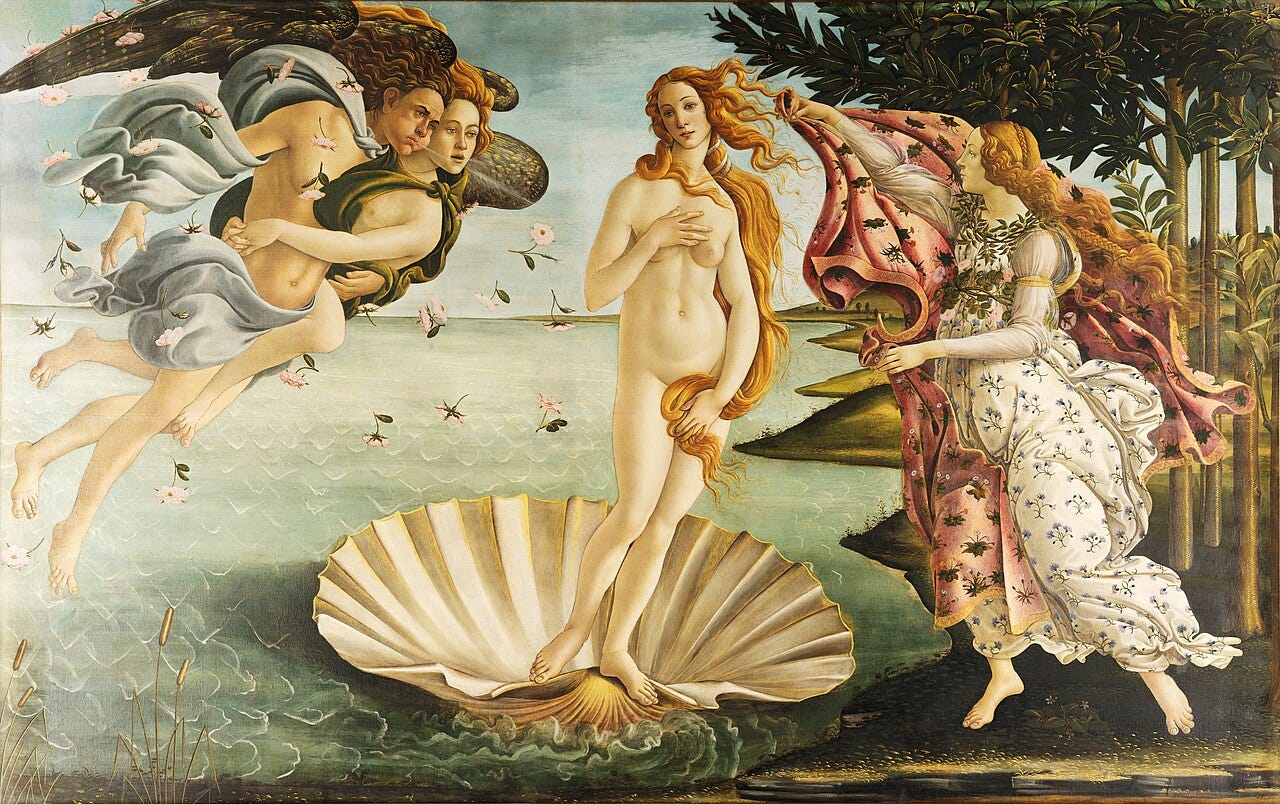
Venus stands at the center, but nothing else obeys: two wind gods crowd in from the left while a single figure lunges from the right with a cloak. Botticelli set up symmetry and then tilted it, so the goddess seems to drift ashore rather than pose.
Complex balance: Velázquez, Las Meninas (1656)
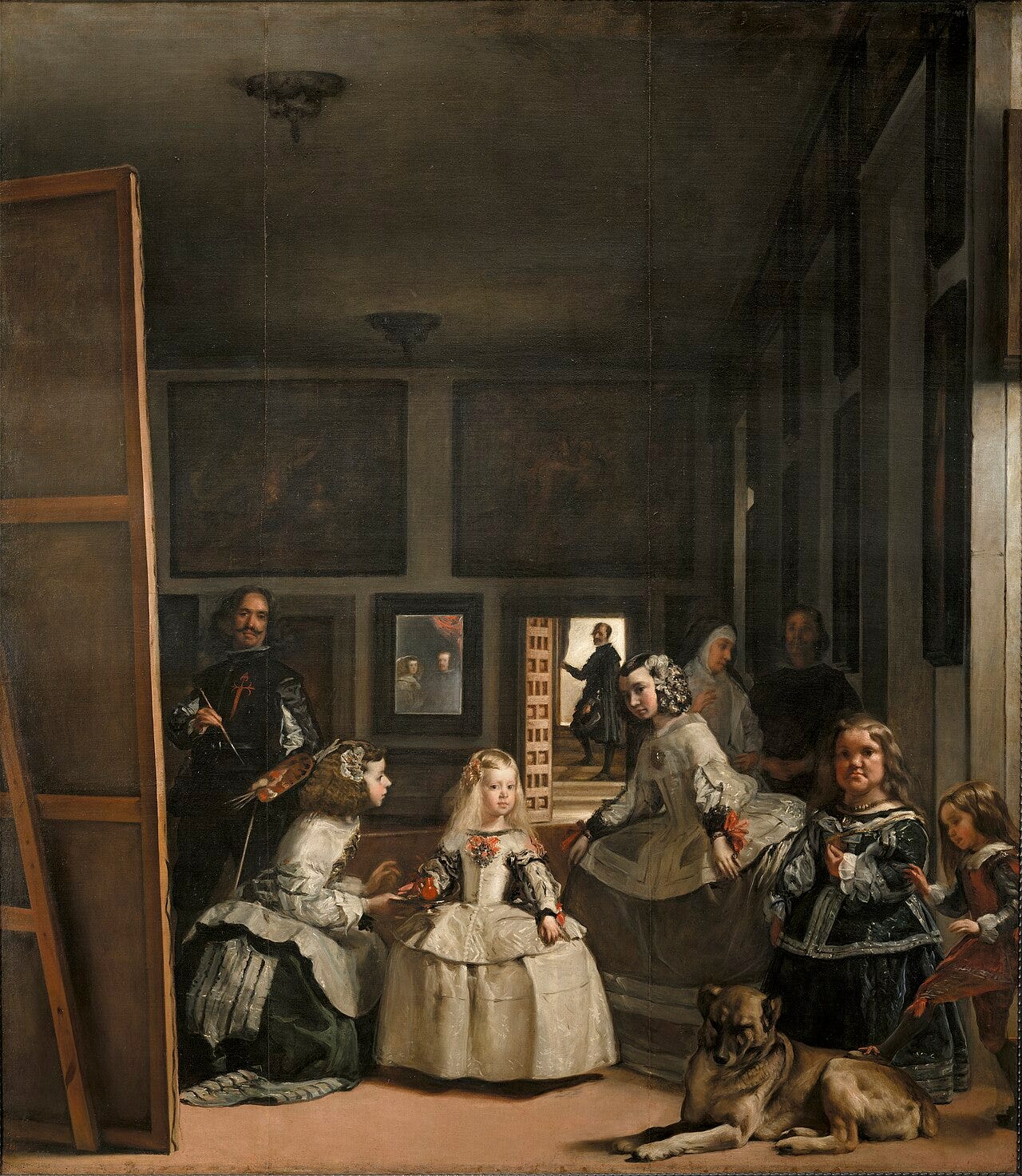
The masses are wildly unequal: a huge dim canvas looms on the left, a bright princess stands low in the middle, a mirror and an open door glow at the back. Velázquez balanced it all with light, aiming your eye in a loop that never settles.
You Might Also Like


Balance is one of eleven principles that organize a composition. See how it connects to the rest in the guide to every element and principle of art. It connects closely to emphasis in art. It also relates to proportion in art. It also echoes harmony in art. It also builds unity in art.
Quick answers
What are the 3 types of balance in art? Symmetrical (mirrored halves), asymmetrical (unequal masses that offset each other), and radial (elements arranged around a center). Most real paintings mix them.
What is asymmetrical balance? Stability without mirroring: a large mass on one side offset by a smaller element with more visual pull, like a bright color, a face, or emptiness. The Great Wave is the textbook case.
What is radial balance in art? Everything radiates from a central point, as in rose windows, mandalas, and Delaunay’s discs. It reads as complete and self-contained.
Why is balance important in a painting? It controls whether the image feels calm or tense. Painters choose symmetry for authority, asymmetry for life, and imbalance, deliberately, for unease.
Where to see these works
The School of Athens is in the Vatican, and The Last Supper is on a refectory wall in Milan, by timed ticket. The Ghent Altarpiece is in Saint Bavo’s Cathedral in Ghent.
L’Absinthe hangs in the Musée d’Orsay in Paris, The Falling Rocket in the Detroit Institute of Arts, Sacred and Profane Love in the Galleria Borghese in Rome, The Birth of Venus in the Uffizi in Florence, and Las Meninas in the Prado in Madrid.
One last fact
After days of building a sand mandala grain by grain, Tibetan monks sweep it away in minutes and pour the sand into a river. The most perfectly balanced works on this list are the ones made to disappear.