
Benvenuto Cellini (1500 to 1571) was an Italian goldsmith and sculptor, born and buried in Florence. He worked for two popes in Rome, for King Francis I of France and for the Medici, the family that ruled Florence.
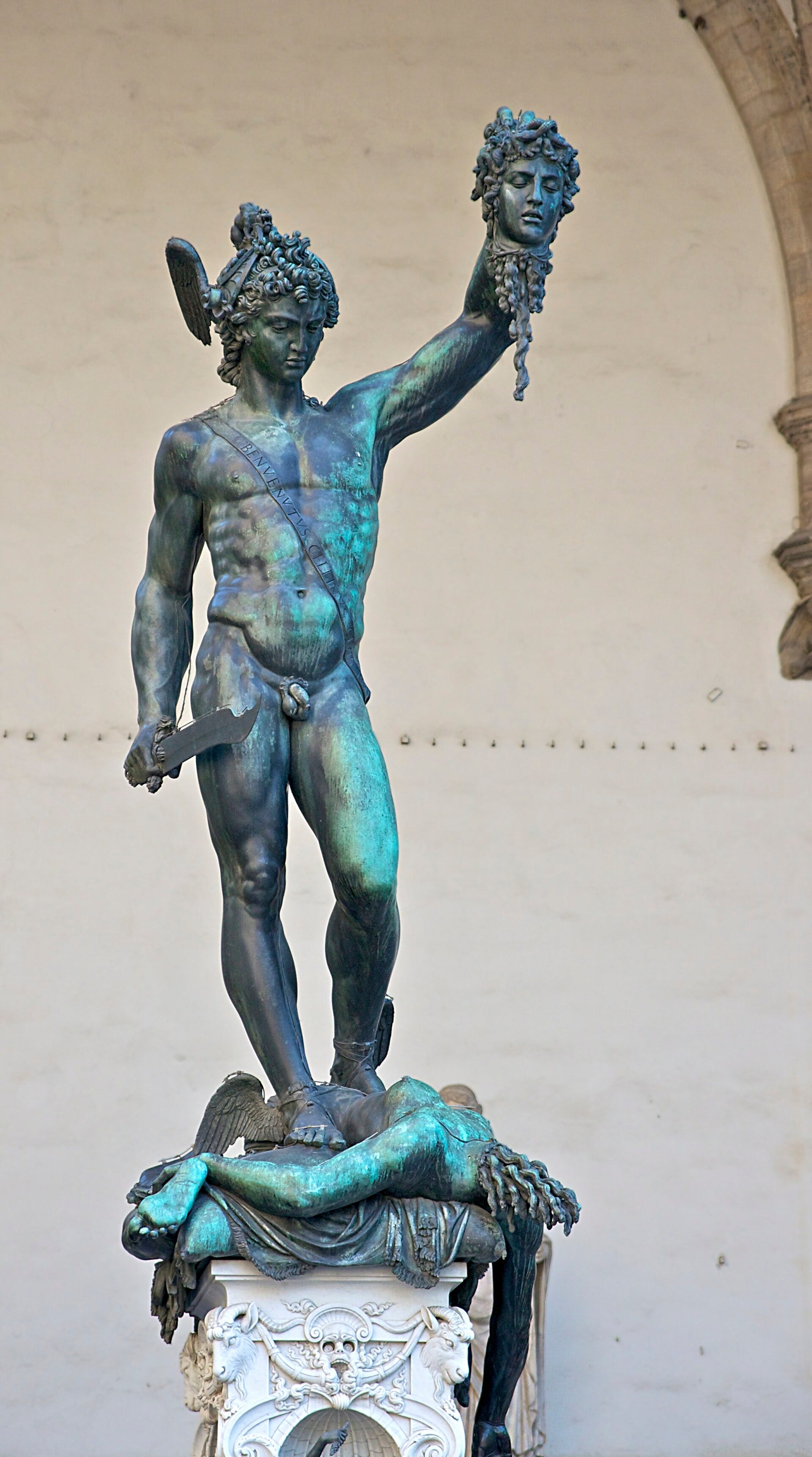
Two works made Cellini famous. The bronze Perseus, on the main square of Florence, shows a Greek hero holding up the severed head of the monster Medusa. The golden Salt Cellar, a table container for salt, was made for the king of France.
Cellini also wrote the story of his own life, the Vita, Italian for "the Life," and its wildest scenes rest on his word alone. One killing is certain: in 1534, he stabbed a rival goldsmith to death on a street in Rome.
Cool Stories About Art is a newsletter to learn art the fun way.
Join 200,000+ readers and get:
10 new art stories / month
The entire archive of content (140+ articles)
Comment, ask questions, and chat with other readers
In 1534, Benvenuto Cellini was thirty-three and one of the finest goldsmiths in Rome, the city of the popes. His fiercest rival was Pompeo de' Capitaneis, a goldsmith from Milan, a city in northern Italy.
Both men worked for Pope Clement VII. Pompeo weighed the gold and the silver at the Mint, the workshop that struck the pope's coins, and Cellini designed coins for the pope. Cellini saw Pompeo as his most envious enemy.
Clement VII died on September 25, 1534, and for almost three weeks Rome had no pope. Cellini tells the days that followed in the Vita. He was sitting with friends in the Banchi, the street of the bankers, when Pompeo walked by with ten armed men.
Pompeo stopped in front of Cellini and laughed at him, and his men laughed too. Cellini's friends wanted to draw their swords, but he held them back.
A little later, Pompeo went into an apothecary's shop, a seller of medicines, on a street corner. When he came out, his armed men closed ranks around him. Cellini pushed through them with a small dagger and killed his rival in the street. The date was September 26, 1534, the day after the pope's death.
Pompeo's men had seen everything, in the middle of Rome. Yet Cellini went on working for a new pope, for the king of France and for the duke of Florence. Why did they keep a killer in their service?
In the rest of the story, you'll find out:
why Cellini walked free after stabbing his rival in the middle of Rome
who pulled Cellini out of the pope's dungeon and sent him to the king of France
how a golden salt cellar made for the king of France vanished from a Vienna museum in 2003
what Cellini left out of the book that made him famous