
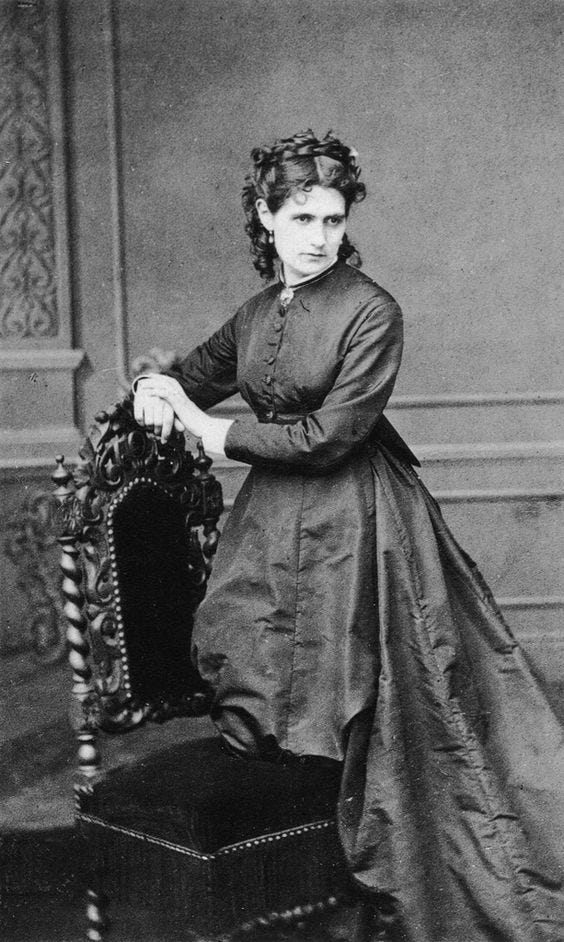
Berthe Morisot was a French painter, born in Bourges on January 14, 1841, who died in Paris on March 2, 1895. She was one of the founders of Impressionism and the only woman in its first exhibition, in 1874.
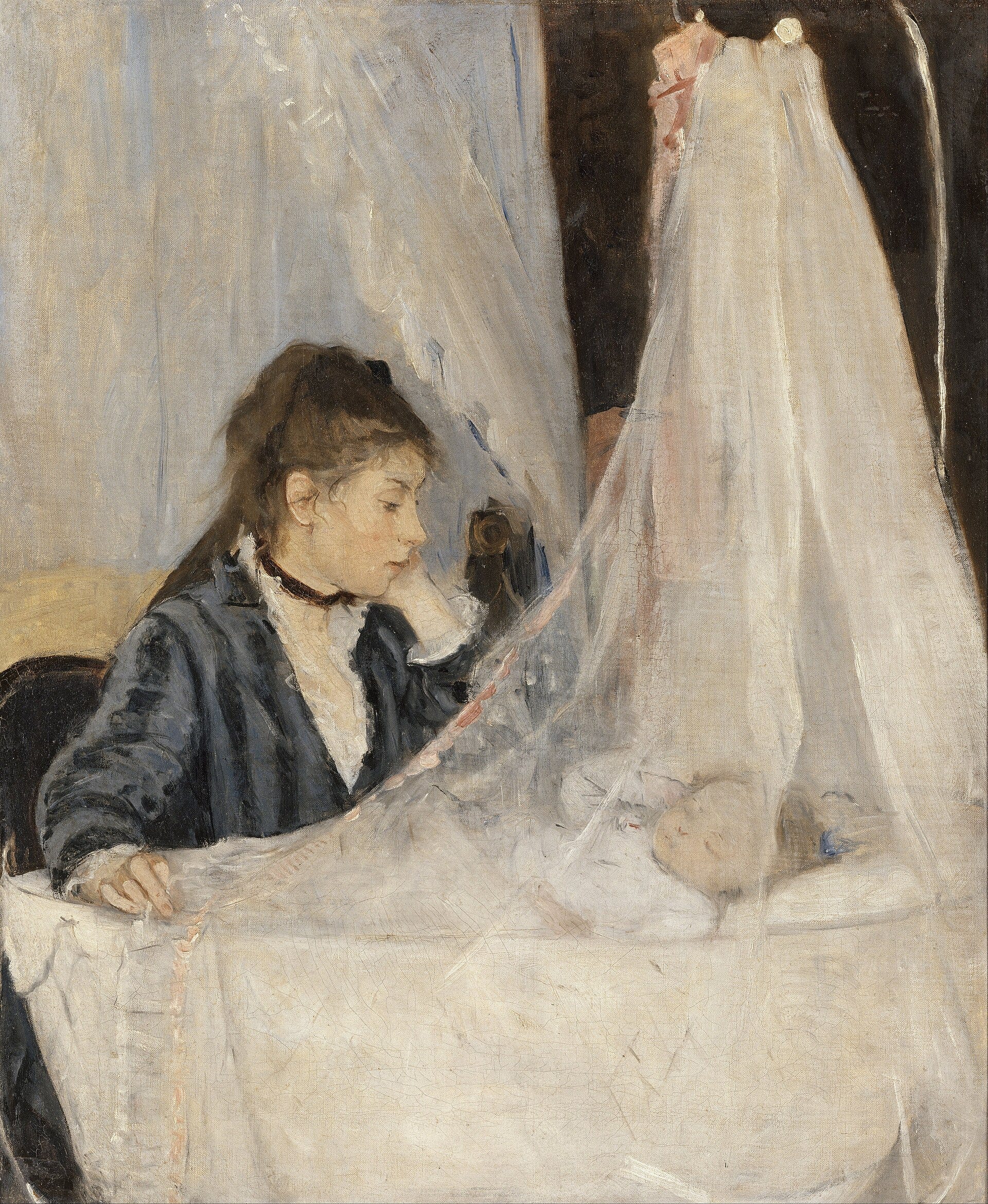
Her canvases show women, children and gardens, the rooms and parks of a well-off Parisian family. She is also the face in a series of portraits by Édouard Manet, painted before she married his brother.
That comfortable world also decided what a woman was allowed to do. Her sister Edma, who learned to paint beside her, gave up painting when she married.
Berthe refused to give it up, and when she showed her work in Paris, the critics laughed at it.
Cool Stories About Art is a newsletter to learn art the fun way.
Join 200,000+ readers and get:
10 new art stories / month
The entire archive of content (140+ articles)
Comment, ask questions, and chat with other readers
On April 15, 1874, a group of painters tired of the Salon, the official yearly exhibition in Paris, opened a show of their own. It filled rooms on the boulevard des Capucines that the photographer Nadar had once used as his studio.
Morisot hung The Cradle there. Under a veil of white netting a baby sleeps, her niece Blanche, and the young woman watching over the child is Blanche's mother, Berthe's sister Edma.
Morisot put a price on the picture and found no buyer, and the press was no kinder.
When the group held its second show in 1876, a critic in Le Figaro wrote of five or six lunatics, one of whom is a woman, and he meant Morisot.
The French state, which bought art for the national museums, would not buy a single canvas of hers for another twenty years. When it finally did, it was because a friend of hers, the poet Stéphane Mallarmé, pushed for it.
Two sisters at the easel
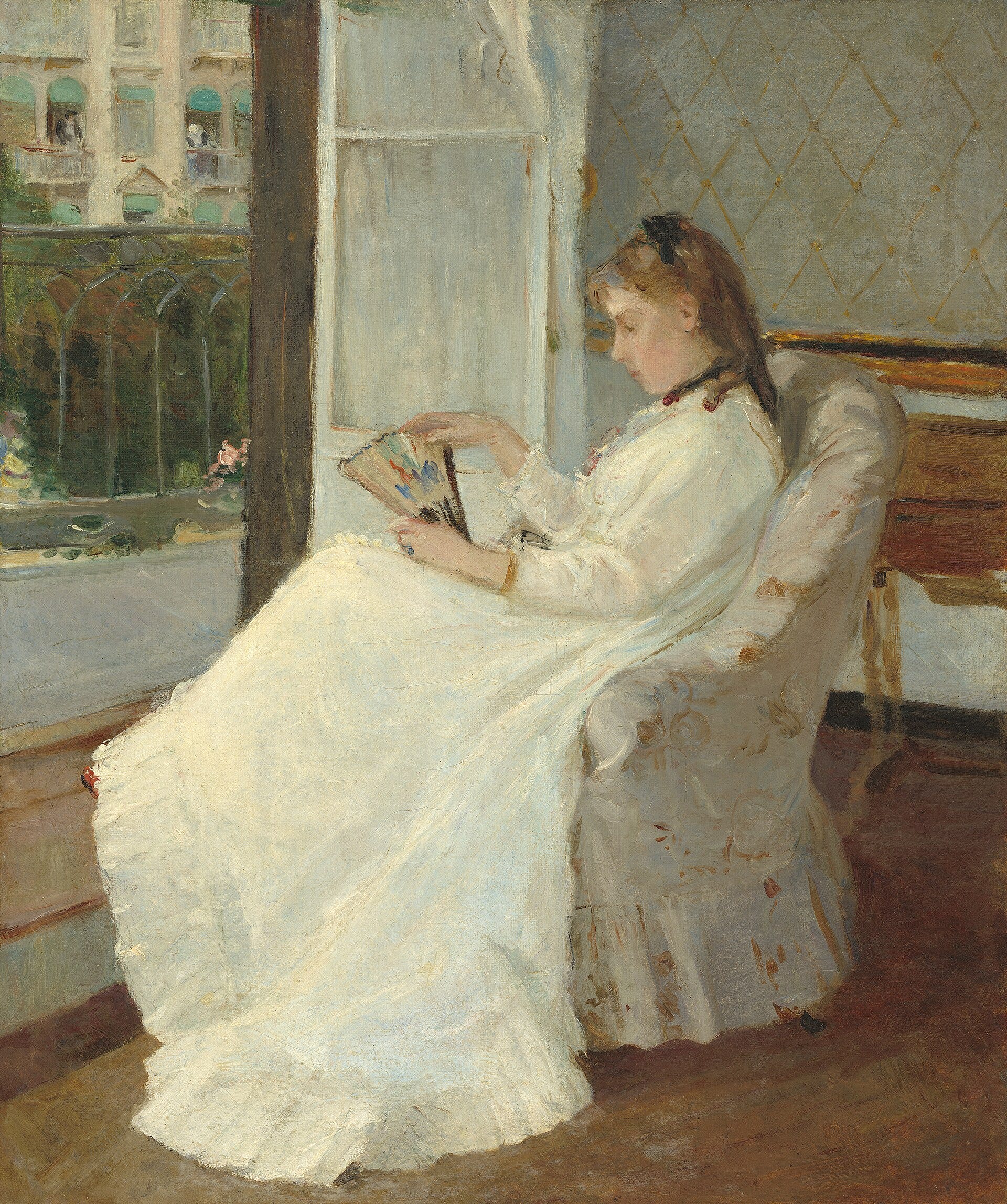
The story of The Cradle starts years earlier, with the two sisters. Edma Morisot, the elder, had shared every lesson with Berthe and shown at the Salon beside her. In 1868 she became engaged to Adolphe Pontillon, and in 1869 she married him.
What You'll Discover
Why her sister put down the brush.
Who painted her again and again.
Why she left the official Salon.
Where a respectable woman could not go.
What her death certificate left blank.