
Blacksmiths and workers were painted long before anyone called it social realism. Velazquez put gods in a real forge, Wright of Derby lit an iron works like a nativity, and Courbet painted two men breaking stones at the scale reserved for kings. Twelve paintings of work, and what each one is arguing.
Clock in
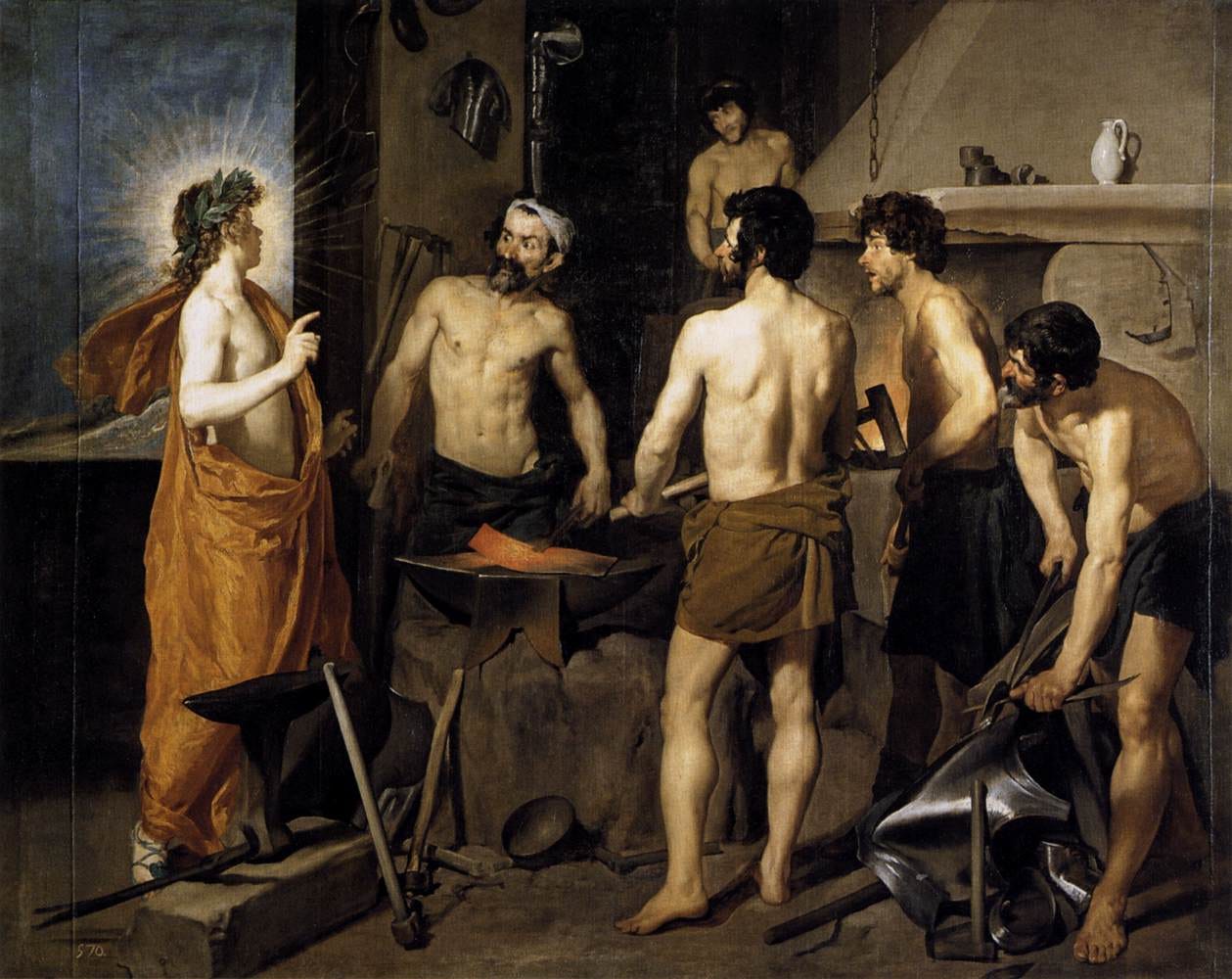
One mythological forge scene was painted with real working men as models.
One eighteenth century painter made industry look like a religious vision, on purpose.
One canvas of stone breakers was destroyed in a bombing and survives only in photographs.
The most famous painting of a bar is really about the woman working behind it.
One Russian picture of men hauling a barge embarrassed an emperor.
Learn art the fun way
1 | The Forge of Vulcan, Diego Velazquez (1630)
Apollo walks into a blacksmith’s shop to tell Vulcan his wife is cheating on him. The workers stop mid hammer, sunburnt and unimpressed.
Velazquez painted the gods from working men he found in Rome and Madrid. More on him in Diego Velazquez.
Velazquez painted it in Rome in 1630, on his first Italian trip, and used street models for the gods. Apollo arrives with the news that Venus has been unfaithful, and the smiths simply stare at him.
2 | An Iron Forge, Joseph Wright of Derby (1772)
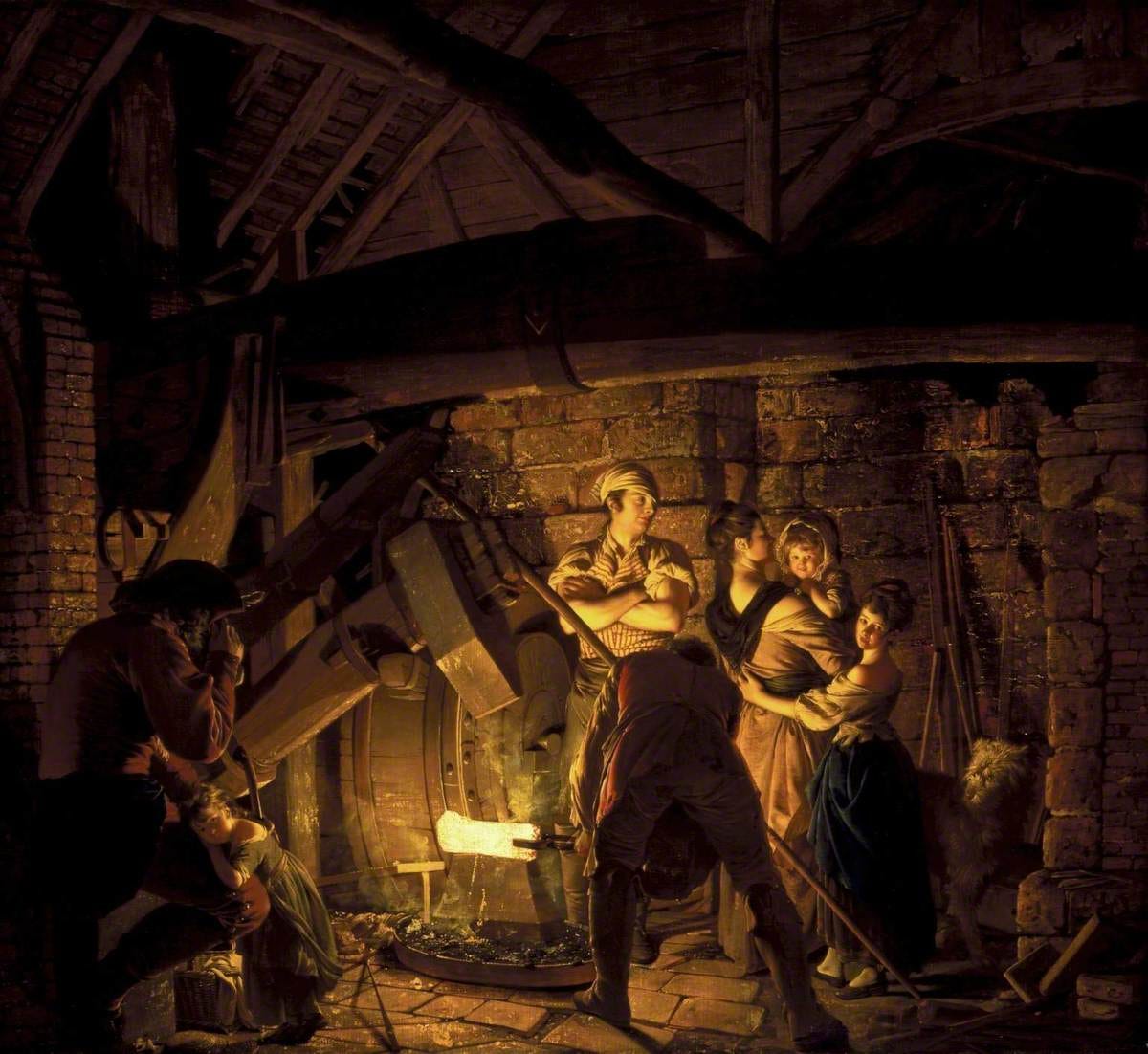
A white hot iron bar lights an entire workshop and the faces around it, including a baby held up to see. The lighting is borrowed straight from religious painting.
Wright painted the industrial midlands as if it were a nativity, which is how its owners saw it.
3 | The Stone Breakers, Gustave Courbet (1849)
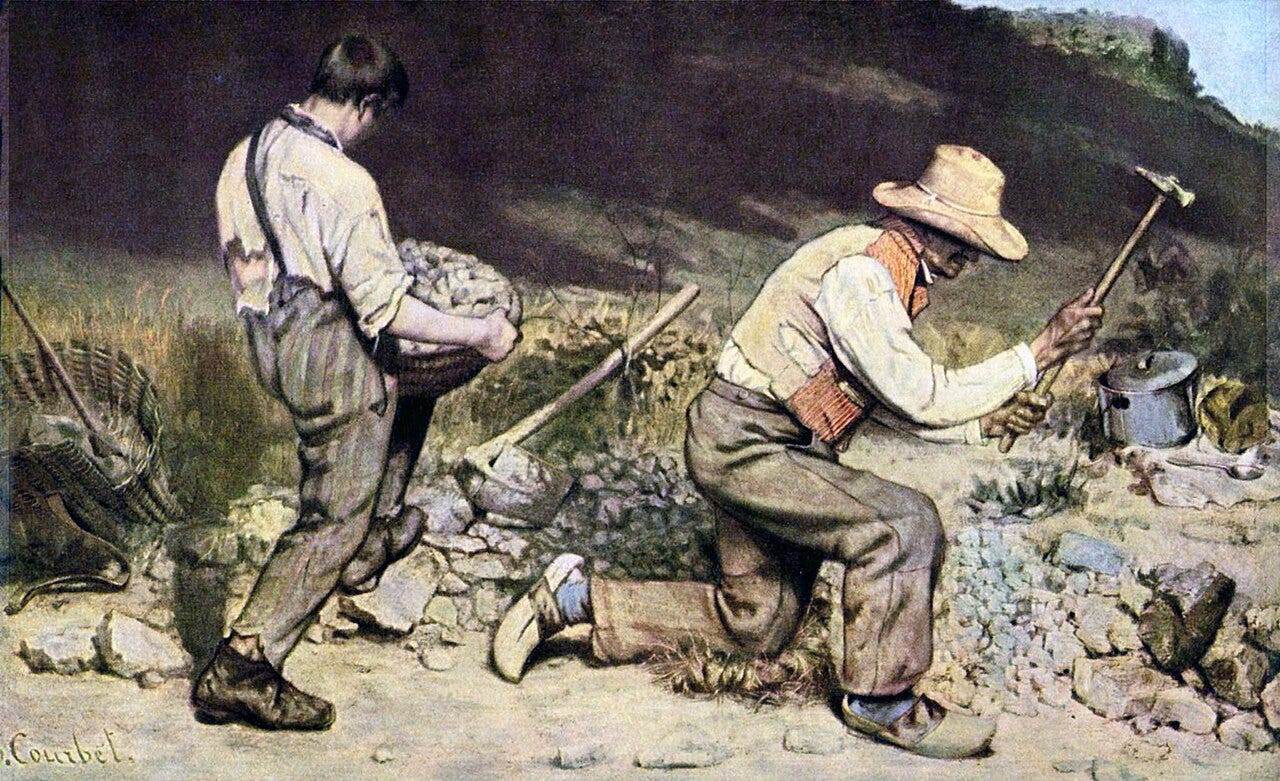
An old man and a boy break rocks for a road, faces turned away, painted at the size normally used for battles and coronations.
Destroyed in the bombing of Dresden in 1945. More on him in Gustave Courbet.
Courbet showed it at the Salon of 1850 and it was attacked as socialism in paint. It was destroyed in February 1945 when a transport of pictures from Dresden was bombed, so only photographs survive.
4 | Barge Haulers on the Volga, Ilya Repin (1873)
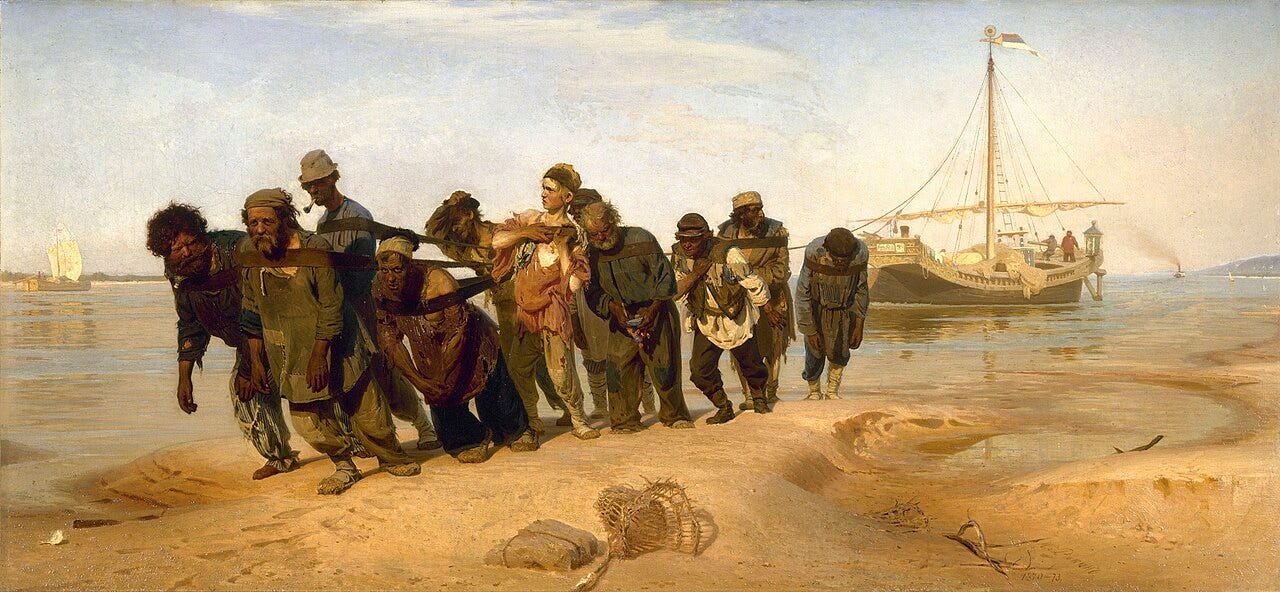
Eleven men in harness drag a barge upriver, ropes cutting into their chests, one boy lifting his head against the line.
Repin lived among them for two summers to paint it. More on him in Ilya Repin.
Repin worked on it from 1870 to 1873 after seeing the haulers on the river as a student. The Grand Duke Vladimir bought it, and it was shown in Vienna in 1873 where European critics were shocked.
5 | A Bar at the Folies Bergere, Edouard Manet (1882)
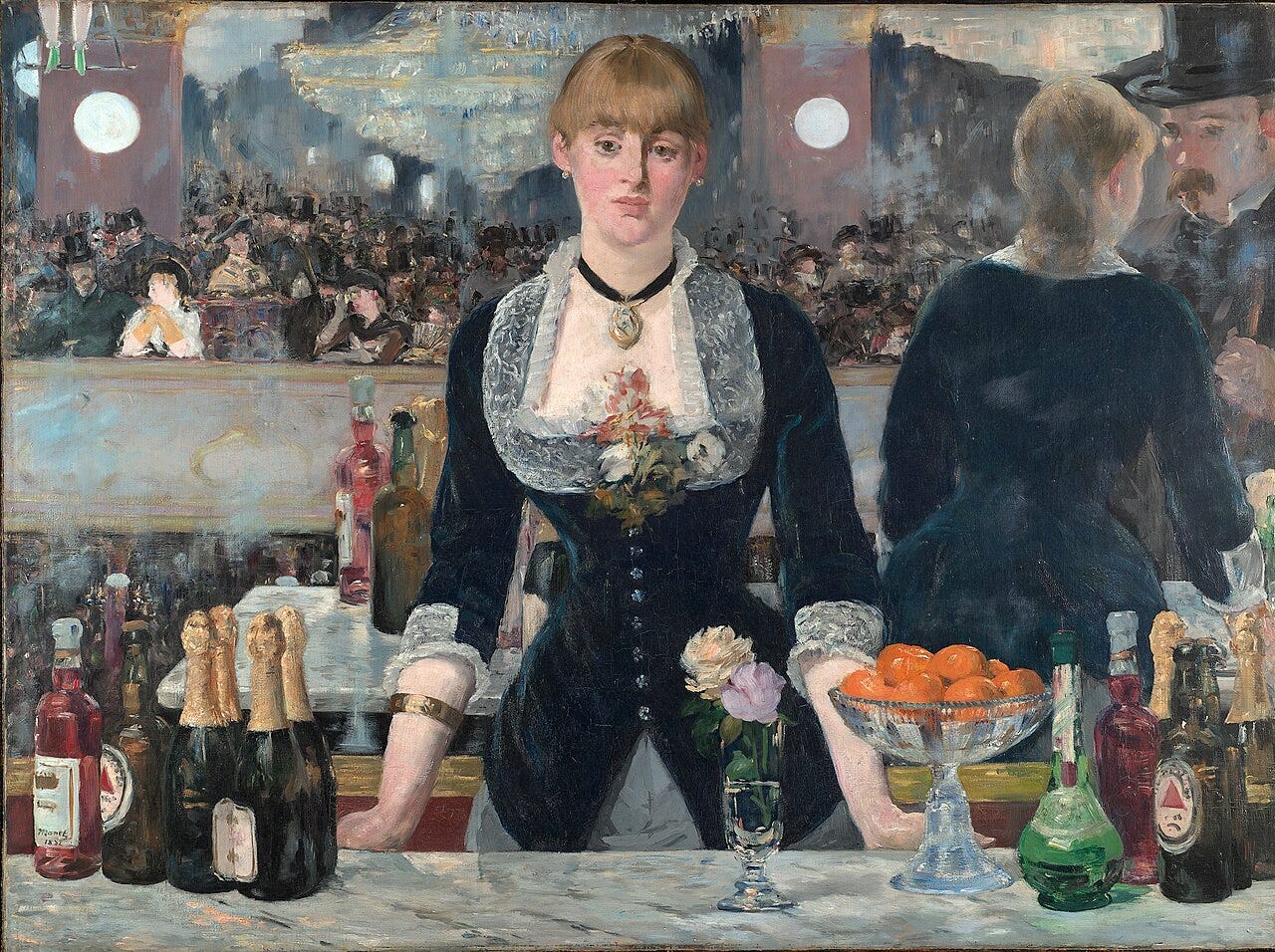
Everyone talks about the impossible mirror. Fewer people notice that the subject is a woman at the end of a shift, looking straight past the customer.
It was his last major painting. More on him in Edouard Manet.
Manet painted it in 1882, a year before his death, from a real barmaid called Suzon posed in his studio. The reflection on the right does not line up with the figure, and painters have argued about it ever since.
6 | The Floor Scrapers, Gustave Caillebotte (1875)
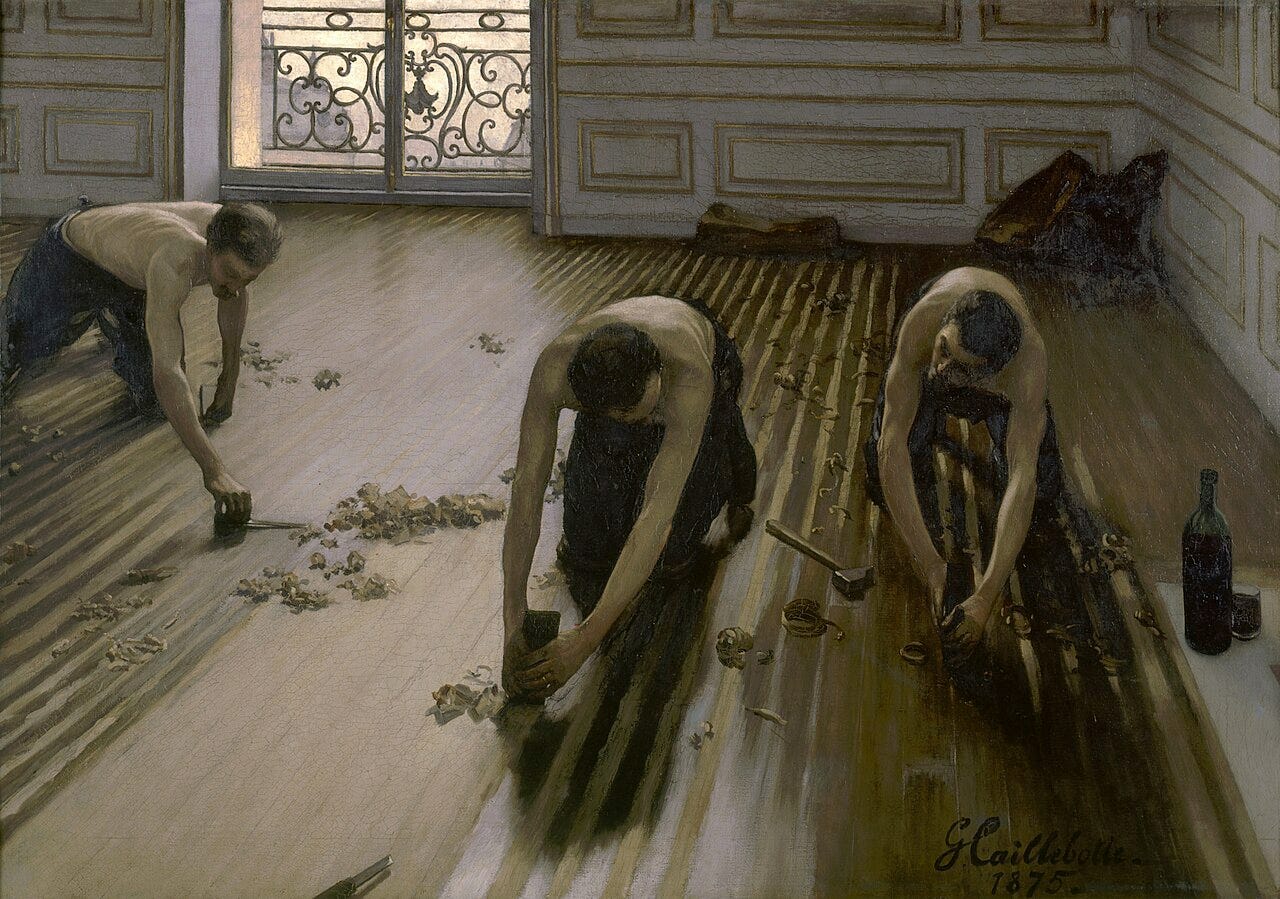
Three men on their knees stripping a parquet floor in a Paris apartment, torsos bare, shavings curling toward the viewer.
The Salon rejected it in 1875 for showing working men without heroism or pity. More on him in Gustave Caillebotte.
Rejected by the Salon jury of 1875, shown with the Impressionists in 1876. Caillebotte was wealthy and did not need to sell, which is partly why he could paint labour without prettifying it.
7 | The Gleaners, Jean Francois Millet (1857)
Three women bending to pick the grain left after harvest. Critics called it a political threat, which says more about them than about the painting.
The link to Van Gogh is direct: How Millet Shaped Van Gogh.
Millet painted it in 1857 and it was read as a political statement about rural poverty. Gleaning was a right of the poor, exercised after the harvest, and the three women are bent over the leftovers.
8 | The guild portrait, or work as a group photo
Dutch group portraits of guilds and militias were paintings of professions, paid for by the members, with the price often set by how prominently you appeared.
Rembrandt made his name with one. More of that in doctors and medicine in painting.
9 | The Milkmaid and domestic labour
Vermeer gave a kitchen servant the monumental stillness of a saint, in a bare room with a cracked wall and a foot warmer on the floor.
It is the most famous painting of housework ever made. More in kitchens and cooks in painting.
10 | The Fourth Estate, Giuseppe Pellizza da Volpedo (1901)
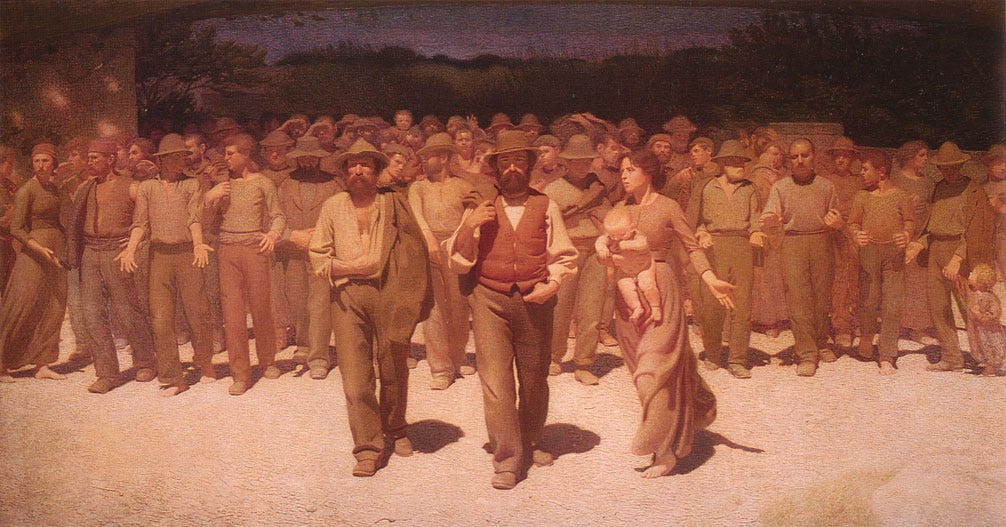
A column of workers on strike walks toward the viewer across the full width of a five metre canvas. Pellizza worked on it for ten years.
It became the emblem of the Italian labour movement and opens Bertolucci’s film 1900.
These belong to realism, the movement that decided ordinary labour was a subject worth the size of a history painting.
11 | The village forge
Before industry, the smith was the loudest and most necessary man in a village, and genre painters returned to the forge for the fire, the sparks and the audience of children.
The forge was one of the few interiors where light came from inside the picture rather than a window.
12 | Nighthawks and the twentieth century shift
Hopper painted a man in white behind a diner counter at an hour when nobody else is working, and made that counter the loneliest object in American art.
The worker is the only one facing the others. More on him in Edward Hopper.
What I notice across the whole run is who is allowed to look tired. In the earlier pictures the labour is noble and the faces are calm. It takes until the nineteenth century for a painter to show a man simply worn out.
Hopper works in oil, and the flat even light he gets from it is explained in what is oil painting.
Work on canvas, quick questions
Why did Velazquez use real workmen as models? He wanted gods with sunburn. Painting mythology from working bodies was his method from the Seville years onward.
What happened to The Stone Breakers? It was destroyed in the bombing of Dresden in February 1945. Only photographs survive.
Why was The Floor Scrapers rejected? The Salon found working men shown without heroism or moral framing unacceptable as a subject.
Which painting became a labour emblem? The Fourth Estate by Pellizza da Volpedo, finished in 1901 after ten years of work.
Where is The Forge of Vulcan today? The Prado for Velazquez, Orsay for Millet and Caillebotte, the Tretyakov for Repin, Milan for the Fourth Estate.
Caillebotte was independently wealthy and had no need to sell anything. He painted men scraping his own floor, and the jury told him it was not a fit subject. He spent his money buying his friends’ rejected paintings instead, and that collection is now a large part of the Musee d’Orsay.
More painted labour sits in the Met and the Rijksmuseum.
This subject is one thread in a wider theme. See how it fits into Work and Everyday Life in Painting.