


170 000+ readers. Learn art the fun way.
This is a preview. Paid subscribers get the full story.
You’ll also get:
10 new stories every month
The full archive (130+ Art stories)
Your personal art guide. Comment, ask questions, DM me anytime
iPhone user? Subscribe at coolstoriesabout.art, not via the app. Apple adds 30% to the price.
Florence, 1475
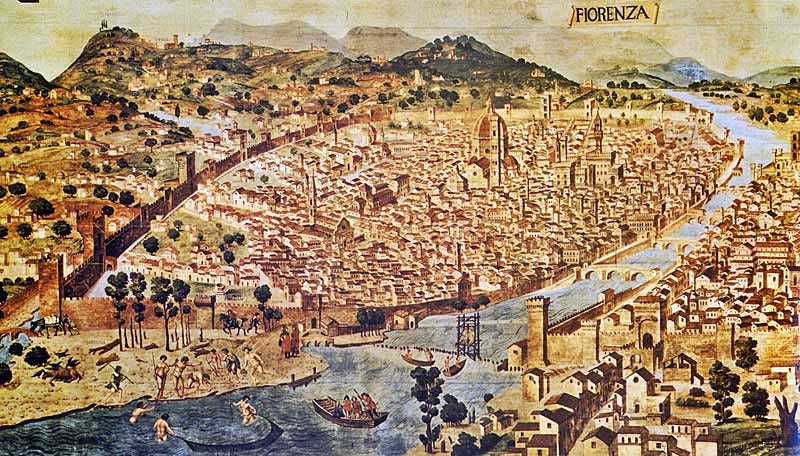
Sandro fixes the dust on his boots. The January sun grazes the Piazza Santa Croce.
At the start of this new year, merchant cries drown out the hammering of hooves on the cobblestones. The smell of manure and leather. The clanking of armor.
Sandro leans against a column, motionless.
Around him, the crowd pushes toward the stands. Nobles in crimson silk. Bankers in dark caps.
Everyone converges for the Giostra di Giuliano. A joust staged to celebrate the new alliance between Florence, Milan, and Venice. A tournament to the glory of the Medici.
The square has been transformed into an arena. The ground is covered in sand. Wooden barriers mark the track.
Escutcheons decorate the stands, displaying the colors of the great Florentine families, the emblems of the guilds, and the red lily of the city.
The Painter and the Muse
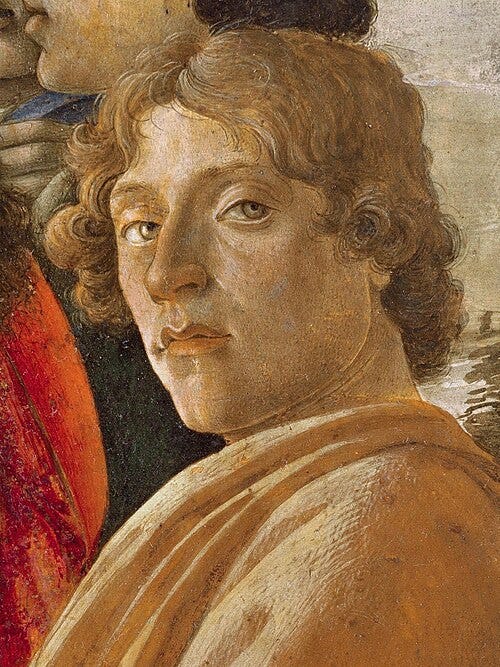
Barely 30 years old. A master painter for three years. A disciple of Lippi and Verrocchio. A friend of Leonardo da Vinci.
Sandro has already created altarpieces for the churches of Santa Maria Novella and Santo Spirito. His Ognissanti workshop is always full.
The protection of Lorenzo the Magnificent guarantees him prestige and security. He rubs shoulders with the greatest Florentine humanists.
The young painter has everything to be fulfilled. Yet, in this moment, his mind is elsewhere.
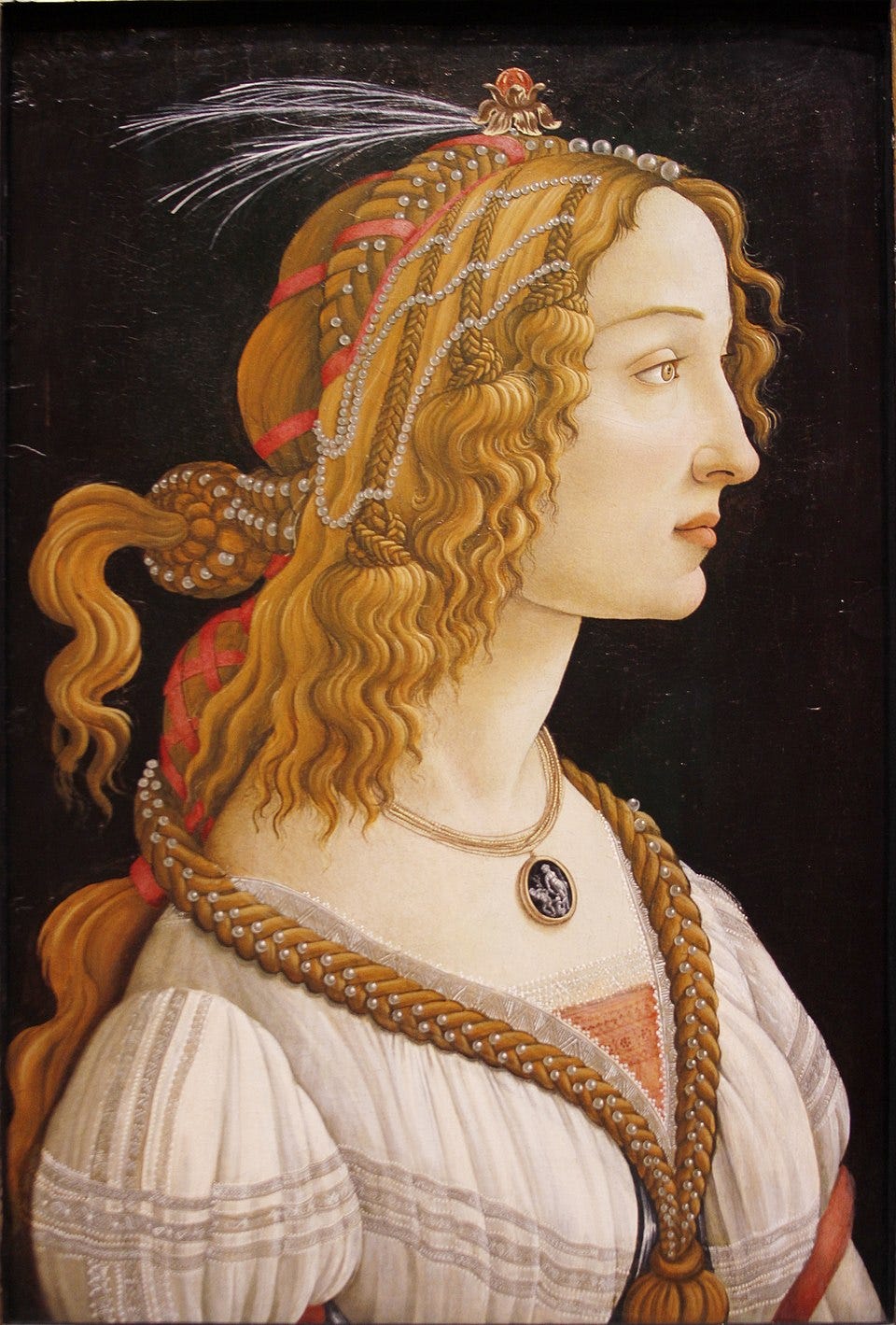
His gaze sweeps the stand of honor. He searches for a face. The face of Simonetta Cattaneo Vespucci.
The most beautiful woman in Italy, the poets say. Married at 16 to Marco Vespucci, cousin of Amerigo, whose name will one day baptize the New World.
Arrived from Genoa six years earlier. Porcelain complexion. Golden hair. A perfect profile.
He knows her. Not intimately. A few exchanged greetings. Furtive glances. Their houses face each other in the Via Nuova, just steps from the Ognissanti church.
The Vespucci family, generous patrons, commissioned a Saint Augustine from him. During receptions at the Medici palace, he watches her. Never for too long.
She belongs to a caste that is not his. She is the pearl of Genoese nobility. He is a tanner’s son.
His father Mariano Filipepi amassed enough to offer him a quality apprenticeship. First with a goldsmith, then in the workshop of his brother Antonio, a gold beater. The nickname came from another brother, Giovanni, called “botticello”, meaning little barrel, for his stocky build.
This nickname became his own. An artist’s name.
The Tournament
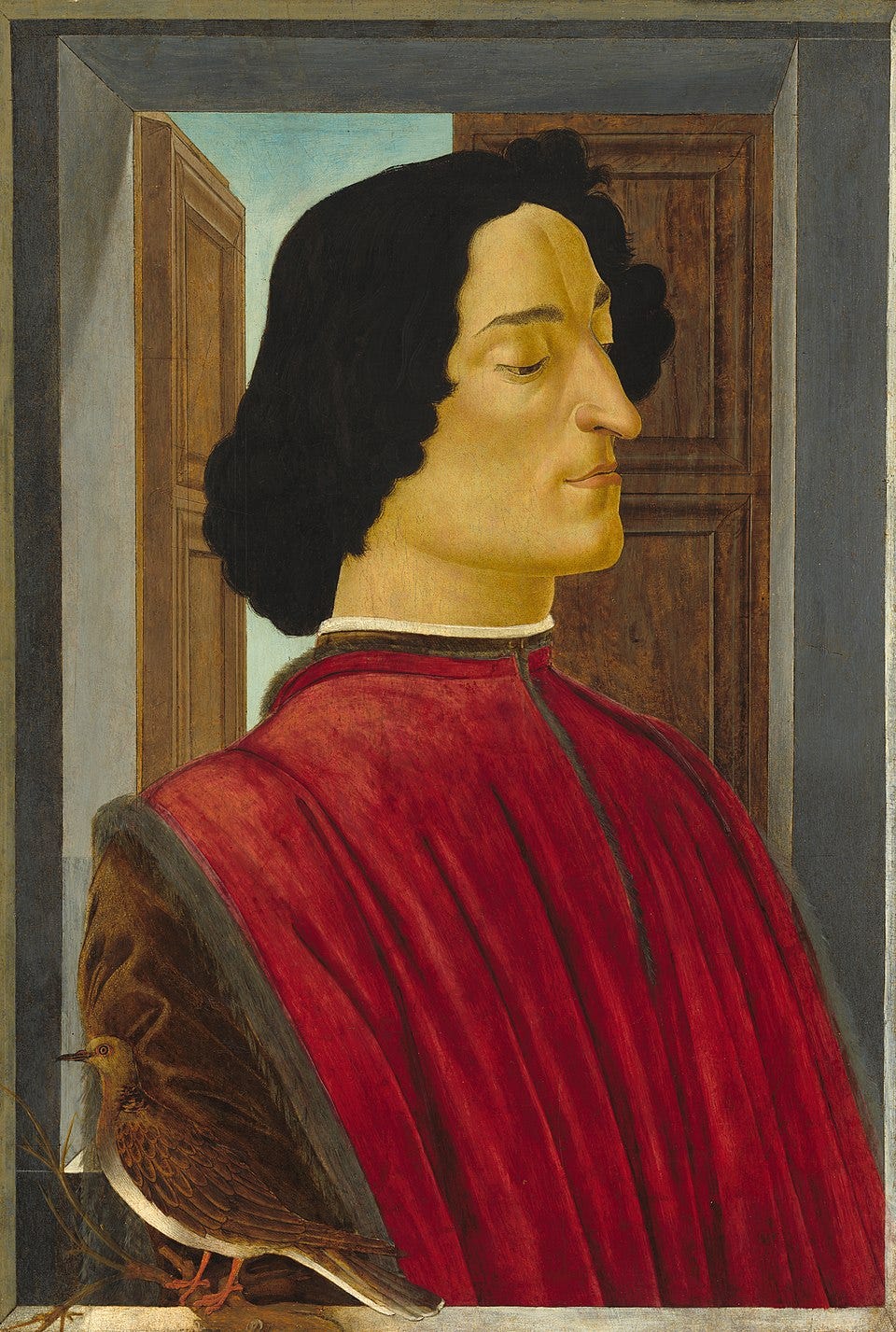
A murmur ripples through the crowd. Giuliano de Medici enters the arena.
21 years old, Lorenzo’s younger brother. Tall, athletic. Olive skin, light eyes. The prince of Florentine youth.
His silver armor, encrusted with precious stones, is alone worth 8000 florins. A fortune sparkling in the sun.
His squire unfurls a banner. The one Sandro painted.
Simonetta appears on it as Pallas Athena, with helmet and spear, hair in the wind, amber eyes. Next to her is an olive tree. A chained Cupid tramples glowing embers.
The motto spreads out in golden letters: “The Peerless One”.
Simonetta takes her seat under a canopy of golden silk. A green dress lined with ermine. A transparent veil held by a gold brooch.
Beside her sits her husband Marco. A satisfied smile. The fulfilled owner of a treasure everyone covets.
Giuliano casts a glance toward Simonetta. She replies with a barely sketched smile. A fleeting complicity.
Sandro alone notices it. A twinge. Mixed admiration and jealousy for this young man who can publicly honor the woman he contemplates in silence.
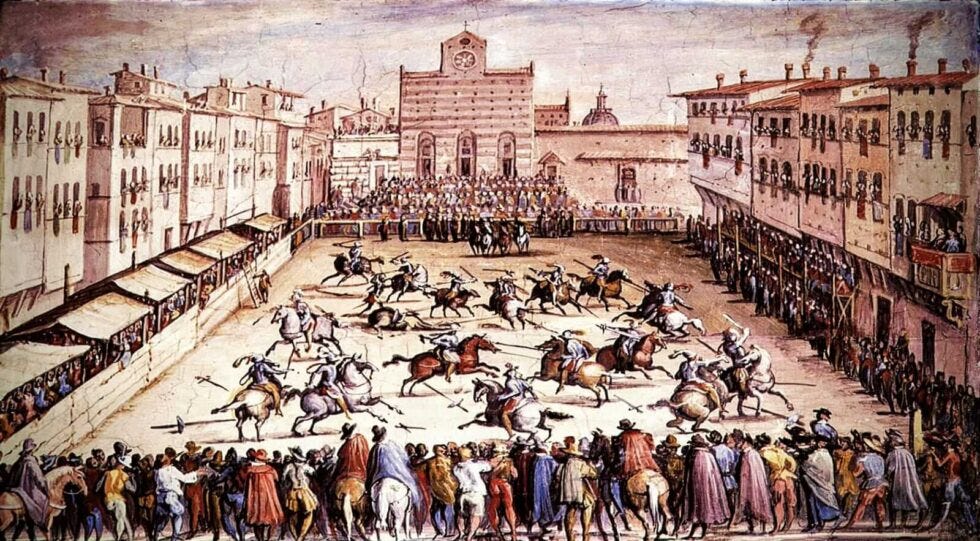
The trumpets sound. The tournament begins. Spears shattering. Horses rearing. Dust rising in sheets.
Giuliano, riding Orso, a black and white steed gifted by the King of Naples, unhorses his opponents one by one. A calculated victory. A political staging.
The tournament ends. Giuliano receives the prize from Simonetta’s hands: a helmet chiseled by Verrocchio’s workshop.
Their fingers brush. A suspended moment. The crowd cheers.
Sandro looks away. He measures the abyss between his status and that of the young Medici.
Discover my new newsletter !

Keep learning art the fun way


Tragedy Strikes
A few months pass. Simonetta coughs. Her skin pales. Fever exhausts her.
Doctors prescribe bloodletting and decoctions. Lorenzo sends his own doctor, Maestro Stefano. In vain.
On April 26, 1476, she draws her last breath. She is 23 years old.
Her body, displayed with an uncovered face, is paraded through the city streets. An exceptional funeral procession for a woman.
Lorenzo writes in his sonnets that she “surpassed in death that beauty which, alive, seemed insurmountable”.
Florence mourns its lost beauty.
Giuliano sinks into despair. He is seen several times at the Vespucci home. He asks for Simonetta’s clothes. Objects that belonged to her. A portrait they owned.
He tries to hold onto something of this vanished presence.
Sandro, meanwhile, stays silent. He works relentlessly.
He transposes Simonetta into every single one of his creations. The features repeat, become fixed, become a signature.
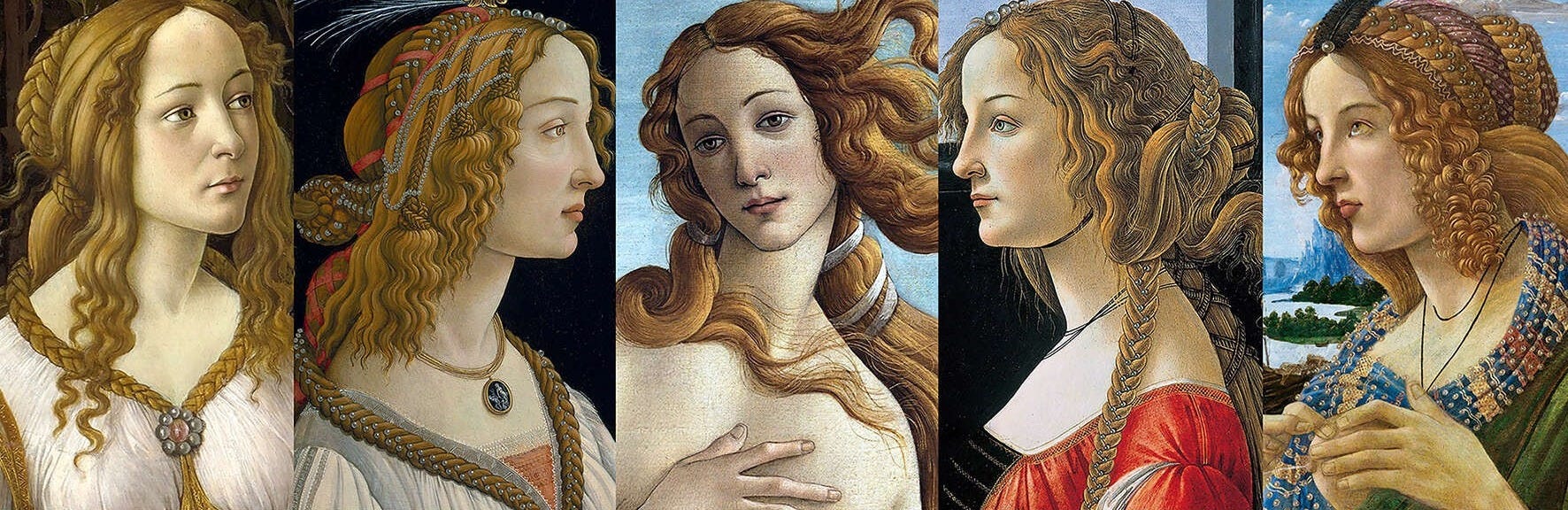
Madonnas, nymphs, goddesses. Always the same oval face. The same almond eyes. An obsession, but also the spirit of an era.
Florentine intellectual circles are rediscovering Plato. Humanists develop a doctrine where earthly beauty becomes a reflection of the divine, where the love it arouses elevates the soul toward the sacred.
Simonetta is its incarnation: an ancient muse and an echo of Christian truth. The emblem of an ideal beauty, that of Medici Florence.
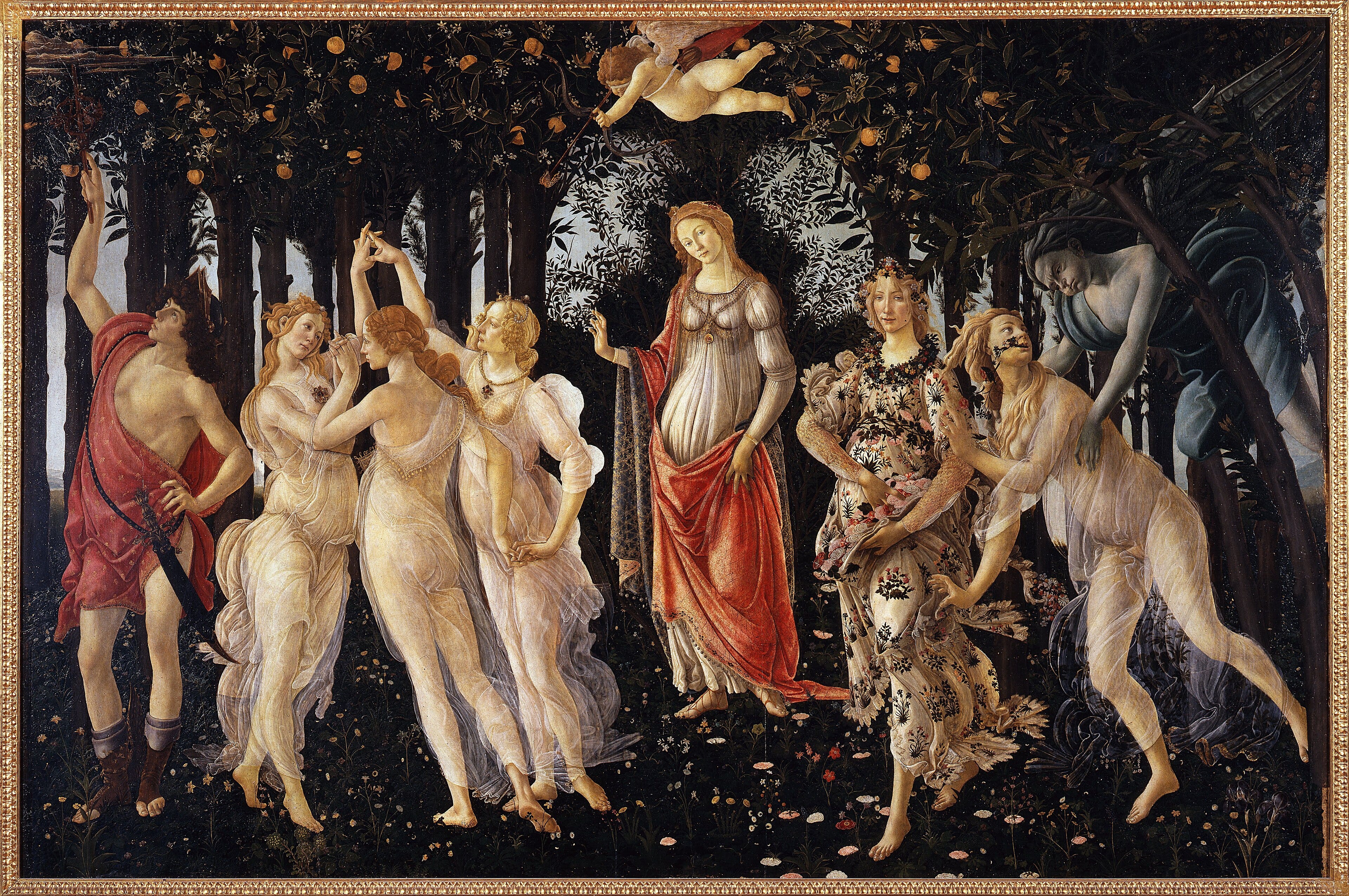
Lorenzo di Pierfrancesco, Lorenzo’s cousin, commissions a grand allegory from Sandro in 1478. It will be The Primavera.
Nine figures in an orange grove. In the center, Venus presides. Three Graces dance on the left. Mercury scatters the clouds.
Under the features of Flora and one of the Graces, Simonetta’s face reappears.
The Pazzi Conspiracy
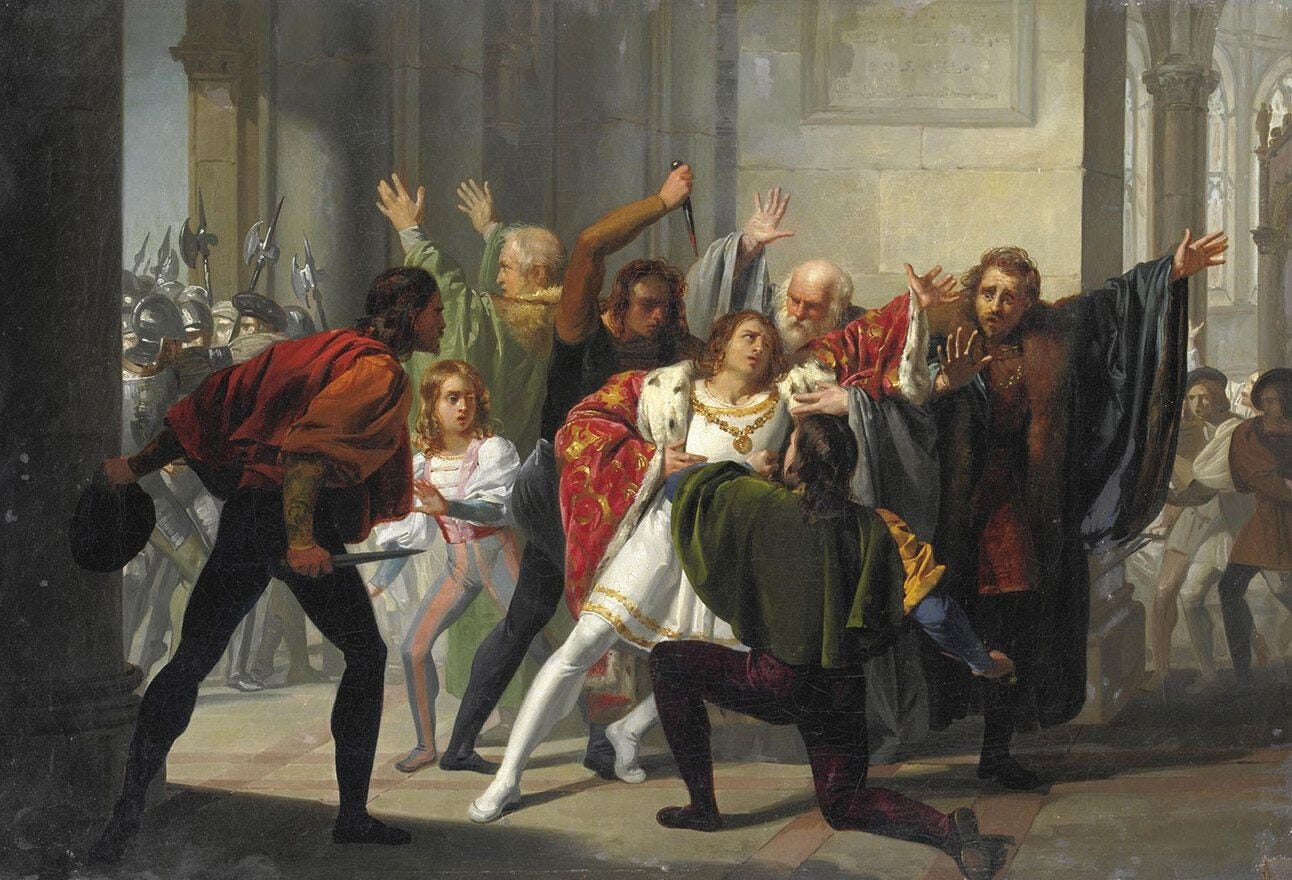
Exactly two years to the day after her death. Sunday 26 April 1478, during High Mass.
The bells of Florence ring for mass. Inside Santa Maria del Fiore, the faithful kneel beneath Brunelleschi’s dome. Lorenzo and Giuliano de Medici are in the front row.
No one notices the Pazzi slipping between the pillars. A fatal anniversary.