

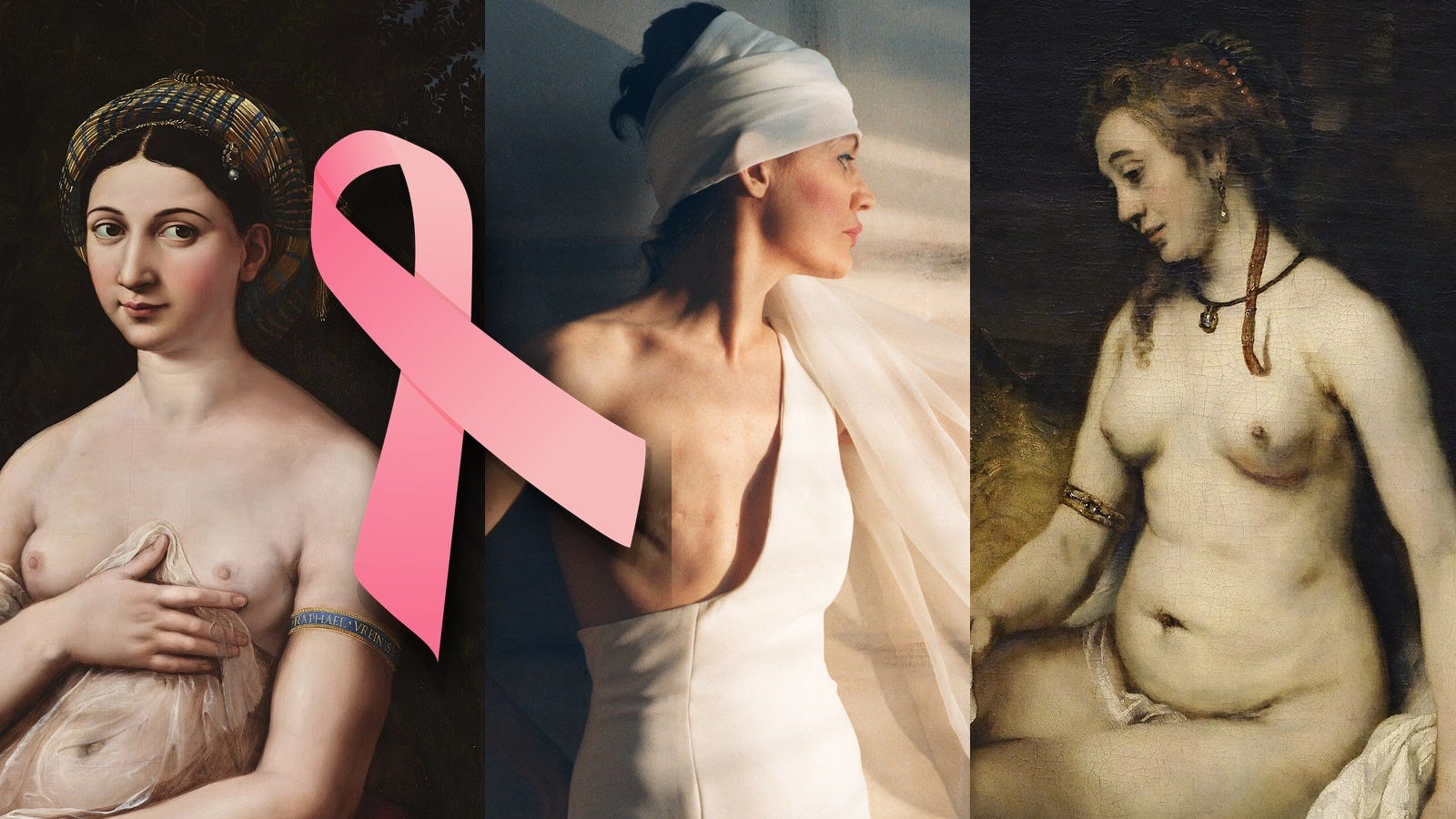
180 000+ readers learn art the fun way.
This is a preview. Paid subscribers get the full story.
You’ll also get:
10 new stories / month
The full archive (130+ Art stories)
Your personal art guide. Comment, ask questions, DM me anytime
Apple user? Subscribe at coolstoriesabout.art, not via the app. Apple adds 30% to the price.
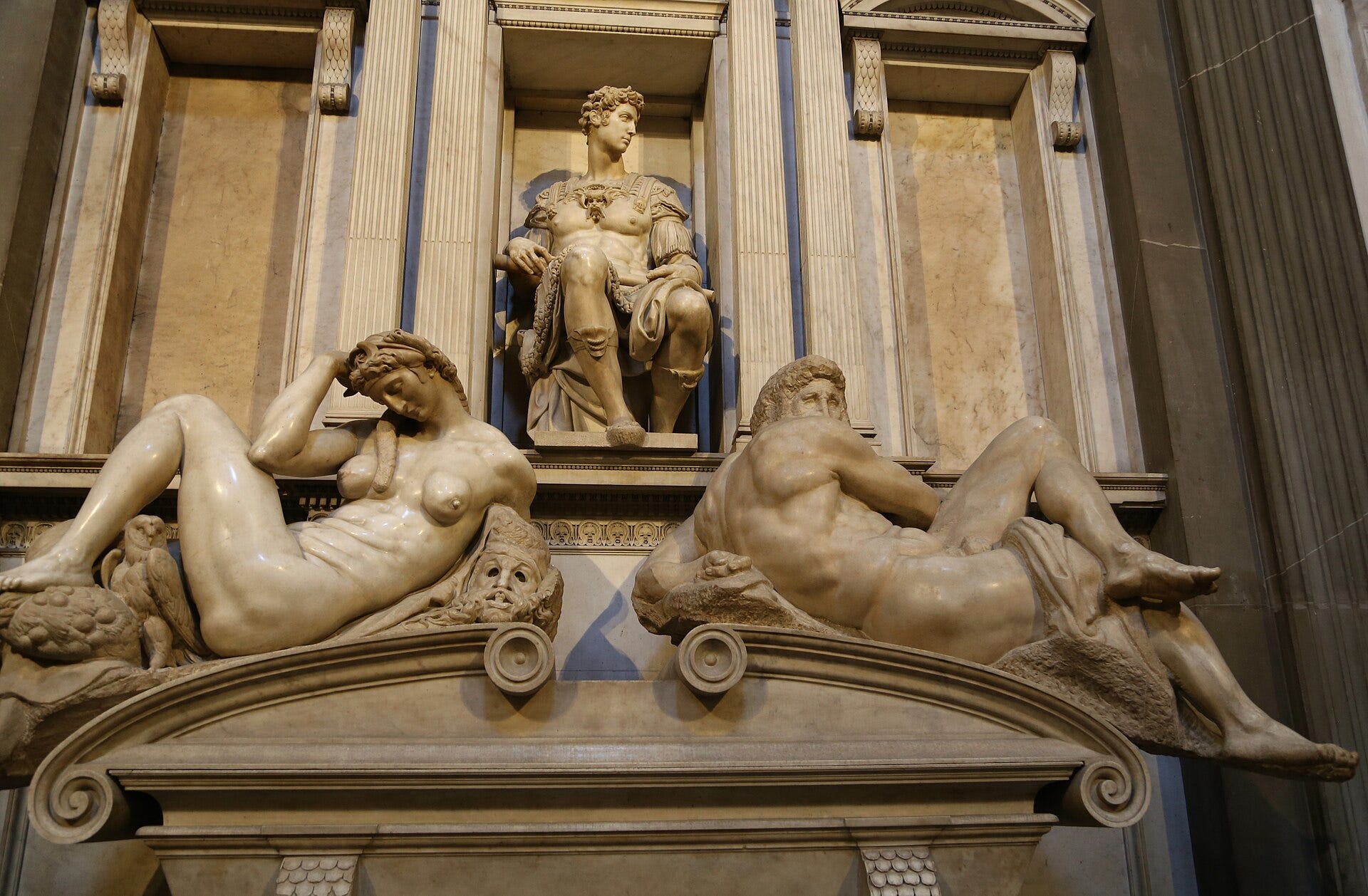
Florence, June 1999. In the Medici Chapel, an American couple on vacation walks between two marble tombs. Michelangelo designed this room for the family that ruled the city, and he carved its figures himself.
Two monumental reclining figures rest on one of the tombs, a man and a woman: "Day" and "Night."
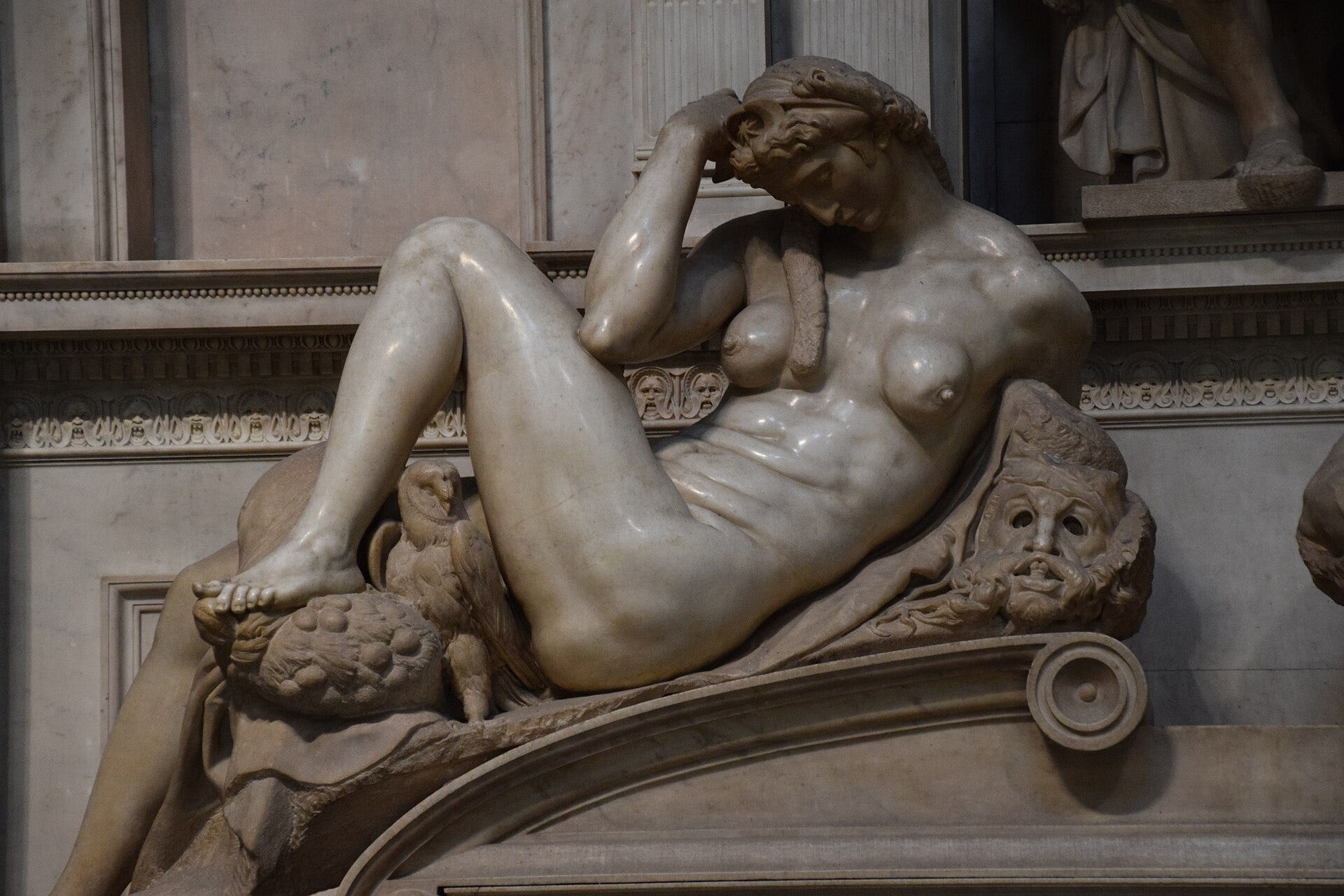
The man stops in front of "Night." She is asleep, nude, stretched out on the marble, one leg drawn up, her elbow resting on that knee, her head tipped forward. In her hair, a crescent moon and a star. Under her leg, an owl. Behind her, a mask.
The visitor's eyes travel down from the face to the belly and come to rest on her breasts. Two seconds. He leans toward his wife and whispers:
"That woman's got breast cancer."
His name is James Stark. He is 53, an oncologist in Portsmouth, Virginia, where he runs a cancer center and teaches at a nearby medical school. He has spent 25 years examining women with breast cancer.
Discover my new newsletter !

The Historian
The vacation ends, and Stark flies home to Virginia with Michelangelo's statue on his mind. The image follows him onto the plane, then to Portsmouth, where it comes back to him between appointments.
He wants to know for certain. But Michelangelo is not his field, and he needs someone who knows the sculptor the way he knows cancer.
Such a man exists, and he lives in Florence. Jonathan Nelson, an American art historian who specializes in the Renaissance, teaches at the Florence campuses of two American universities. Stark tracks him down, introduces himself and describes what he saw on the statue.
Nelson knows that torso inside and out. Everyone who teaches Michelangelo knows it. Nelson answers politely, a little amused by the question.
"Michelangelo modeled his women on male bodies, Doctor, and added the breasts afterward. That's why they look tacked onto the torso. It's his way of carving, not a disease."
"I'm not talking about the way she was carved. I'm talking about what I saw."
"You saw what generations of art students have seen before you: Michelangelo's hand."
"I've been diagnosing breast cancer for 25 years. I looked at that breast for two seconds and I just knew."
Nelson does not budge. But he offers to go back to the chapel and look at the statue with him.
Stark accepts.
For centuries, breast cancer was found only when it showed on the skin, or when a lump could be felt by hand. In the 1960s, the mammogram, an X ray of the breast, began to detect what fingers could not yet feel.
Breast cancer is now caught earlier and treated more successfully, and yet every year hundreds of thousands of women around the world still die of it. In 2024, about 694,000. One every 46 seconds.
This October, during Breast Cancer Awareness Month, art can help us learn to recognize the disease early.
What You'll Discover
The masterpieces in which doctors believe they have spotted breast cancer.
How artists depicted the disease.
The warning signs to watch for.
A breast self exam, a few minutes long, that can help catch it early.
How Stark recognized the disease on a marble statue.