
A painting can travel to a museum. A mosaic stays on the wall, floor or dome where it was set, and none of these has ever left its building. Among them are hands left on a column after the men they belonged to were erased, and a church floor that placed a street of Jerusalem exactly where archaeologists later found it.
Cool Stories About Art is a newsletter to learn art the fun way.
Join 200,000+ readers and get:
10 new art stories / month
The entire archive of content (140+ articles)
Comment, ask questions, and chat with other readers
What the Gold Was For
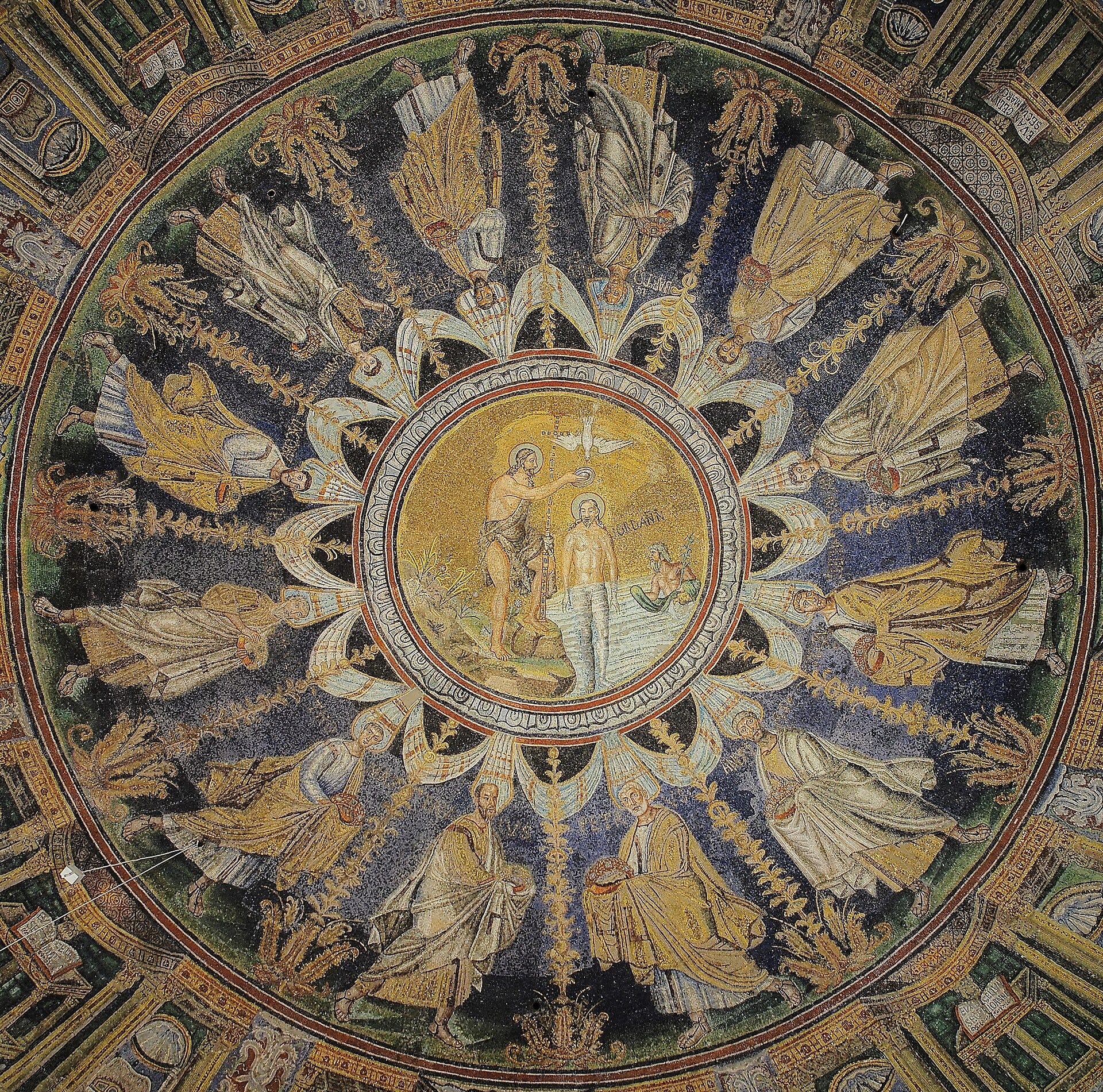
Roman mosaicists mostly laid colored stone on floors, to be walked on. Byzantine workshops raised mosaic onto walls, vaults and domes, and worked in glass. Each gold cube holds a leaf of gold thinner than a thousandth of a millimeter between two layers of glass.
The gold had a purpose. The cubes were set at slightly different angles, so in a church lit by windows and lamps the wall gives back a light that shifts as people move, and the figures stand in no earthly room.
A surface like this was expensive, and paying for it said who held power under heaven. I chose works from the fifth century to the fourteenth, from Jordan to Venice, whose story can be read in the image itself: who paid for it, what it was meant to prove, and sometimes who changed it afterwards.
12. Sant'Apollinare Nuovo, The Palace of Theodoric (early 6th century)
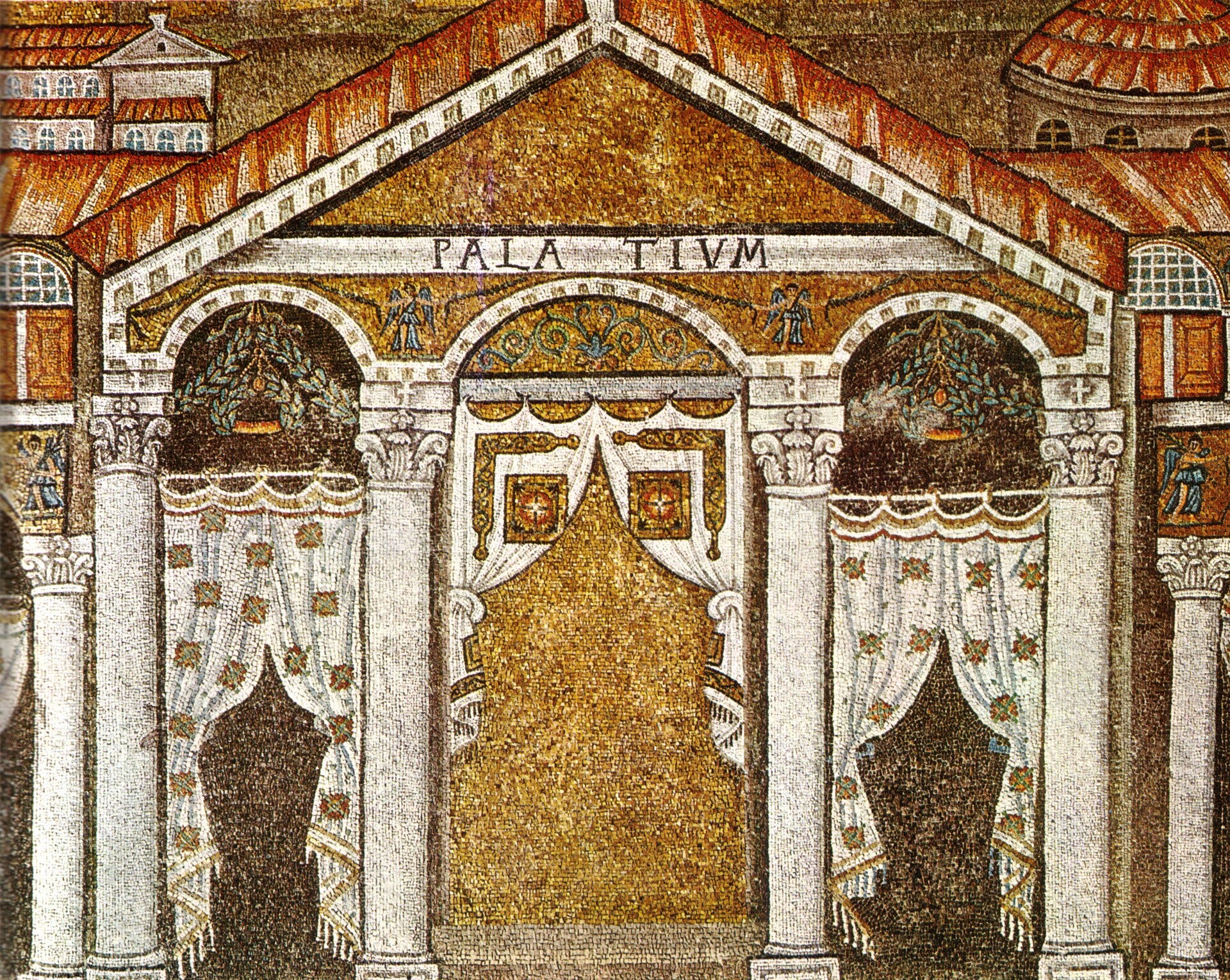
Some of the columns in the Palace of Theodoric have hands on them. The panel shows a gold and white façade, with the word PALATIVM over the central arch and tied curtains hanging under the others. On the left, on the first column, and on the right, on the next to last, fingers and the stubs of arms still grip the stone. They belong to no one.
The panel belongs to the church Theodoric built as his palace chapel in Ravenna, near the Adriatic coast of Italy. Theodoric was the Ostrogoth king who ruled Italy from 489 to 526, and the chapel was consecrated in 504. He and his Goths were Arians, Christians who held that Christ had been created by God the Father and was lower than him, a belief the bishops of Rome and Constantinople condemned as heresy.
That belief cost the building its first decoration. After the armies of the emperor Justinian took Italy back from the Goths, the church was consecrated a second time in 561, for the emperor's own faith, and the images that spoke for the Arians had to go.
On this panel, what had to go was the people. The arches probably once framed Theodoric and members of his court. Rather than pull down the wall, the mosaicists picked the figures out one by one and filled the gaps with curtains. The palace stayed, and the people who had lived in it disappeared.
The work was not done cleanly. Where a courtier had rested a hand against a column, that hand had been laid in the same cubes as the stone, and it was left in place. Fifteen centuries later, a few fingers still mark where someone from a fallen court once stood.
At a Glance
Artist: Unknown mosaicists working for Theodoric, altered after 561
Made: Early 6th century, figures removed after 561
Medium: Glass and stone tesserae, gold glass
Size: Not published
Where to see it: Basilica of Sant'Apollinare Nuovo, Ravenna, south wall of the nave
11. Madaba, The Map of the Holy Land (about 560)
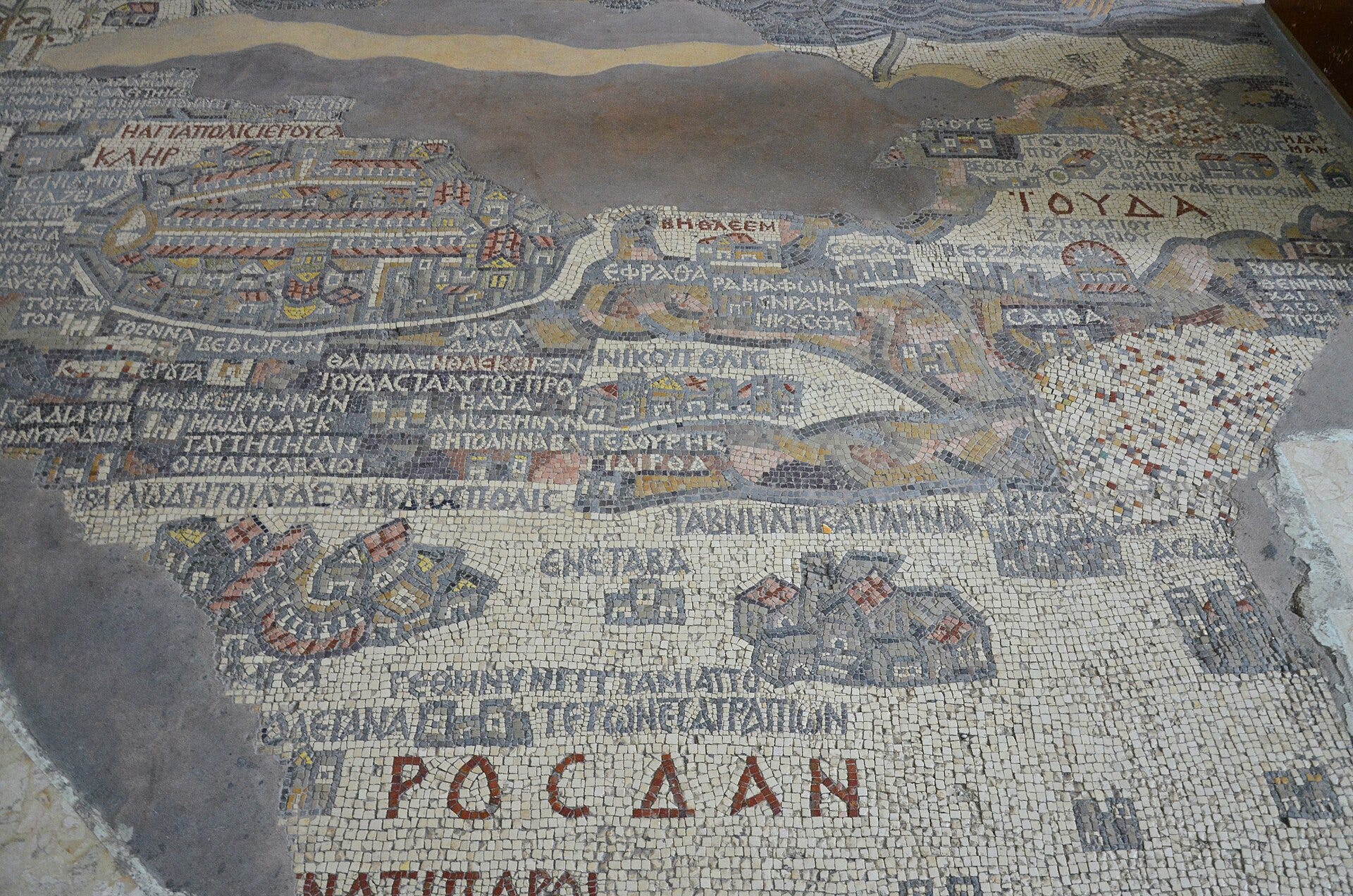
In 1884, Greek Orthodox Christians settling in Madaba, a town east of the Dead Sea in what is now Jordan, cleared the rubble of an old church to build a new one. Under the debris lay a floor of small stones covered with walled towns, a river and lines of Greek names. Near the middle sat one town drawn as an oval, far larger than any other.