

170 000+ readers. Learn art the fun way.
This is a preview. Paid subscribers get the full story.
You’ll also get:
10 new stories every month
The full archive (130+ Art stories)
Your personal art guide. Comment, ask questions, DM me anytime
iPhone user? Subscribe at coolstoriesabout.art, not via the app. Apple adds 30% to the price.
In Arles, on the Place du Forum, a café is painted yellow and bears Van Gogh's name. People come to sit there for a drink, inside the setting of one of his best known paintings.
They are in the right place. This is where he set up his easel, one night in September 1888.
It is also where he paints his first starry sky.
But the café was repainted to look like the canvas. The night Van Gogh painted it, it was not yellow.
The painting hangs today at the Kröller Müller Museum, in Otterlo. You think you know all about it. A terrace, some tables, a summer evening.
You are wrong.
We are going to look at it, detail by detail.
The square
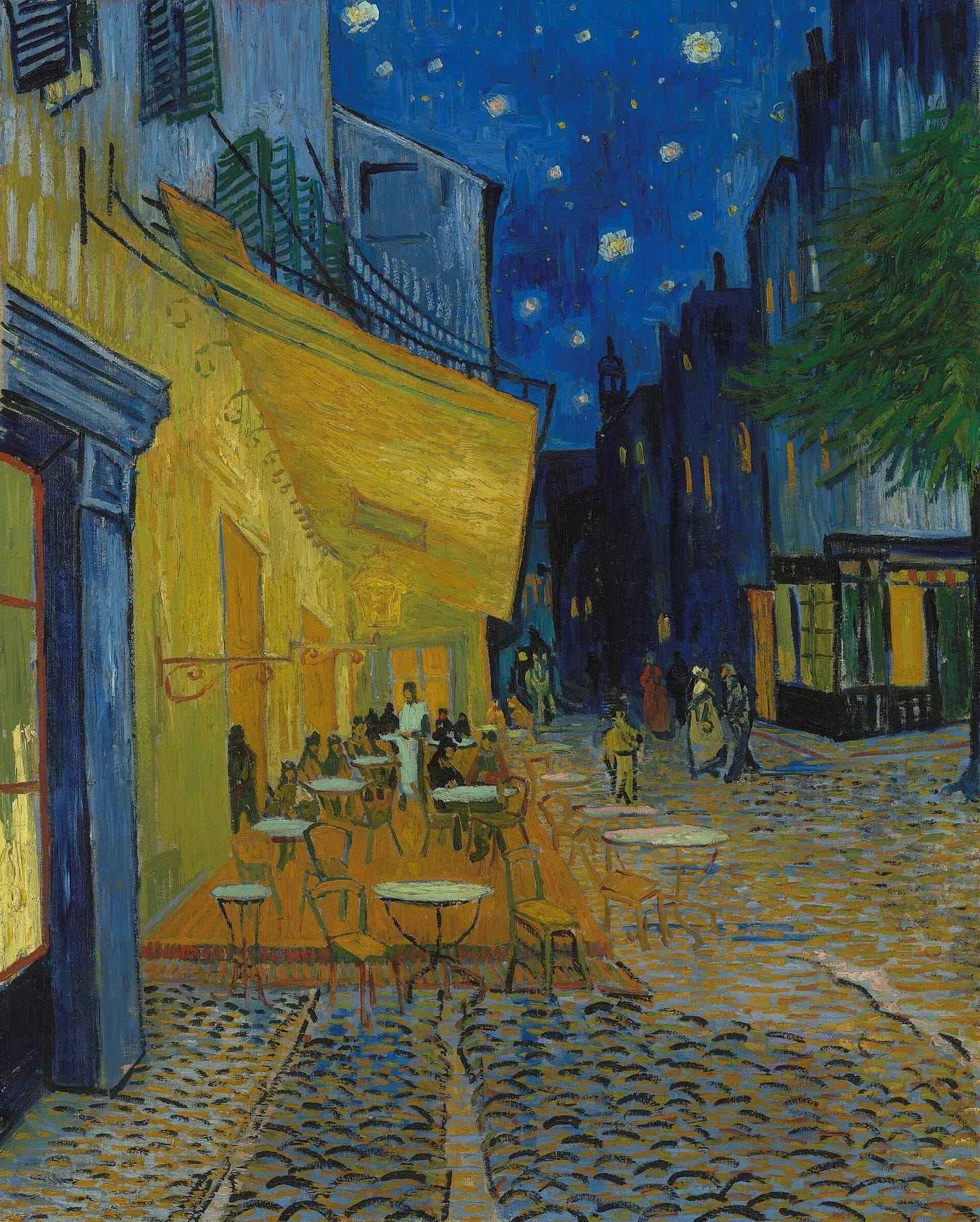
The café stands at the corner of the square, in the heart of town, a few minutes from the house Van Gogh has just rented.
That autumn, he takes up a habit that is rare for the time. He goes out at night, sets his easel on the cobblestones, and paints the street exactly as he has it before him.
Before him, night scenes were painted the next day, in the studio, from memory. He works in the dark, in front of the scene, by the light of the gas lamps.
Everything he paints here, he truly has before his eyes.
Discover my new newsletter !

The lamp
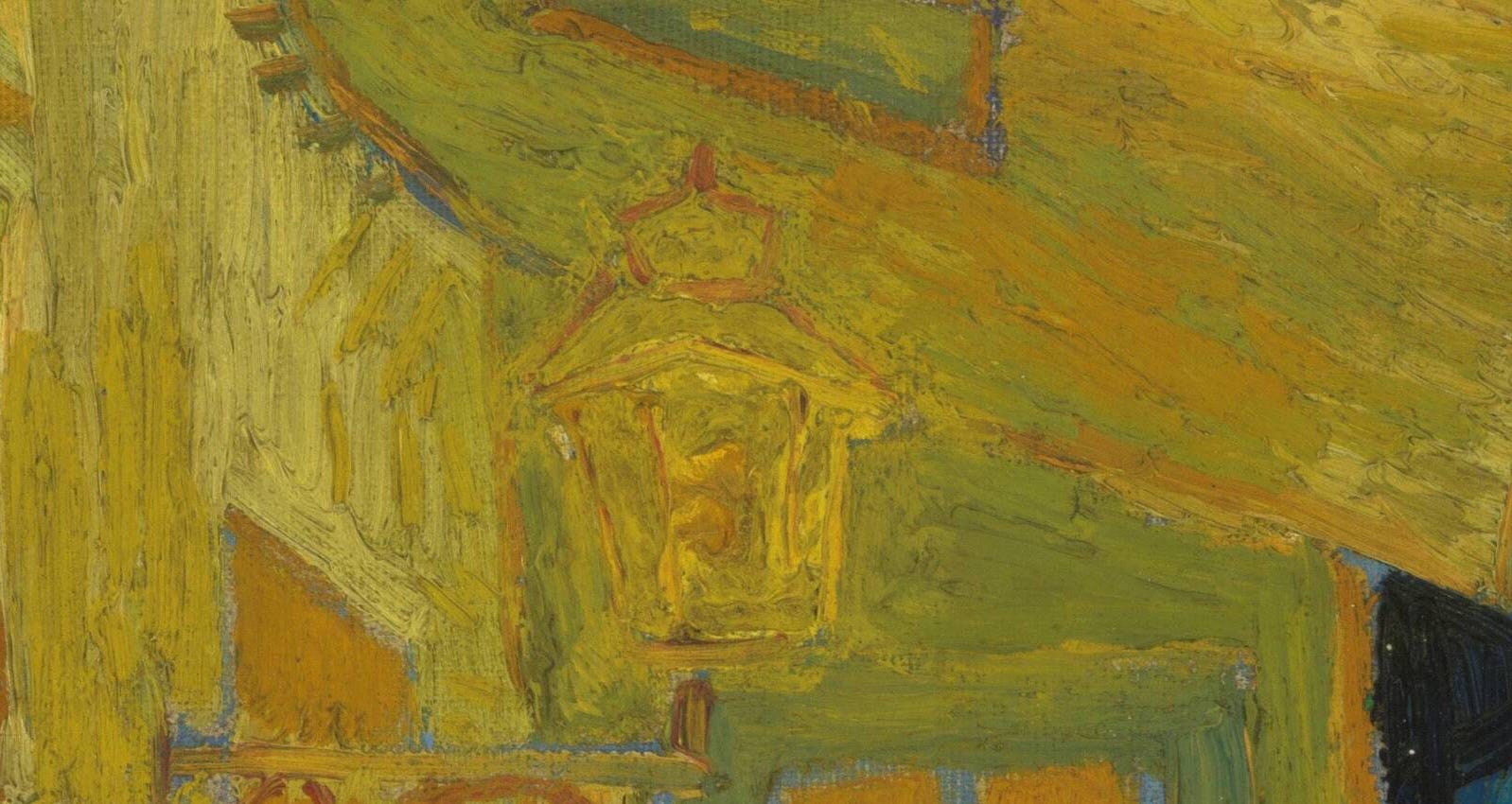
Under the awning, a large gas lamp burns above the tables. It throws a thick yellow onto the façade, onto the chairs, and down over the cobblestones.
It is the only light in the painting. Everything that glows here comes down from it.
And that yellow is not the color of the café.
The wall was not yellow. It is the lamp that gilds it.
The people who repaint the real façade today are fixing into stone a color that only ever existed for one evening, in a light.
What he took out
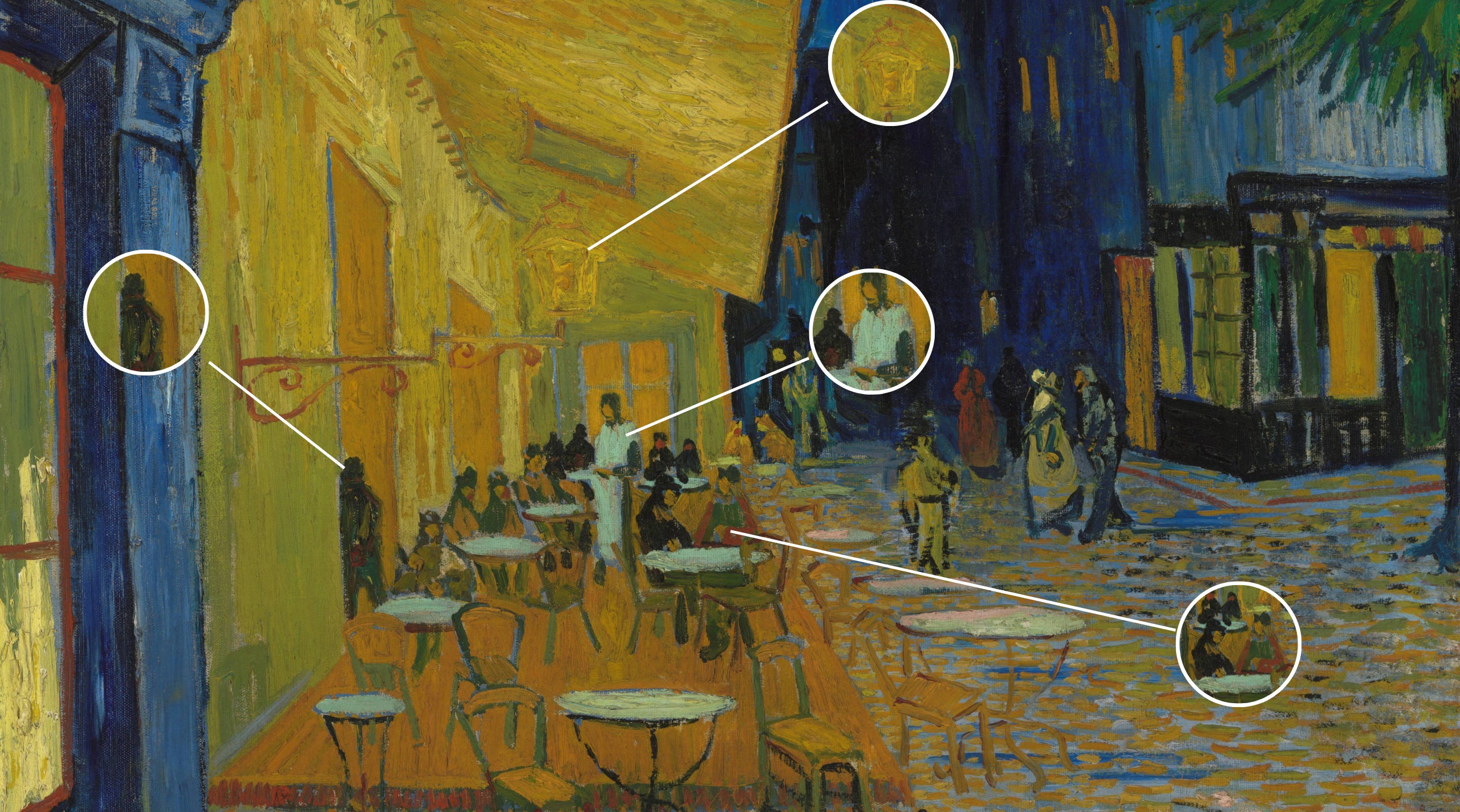
Everything in this painting looks caught on the spot. The customers bent over their drinks, the street sinking away, the stars above the rooftops, set exactly where they truly stood that night over Arles.
And yet he reworks it all.
To the right of the shop stood Roman ruins. He erases them.
Gas has just reached Arles, and the square has filled with street lamps. Van Gogh keeps only one, above the tables. A single light where there were several.
He does not copy the square. He remakes it.
The customers
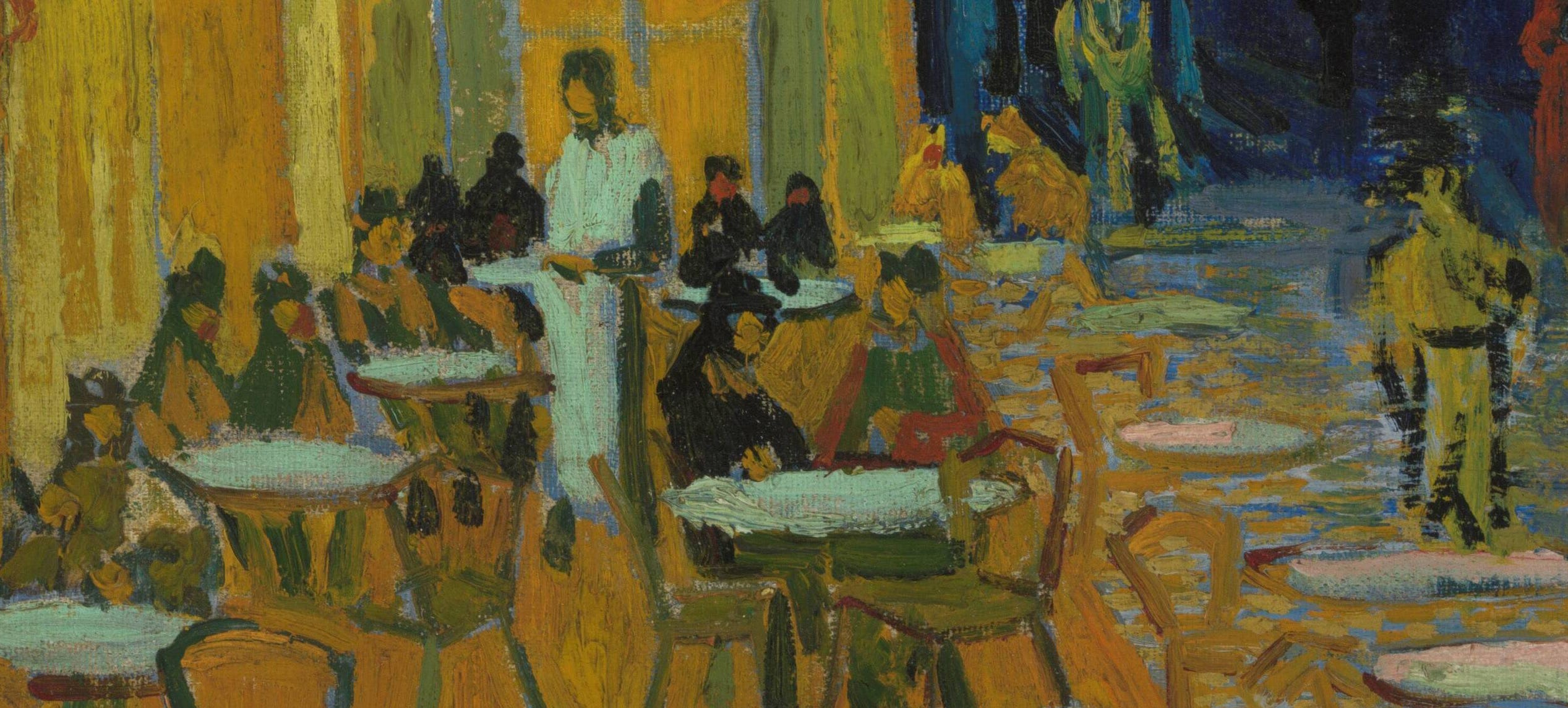
At the tables, under the awning, people are seated.
A café like this, at night, does not draw families. You find laborers there, soldiers from the garrison, night owls, the ones who stay when the rest of the town has closed.
Van Gogh gives them no faces. A few strokes are enough, a back, a hat, a shoulder hunched over a glass.
They sit in small groups, all turned toward the same point, at the center of the terrace.
The standing man
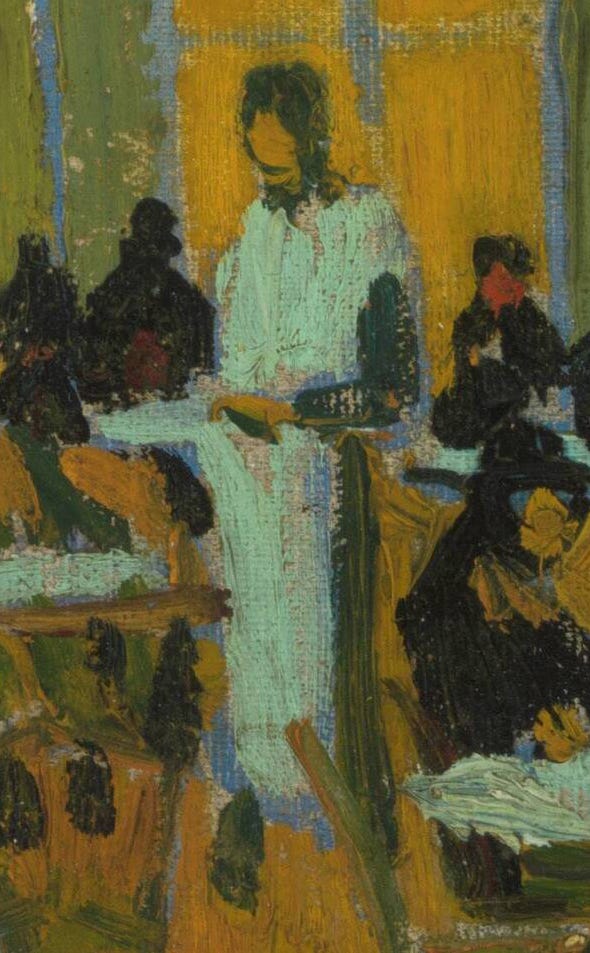
In the middle, a man stands upright.
He is the only one on his feet. The others are seated. He stays planted at the center, among the tables, in pale clothing that sets him apart from the rest.
They say he is the waiter, the one who serves. Maybe.
But look at how the terrace is built around him. The tables, the chairs, the customers, the street itself open out on either side of this man, as if arranged to place him there.
Keep him in mind.
The windows
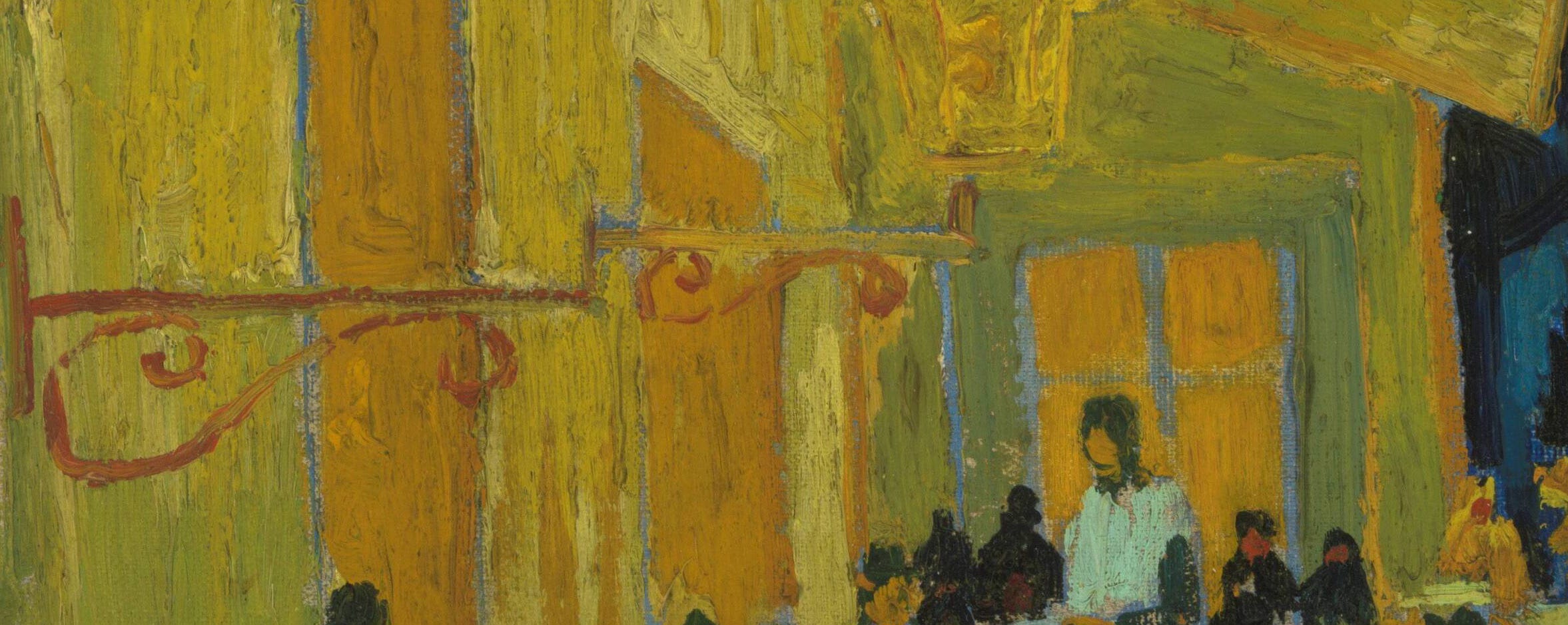
Behind him, at the back, a window. Others run along the street, on the neighboring houses.
Compare them. The ones along the street are painted fast, in a few strokes.
The one at the back, right behind the head of the man in pale clothing, does not look like them. It is drawn with a care that no other one gets. Its bars are traced apart.
Remember it.
Keep learning art the fun way


The door
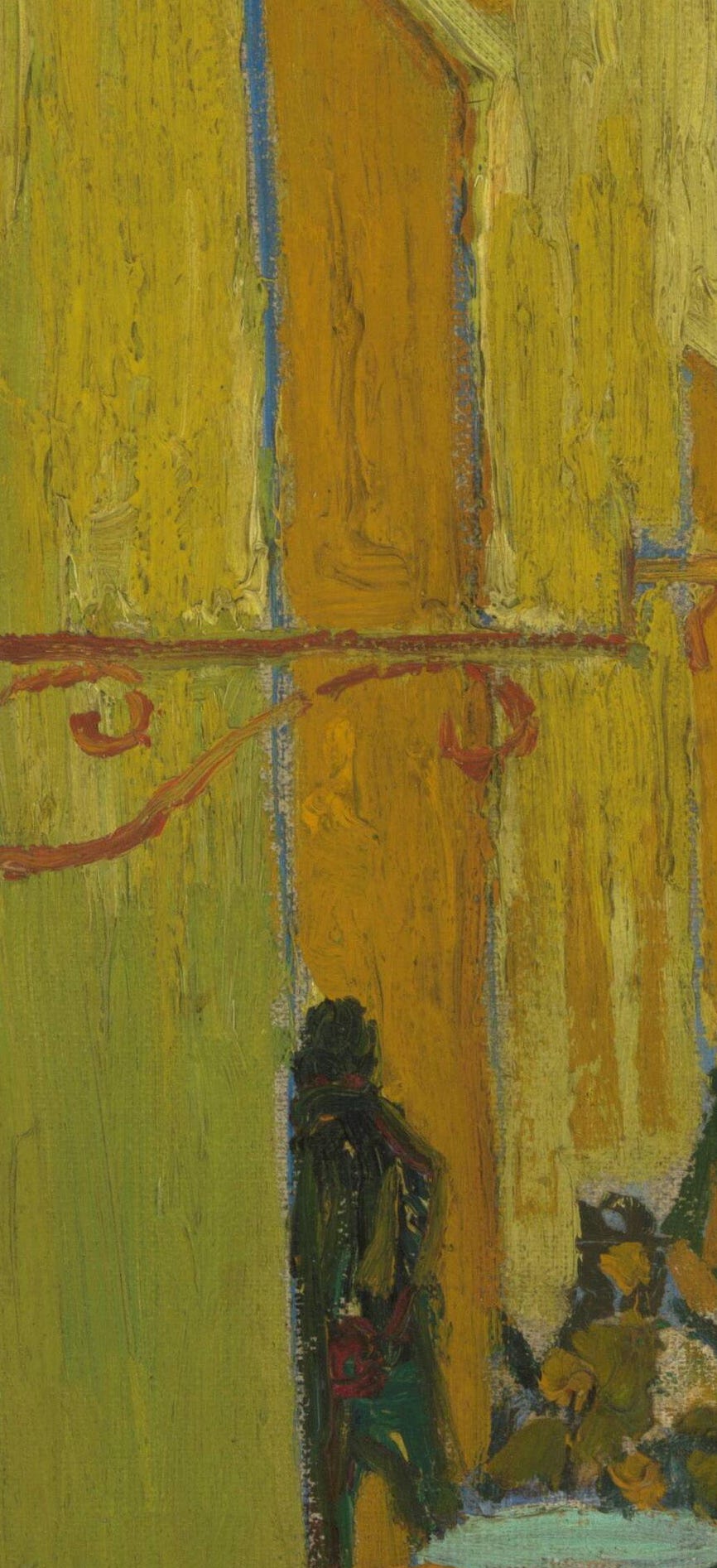
Move to the right, toward the entrance of the café.
A door opens onto the interior, dark. On the threshold, a figure, one foot already on the other side, about to vanish.
One man alone leaves the light of the terrace for the darkness inside, while all the others stay.
Step back, and look at the whole scene.
A café terrace, a summer evening in the south of France? The truth is something else entirely. It comes down to what Van Gogh wanted to be, before he became a painter…