
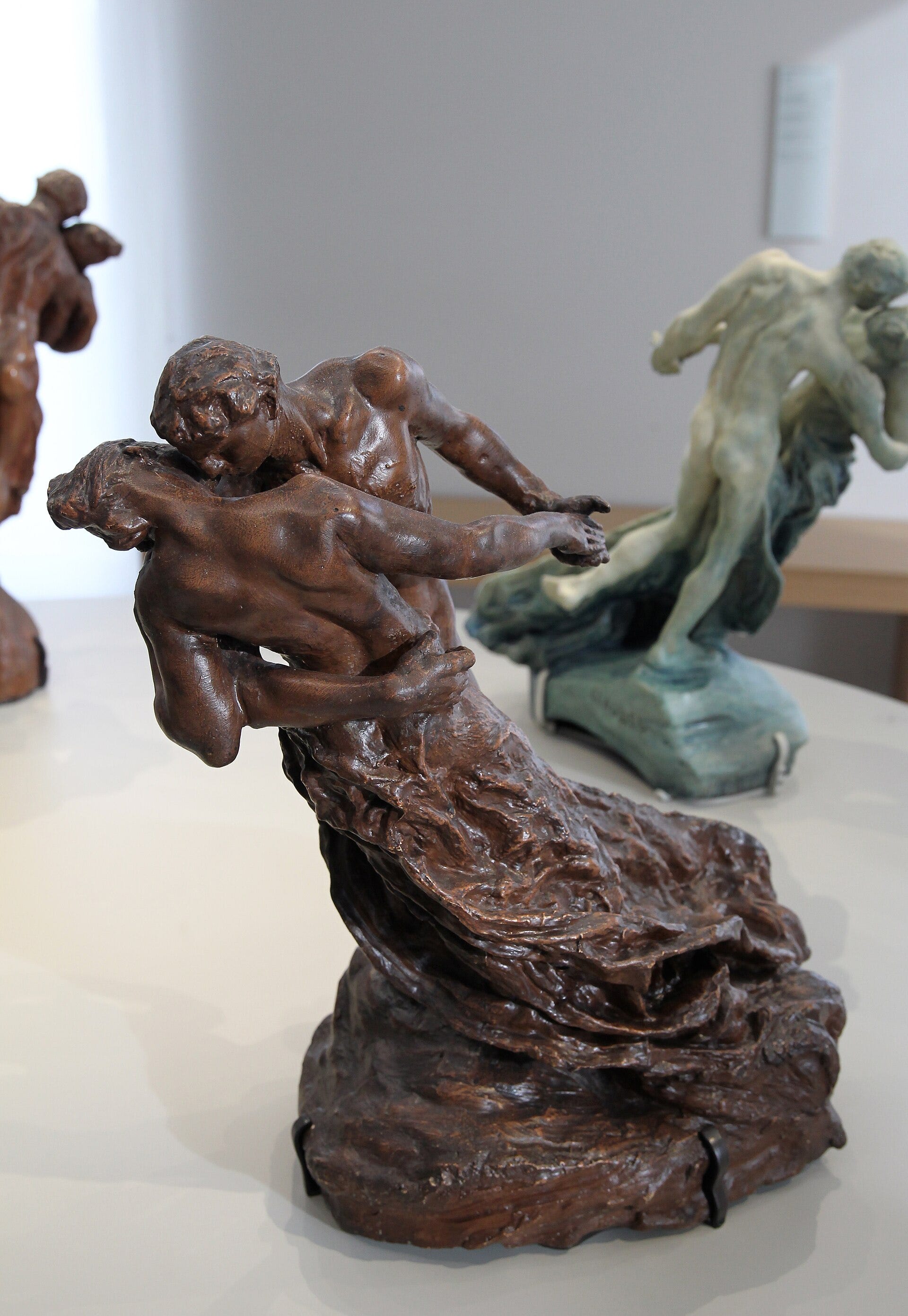
Camille Claudel (1864 to 1943) was a French sculptor, born in Fère-en-Tardenois, a small town in northern France. She is famous for The Waltz, two dancers whirling in each other's arms.
Camille Claudel was the student, then the assistant and the lover, of Auguste Rodin, the most famous sculptor of her time. For the rest of her career, critics kept comparing her work to his.
In 1913, a week after her father died, her family had her placed in an asylum, as psychiatric hospitals were then called. She spent the last thirty years of her life in asylums, never sculpted again, and died near Avignon in 1943.
Cool Stories About Art is a newsletter to learn art the fun way.
Join 200,000+ readers and get:
10 new art stories / month
The entire archive of content (140+ articles)
Comment, ask questions, and chat with other readers
In the fall of 1876, the Claudel family moved into a large old house in Nogent-sur-Seine, a small town about sixty miles southeast of Paris. The father, Louis-Prosper Claudel, was a government official.
Camille, almost twelve, was the eldest of three children. Her little brother Paul, eight, was the one she felt closest to.
In the house at Nogent, Camille modeled her first figures in clay, among them David fighting Goliath and a Napoleon. Paul, their sister Louise and the family's servants had to pose for her.
Camille's mother thought sculpture was no career for a young lady. Her father was not sure he could judge her talent, but he encouraged her.
Louis-Prosper Claudel showed his daughter's figures to Alfred Boucher, a sculptor who had grown up in Nogent and had won second place in the Prix de Rome, the great state competition for young French artists. Boucher saw that Camille had a gift and advised the family to settle in Paris.
In 1881, Camille's mother moved to Paris with the three children. The state art school, the École des Beaux-Arts, refused women, so Camille took classes at the Académie Colarossi, a private school that accepted them.
In 1882, Camille also rented a studio with other young women sculptors, several of them English, and Boucher came once a week to correct their work. That fall, Boucher left for Florence, in Italy, and handed his students over to another sculptor, Auguste Rodin.
Within two years, Camille would be working in Rodin's own workshop. Some thirty years after she met him, she would be shut away in an asylum. How did the gifted girl from Nogent end up there, and would her sculptures ever be seen as hers alone?
In the rest of the story, you'll find out:
what Rodin promised Camille in writing, and what became of the promise.
why a government inspector asked her to put clothes on her dancers.
how one of her figures passed for a Rodin for years.
who refused to let her leave the asylum when her doctors said she could.