

This is a preview. Paid subscribers get the full story.
I’m going to show you a secret that no one noticed for 400 years.
It is hidden in my favorite painting, the one that has moved me more than any other painting in art history: Caravaggio’s “The Supper at Emmaus.”
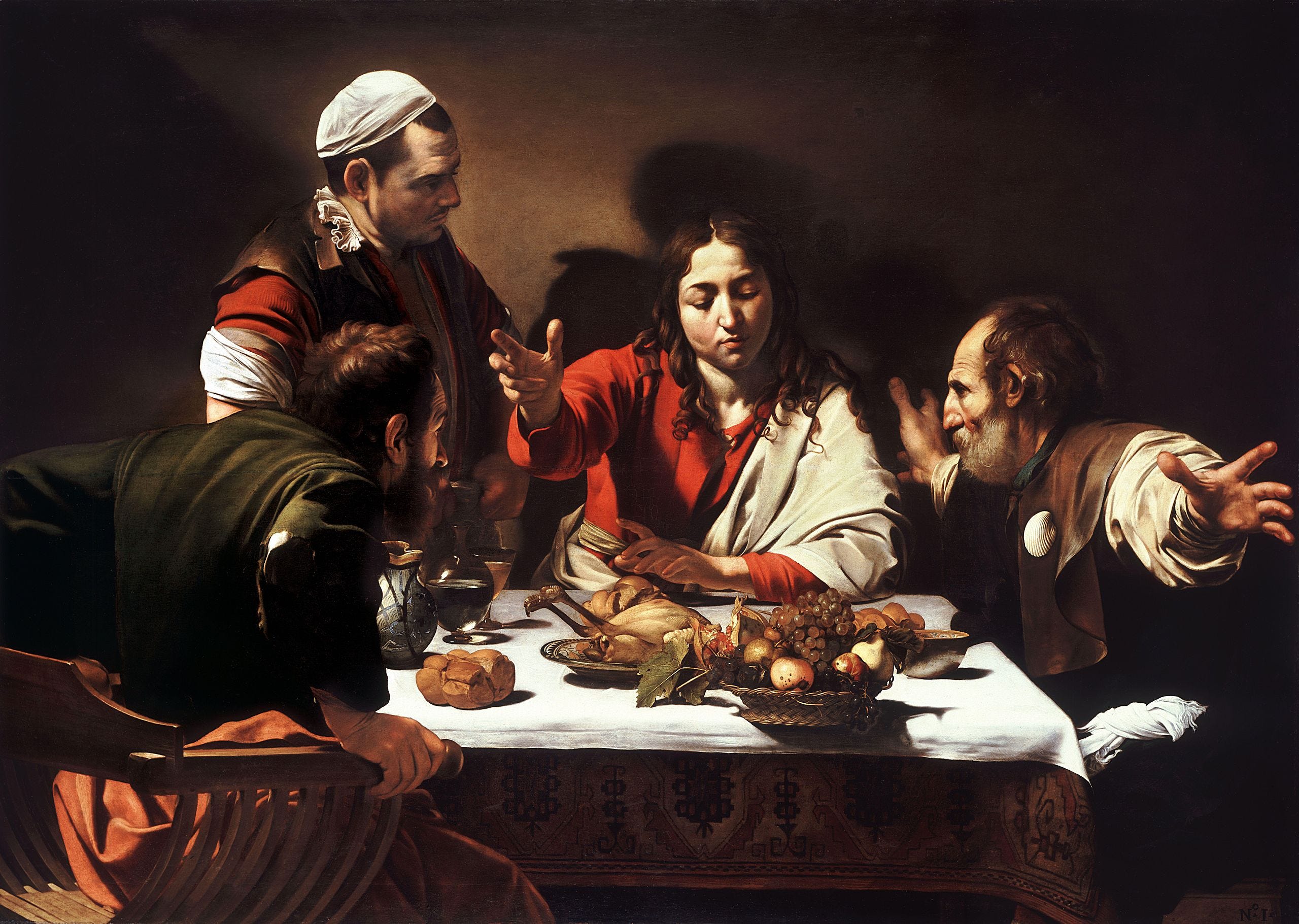
Millions of visitors have walked past it at the National Gallery in London, where it has hung since 1839. Not one of them saw the secret. Not one art historian, either.
And yet it is right there, in plain sight, in the middle of the table.
To see it, you first need to understand the scene Caravaggio painted. It takes place nearly 2,000 years ago, in Jerusalem, three days after the death of Jesus.
That day, two of his disciples leave the city on foot and set off down the road to Emmaus, a village a few hours’ walk away. They are heavy-hearted. They watched their teacher die on the cross. Since morning, a rumor has been spreading through Jerusalem: some women say they found his tomb empty, and they are talking about angels, about a resurrection. The two men cannot make sense of any of it.
Along the way, a stranger joins them. He walks with them, listens to their story, then talks to them about the prophets and the scriptures. His voice sounds familiar, though they cannot say why.
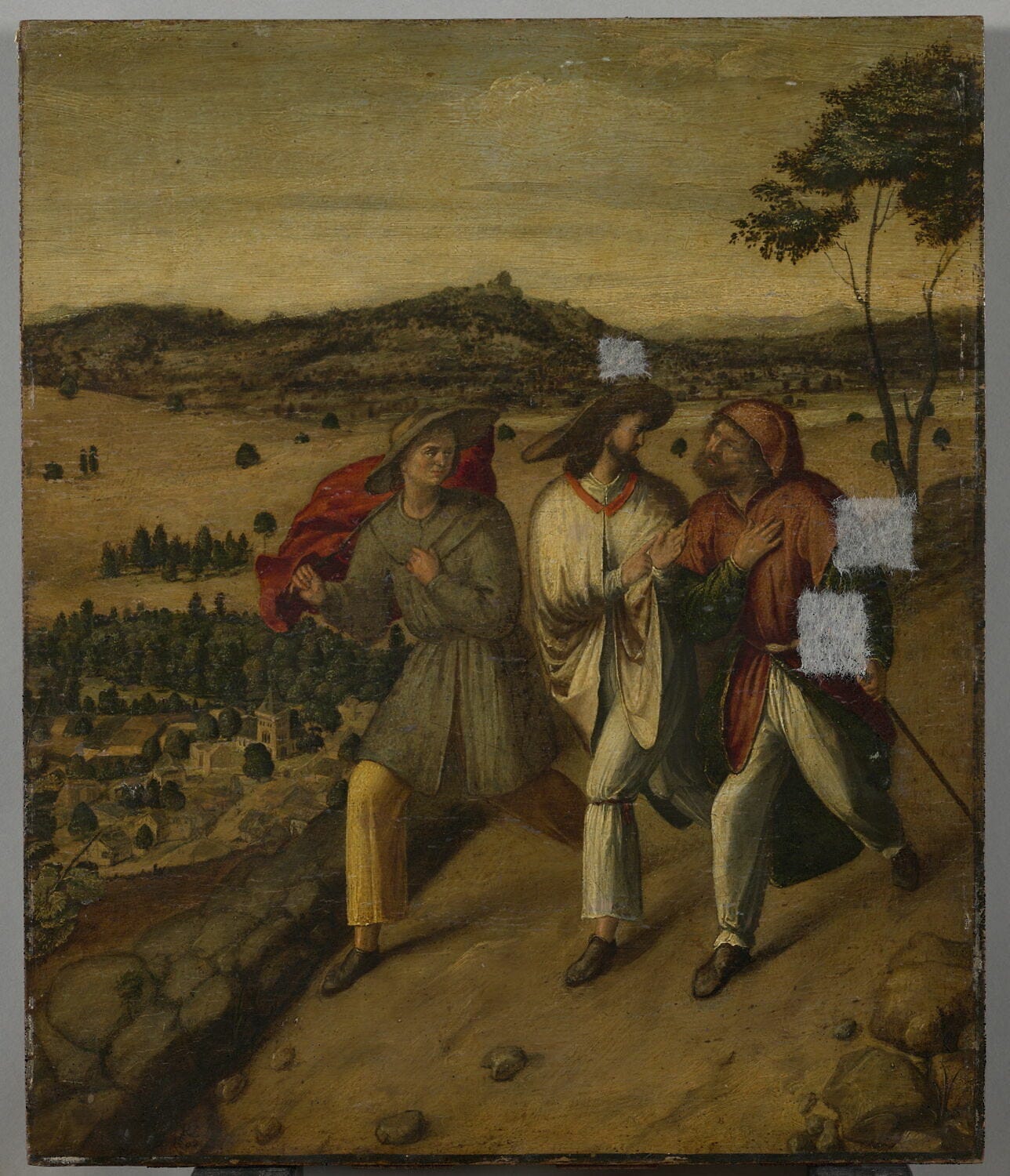
Night is falling when they arrive. The stranger seems about to walk on, but they insist he stay and eat with them at an inn. At the table, the man takes the bread, blesses it, and breaks it. At that gesture, the two disciples recognize him: the stranger is Jesus. Then he vanishes before their eyes.
Know someone who would love these stories? Give them a month or a year, with a note from you. 🎁
In 1601, Caravaggio paints that exact moment, the instant the disciples understand. He is 30, and all of Rome is talking about him. His style shocks as much as it fascinates: he lights his figures as if they were on a stage, plunges everything else into darkness, and paints saints the way he sees people in the street, with dirty feet and laborers’ hands.
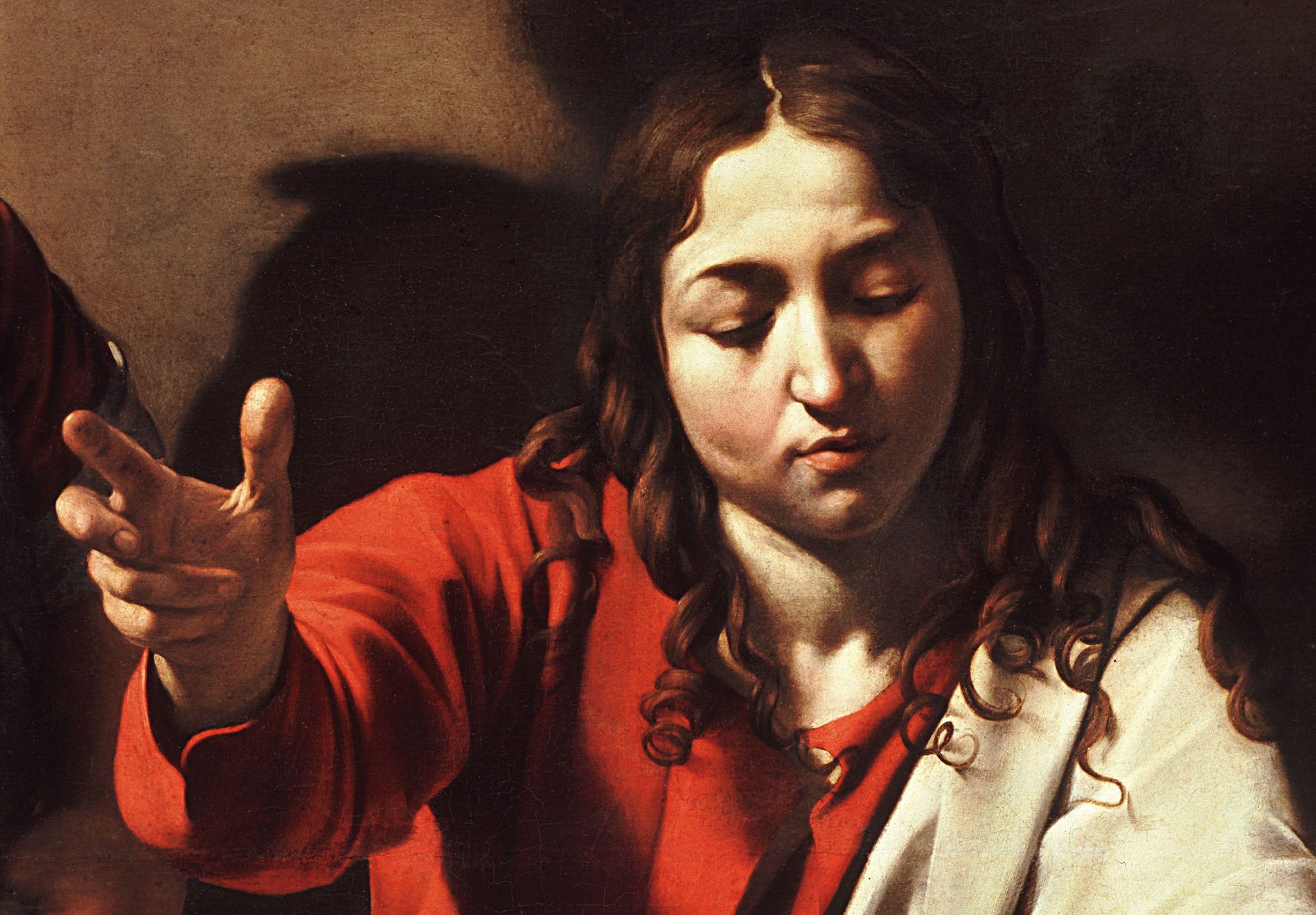
Look at the scene. In the center, Jesus blesses the bread. His face is a surprise: he is 33, yet Caravaggio gives him the features of a beardless young man, almost feminine. Nothing like the bearded Christ you see in every church.
Around him, the two disciples react as if they had seen a ghost. One half rises from his chair, gripping the armrests. The other flings his arms wide, palms open, as if to make sure he is not dreaming. On his chest is a scallop shell: the badge of pilgrims, of those who walk in search of God.
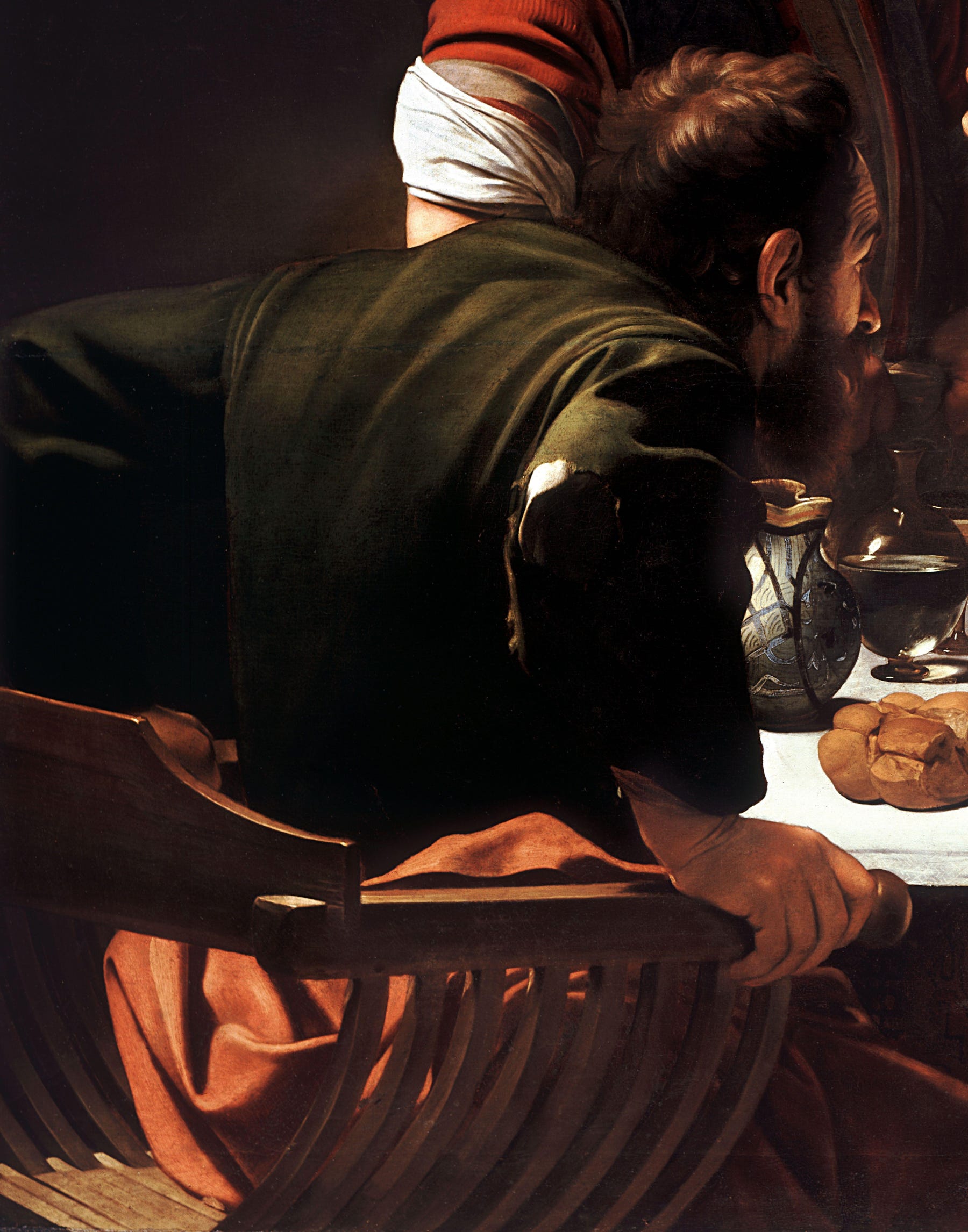
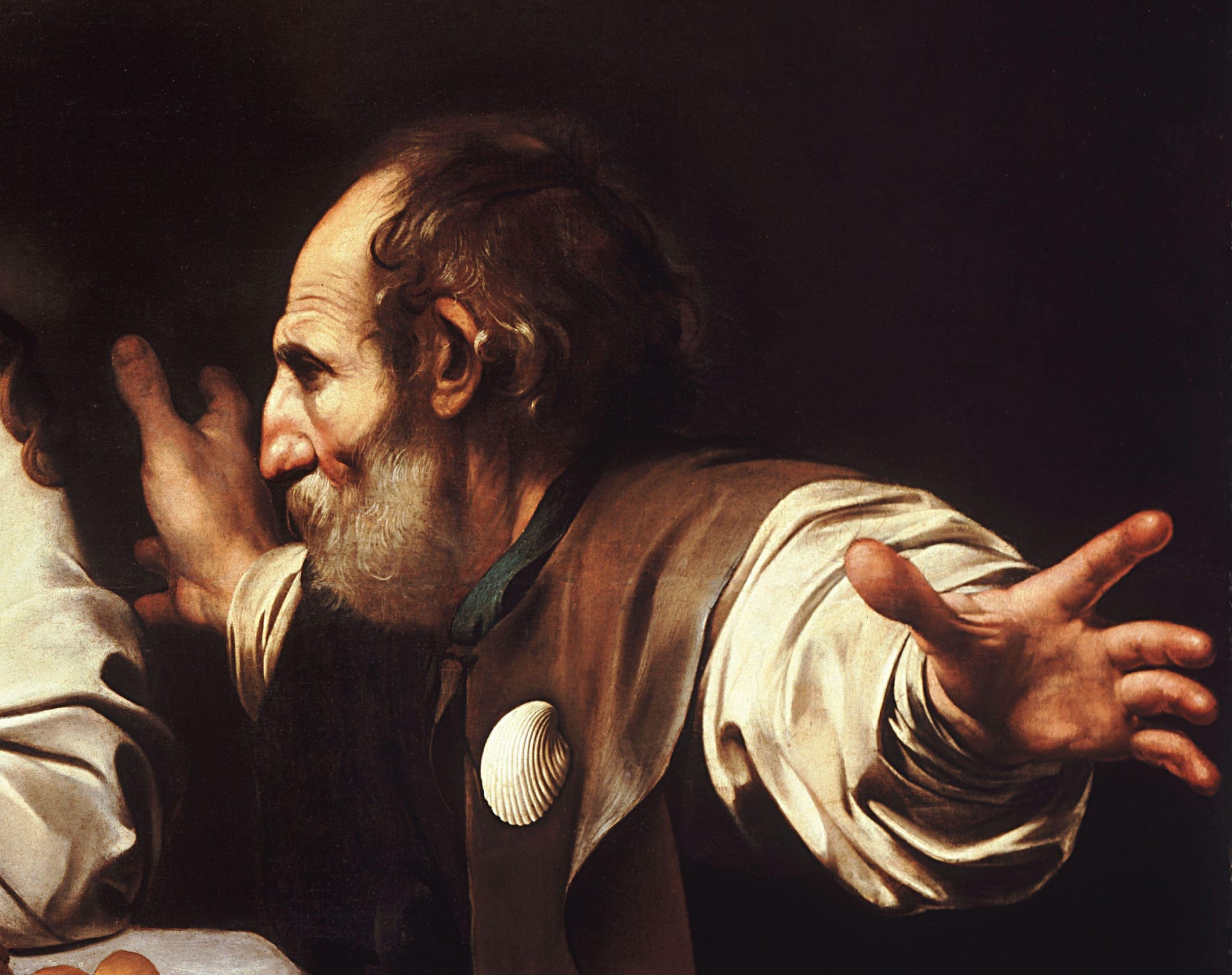
Standing behind Jesus, the innkeeper watches without understanding. His face stays in shadow, while the disciples’ faces are bathed in light. All he sees is three men having dinner. Caravaggio pits those who see the miracle against the one man who remains blind to it.
Now look down at the table. Nothing here is left to chance. The bread and wine recall the Mass, where the priest blesses bread that, for Catholics, becomes the body of Christ. Here, Jesus repeats his gesture from the Last Supper.
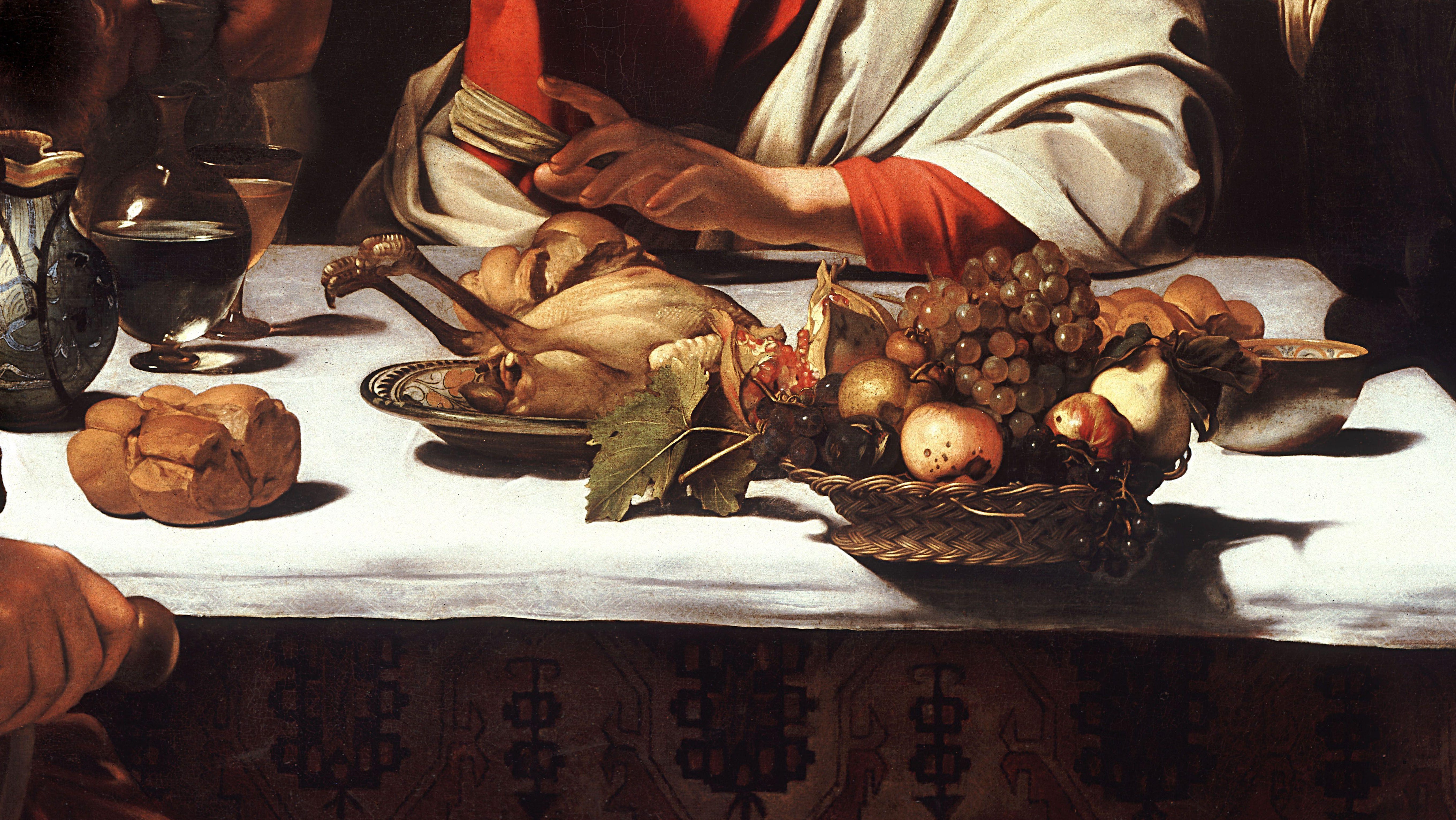
In the basket, each fruit tells part of Christ’s story. Grapes make wine, and wine stands for the blood Christ shed on the cross.
The split pomegranate speaks of the Resurrection. Its rind is hard, dry, and dull, like something dead. Yet when it splits open, it releases hundreds of red seeds, bursting with juice. For Christians, it stands for Christ’s tomb: a lifeless shell from which life springs.
The apples recall the sin of Adam and Eve, which Christ’s coming washes away.
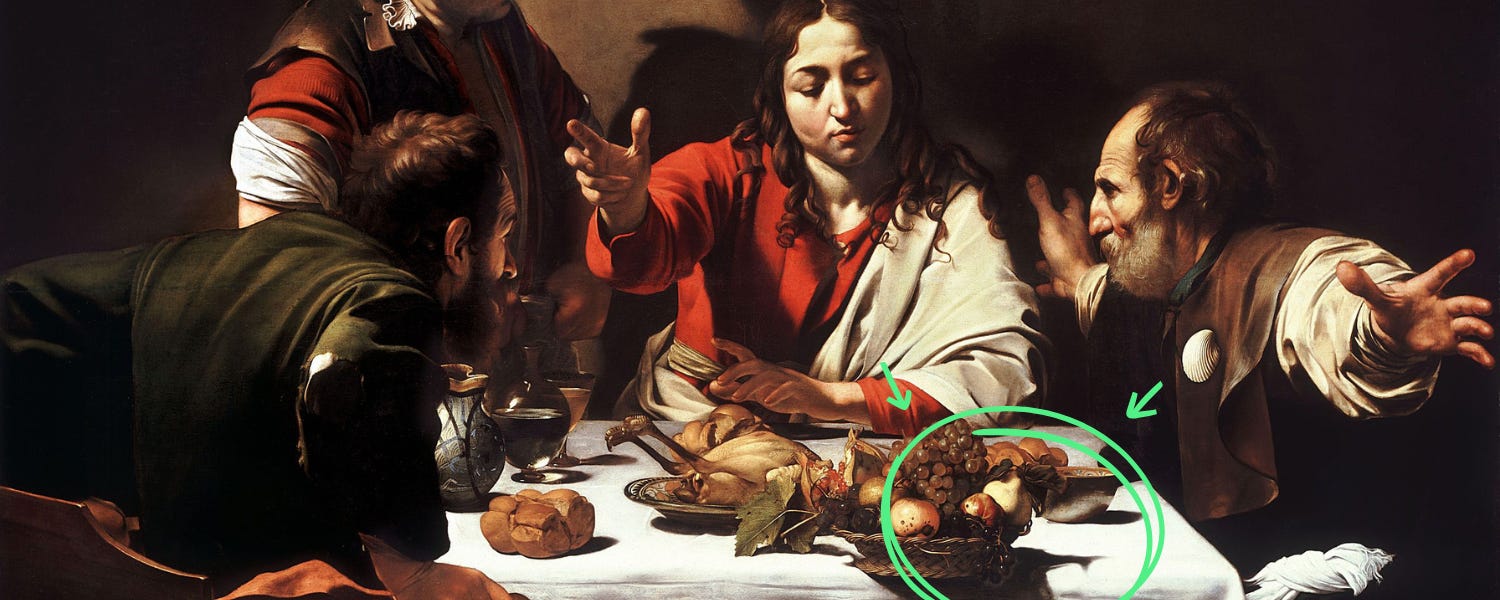
I could look at this basket for hours. It overflows, balanced on the edge of the table, as if it were about to tip into your hands. The leaves droop, the fruit looks real, and every strand of wicker is woven with astonishing care. For four centuries, visitors have admired it for its realism.
Too perfect, perhaps.
In 2021, Kelly Grovier, an art critic writing for the BBC, is working on an article about the painting. He studies the basket up close, for hours, examining the weave strand by strand. Then he notices a detail no one had ever pointed out: two strands of wicker have worked loose from the weave. One runs upward, the other downward, and they cross in the middle.
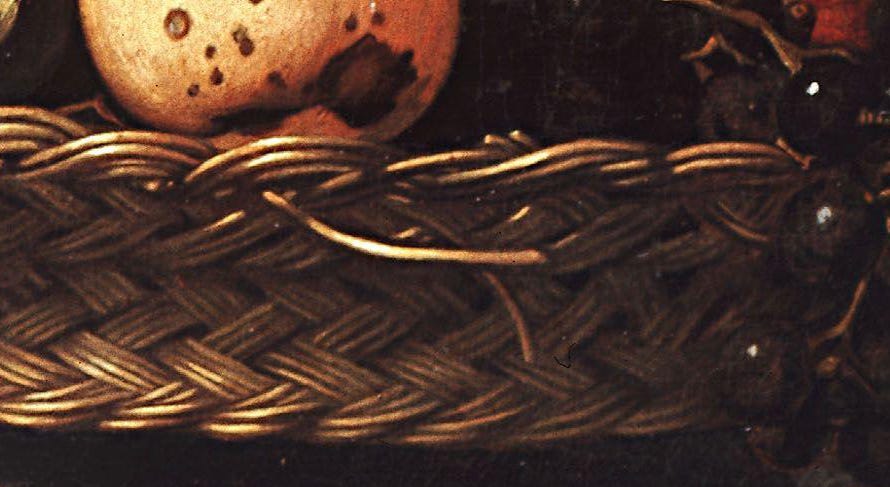
Intrigued, he looks down at the white tablecloth, just beneath the basket. The shadow the basket casts there does not match the shape of the fruit above it.
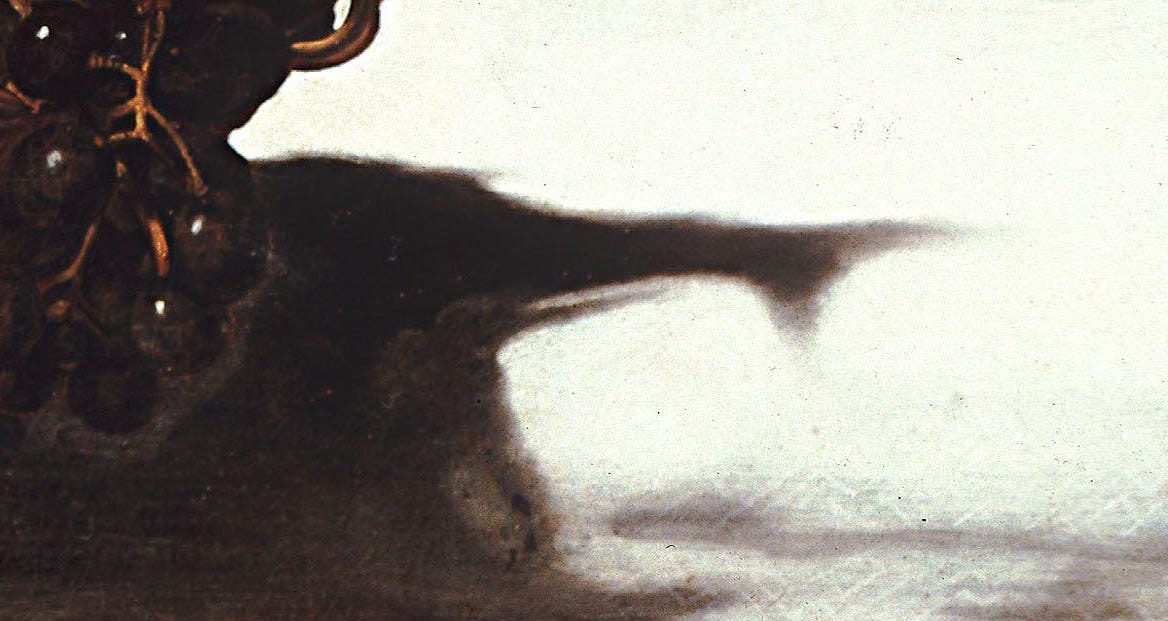
Grovier freezes.
Caravaggio, the painter who copies reality right down to his apostles’ dirty feet, has painted a false shadow.
What You’ll Discover
The secret sign hidden in the basket
Why this sign could cost you your life
Why Caravaggio painted an impossible shadow
Why this Jesus doesn’t look like Jesus
The war being fought on this table
200,000+ readers learn art the fun way.
Paid subscribers get the full story. You’ll also get:
10 new stories / month
The full archive (150+ Art stories)
Your personal art guide. Comment, ask questions, DM me anytime
There’s only one person behind Cool Stories: me. Paid subscribers make it possible.
Less than a coffee a month. Cancel anytime.
Apple user? Subscribe at coolstoriesabout.art, not via the app. Apple adds 30% to the price.