
Art censorship has a specific tool: the fig leaf. For four centuries popes, kings and museum directors ordered painted drapery, plaster leaves and metal shields added to finished works. Here is who censored what, when, and how much of it is still there.
The pope who hired a breeches maker
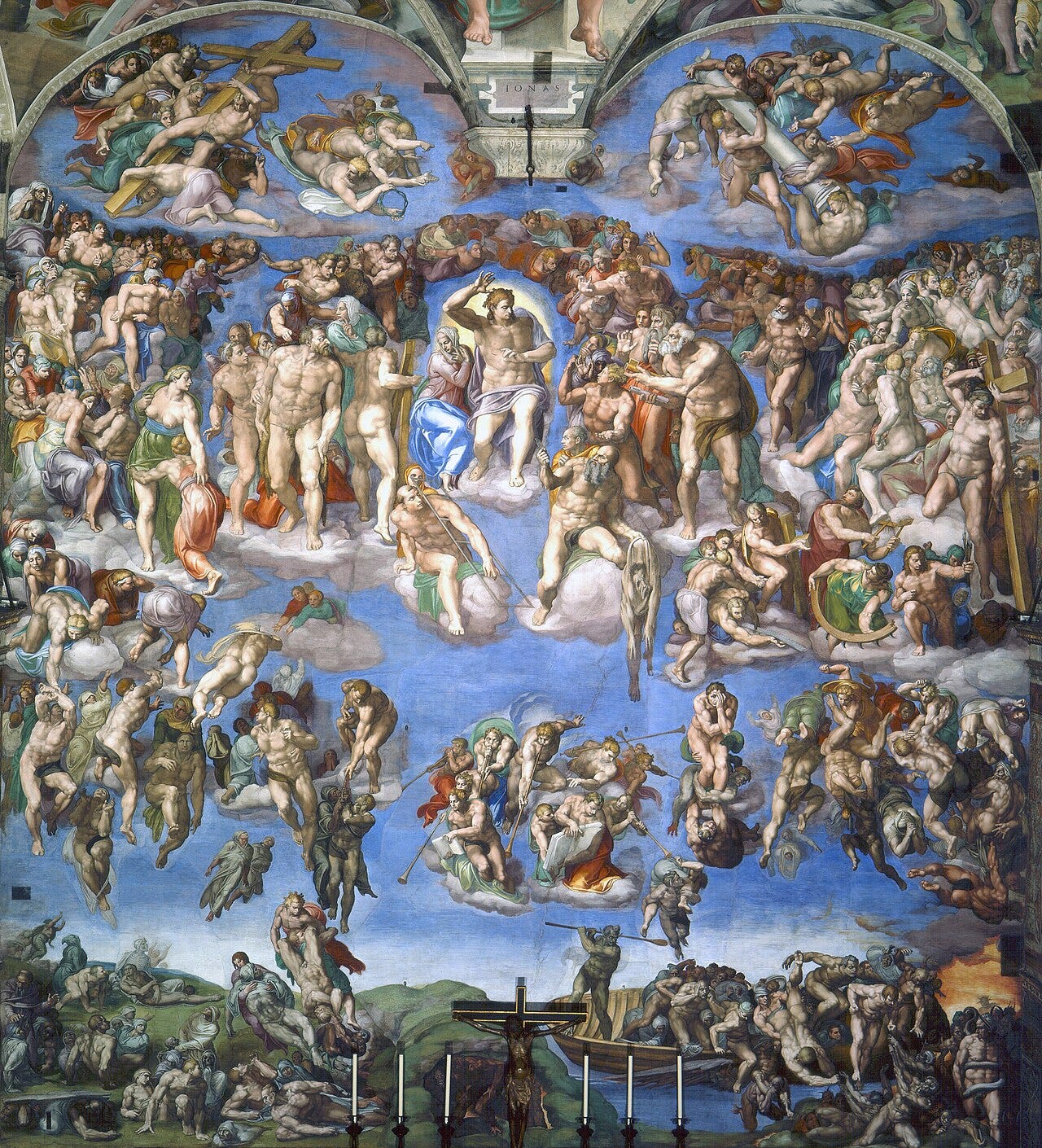
When Michelangelo finished the Last Judgment in 1541, the Vatican’s own master of ceremonies said it belonged in a bathhouse. Michelangelo painted him into hell with donkey ears.
The order to cover the nudity came in January 1564, a few weeks before Michelangelo died on 18 February. The work fell to Daniele da Volterra, his friend, who painted the loincloths in 1565 and earned the nickname Il Braghettone, the breeches maker.
Restorers in the 1980s and 90s removed some later additions but kept Volterra’s, because by then the censorship was itself a historical document.
Daniele da Volterra was a friend of Michelangelo and took the job in 1565, the year after Michelangelo died. The 1980s and 1990s restoration removed some later additions but kept his, on the grounds that they are now four and a half centuries old and part of the object.
The plaster leaf made for a queen
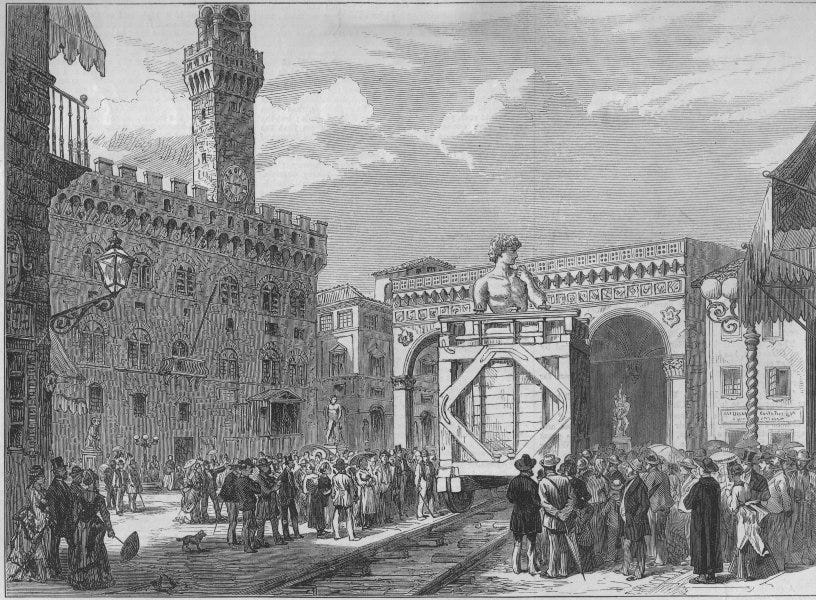
The Victoria and Albert Museum owns a plaster cast of Michelangelo’s David. It also owns a detachable plaster fig leaf, about half a metre tall, made to hang on it.
Museum tradition says it was prepared for royal visits so that Queen Victoria would not be confronted with the statue as carved. The leaf is displayed today in its own case, behind the cast.
The cast of Michelangelo’s David was given to Queen Victoria in 1857, and a detachable plaster fig leaf was made to hang on it for royal visits. It sits in a box at the Victoria and Albert Museum and is occasionally displayed on its own.
Learn art the fun way
The nude that got its owner summoned by the Inquisition
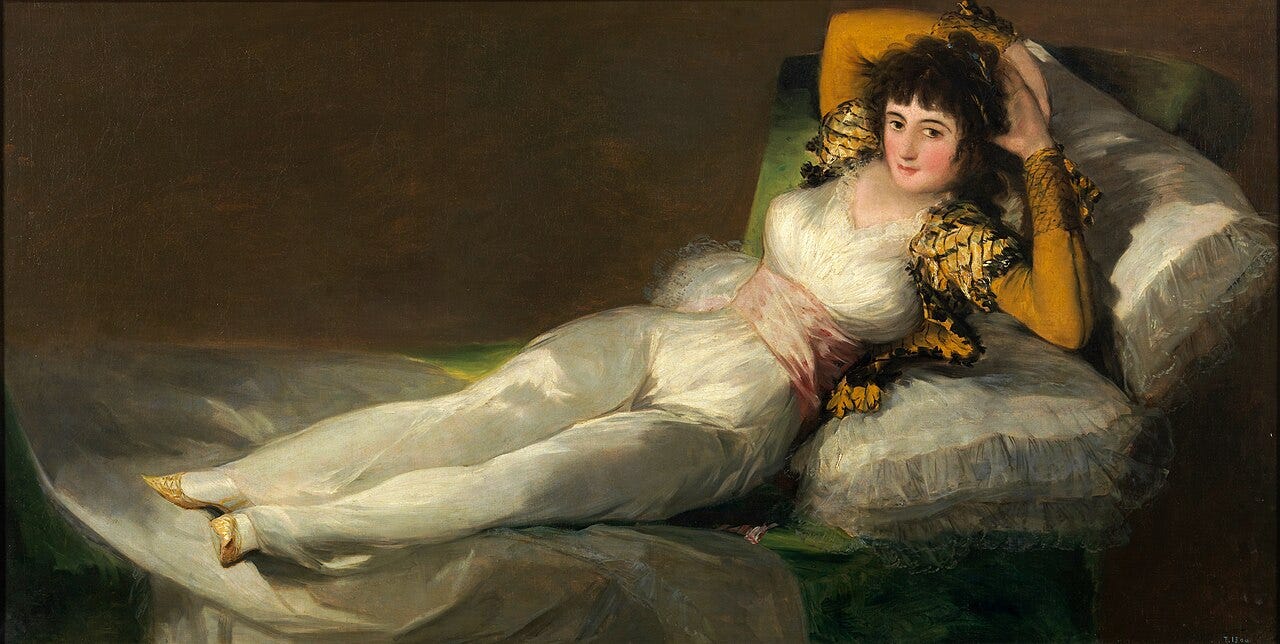
Goya’s Nude Maja hung in a private cabinet of the minister Godoy, behind a clothed version rigged to swing aside. In 1815 the Inquisition summoned Goya to explain it.
His answers have not survived. Both paintings are now in the Prado, hung side by side, which is the opposite of what the cabinet was built to do. I go into his whole story in Francisco Goya.
Goya was called before the Spanish Inquisition over the Naked Maja, and both Majas were seized in 1813 from the collection of Manuel Godoy. He was asked who commissioned it and reportedly gave no useful answer.
The strap that ruined a reputation
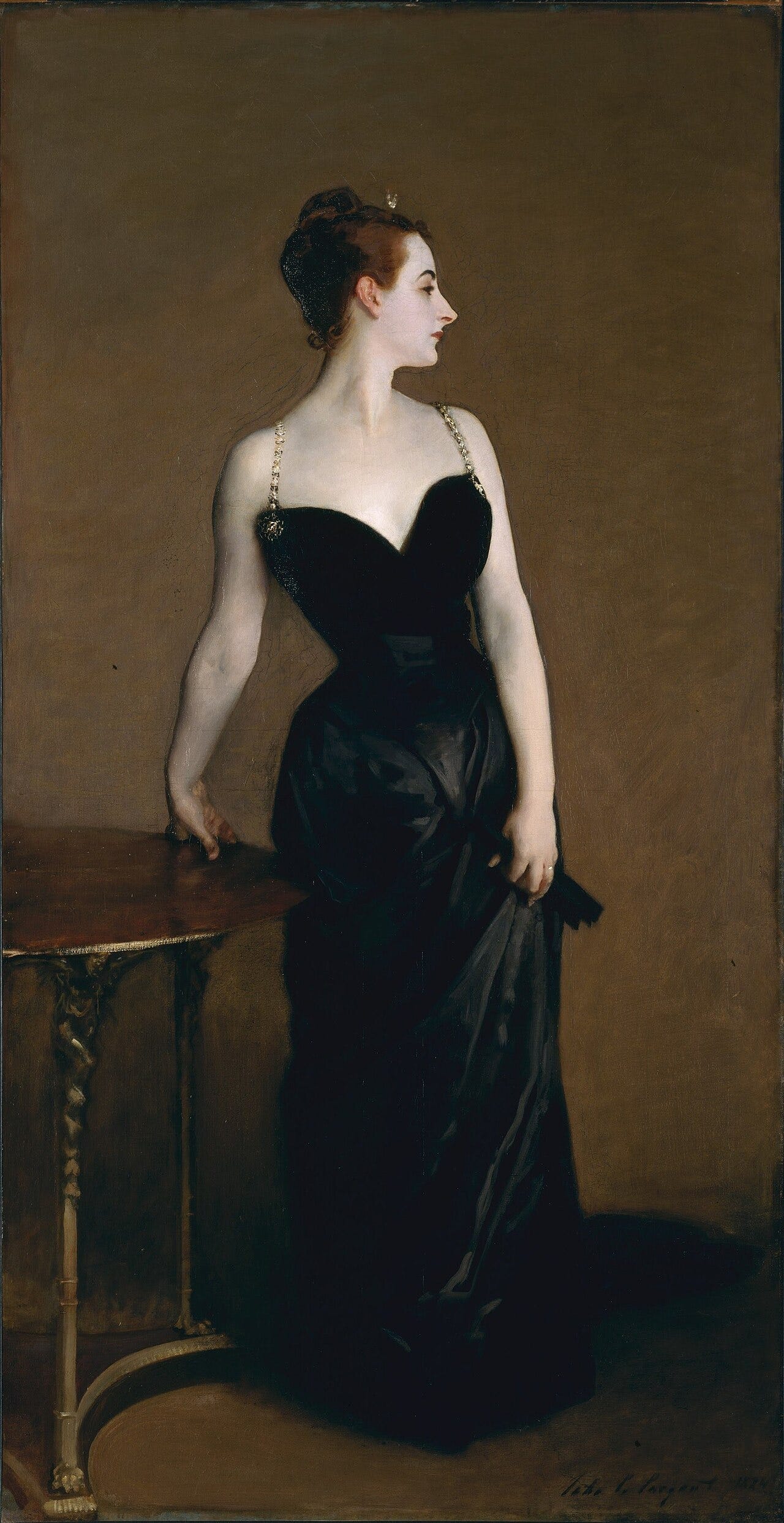
Sargent exhibited Madame X in 1884 with one jewelled shoulder strap fallen off the shoulder. Paris laughed, the sitter’s mother begged for the painting’s withdrawal, and Sargent repainted the strap upright.
The original position is still visible in an earlier photograph. He left France for London and the sitter never recovered socially. The full affair is in Madame X, the scandal.
The nude that spent a century behind a panel
Courbet painted The Origin of the World in 1866 for a private collector, and for over a century almost nobody saw it. Its last private owner kept it hidden behind a wooden panel that slid aside.
The Musee d’Orsay hung it publicly only in 1995. Social platforms still remove photographs of it, which means the censorship simply changed hands. More on him in Gustave Courbet.
Courbet painted The Origin of the World in 1866 for the Ottoman diplomat Khalil Bey. It passed through several private hands, including the psychoanalyst Jacques Lacan, and only entered the Orsay in 1995.
The Nazi word for art they hated
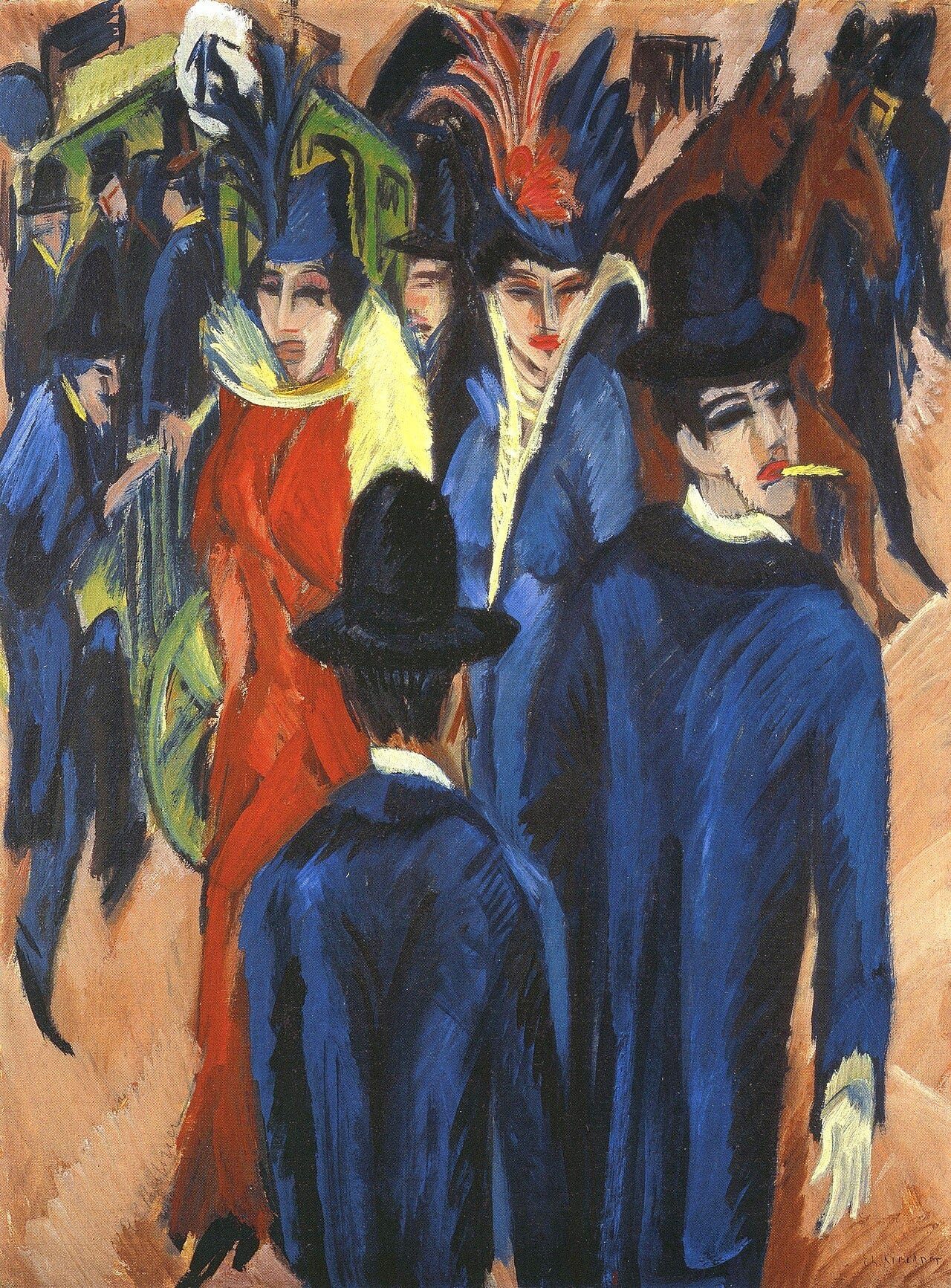
In 1937 the German state seized around 16,000 works and mounted the Degenerate Art exhibition in Munich, hanging modern painting crookedly with mocking labels.
Over two million people came, more than any modern art show of the period. Many of the works were sold abroad or burned. Kirchner, one of the targets, took his own life the following year.
The Degenerate Art exhibition opened in Munich in July 1937 with around 650 confiscated works, deliberately hung badly with mocking labels. More than two million people saw it, which was more than the approved show running next door.
What the Victorians did to their own collections
British museums of the 19th century bought classical nudes and then argued about who could see them. The British Museum kept a Secretum, a locked cabinet of erotic antiquities, from 1865.
Access required a written application and a good reason. The collection was only fully reintegrated into the main displays in the 20th century. The wider Victorian appetite is in Victorian erotic art.
The Victoria and Albert bought the Cast Courts collection to educate art students, and then had to manage the nudity in it. Museums across Europe kept locked rooms, and the British Museum had a Secretum, a secret cabinet, from 1865 to the 1960s.
Five things people get wrong about censorship
Why were fig leaves added to statues? To cover genitals on classical and Renaissance nudes, usually by later owners, churches or museums rather than the original artists.
Is the V&A fig leaf real? Yes. It is a plaster leaf made for the museum’s cast of David, displayed today in a case beside it.
Did the Vatican remove Michelangelo’s censorship? Only partly. The restorers of the 1980s and 90s kept Daniele da Volterra’s loincloths as part of the work’s history.
What was Degenerate Art? A 1937 Nazi exhibition of confiscated modern works, staged to ridicule them. It drew over two million visitors.
Is art still censored today? Yes, mostly by platforms. Courbet’s Origin of the World is regularly removed from social media, 160 years after it was painted.
Where to see the covered and the uncovered
The Prado hangs both Majas together, the Sistine keeps Volterra’s breeches, and the Met shows Madame X with her strap where Sargent finally put it. The Rijksmuseum holds the classical nudes the Victorians argued over.
One closing detail worth keeping: the V&A leaf was fitted with two hooks so it could be hung and removed in seconds. Censorship, in that case, was designed to be temporary and reversible, which tells you exactly how seriously anyone believed in it.
The Nazis reserved their loudest contempt for abstraction. What they were attacking is in famous abstract paintings.
Fig leaves and locked cabinets belong to a longer record of art history's darker turns. Grief, plague, madness and violence get the same treatment in Dark Paintings: A Guide to Art History's Macabre Side. Some of these cases went further than a fig leaf, into lawsuits and public outrage, the subject of The Most Controversial Paintings.