
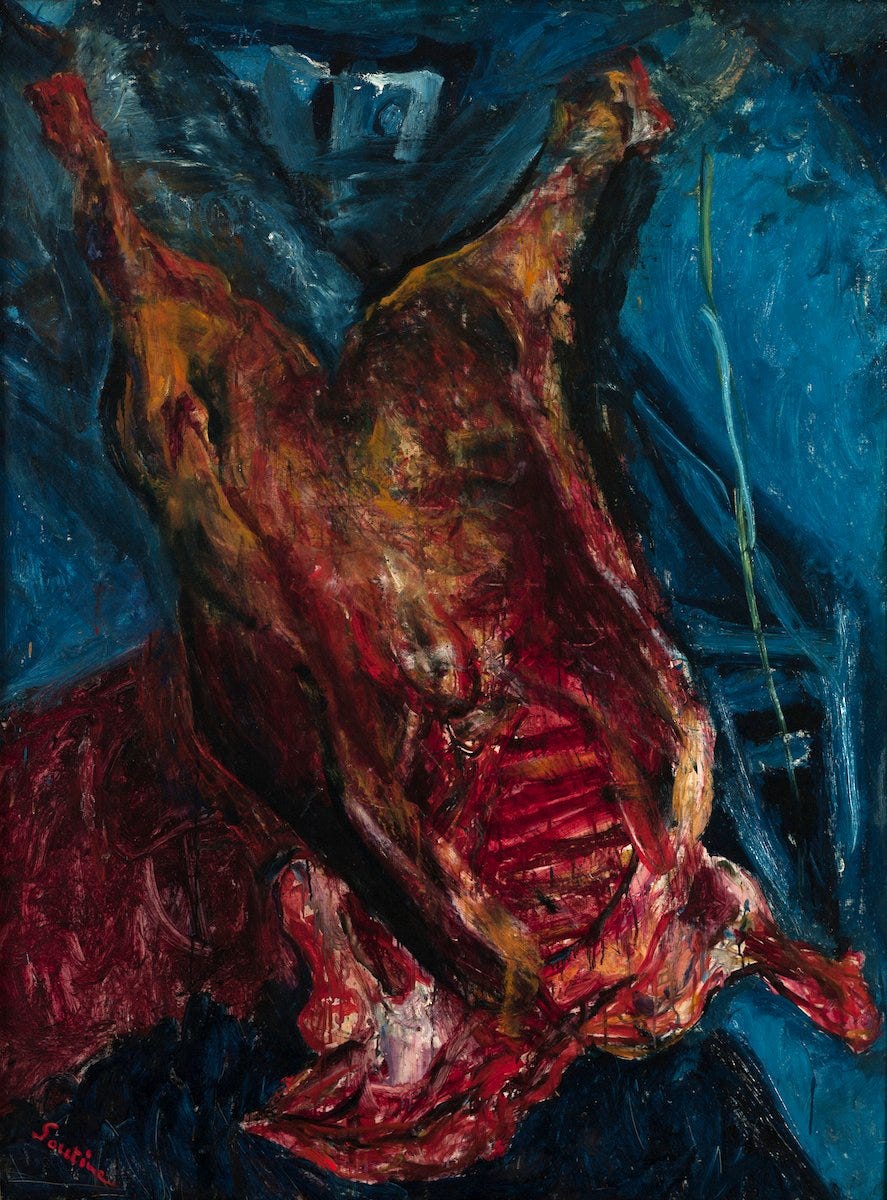
Chaim Soutine was a Jewish painter from a village near Minsk who reached Paris in 1913 and became famous for the beef carcass. He hung a side of beef in his studio and painted it as it rotted, he slashed and burned his own canvases, and an American collector bought more than fifty of his paintings in one deal. Born in 1893, he died in occupied Paris in 1943.
People who type his name usually want the meat, and the meat is the right place to start. It is also where the usual story goes wrong.
Cool Stories About Art is a newsletter to learn art the fun way.
Join 200,000+ readers and get:
10 new art stories / month
The entire archive of content (1,000+ articles)
Comment, ask questions, and chat with other readers
The usual story says Soutine was a wild man who painted in fits, and the carcass is the proof. Around 1925 he bought a side of beef at La Villette, hung it in his studio and painted it day after day while it rotted. The neighbours complained about the smell and the flies, then called the police, and Soutine lectured the officers on why his work mattered more than their hygiene.
But the wildest paintings of the century began with a visit to a museum. Soutine had stood in the Louvre in front of Rembrandt's Slaughtered Ox, painted in 1655, and he went home to build his own. He was following a master, not an impulse.
He was not proud of the results, either. His dealer found canvases hidden in cupboards and Soutine trying to burn them. He slashed the ones he disliked with a kitchen knife, and when he could afford it he bought his early work back to destroy it. By one estimate, only one of his paintings in ten survives.
What You'll Discover
What a drawing cost him at thirteen.
Who vouched for him to a dealer.
What he did to his own canvases.
What a stranger bought in 1922.
What he saw in rotting meat.
Who he painted besides the beef.