
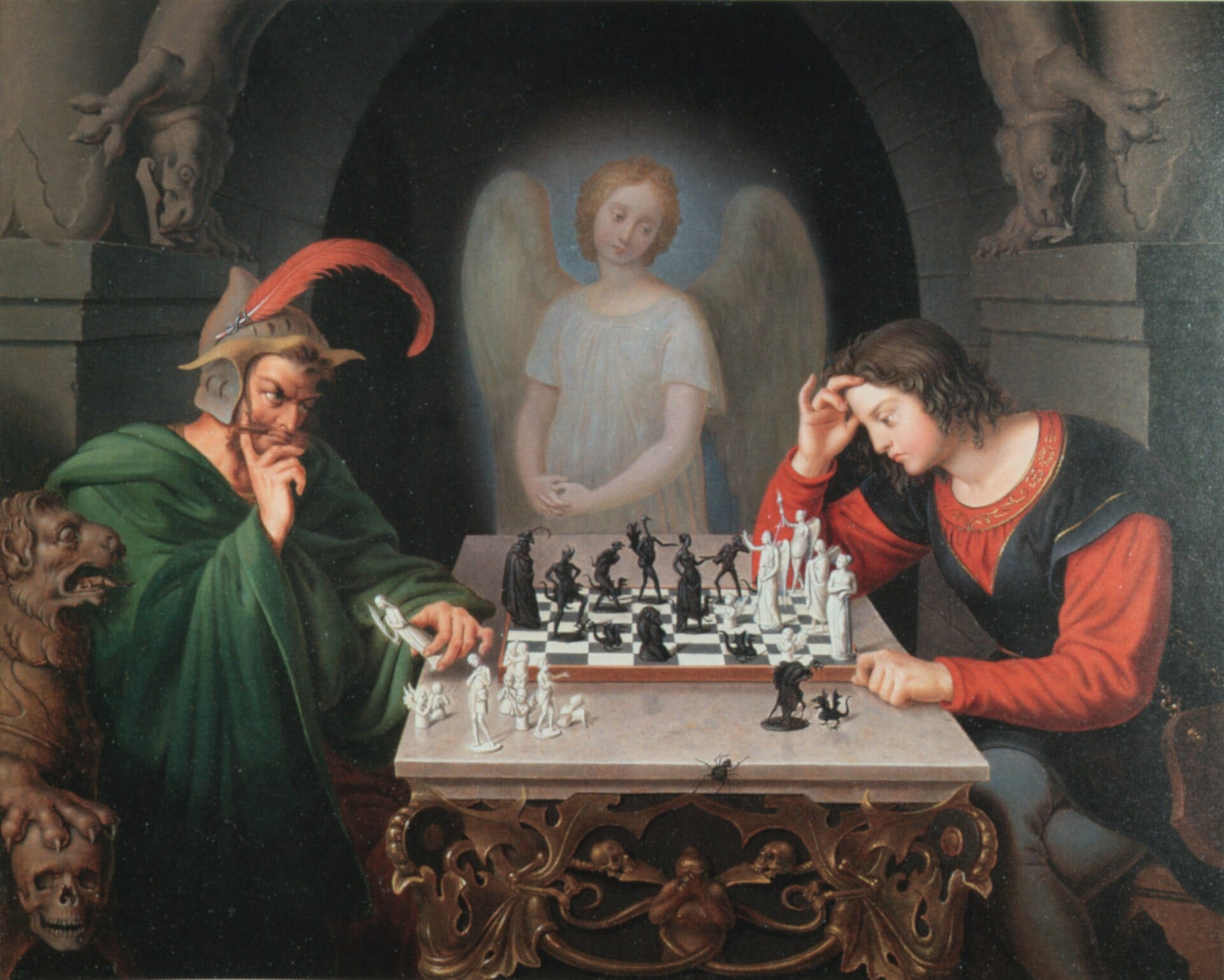
The painting known as Checkmate is The Chess Players, a scene by the German artist Moritz Retzsch, first published as an etching in Leipzig in 1831. A devil in a green cloak plays chess against a young man for his soul, while an angel in white stands behind the table and watches.
Its fame comes from a legend, first printed in 1888, in which a great chess player, most often named as the American champion Paul Morphy, studies the board and finds a way to save the young man. No record places the picture in the Louvre, and the small oil version is in private hands.
Cool Stories About Art is a newsletter to learn art the fun way.
Join 200,000+ readers and get:
10 new art stories / month
The entire archive of content (140+ articles)
Comment, ask questions, and chat with other readers
What is the meaning behind the Checkmate painting?
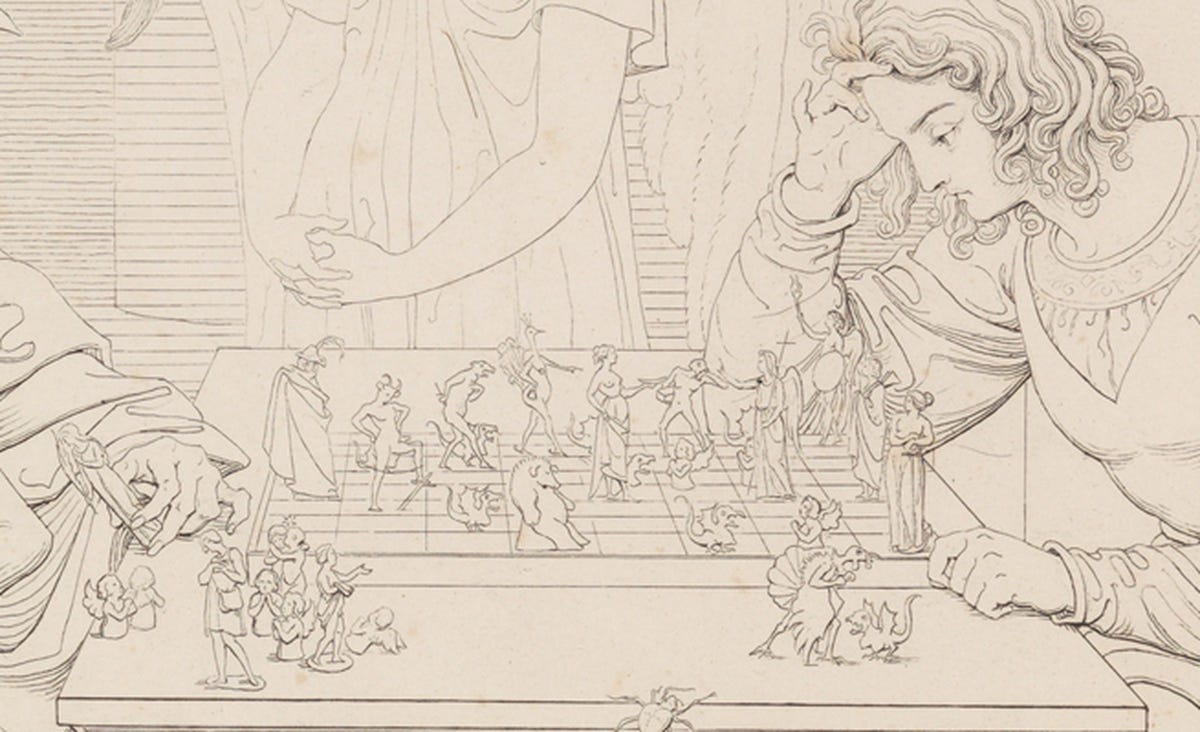
Under a low stone vault, a young man leans over a chessboard, his forehead in his hand, sure the game is lost, while across the table the devil already holds one of his pieces…
What You'll Discover
What each small figure on the board stands for
Which smiling angel Retzsch painted for himself
How a London cartoonist sat two politicians at the board
Where a dinner in Virginia gave birth to the legend
Why nobody can replay the position with certainty
How an American preacher finished the game in 1870