
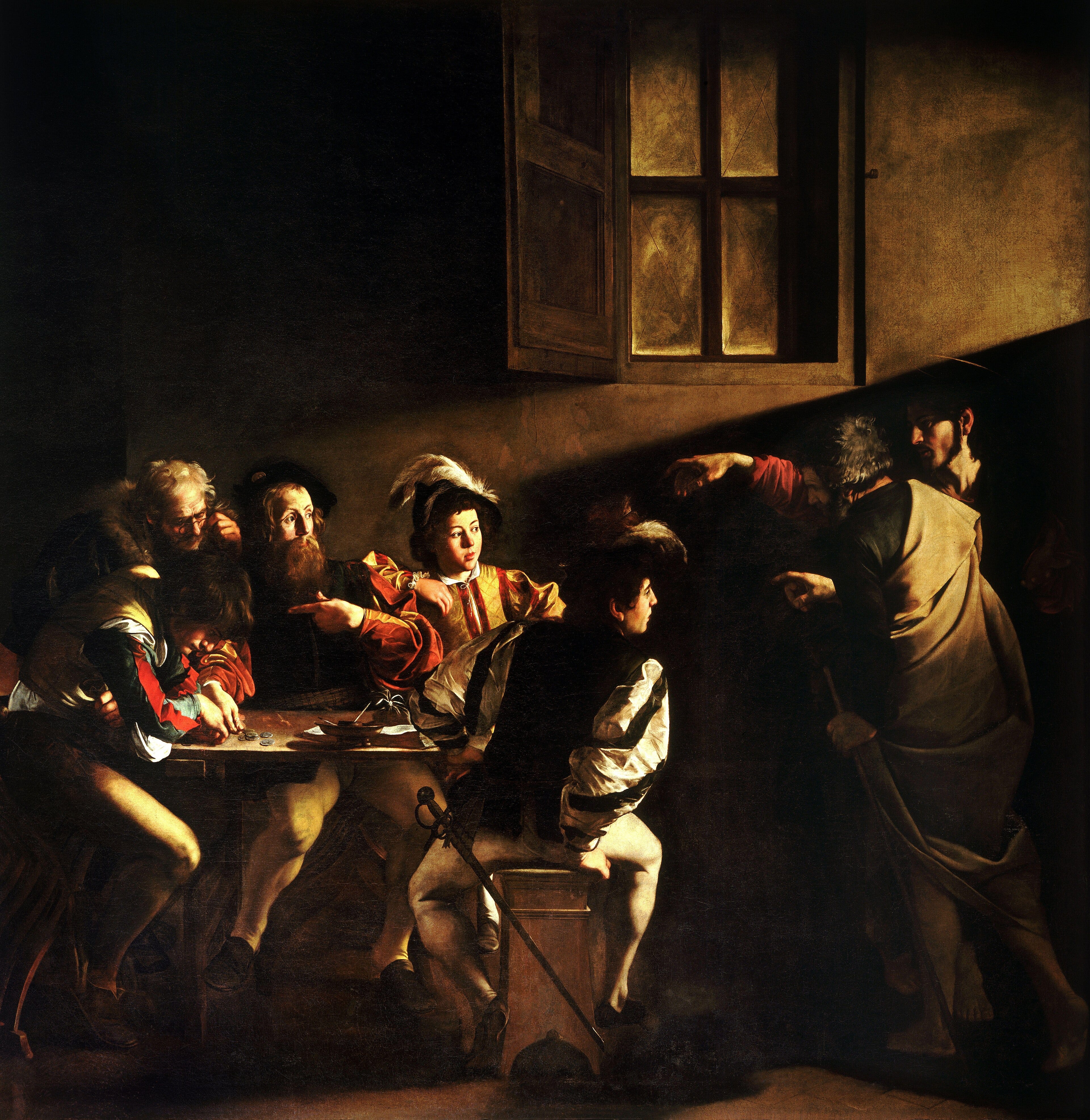
Chiaroscuro, tenebrism and sfumato are three different ways of handling light and shadow in a painting. Chiaroscuro is the contrast of light and dark that makes a shape look solid, tenebrism is its extreme form, with darkness filling most of the picture, and sfumato is the soft blending that leaves no outline.
The difference comes down to one point: the first two are about how much dark there is, and sfumato is about the edge where light turns to shadow. Caravaggio's Calling of Saint Matthew shows tenebrism best, and Leonardo's Mona Lisa shows sfumato.
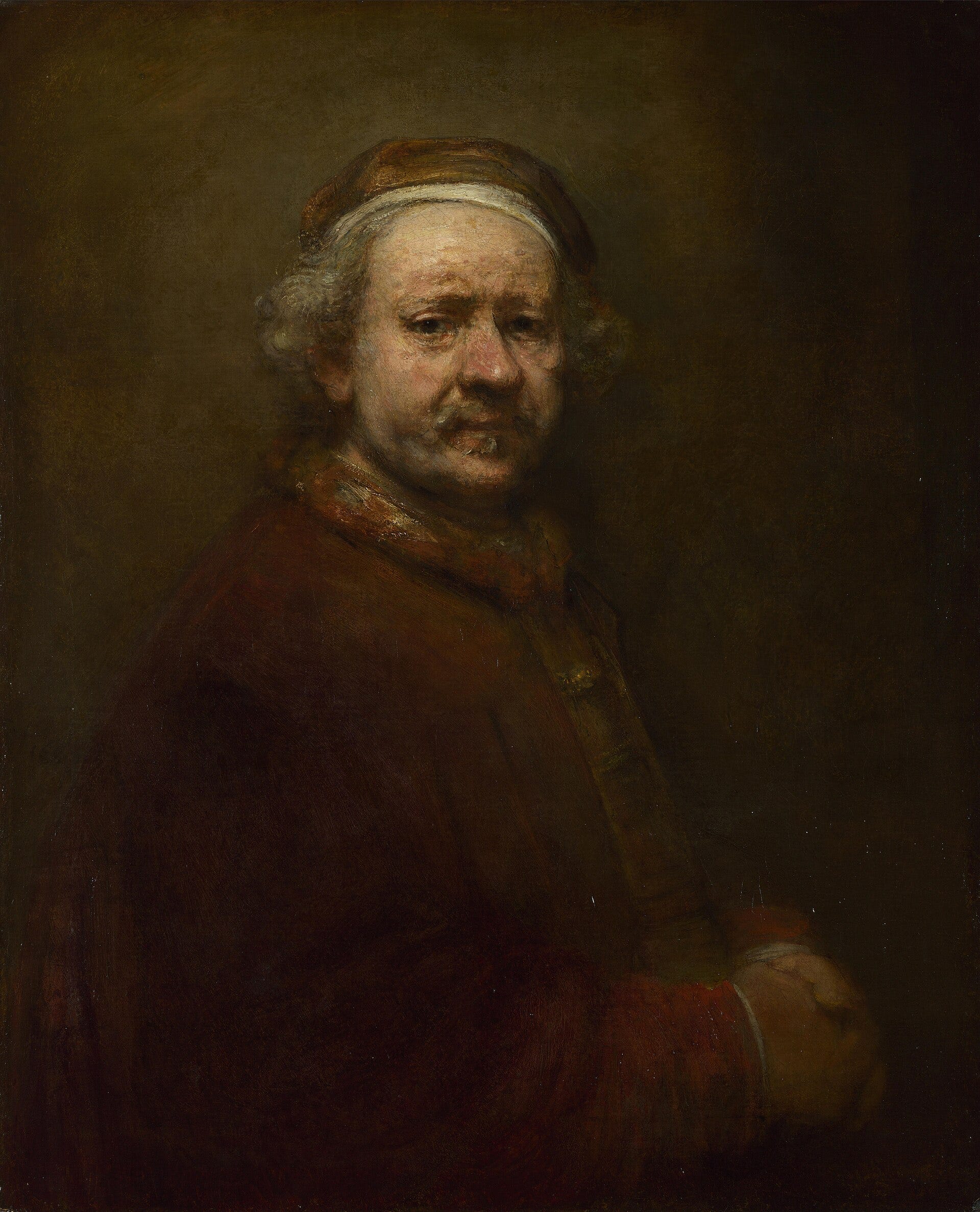
Britannica calls tenebrism chiaroscuro in its most dramatic form, so the first two words sit one inside the other, while sfumato works on a different question altogether. Rembrandt's Self-Portrait at the Age of 63, in the National Gallery in London, is a clear case of chiaroscuro, a lit face modelled out of a dark ground.
Cool Stories About Art is a newsletter to learn art the fun way.
Join 200,000+ readers and get:
10 new art stories / month
The entire archive of content (1,000+ articles)
Comment, ask questions, and chat with other readers
The tidy way to remember the three words is one painter for each: Rembrandt for chiaroscuro, Caravaggio for tenebrism, Leonardo for sfumato. The trio is easy to repeat, and it hands Leonardo only one of the two things he wrote about.
In his notes on painting, collected after his death as the Treatise on Painting, Leonardo tells painters to set a face between dark walls and light it from above, so that the parts standing farthest forward catch the open light and the rest fall into shadow.
That is a recipe for chiaroscuro, written by a man who died in 1519, and Britannica says he was the first to bring the technique to its full potential, in works such as the Adoration of the Magi of 1481.
The same man also described the effect of light and shade as blending “without lines or borders, in the manner of smoke,” and the word for that effect, sfumato, comes from the Italian for smoke.
The tidy trio gives Leonardo sfumato and forgets that he also described the lighting of chiaroscuro. So the three words are not three styles with one champion each. They are questions that a single painter can answer at once.
What did the word chiaroscuro first describe?
A print. In 1516 a printmaker named Ugo da Carpi asked the Venetian Senate for a privilege, a legal protection against copyists, for what he called a new method of printing in chiaro et scuro.
His method used wooden blocks, two or more, each inked in a different tone, and the Metropolitan Museum says the result gave light and dark values like those of a wash drawing. The Senate granted the privilege that year.
Painters took over the word later. Britannica says that by the late 17th century it was routinely used for any painting that relied on strong contrasts of light and dark, and its definition is the technique of representing light and shadow as they define three dimensional objects. Nothing in that asks for drama. A quiet portrait lit by a window counts as much as a storm of shadow.
Caravaggio pushed the same contrast until the dark took over almost the whole room.
What You'll Discover
Where chiaroscuro turns into tenebrism.
What Caravaggio's critics called his dark room.
The question only sfumato answers.
How Leonardo built a shadow without a line.