
Painting Circe, the sorceress of the Odyssey, means painting what she does to men: a drink, a touch of her wand, and they are pigs. For some twenty-five centuries, artists have weighed how much of the man should still show in the animal. In a garden in Kent, three pigs once helped settle the question by proving to be very patient models.
Cool Stories About Art is a newsletter to learn art the fun way.
Join 200,000+ readers and get:
10 new art stories / month
The entire archive of content (140+ articles)
Comment, ask questions, and chat with other readers
A Sorceress and Her Animals
Circe rules an island in Book 10 of the Odyssey. She gives the companions of Odysseus a drugged drink, turns them into pigs with her wand, and keeps tame wolves and lions around her house.
That story asked artists for two things at once, a woman who commands men and the animals those men become. It let them paint fur, feathers and bristles under cover of a myth. It also made them choose where her power lies: in a drink, in written spells, in music or simply in her gaze.
Each work chosen takes Circe as its subject, or was long taken for her, from a Greek wine cup to the portrait of a Berlin actress in 1913. Two artists appear twice, because each gave her two very different faces.
12. Briton Rivière, Circe and the Friends of Ulysses (1871)
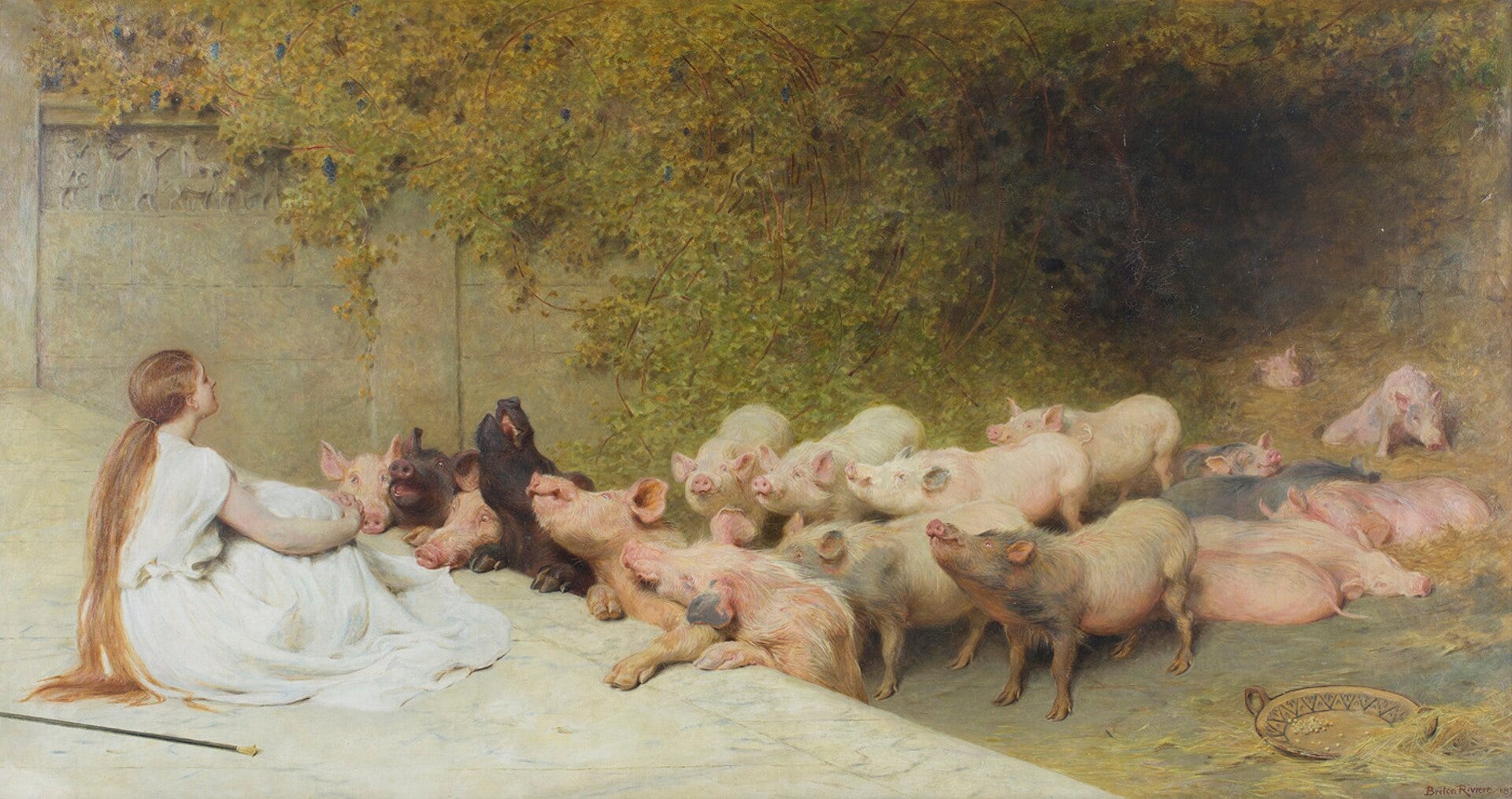
Pigs crowd around a young woman in white at the edge of a sunlit terrace, nosing at her skirt while her wand lies behind her. They are the companions of Ulysses, just transformed, and for Circe and the Friends of Ulysses Briton Rivière painted them from life.
Painting from life was his trade. Rivière was an animal painter, and for this picture he had pens built in the garden of his house in Kent, where he kept three pigs. In an interview, he called them "remarkably good sitters." Circe herself was painted separately, in his London studio.
That care for the animals is, to my eye, where the humor comes from, since every pig is painted as seriously as the woman. When Rivière sent the canvas to the Royal Academy's summer show of 1871, one critic called it one of the funniest pictures he had seen in years, and it made the painter's reputation.
Success brought a print. In 1875, the engraver Frederick Stacpoole made one after the canvas, the first ever made after a work by Rivière, and picture and print both crossed the Atlantic for Philadelphia's Centennial Exhibition of 1876.
Even the praise kept a trace of embarrassment. In 1878, the Art Journal, a London magazine, conceded that pigs were not a flattering subject, before praising the way they were painted.
At a Glance
Artist: Briton Rivière (1840 to 1920)
Painted: 1871
Medium: Oil on canvas
Size: 68.5 × 130 cm (27 × 51.2 in)
Where to see it: Private collection
11. Dosso Dossi, Melissa (about 1518)
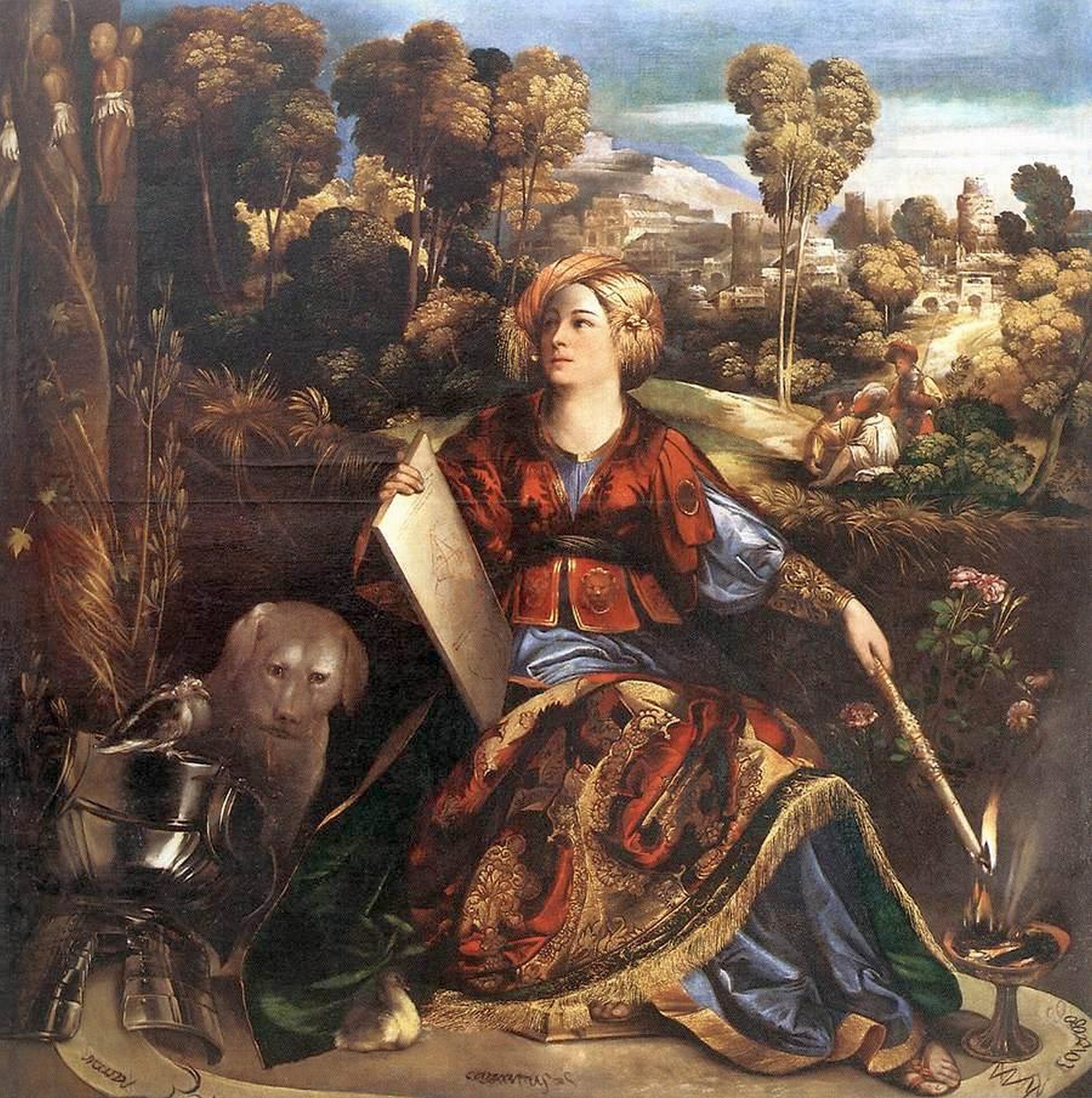
A sorceress in a red and gold robe sits inside a circle drawn on the ground, a tablet covered in signs in her hand and a large dog beside her. From 1790, the inventories of the Borghese collection in Rome called her Circe. In the 1990s, X-rays showed that the dog had not always been a dog.