
Coronations in painting are the most expensive lies ever commissioned. David painted Napoleon crowning Josephine and moved his boycotting mother into the front row, Rubens invented a whole mythology for a queen nobody liked, and one English coronation portrait was painted from a dress on a mannequin.
Learn art the fun way
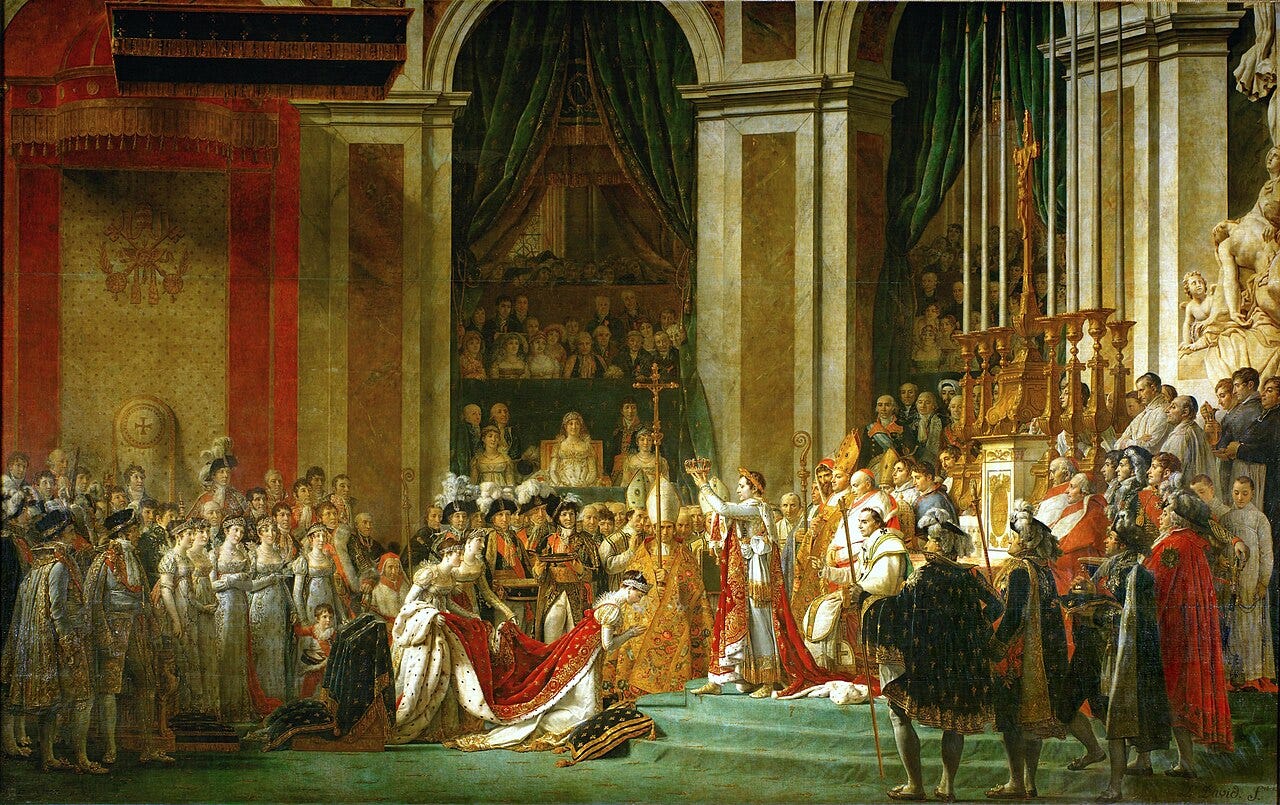
1 | The Coronation of Napoleon, Jacques Louis David (1807)
Ten metres wide, around 200 identifiable figures, painted over three years with a model of the cathedral built in the studio.
Napoleon’s mother sits in the tribune although she boycotted the ceremony entirely. More on the painter in Jacques Louis David.
The canvas is nearly ten metres wide and took David from 1805 to 1807. Napoleon’s mother Letizia sits in the stands although she boycotted the ceremony, added because he asked for her.
2 | The moment David decided not to paint
Napoleon took the crown from the pope and crowned himself. David first sketched exactly that, then changed the scene to the softer moment where Napoleon crowns Josephine.
The most famous coronation painting in the world shows the second best moment on purpose.
David had already turned Napoleon into propaganda once before, on a rearing horse crossing the Alps, a painting covered in Napoleon Crossing the Alps.
3 | The Marie de Medici cycle, Peter Paul Rubens (1625)
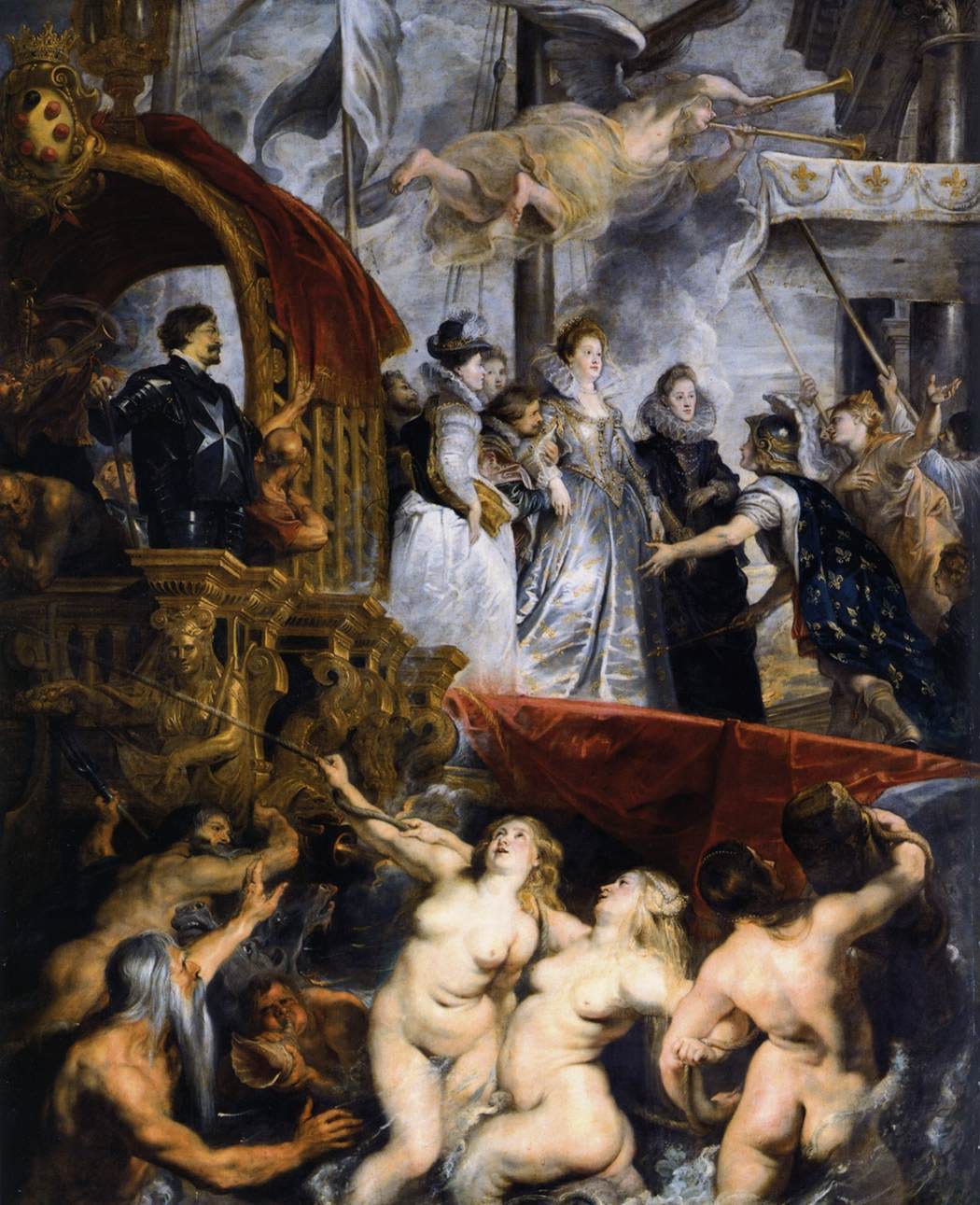
Twenty four enormous canvases turning a disliked queen’s life into mythology, complete with gods attending her birth and her landing in France.
It is the most sustained piece of painted public relations in European art, now filling a room in the Louvre.
Rubens delivered twenty four canvases for the Luxembourg Palace between 1622 and 1625, turning a politically awkward life into mythology. A planned second cycle for Henri IV was abandoned when she was exiled.
4 | Elizabeth I, the Coronation Portrait
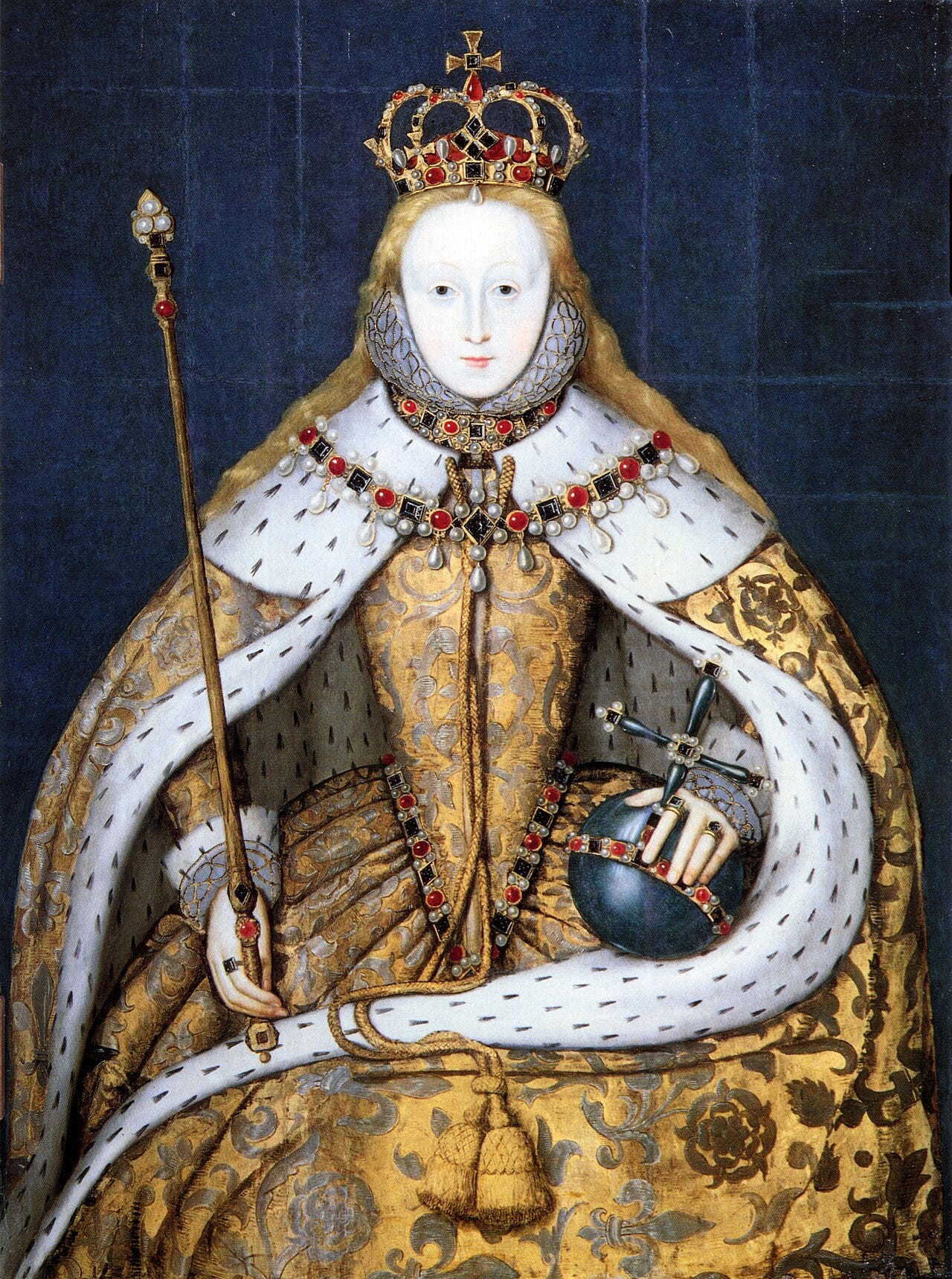
The queen in cloth of gold, holding orb and sceptre, hair loose in the medieval manner reserved for coronations and weddings.
The surviving version is an early seventeenth century copy of a lost original. The image everyone knows is a reproduction. More royal staging in famous paintings of kings and queens.
5 | Charlemagne, crowned retrospectively
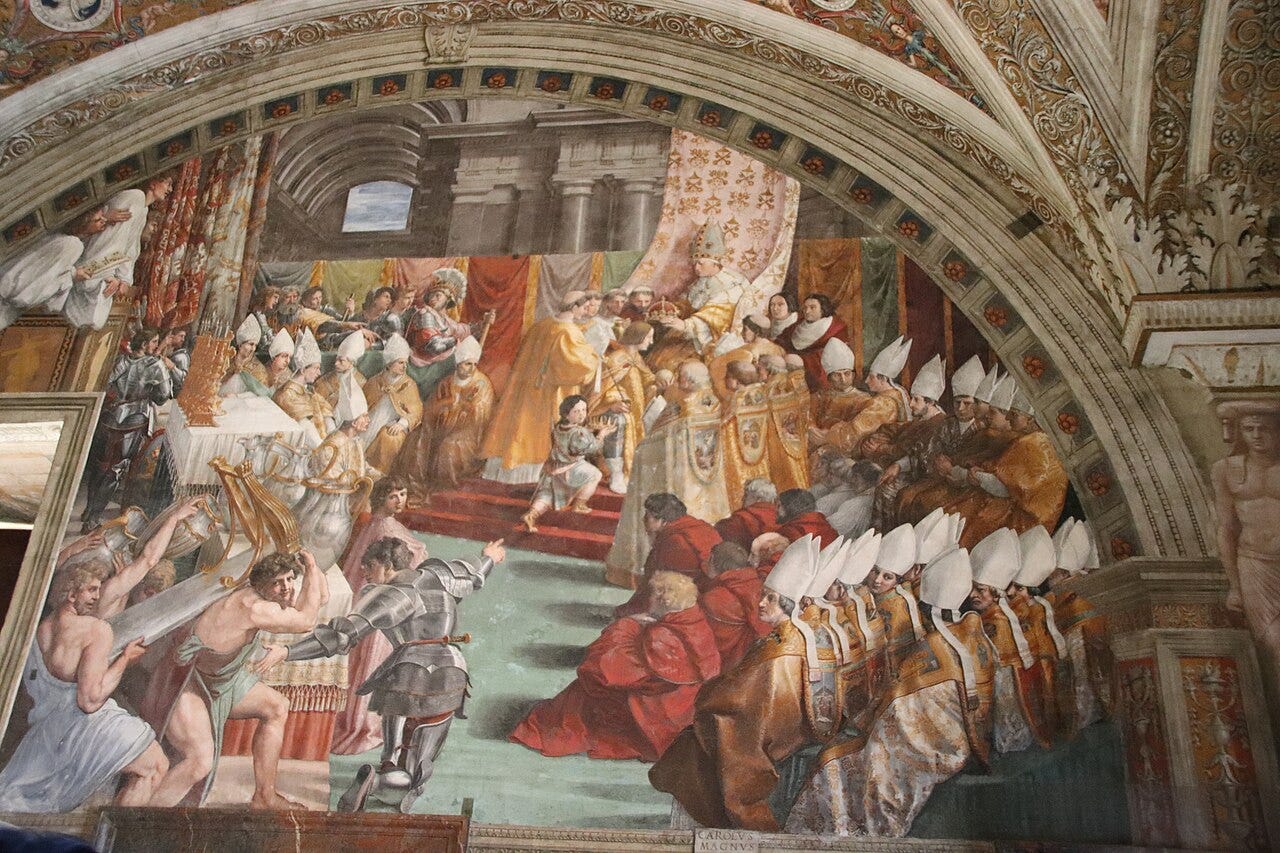
Renaissance and later painters kept restaging the coronation of Charlemagne in 800, each version dressing him in the fashion of the painter’s own century.
Every empire that wanted legitimacy repainted that scene, which tells you what coronation pictures are for.
The Vatican fresco was painted by Raphael’s workshop around 1516 and gives Charlemagne the face of Francis I of France, then negotiating with the pope. The coronation itself happened in 800, seven centuries earlier.
6 | The crown that had to be remade
England melted down its medieval regalia in 1649 after the execution of Charles I. New crowns were made for the restoration in 1661, which is why coronation paintings before and after show different objects.
The paintings are dated by the metalwork as much as by the faces.
7 | Louis XIV in coronation robes, Rigaud (1701)
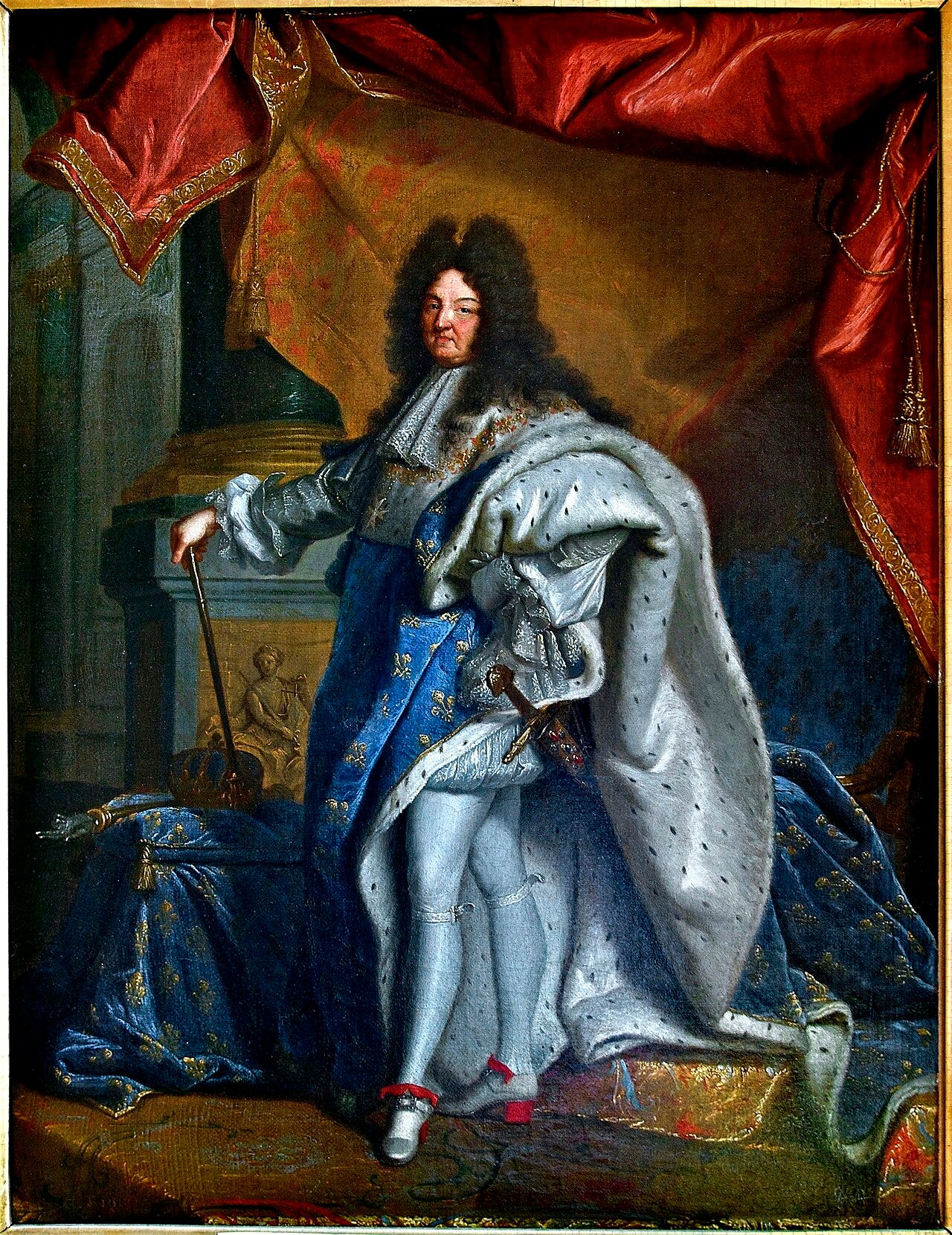
Not a coronation scene but the outfit, worn at 63, with ermine, fleur de lys and the legs of a former ballet dancer on display.
He liked it so much he kept it instead of sending it to Spain as intended.
Rigaud painted it in 1701 when the king was sixty two, intending it as a gift for his grandson Philip V of Spain. Louis liked it so much he kept it and ordered a copy for Madrid instead.
8 | Queen Victoria, painted at 19
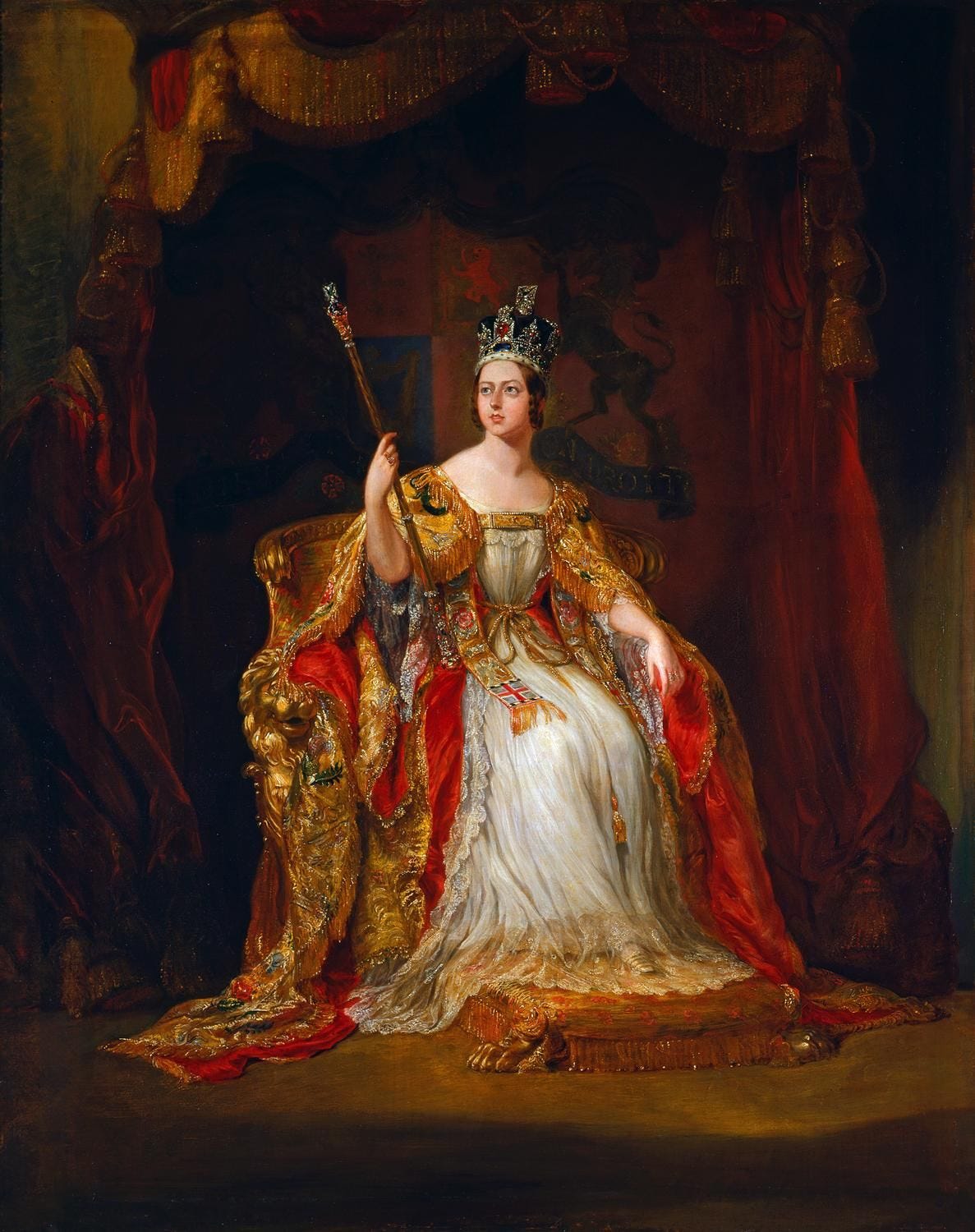
The coronation of 1838 lasted five hours, a ring was forced onto the wrong finger, and an elderly peer fell down the steps. None of that appears in the paintings.
Victoria recorded it all in her diary, which is the only reason we know.
She was crowned on 28 June 1838 in a ceremony nobody had rehearsed, and the ring was forced onto the wrong finger. Hayter’s state portrait smooths all of that away.
9 | The empty throne and the interregnum
Between a death and a coronation, painters were sometimes commissioned to show the regalia alone on a cushion, a portrait of an office without a person.
The crown does the work when there is no head to wear it.
10 | The Consecration of the Emperor and the pope who came anyway
Pius VII travelled to Paris expecting to crown Napoleon and instead sat and watched. In David’s painting he is shown raising his hand in blessing, a gesture added at Napoleon’s request.
One raised hand turns a humiliation into an endorsement.
11 | Coronations in the Byzantine world
Byzantine mosaics show Christ himself placing the crown, removing any human authority from the transaction entirely.
It is the same argument as David’s, made a thousand years earlier and with more confidence. The tradition is in what is byzantine art.
Byzantine emperors are shown being crowned by Christ directly, not by a patriarch, which removes the church from the transaction. The mosaics in Hagia Sophia use exactly that formula.
12 | The mannequin portrait
These are history paintings as much as portraits, which is why the robes get more brushwork than the face.
Court painters routinely worked from robes arranged on a dummy, since monarchs rarely sat for the hours a full length required.
The face was painted from life in one or two sittings. Everything below the neck is a still life.
Crowning scenes, five things worth knowing
Did Napoleon crown himself? Yes, he took the crown from the pope and placed it on his own head. David sketched that and then painted the moment he crowns Josephine instead.
How many people are in David’s coronation? Around 200 identifiable figures, painted over three years with a scale model of the cathedral in the studio.
Was Napoleon’s mother present? No. She boycotted the ceremony and David painted her into the tribune anyway, at Napoleon’s instruction.
Why was the English regalia remade? The medieval crowns were melted down in 1649 after the execution of Charles I. New ones were made for 1661.
Where is The Coronation of Napoleon today? The Louvre for David and the Marie de Medici cycle, Versailles for Rigaud, London for the Tudor portraits.
David painted himself into the upper gallery of the coronation, sketching. The man hired to record the ceremony gave himself a seat at it, which is exactly the same move Napoleon made with the crown.
Court images and regalia are catalogued at the Met and the Rijksmuseum.
This subject is one thread in a wider theme. See how it fits into War and Power in Art.