
Courtesans built the image of women in Western art. Titian painted them as goddesses, Manet painted one staring back and Paris exploded, and Toulouse Lautrec drew them eating lunch. Here is what the paintings show, and what the women behind them actually did.
Venice invented the profession as a subject
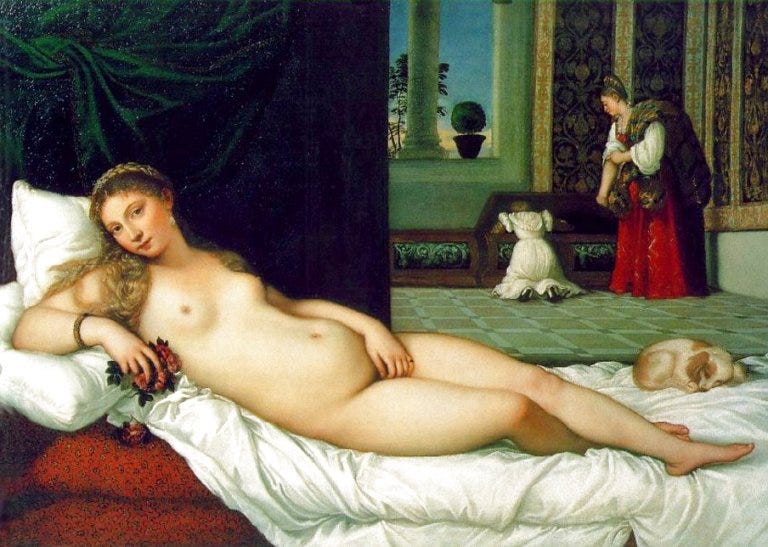
Sixteenth century Venice registered its courtesans and even printed a catalogue of them with addresses and fees. Painters used them as models for goddesses and saints.
The Venus of Urbino is generally thought to show a Venetian woman, not a goddess, on a real bed in a real palazzo. Titian The full account is in Titian.
Venice published a printed catalogue of its courtesans in the 1560s, listing names, addresses and prices. The city taxed them, which is why the records survive, and painters worked in the same streets.
Veronica Franco, the best known Venetian courtesan of the sixteenth century, published two books of poetry and was tried by the Inquisition in 1580. She was acquitted, and Tintoretto is thought to have painted her.
The stare that broke the rules
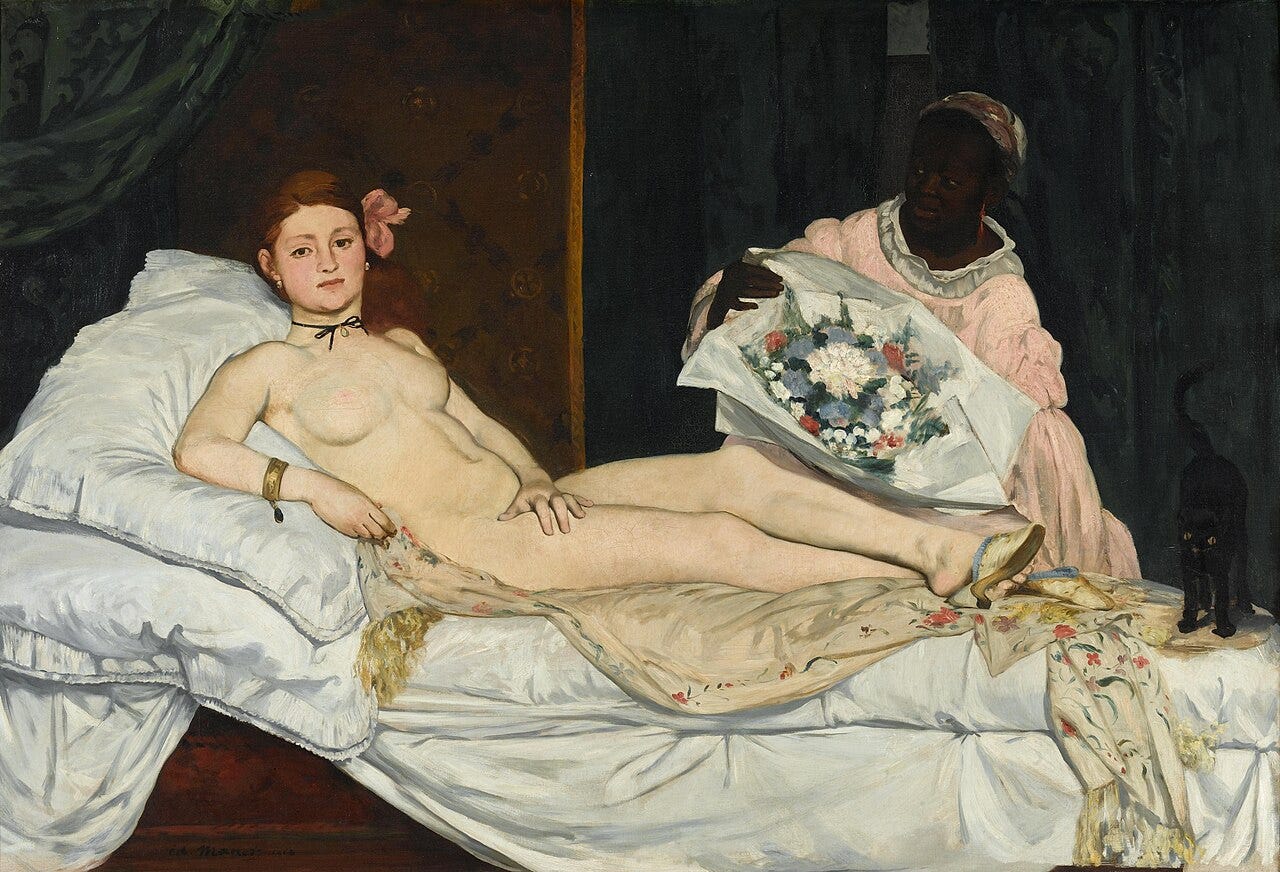
In 1865 Manet showed Olympia: the same reclining pose as Titian, but the woman is a professional and she is looking at you, the buyer, without shame.
The Salon hung it high and posted guards. That look is the hinge between old master nudes and modern painting. I go into his whole story in Edouard Manet.
Exactly why Olympia caused a scandal is its own story.
Manet’s Olympia was shown at the Salon of 1865 and had to be guarded. The pose is copied from Titian’s Venus of Urbino, and the difference is only that Manet named her after a well known Paris courtesan.
Zola defended the picture in print and Manet painted his portrait in thanks in 1868, with a pamphlet on Manet visible on the desk. The two men kept each other’s reputations afloat for a decade.
Learn art the fun way
The Japanese equivalent, and why it is not the same
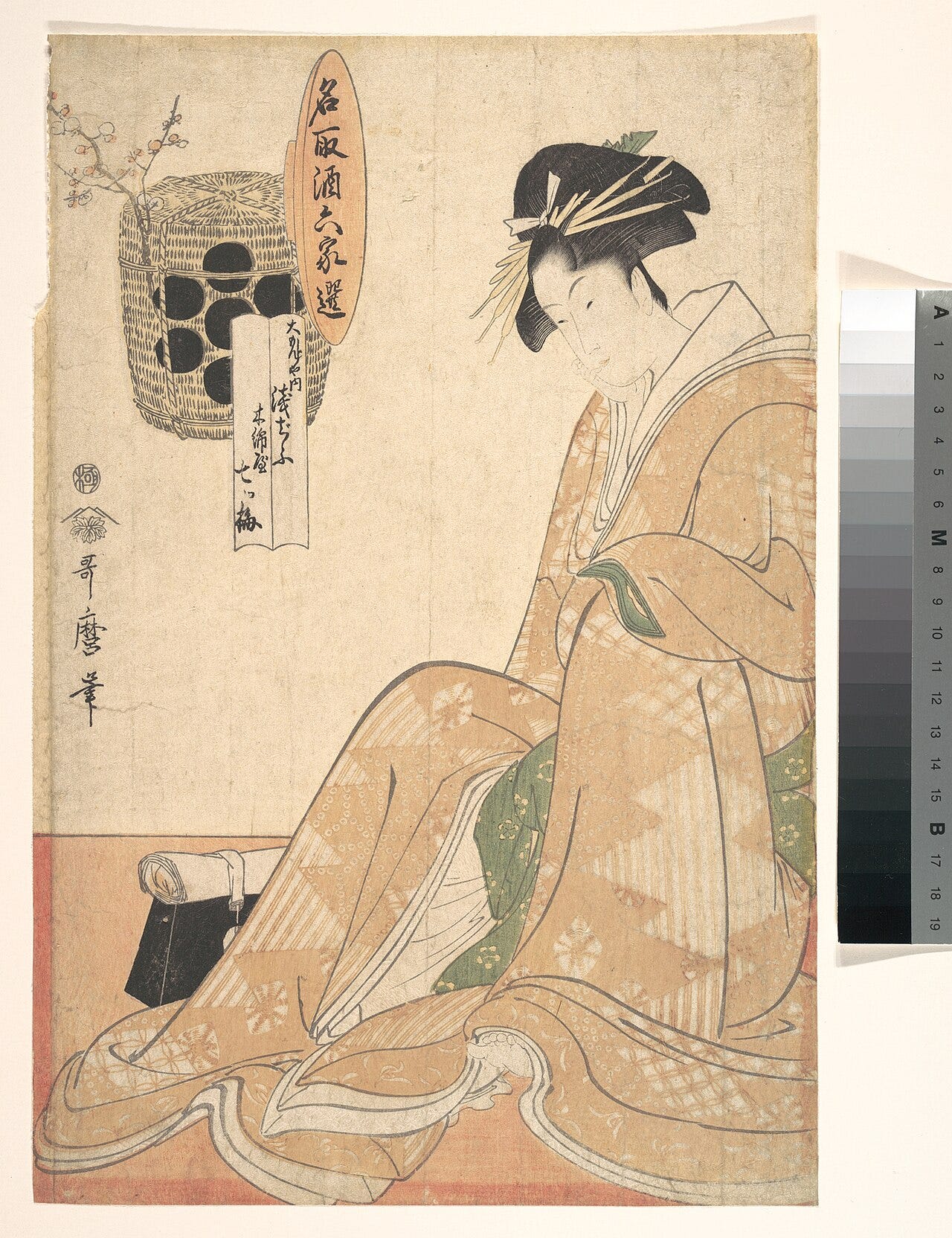
Ukiyo e prints made stars of the courtesans of the Yoshiwara district, published like celebrity portraits with the women’s names and houses printed alongside.
Utamaro was the master of it and was eventually punished by the shogunate for a print that broke political rules. The trade in those prints reached Europe and changed it: what is japonisme.
The oiran and later the geisha were regulated professions in the licensed quarter of Yoshiwara, and ukiyo e printmakers produced portraits of named women as celebrity images. Utamaro built his career on them in the 1790s.
Utamaro was punished in 1804 for a print showing a sixteenth century warlord with his concubines, and spent time in manacles. He died two years later, and the licensing rules on named portraits tightened after him.
Lautrec, who simply moved in
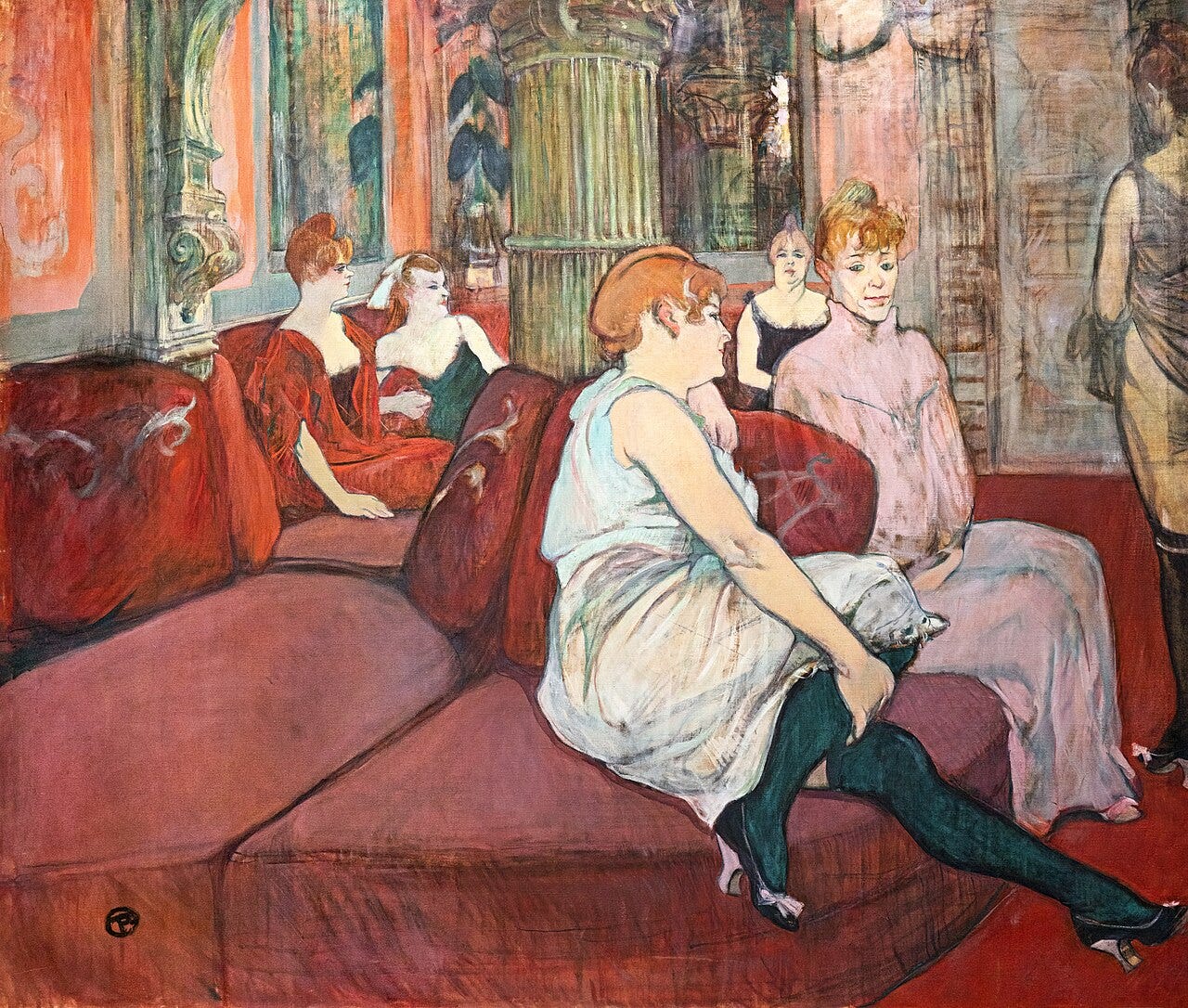
Toulouse Lautrec lived in Paris brothels for months at a time and drew the women off duty: mending stockings, queuing for the medical inspection, playing cards, sleeping.
The series called Elles has almost no clients in it. That absence is the argument. More on him in Toulouse Lautrec.
He lodged in brothels in the rue des Moulins and the rue d’Amboise for months at a time in the 1890s and painted the women waiting, washing and playing cards. Very few of the pictures show a client.
He listed a brothel as his postal address for a period, which scandalised his family. The Salon des Cent showed some of the work in 1896, and a set of the lithographs sold badly.
The women who were never named
Most models in these paintings are anonymous. Olympia is an exception: she was Victorine Meurent, a painter herself who exhibited at the Salon, sometimes in years when Manet was rejected.
The story that she died destitute was a myth spread after her death and corrected by researchers only in the 1990s.
Most sitters in these pictures are recorded only as a model or a first name. Victorine Meurent, who posed for Olympia and the Dejeuner, was a painter herself and exhibited at the Salon, which almost nobody knew until the 1980s.
Meurent died in 1927 in poverty at Colombes, and her own paintings were forgotten. One of them, a self portrait, resurfaced in 2004 and now hangs in the municipal museum at Colombes.
The Rococo version: powdered and deniable
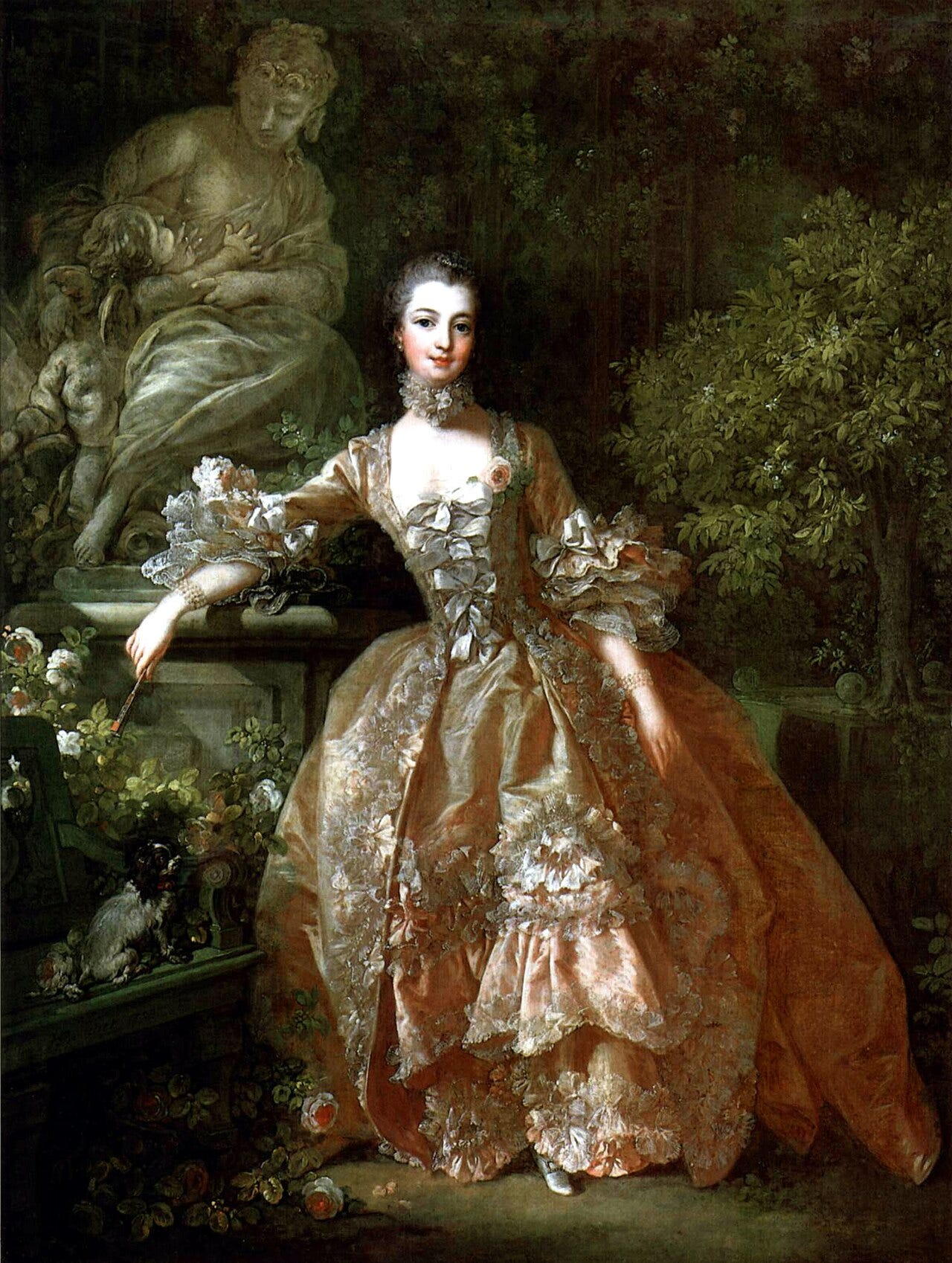
Boucher painted Louis XV’s mistresses as mythological figures so that a court portrait could hang as an allegory. The alibi was the whole technique.
Madame de Pompadour understood image management better than any sitter of her century, and commissioned accordingly.
Boucher painted Louise O’Murphy at about fourteen for Louis XV, and the picture worked as an introduction. The Rococo convention was to leave it deniable: the setting is a boudoir, the title says nothing.
Fragonard’s The Swing of 1767 was commissioned by a courtier who asked to be placed where he could look up the lady’s skirts, and specified a bishop pushing the swing. Fragonard kept the first request and dropped the second.
What people ask about courtesans in art
Was the Venus of Urbino a courtesan? Most historians think the model was a real Venetian woman rather than a goddess, though the commission remains debated.
Why was Olympia so shocking? The pose was traditional, the stare was not. She looks directly at the viewer as a professional, not a goddess looking away.
Who was Victorine Meurent? Manet’s model for Olympia and a working painter who exhibited at the Salon, sometimes in years when Manet himself was refused.
What is Elles? Toulouse Lautrec’s 1896 print series about brothel life, showing the women at rest and almost never with clients.
Where do I find them in person? The Uffizi for Titian, the Musee d’Orsay for Olympia, and the Met for the Japanese prints.
Two places to keep reading
The Rijksmuseum holds the Venetian and Rococo end of this story, and its catalogue entries name the models where records survive, which is rarer than it should be.
One last fact: when Manet died in 1883, Monet organised a public subscription to buy Olympia for the French state. It took two years and the painting entered the Louvre in 1890, which means France officially acquired the picture it had mocked 25 years earlier.