
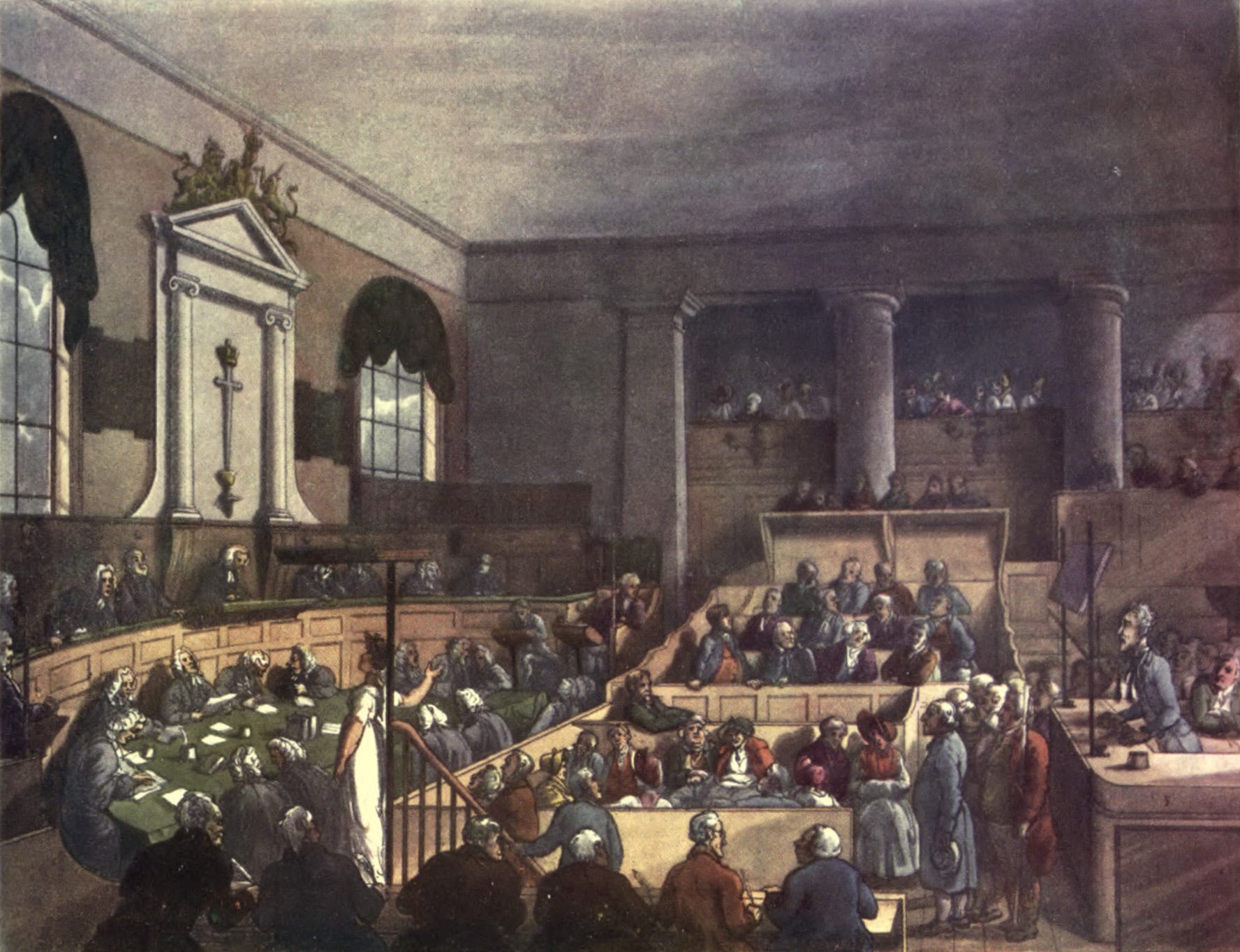
A judge's chair covered with a corrupt judge's skin, a painter told to prove in a courtroom that her pictures were her own, a judge asleep on the bench while the court carries on around him. For five centuries painters have followed justice into the courtroom, to warn judges, to mock lawyers, and to show a room that most people never enter.
Cool Stories About Art is a newsletter to learn art the fun way.
Join 200,000+ readers and get:
10 new art stories / month
The entire archive of content (140+ articles)
Comment, ask questions, and chat with other readers
What a Courtroom Asks of an Artist
A trial happens in words, and a painter has to find something in it that can be seen instead. Each of these twelve works rests on one thing of that kind, such as a raised hand, a seat, a door or a pile of papers.
That detail can belong to anyone in a case. Some of the pictures keep close to the judge, others to the lawyers or the accused, and several leave the hearing altogether.
The cases behind them are just as mixed. Three were real trials. Four are much older stories, known from ancient and medieval texts, and the other five have no named case behind them, only the daily business of the law.
12. Gerard David, The Judgment of Cambyses (1498)
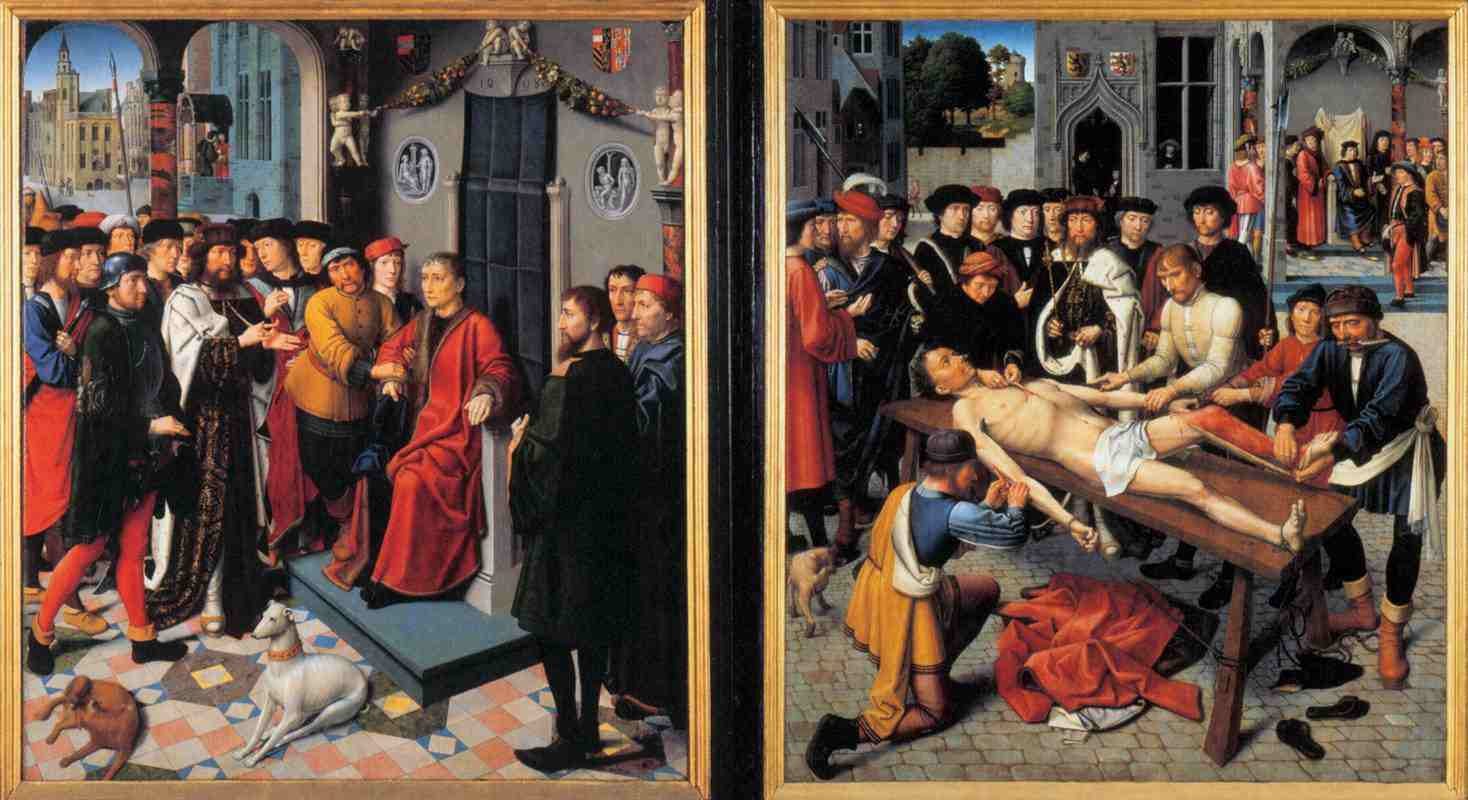
High in the second of two panels, well above the flaying that fills its foreground, a young man sits as a judge. The seat beneath him is covered with his father's skin.
The Greek historian Herodotus tells how that seat was made. Cambyses, king of Persia, learned that one of his royal judges, Sisamnes, had given an unjust verdict for money. He had him put to death and flayed, had the skin cut into strips and stretched over the seat from which Sisamnes used to judge, then gave the post to the dead man's son, Otanes.
Cambyses gave the new judge a single instruction, to remember on what seat he was sitting.
Gerard David painted the story in 1498 for the city of Bruges, on two panels meant to be seen together. In the first, Cambyses lists the charges against the judge, who has been brought before him. Behind them, small and easy to miss, the same Sisamnes stands on the doorstep of his house and receives a merchant, in what may be the bribe itself changing hands.
The second panel carries out the sentence. Men bend over the stripped body with their knives, and in the upper corner the son already sits in his new chair.
Both panels hung in the Bruges town hall, where the city's magistrates saw them every day. The men who looked at Sisamnes on his doorstep did the same work he had done.
At a Glance
Artist: Gerard David (about 1460 to 1523)
Painted: 1498
Medium: Oil on oak, two panels
Size: 182.3 × 318 cm (71.8 × 125.2 in), both panels together
Where to see it: Groeningemuseum, Bruges
11. Margaret Keane, Keane v. Keane (1986)
Margaret Keane faced her former husband, Walter, in a federal courtroom in Honolulu in 1986. For twenty years he had told the world that the paintings of big-eyed children were his, and she was suing him for defamation. To find out who was telling the truth, the court asked them both to paint one, there, in the room. Margaret took up a brush. Walter was asked to do the same.