Cy Twombly: The Complete Story

Cy Twombly trained himself to draw in the dark, moved to Rome when New York was the only place to be, and turned scribbles into canvases worth 70 million dollars. A museum visitor once loved one so much she kissed it, and was prosecuted.

His name came from a baseball pitcher, his method from an army cryptography unit, and his subjects from Homer. Here is how the pieces fit.

Twombly at a glance:

  • Born in Lexington, Virginia, in 1928, nicknamed Cy after the pitcher Cy Young.

  • Trained himself by drawing in the dark during army cryptography service.

  • Moved to Rome in 1957 and stayed for life.

  • A 1968 blackboard painting sold for 70.5 million dollars in 2015.

  • The Menil Collection in Houston devotes an entire building to him.

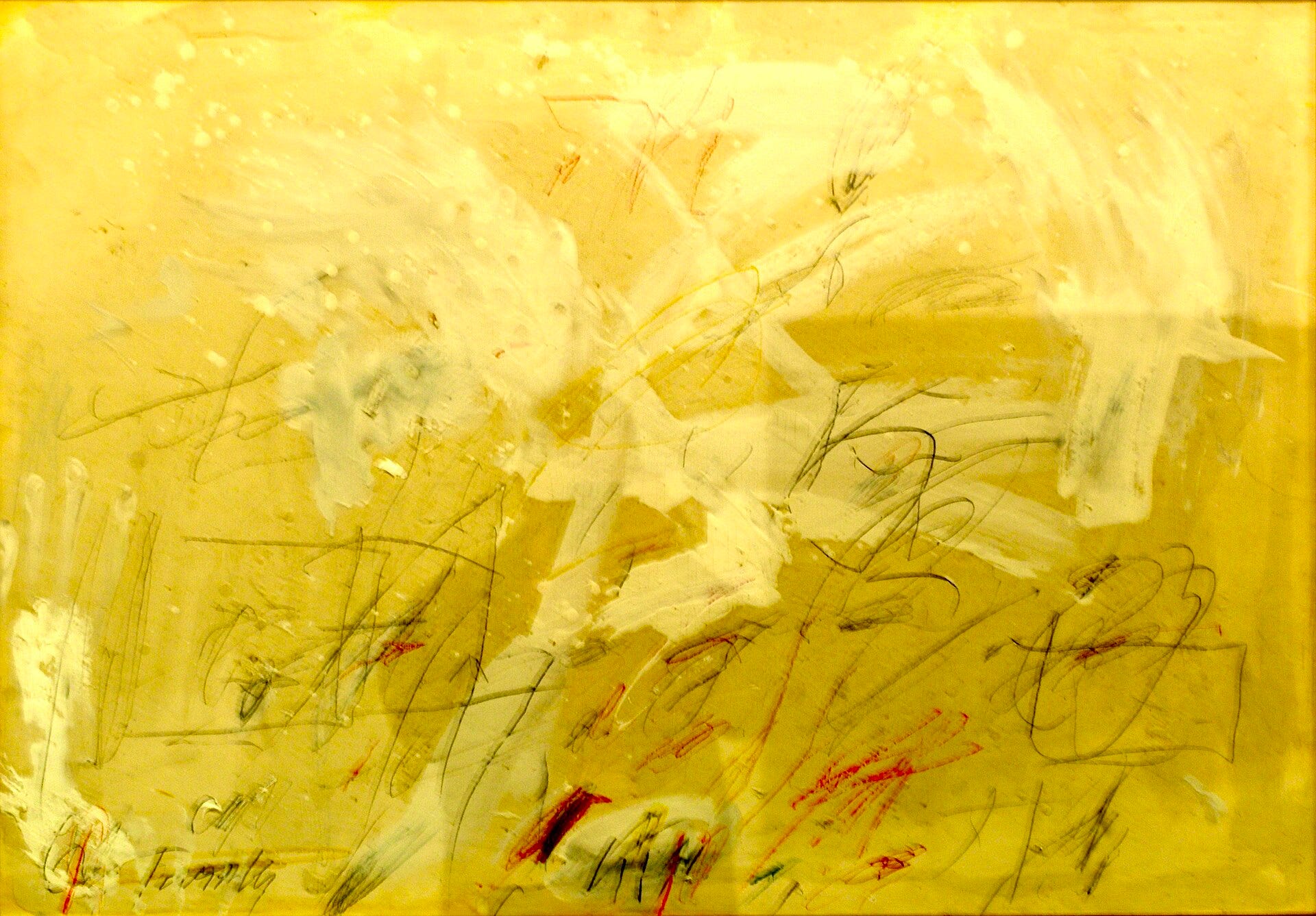
Cy Twombly, Paintings in the San Francisco Museum of Modern
Cy Twombly, Paintings in the San Francisco Museum of Modern Art, SFMOMA 15

Virginia, Black Mountain, and drawing in the dark

Twombly was born in Lexington, Virginia, on April 25, 1928, nicknamed Cy after the pitcher Cy Young, like his father before him.

At Black Mountain College in 1951 and 1952 he studied under Franz Kline and Robert Motherwell, then traveled through North Africa with Robert Rauschenberg.

Drafted in 1953, he served as an army cryptographer and spent nights drawing with the lights off, deliberately breaking his own trained hand.

Rome, 1957: the wrong move that worked

In 1957, when every ambitious American painter was moving to New York, Twombly moved to Rome. He married Tatiana Franchetti in 1959 and stayed in Italy for the rest of his life.

Surrounded by ruins and inscriptions, he filled canvases with scrawled names from Homer, Sappho, and Virgil, painting antiquity as graffiti rather than marble.


Hooked on Cy Twombly? Get more art secrets and stories in your inbox, free.


More incredible painter stories

If Cy Twombly pulled you in, you will love these too:


Blackboards, Iliam, and a 70 million dollar loop

From 1966 to 1971 he made the blackboard paintings, gray grounds covered in looping chalk-white lines. In 1978 he finished Fifty Days at Iliam, ten canvases on the Trojan War now filling a room at the Philadelphia Museum of Art.

5 million dollars.

The myth: a child could not do this

No painter attracts the phrase my kid could do that more reliably. The line misses what the canvases are made of: a classical library, decades of deliberate unlearning, and marks that record time the way a seismograph does.

The Louvre answered the doubters in 2010 by giving him a permanent ceiling, 350 square meters in the Salle des Bronzes, the first painter so honored since Braque in 1953.


More than 130,000 people read these art stories. Come along, free.


The kiss, the end, and where to see him

In 2007 a visitor in Avignon kissed an all-white Twombly, leaving lipstick that restorers struggled to remove; the court fined her, and she called it an act of love. Twombly died in Rome on July 5, 2011, at 83.

The Menil Collection in Houston devotes a whole Renzo Piano building to him, Philadelphia holds Fifty Days at Iliam, and the Brandhorst in Munich keeps the Lepanto cycle.

Drawing in the dark, on purpose

During his 1953 army service Twombly spent nights drawing with the lights off, deliberately sabotaging his own trained hand.

The scrawl that critics mocked was engineered: he wanted a line that knowledge could not stiffen. Few artists have worked so hard to unlearn.

The words inside the paintings

Read a Twombly up close and names surface: Achilles, Sappho, Virgil, Apollo, scribbled, crossed out, misspelled.

He treated the classics as graffiti treats a wall, something to touch rather than worship. Rome gave him ruins as neighbors, and he answered in pencil.

A room of his own, four times

Twombly is best met in the rooms built for him: the Menil's Twombly Gallery in Houston, Fifty Days at Iliam in Philadelphia, the Lepanto room in Munich, and his painted ceiling at the Louvre.

He outlived the my-kid-could-do-that joke by simple persistence: institutions kept clearing entire rooms for the scribbles.

The Cy Twombly questions that keep coming up

  • Why is Cy Twombly important? He found a third way between Abstract Expressionism and Pop: painting as handwriting, where myth and memory arrive as scribbled words rather than pictures.

  • How much does a Twombly cost? His record is 70.5 million dollars, paid in 2015 for a 1968 blackboard painting. Works on paper run to seven figures.

  • Why did Twombly live in Italy? He moved to Rome in 1957, married there, and said the Mediterranean gave him his subjects. Distance from the New York market became part of the work.

  • Where can I see Twombly? The Twombly Gallery at the Menil Collection in Houston, Fifty Days at Iliam in Philadelphia, the Lepanto room at the Brandhorst in Munich, and his ceiling at the Louvre.

  • Why did Twombly write words on his paintings? The names and verses are touchstones, not captions: antiquity handled like graffiti, personal and worn. He said the line was his real subject.

  • What is the Louvre ceiling? A 350 square meter blue ceiling with the names of Greek sculptors, unveiled in 2010 in the Salle des Bronzes, the first such commission since Braque in 1953.


More secrets to unlock


One last fact

The army taught Twombly cryptography, the science of making writing unreadable. He spent the next sixty years doing exactly that on canvas, and museums built rooms to hold the results.


Get the secrets behind the paintings. Free, every week.