
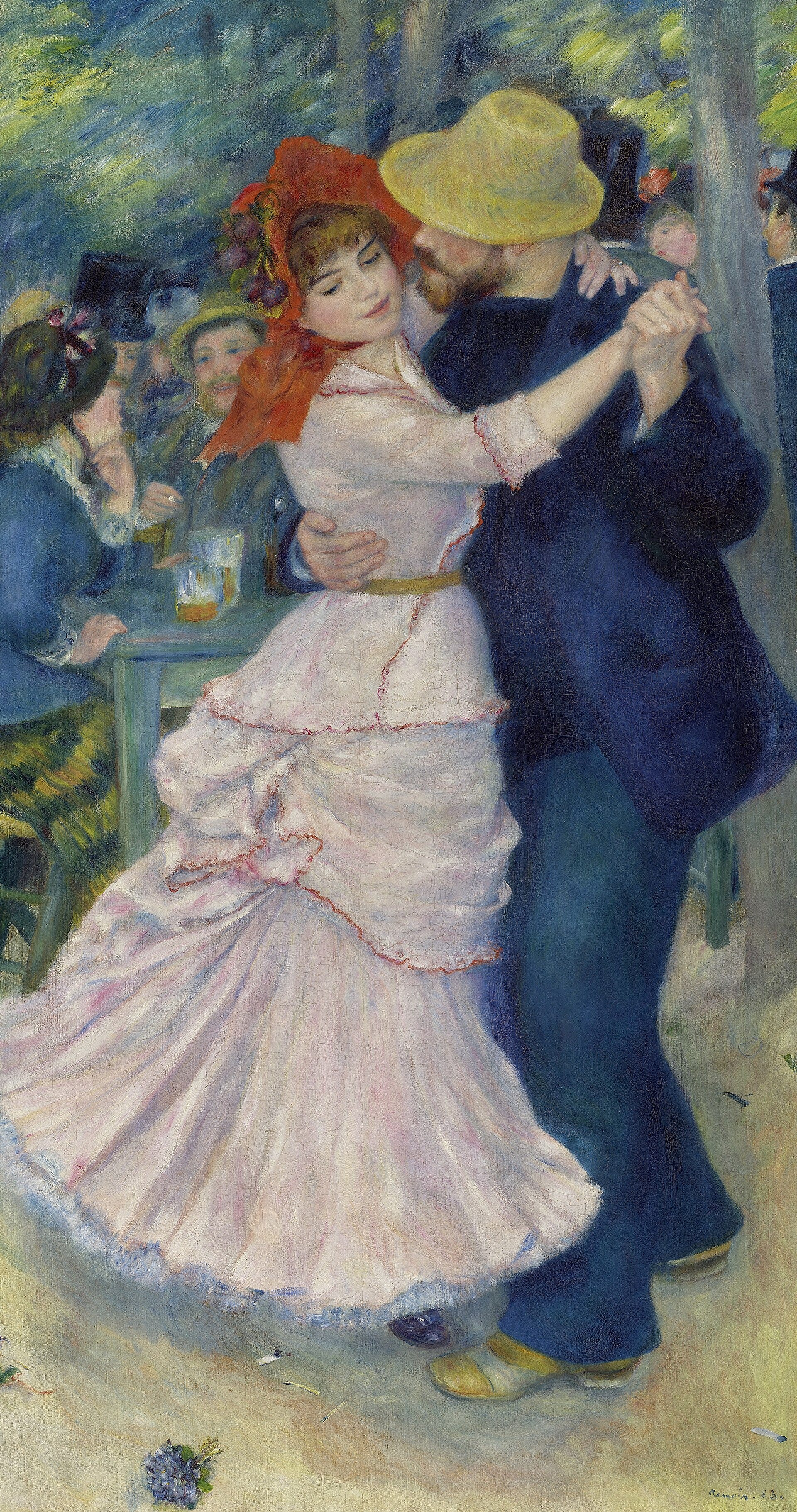
Dance at Bougival is an 1883 canvas by Pierre-Auguste Renoir, a central figure of French Impressionism. A young couple dances outdoors at a café in Bougival, a riverside village west of Paris, where Parisians came to dance on Sunday afternoons.
The two figures are nearly life-size. They hold each other with bare hands, their faces only inches apart, while the man's straw boater hides his eyes. The young woman in the red bonnet is usually identified as Suzanne Valadon, a 17-year-old model who would later win fame as a painter herself.
Renoir painted three tall dance scenes that year, and the Bougival couple is the most romantic of the three. Its closeness, daring at the time, made it a public favorite, and the Museum of Fine Arts, Boston, has owned it since 1937.
Cool Stories About Art is a newsletter to learn art the fun way.
Join 200,000+ readers and get:
10 new art stories / month
The entire archive of content (140+ articles)
Comment, ask questions, and chat with other readers
What is the meaning behind Renoir's Dance at Bougival painting?
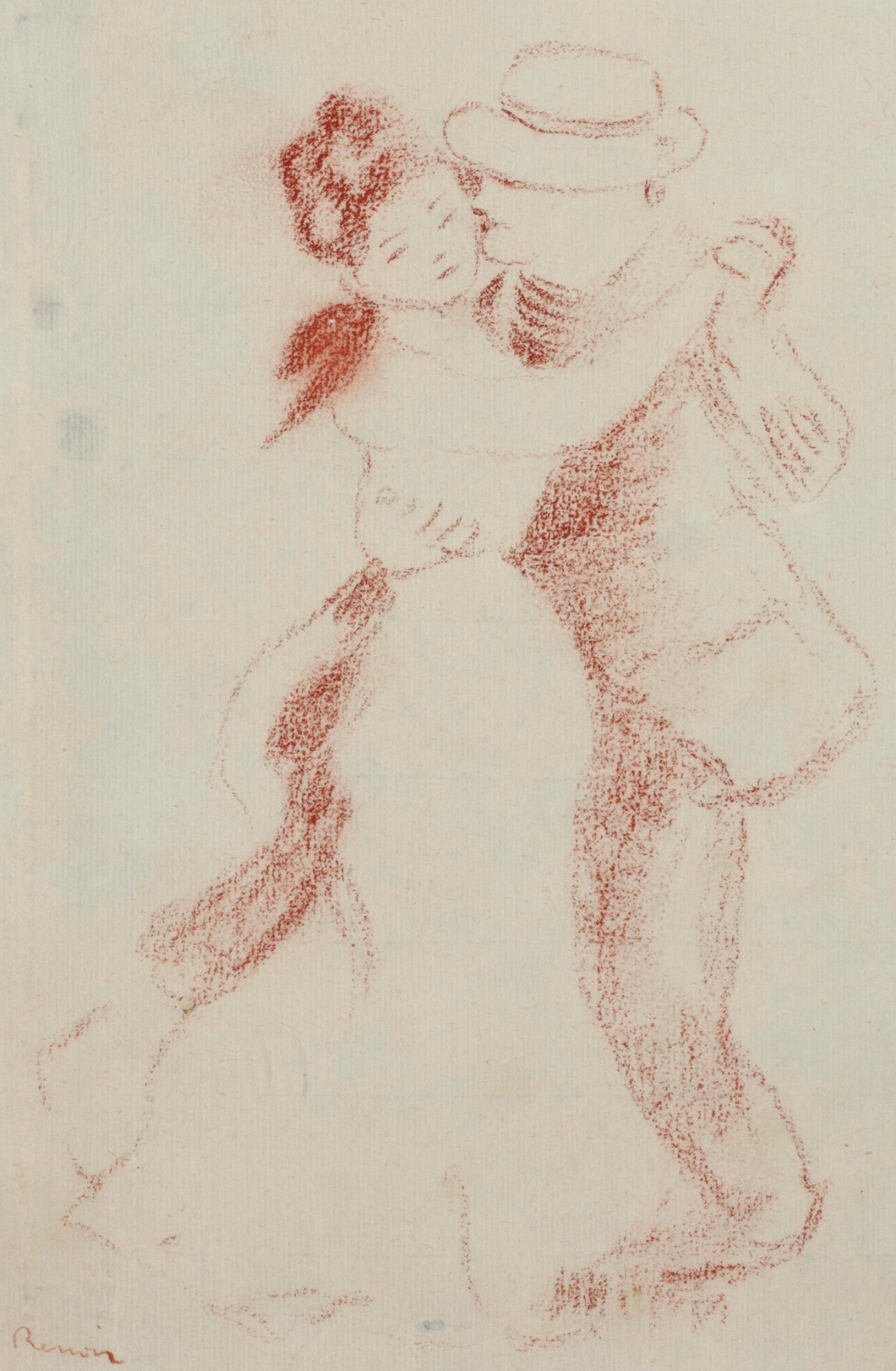
Every gesture in the embrace looks spontaneous, yet Renoir arranged the scene with care and kept changing the canvas, and one of those changes he later regretted in writing…
What You'll Discover
Why the dancers' bare hands were no accident
Who may have lent the young woman her face
Why one canvas was started first and finished last
How a broken promise kept it out of Rouen
What protesters shouted outside the Boston museum
What became of the girl in the red bonnet