
David Roberts (1796 to 1864) was a Scottish painter, the son of a shoemaker in Edinburgh. Before he became famous, he spent fifteen years painting scenery, first for a traveling circus, then for theaters.
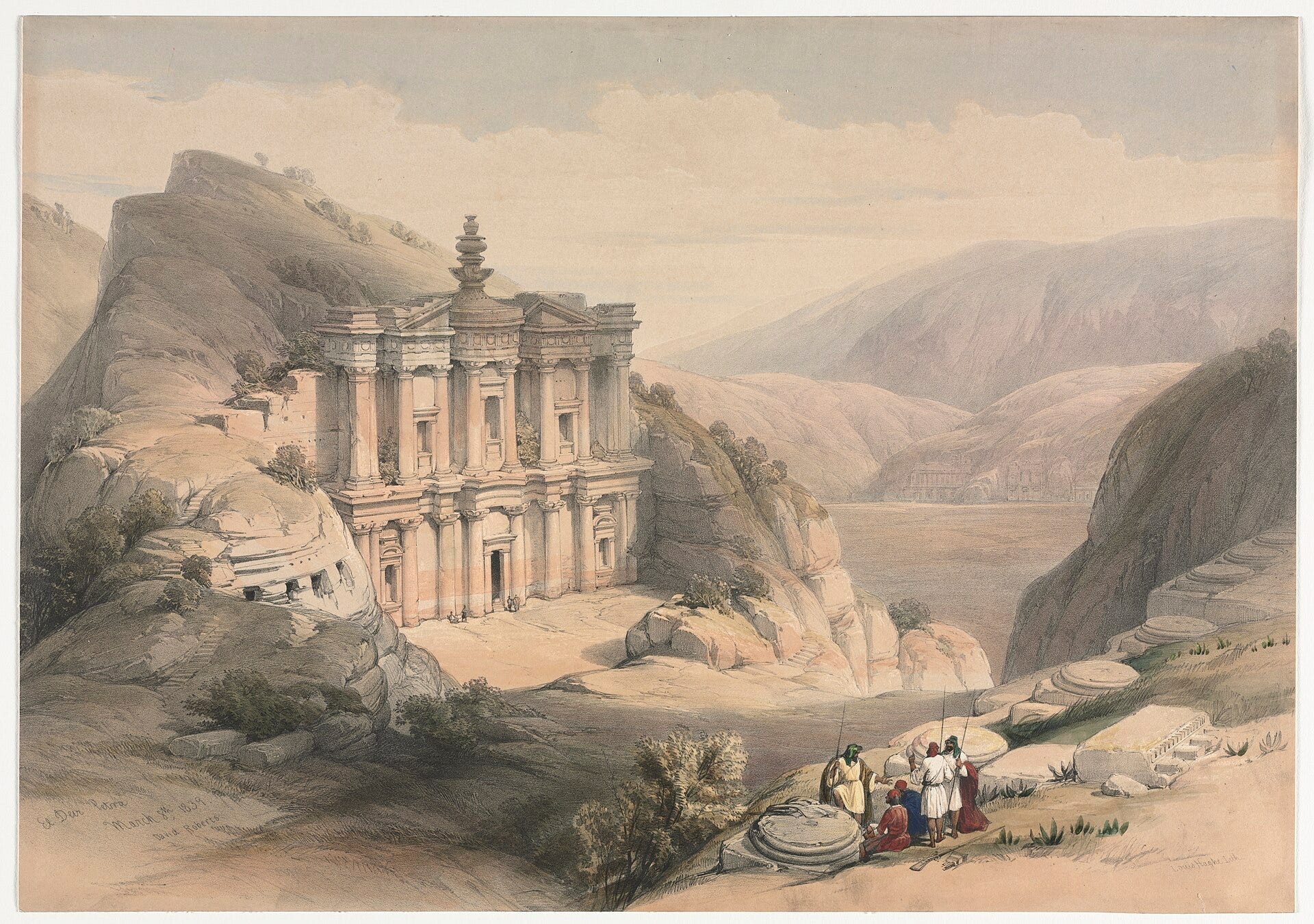
Roberts is famous for The Holy Land, nearly 250 prints that a printmaker copied from the drawings of his journey through Egypt, Petra and Jerusalem in 1838 and 1839. Petra is an ancient city carved into pink cliffs, in what is now Jordan.
The former scene painter, trained to fake faraway palaces on canvas, set off at forty-one to draw real ones.
Cool Stories About Art is a newsletter to learn art the fun way.
Join 200,000+ readers and get:
10 new art stories / month
The entire archive of content (140+ articles)
Comment, ask questions, and chat with other readers
David Roberts grew up in Stockbridge, then a village on the edge of Edinburgh, the capital of Scotland. As a small boy, after a traveling animal show came to town, he drew its lions and tigers in red chalk on the whitewashed wall of the family home.
A few years later, David was apprenticed to a house painter in Edinburgh, which meant seven years learning the trade in his workshop. House painters then imitated costly wood and marble on ordinary walls, so the boy learned early how to make a cheap surface look grand.
In 1816, a traveling circus hired the young painter to make its scenery, and theaters in Edinburgh and Glasgow came next. From 1822 he painted for the London stage, and soon for Drury Lane, one of the two great theaters of the city.
A scene painter worked on canvases many yards wide, painted fast and meant to be seen from the back of the hall. Roberts painted the palaces, cathedrals and distant cities where the plays took place, and a whole theater had to believe in them.
In 1829, an oil painting made his name in London. The Departure of the Israelites shows Moses leading his people out of Egypt, as the Bible tells it, beneath colossal temples and statues. Roberts had never set foot in Egypt.
Nine years later, he went to see Egypt for himself. Once he stood in front of real temples, would he draw them as they were, or as a stage would want them?
In the rest of the story, you'll find out:
what a painter had to promise about his brushes before entering the mosques of Cairo
who decided whether three British travelers could camp inside Petra
why one desert storm in Roberts's prints was put together like a stage set
why two temples he drew on the Nile no longer stand where he saw them