
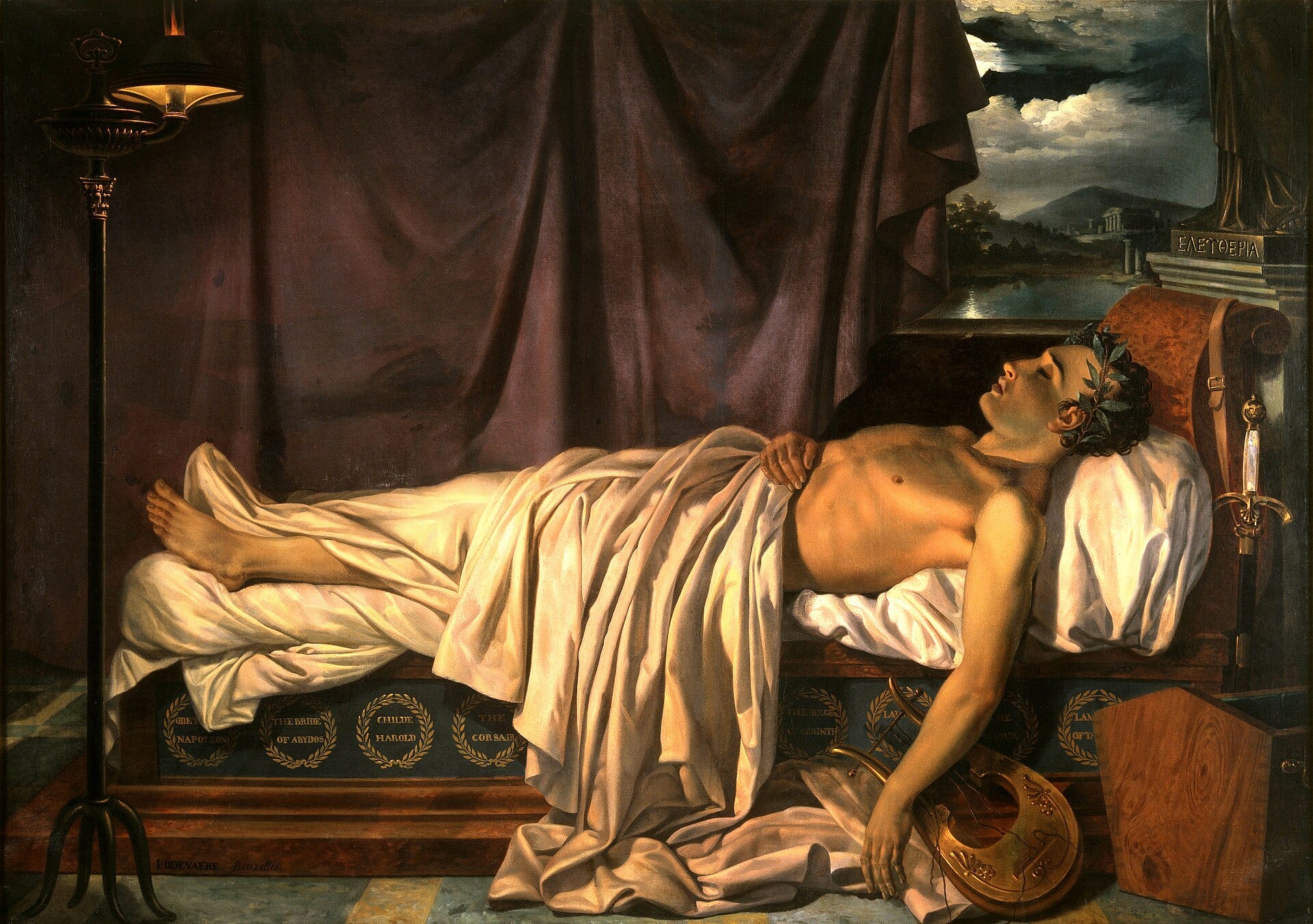
The last image we keep of a famous death is rarely what a witness saw. Most painters rebuilt those final hours afterward, from letters, sketches and studio photographs, and decided who stood by the bed, sometimes adding people who were miles away. A few painted in the room itself, and their pictures are the quietest of all.
Cool Stories About Art is a newsletter to learn art the fun way.
Join 200,000+ readers and get:
10 new art stories / month
The entire archive of content (140+ articles)
Comment, ask questions, and chat with other readers
Who Gets a Place by the Bed
A deathbed scene asks a painter to hold the moment when a life stops, and everything around it. For history painters, the bed became a stage: the dying make a last gesture or say a last word, and every face in the room answers it.
Families wanted something else. A deathbed portrait keeps a loved one's face from the hours after death, so that it is not lost, and some painters made one for the people closest to them.
Every picture here shows a real death, of rulers, soldiers, a poet, a philosopher or someone the painter loved, at the last moment rather than at the funeral, even where there is no bed. Few were painted at the bedside. In all the others, the painter had to decide who deserved a place in the room.
12. Alonzo Chappel, The Last Hours of Lincoln (1868)
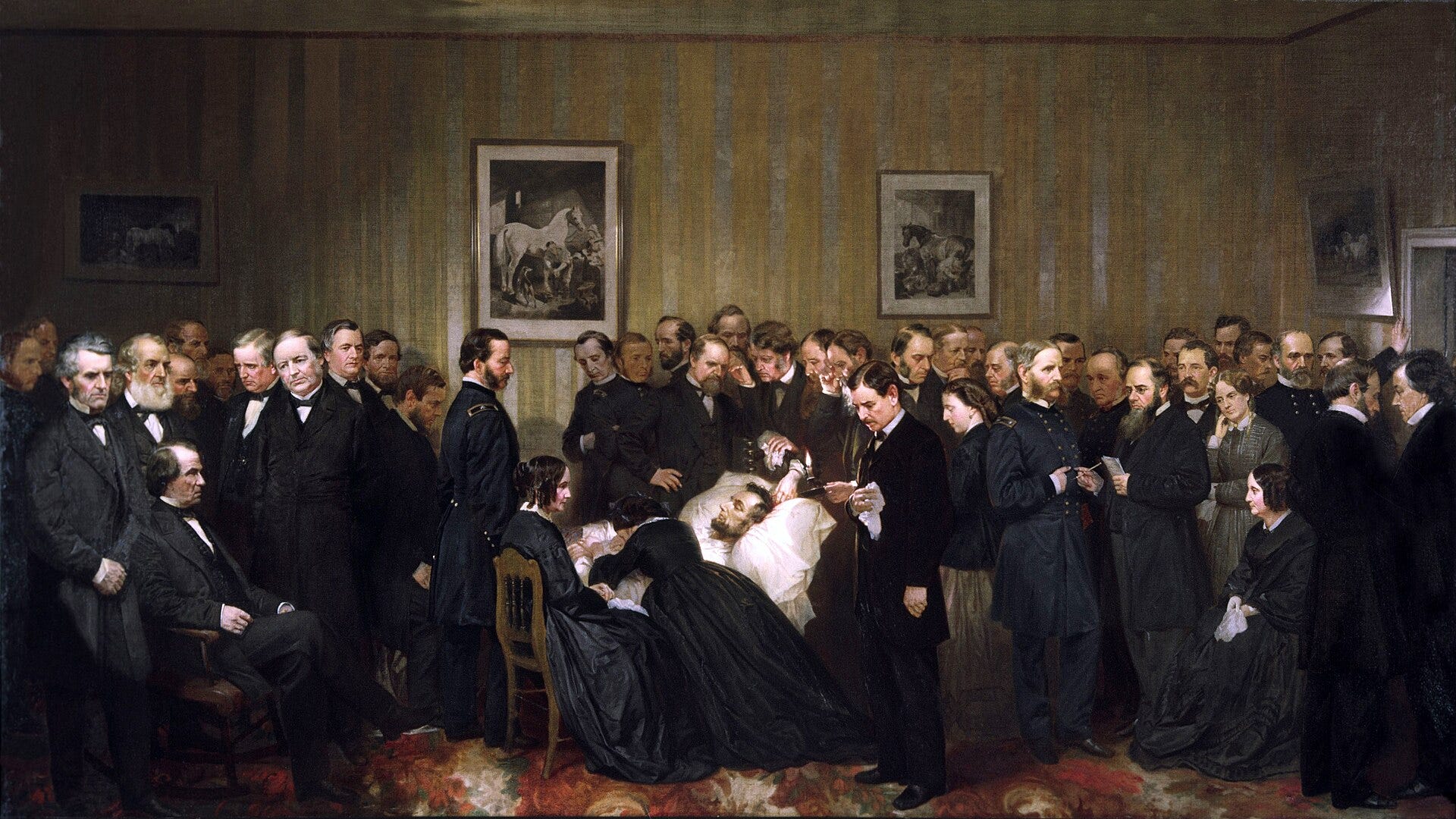
Nearly fifty men and women crowd the bedroom in this picture, most of the men in dark frock coats, packed shoulder to shoulder around a bed where Abraham Lincoln lies under a white sheet. A woman bends over him at the edge of the mattress. Lamps light the faces, and the walls seem to have moved back to make room for everyone.
That room never looked like this. After he was shot at Ford's Theatre on the evening of April 14, 1865, the president was carried across the street to the Petersen House, a family home that also took in boarders, and laid in a back bedroom of about ten feet by eighteen. He died there at 7:22 the next morning.
During the night, the visitors came and went: cabinet members, doctors, army officers, Lincoln's eldest son, Robert. They were never all at the bedside together. Three years later, the New York painter John B. Bachelder planned a picture that would gather them in one place, and Alonzo Chappel painted it.
To make it, Bachelder needed faces. He persuaded many of the visitors to sit for photographs, and several of them, among them the new president, Andrew Johnson, the secretary of war, Edwin Stanton, and Robert Lincoln, posed in the studio of the photographer Mathew Brady. Chappel copied each face from those prints and set it in its place around the bed.
The result folds a whole night into one moment, and most of the people gathered around the bed were somewhere else when Lincoln died.
At a Glance
Artist: Alonzo Chappel (1828 to 1887)
Painted: 1868
Medium: Oil on canvas
Size: Not published
Where to see it: Chicago History Museum, Chicago
11. Ferdinand Hodler, Valentine Godé-Darel on Her Deathbed (1915)
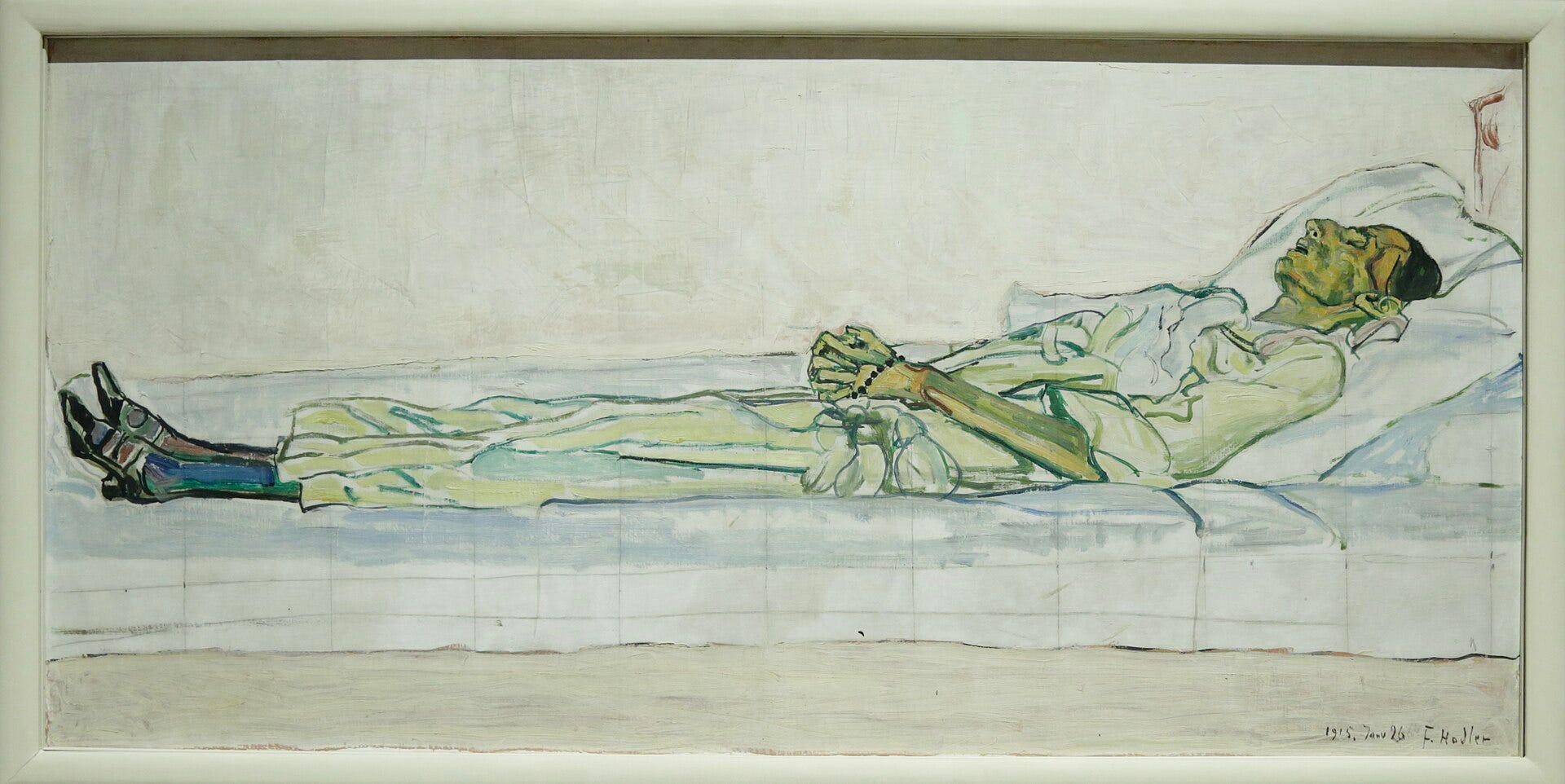
A woman lies on her back across a long, narrow canvas, from one side to the other, her hands folded, her profile clear against a dark blue ground. Ferdinand Hodler, a celebrated Swiss painter then in his sixties, painted her in January 1915, the day after her death. Her name was Valentine Godé-Darel, and through the last months of her life he had come to her bedside nearly every day to draw her.