The Dance Class by Edgar Degas: The Story Behind the Painting

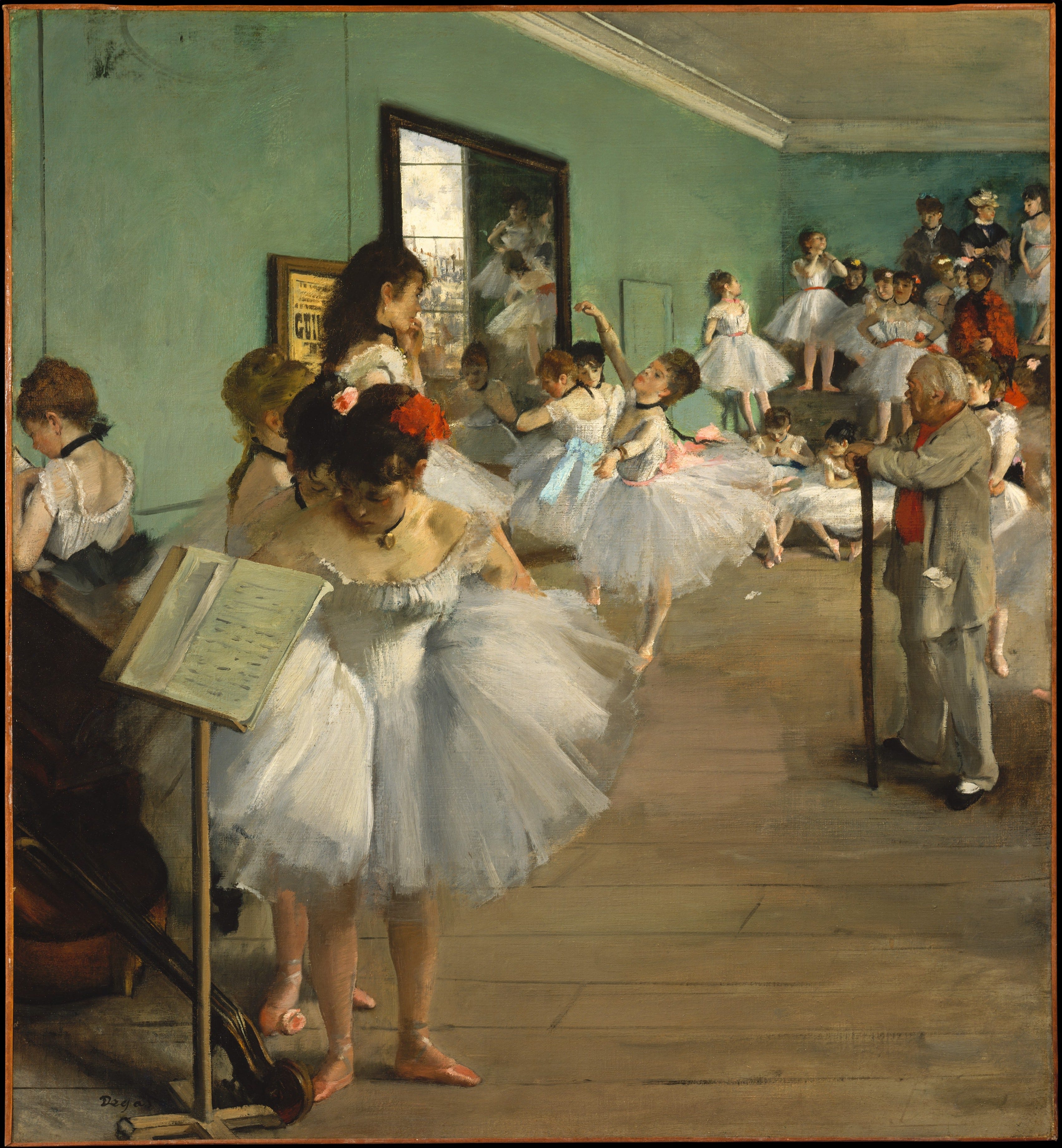
The Dance Class is Edgar Degas's 1874 painting of a ballet rehearsal at the old Paris Opera, now in the Metropolitan Museum of Art in New York. Twenty four dancers and their mothers wait around the room while one girl performs an attitude for her examination.

Edgar Degas The Dance Class 1874 ballet rehearsal painting
Edgar Degas, The Dance Class, 1874. Metropolitan Museum of Art, New York.

Degas painted a room that had already burned down. Get stories like this, free, twice a week.


A rehearsal that never happened where he painted it

The room Degas painted was the rehearsal hall of the old Paris Opera, on rue Le Peletier. That building had burned down in October 1873, a year before Degas finished the canvas.

He was working from memory and invention, not from life. Because he did not yet have permission to sketch backstage at the Opera, the dancers in the painting posed for him in his own studio.

The real ballet master in the room

The man leaning on his cane in the center is Jules Perrot, a ballet master who had actually taught and performed at the Paris Opera decades earlier. Degas placed a real, recognizable figure inside an imagined rehearsal.

Perrot had been one of the most celebrated dancers in Europe in the 1830s and 1840s before he turned to teaching. By the time Degas painted him, he was an old man watching young dancers work.

Jules Perrot ballet master portrait
Jules Perrot, portrait by Lheritier. Bibliotheque nationale de France.

Commissioned by a singer, delivered two years late

The opera singer Jean Baptiste Faure commissioned the painting in 1872. Degas did not deliver it until November 1874, after two years of intermittent work.

On the wall behind the dancers hangs a poster for Rossini's opera Guillaume Tell, a small tribute to Faure, who had sung the lead role.

Jean Baptiste Faure opera singer portrait 1868
Jean Baptiste Faure, the baritone who commissioned the painting, photographed by Charles Reutlinger in 1868.

A singer commissioned it, a poster hides a tribute to him. Join readers who learn art the fun way, free every week.


A companion picture in Paris

Degas painted a related canvas around the same years, now in the Musee d'Orsay in Paris. The two paintings are usually counted among the most famous dance paintings in Western art, and his most ambitious statements on the subject of ballet.

Together they set the template for the dozens of rehearsal and backstage scenes Degas kept returning to for the rest of his career, far more of them than the finished stage performances that made the Opera famous. That closeness to young dancers backstage is part of why some readers still ask whether Degas could have been Jack the Ripper.

Edgar Degas The Dance Class companion painting Musee d'Orsay
Edgar Degas, La Classe de Danse, circa 1873 to 1876. Musee d'Orsay, Paris. The companion painting to the Metropolitan Museum canvas.

Questions about The Dance Class

  • What is happening in The Dance Class? A ballet rehearsal at the Paris Opera, supervised by the ballet master Jules Perrot, with dancers and their mothers waiting around the edges of the room.

  • Where is The Dance Class today? The Metropolitan Museum of Art in New York.

  • When did Degas paint it? Between 1872 and 1874. He delivered the finished canvas in November 1874.

  • Is there another version? Yes, a related painting from the same years is in the Musee d'Orsay in Paris.

The Opera building in the painting had already burned to the ground by the time Degas finished it. He painted a rehearsal room that no longer existed.

Read Edgar Degas: The Complete Story for the rest of his life and work.

Related reading