
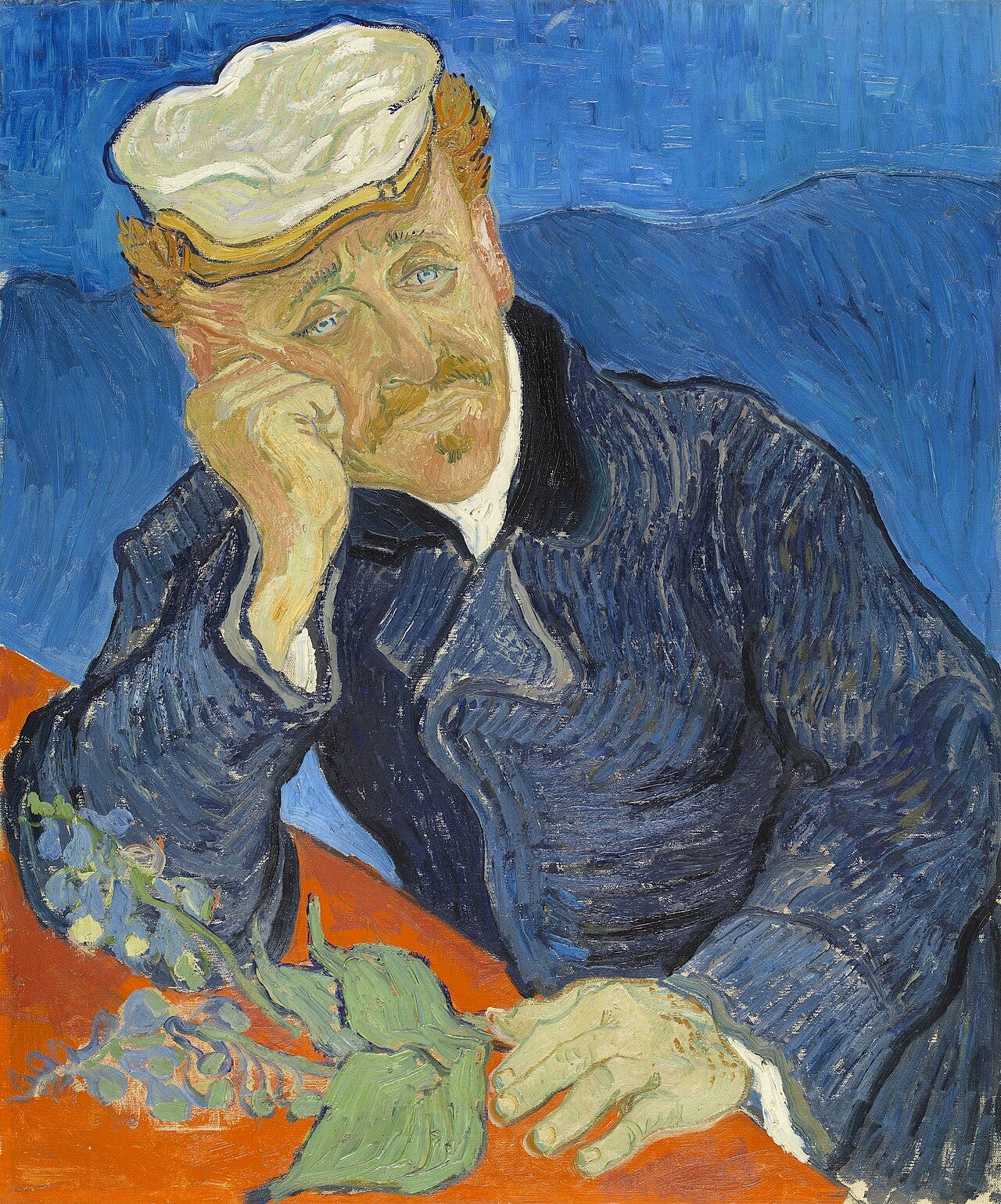
Doctors and medicine in painting run from Rembrandt's public dissection of 1632 to a physician keeping watch over a sick child in 1891. Before the stethoscope, a doctor at a sickbed worked mostly with his eyes and fingers, and often his only treatment was to stay until morning.
These twelve famous works include a surgeon pulling a flower out of a man's head and a physician painted by the patient he was supposed to be looking after.
Cool Stories About Art is a newsletter to learn art the fun way.
Join 200,000+ readers and get:
10 new art stories / month
The entire archive of content (140+ articles)
Comment, ask questions, and chat with other readers
A medical painting shows a doctor at work: at a bedside, in an operating theater, beside a dissection table, or holding a flask up to the window. Painters liked the subject because it gathered a room of people around a single body, with fear and professional calm side by side.
The scene also came with props any viewer could read: two fingers on a wrist, a scalpel, a glass of urine. And the sickroom was not always someone else's. Painters fell ill like everyone else, and at least one of them painted himself in the bed.
Each picture shows medicine as it was practiced in its own day, or as the painter lived it. For most of those four centuries, a physician could do very little against serious illness, and that began to change only in the late nineteenth century, when surgeons learned to fight infection.
12. The Agnew Clinic, Thomas Eakins (1889)
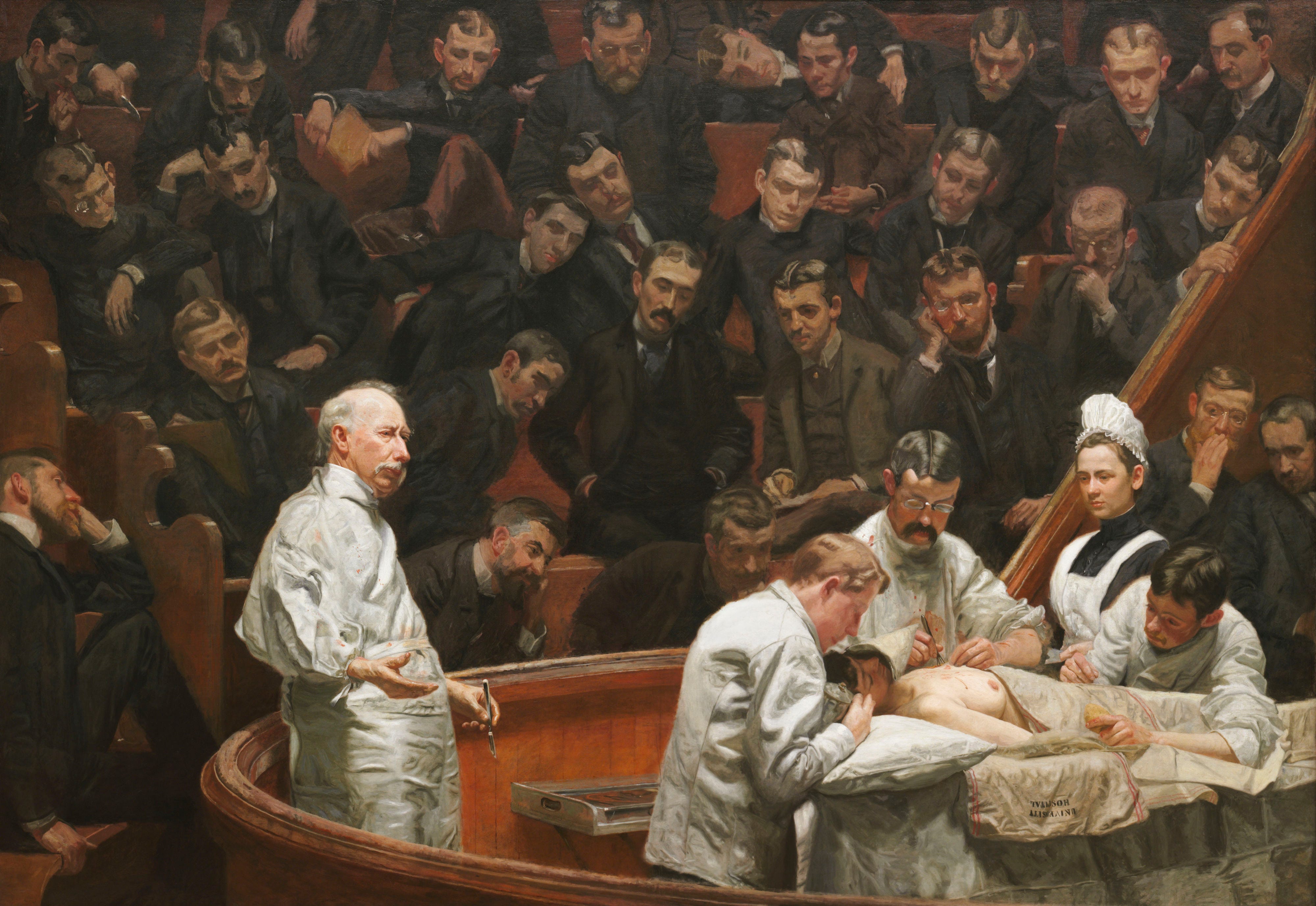
In The Agnew Clinic, painted by Thomas Eakins in 1889, a surgeon in a white coat has lowered his scalpel and stepped back from the operating table.
The table stands at the bottom of a lecture hall, below steep tiers packed with students, and the surgeon is speaking up to them. Three assistants bend over a woman under a sheet, and a nurse in white stands at her head.
The surgeon is David Hayes Agnew, who taught at the University of Pennsylvania in Philadelphia. Three classes of medical students commissioned the canvas as their professor was about to retire, and they wanted it ready for commencement, the graduation ceremony, on May 1.
Those white coats are the place to start. Fourteen years earlier, in 1875, Eakins had painted another Philadelphia surgeon, Samuel Gross, in another operating theater, and Gross worked in a black frock coat, the long jacket of a gentleman, with bare, bloody hands.
Between the two pictures, the ideas of Joseph Lister had gained ground in American teaching hospitals. Lister, a British surgeon, argued that wound infection came from germs carried in on hands, instruments and dressings, and that killing those germs saved patients.
By 1889, Agnew's operating room had white coats, clean instruments and a trained nurse. Her name is Mary V. Clymer, and instead of leaving her in shadow at the edge of the scene, Eakins placed her at the head of the table, in full view, painted as carefully as the men around her.
When the students listed the people in the picture, they named thirty-two: Agnew, four assisting doctors, Clymer, twenty-five students and Eakins himself, at the right edge, listening to a student. His wife, Susan Macdowell Eakins, painted his head in for him.
One person is missing from that list. Nobody named the woman on the table.
At a Glance
Artist: Thomas Eakins (1844 to 1916)
Painted: 1889
Medium: Oil on canvas
Size: 214 × 300 cm (84 × 118 in)
Where to see it: Philadelphia Museum of Art, Philadelphia (on loan from the University of Pennsylvania)
11. The Village Doctor, David Teniers the Younger (about 1660)
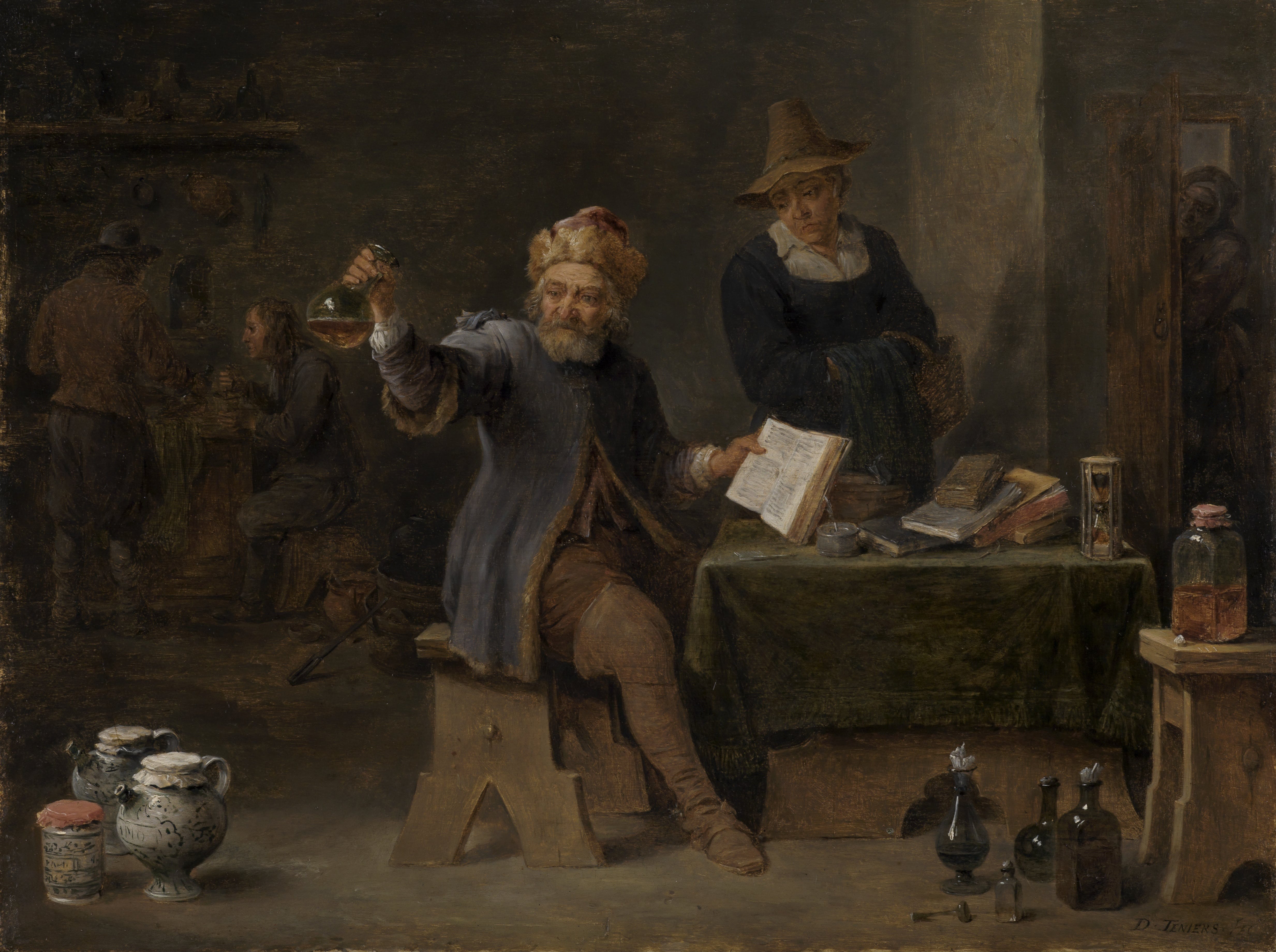
In The Village Doctor, a small oak panel by the Flemish painter David Teniers the Younger, a man holds a glass flask of urine up to the window and squints into it. Shelves of pots, stoppered bottles and bundles of dried herbs line the room around him.
Teniers, who worked in Antwerp and later in Brussels, painted the scene around 1660. The man at the window is about to name a disease from what he sees in the glass, and the people who first bought pictures like this one knew exactly how far to trust him.