
Edgar Degas was the French painter of ballet dancers who hated being called an Impressionist and almost never painted outdoors. Above all he was a fanatical draughtsman of modern life.
Born into a wealthy Paris banking family in 1834, he trained as a draughtsman, sculpted in secret, and kept working in pastel even as his eyesight failed, right up to his death in 1917.
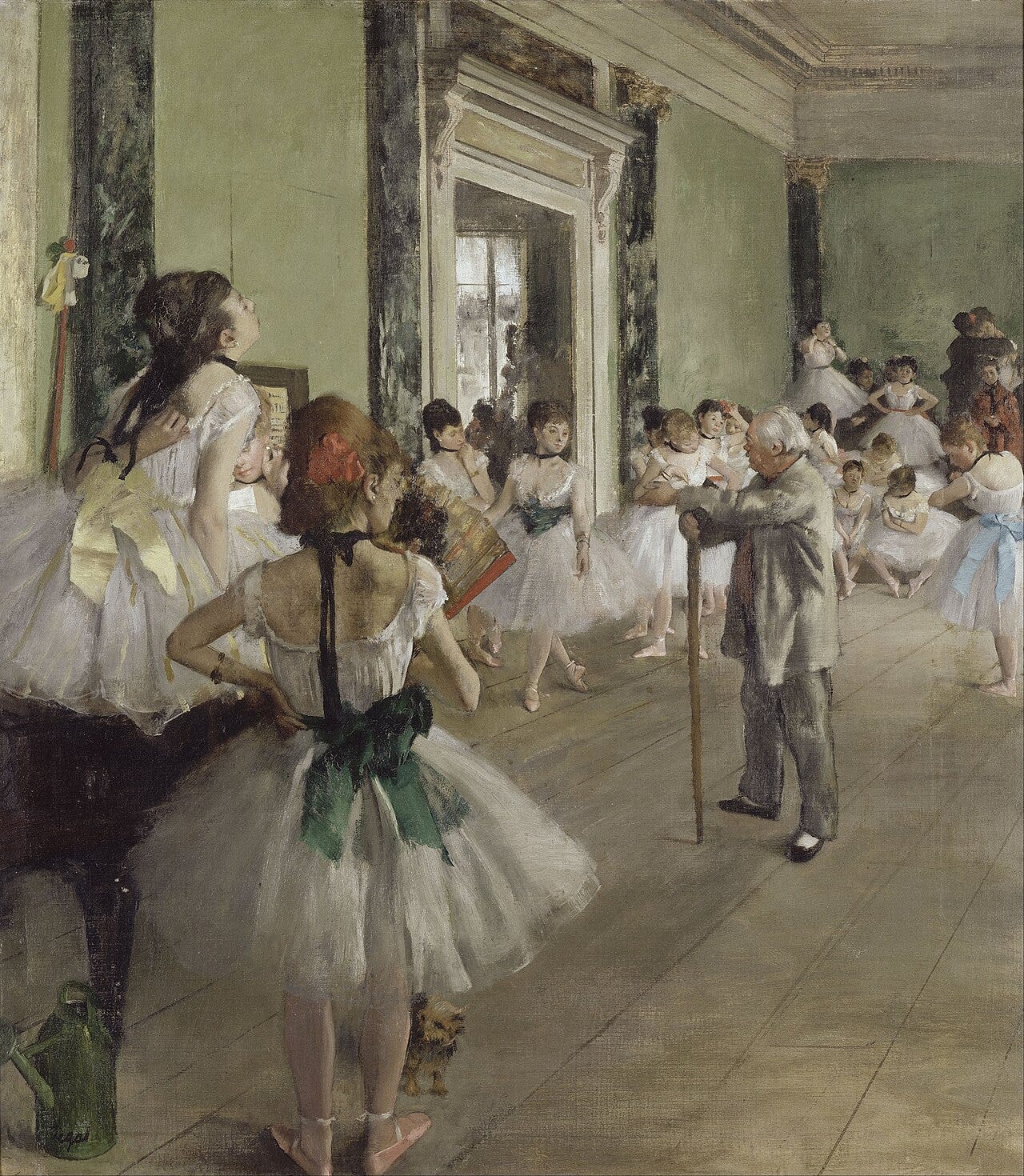
Behind the pretty dancers is a sharp, restless eye. Degas painted rehearsals, exhaustion, laundresses, racehorses and women washing, the work and effort the modern city tried to hide.
More incredible painter stories
If Edgar Degas pulled you in, you will love these too:


He was brilliant, difficult and, in old age, nearly blind. Here is the whole story.
Edgar Degas at a glance
1834. Born in Paris into a banking family.
1874. The family bank’s debts forced him to sell his collection. He helped organize the first Impressionist show the same year.
1881. Showed the Little Dancer, Aged Fourteen, dressed in real tulle and human hair.
1912. Forced from his longtime studio, nearly blind, he essentially stopped working.
1917. Died in Paris. About 150 sculptures were found in his studio. He had exhibited exactly one.
The reluctant Impressionist
Degas showed his work in almost all the Impressionist exhibitions, so the label stuck. He hated it.
The Impressionists painted light outdoors with quick, broken strokes. Degas worked indoors, from memory and drawings, prizing firm line and careful composition.
He called himself a Realist, an independent. He shared their subject, modern life, but not their method.
The labor under the beauty
Degas is famous for taking glamorous subjects and showing the labor underneath. His dancers are not floating fairies but working girls, aching, scratching, adjusting a strap, waiting in the wings.
He did the same for laundresses, milliners and bathers. He found beauty in awkward, unguarded, everyday movement, and that honesty is why he still feels modern.
How to spot a Degas
A Degas gives itself away fast.
Drawing first. Line and contour matter more than loose color. He idolized the great draughtsman Ingres.
The off center view. Figures cropped by the frame and seen from odd angles, like a snapshot or a seat at the theater.
Pastel. Glowing, powdery color, which he used more and more as his eyesight failed.
Movement caught mid action. A dancer mid turn, a horse mid stride, never stiffly posed.
His love of pastel produced some of the most glowing surfaces of the era.
Why the ballerinas
Roughly half of Degas’s work shows the ballet, but not for the reasons people assume. The Paris Opera gave him a perfect laboratory: bodies in motion, artificial light, repeated effort.
He painted the unglamorous truth of it, the boredom of rehearsal, the strain of holding a pose, and the wealthy male subscribers who prowled backstage with access to the young dancers.
I go deeper into one specific rehearsal scene in The Dance Class by Edgar Degas.
For me that quiet unease under the tulle is what makes these pictures so hard to look away from.
The secret sculptor
Few people knew that Degas also sculpted. In 1881 he showed one work, the Little Dancer Aged Fourteen, a wax figure dressed in a real cloth tutu and hair ribbon.
Audiences found it shockingly lifelike, almost improper. When he died, around 150 fragile wax sculptures of dancers and horses were found in his studio, later cast in bronze. The painter had been a hidden sculptor all along.
What he took from Ingres and Japan
Degas mixed old and new with unusual deliberation.
From the classical master Ingres he took a near religious devotion to line. From Japanese prints he took flat shapes, high viewpoints and unexpected cropping.
And from the new art of photography he took the frozen, accidental look of a snapshot. Tradition and modern technology met in his hand.
A difficult man
Degas was famously prickly, witty and hard to be around, and he never married. His reputation also carries a real stain.
During the Dreyfus Affair, the political scandal that split France over a wrongly accused Jewish officer, Degas sided with the antisemites and broke with old friends, including the painter Camille Pissarro. It is part of an honest account of him.
Going blind
From middle age, Degas’s eyesight slowly failed, a quiet tragedy for an artist who lived to look.
As fine detail grew impossible, he leaned into pastel, with its broad strokes and strong color, and into sculpture he could shape by touch. His late work grew freer and more abstract as his vision dimmed.
How Edgar Degas died
In his final years Degas was nearly blind, lonely and famous, wandering the streets of Paris.
He died in 1917, at 83, during the First World War. Only after his death did the full range of his drawings and secret sculptures come fully to light.
Paris and New York, above all
Paris and New York lead the way.
The Musee d’Orsay, Paris. The essential stop, rich in his dancers, bathers and the Little Dancer.
The Metropolitan Museum of Art, New York. Holds a deep collection of his paintings, pastels and bronzes.
Born into money in 1834
Edgar Degas was born in Paris on 19 July 1834, into comfort most artists never know.
His full name was Hilaire Germain Edgar De Gas. The family spelled it de Gas, which looked grander than it was. Edgar later flattened it to the plain Degas.
His father ran a branch of the family bank, and Edgar was the eldest son. He grew up among Latin, Greek and ancient history at the Lycee Louis le Grand, and his father took him often to the museums of Paris.
Here is a myth worth killing early. Degas was never a starving bohemian in a cold garret. He started rich, and for the first two decades of his career money was simply not a worry. That changed later, and hard.
Law first, then a pupil of Ingres
Degas was groomed for a respectable profession, not for paint.
As a young man he registered to study law, the safe path for a banker's son. It did not hold him, and he soon left it to train as an artist.
He copied Italian Renaissance paintings at the Louvre and entered the studio of Louis Lamothe, a teacher who had studied under Jean Auguste Dominique Ingres.
That lineage mattered. Lamothe drilled into Degas the old academic faith in line and drawing above all else. Degas kept it for life, even when his Impressionist friends chased loose color and daylight.
Under the pastel haze there is always a firm, deliberate contour.
Three years in Italy, 1856 to 1859
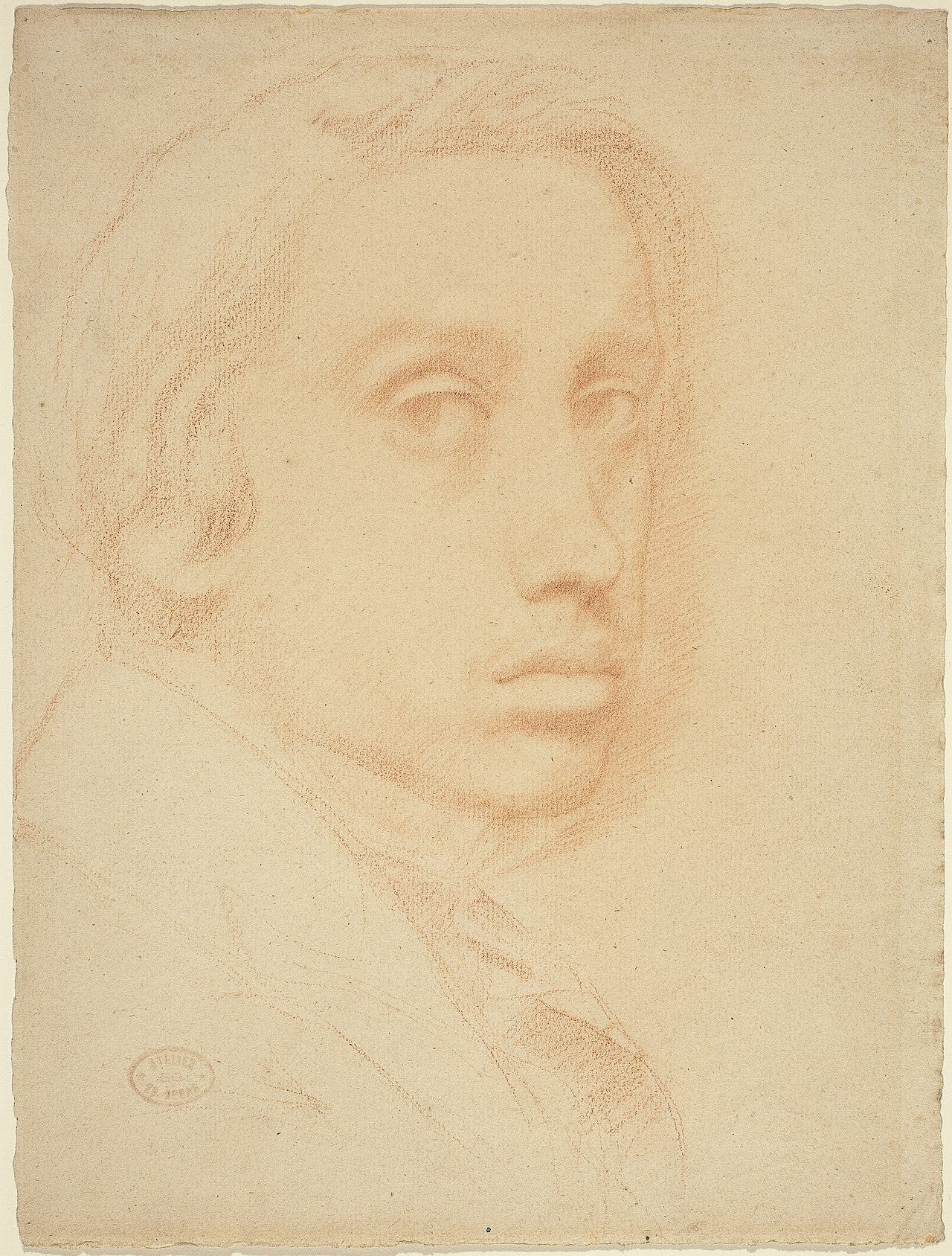
Between 1856 and 1859 Degas spent roughly three years in Italy, and it shaped him.
He filled notebooks with copies after the old masters, sketching frescoes and paintings in Rome, Naples and Florence. This was his real school.
He also had family there. In Florence he stayed with his aunt Laura, the Baroness Bellelli, and studied her household closely. Out of those studies came one of his first large works, a group portrait of the Bellelli family.
It shows his aunt, her husband and their two daughters in a room thick with tension between the parents. Today it hangs in the Musee d'Orsay, and it already reveals his gift for catching real people mid mood.
The history painter who changed his mind
Degas did not set out to paint dancers and laundresses. He wanted to be a history painter, the grandest job in the academic ranking.
In his twenties he tried classical and historical subjects. His Young Spartans Exercising, from around 1860, now in the National Gallery in London, puts youths in a vaguely ancient scene.
Even there, the girls have the snub noses of Paris streets, not Greek myth.
In 1865 the official Salon accepted his history painting about a medieval sack of Orleans, a work now in the Musee d'Orsay. That was the turning point.
After 1865 he dropped historical themes for good and pointed his eye at modern life instead, at racetracks, cafes and rehearsal rooms, moving in the same Paris social circle as the portraitist Giovanni Boldini.
New Orleans, 1872 to 1873
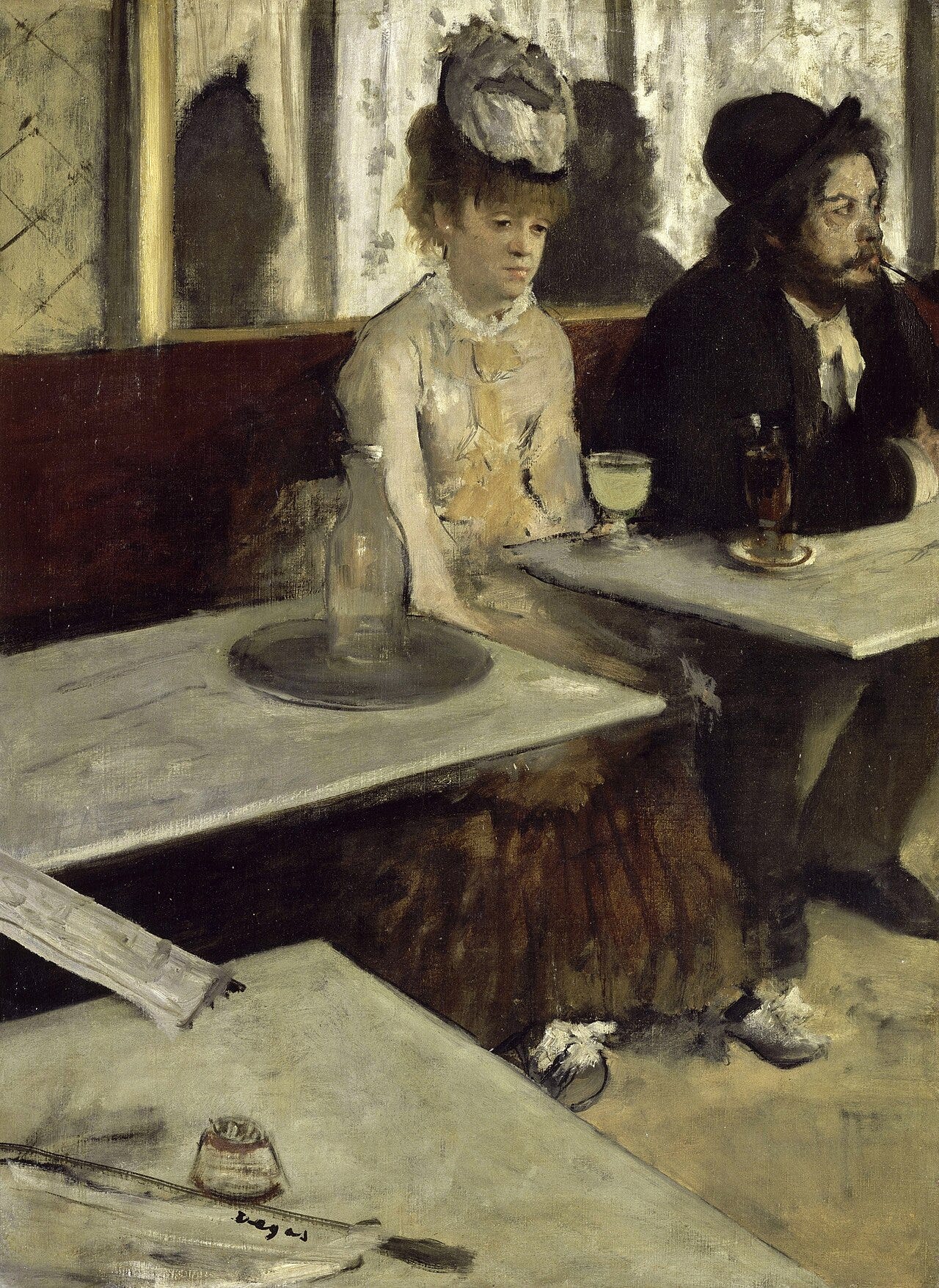
The two friends who posed for this picture, and the scandal it caused in London, are the whole subject of L'Absinthe by Edgar Degas.
One of the odder chapters of Degas's life happened far from France. His mother came from New Orleans, and her relatives ran a cotton business there.
In 1872, soon after serving in the defense of Paris during the Franco Prussian War, Degas sailed across the Atlantic to visit them.
He stayed for months into 1873. The bright American light bothered his eyes, and he complained of it, an early sign of the trouble that would haunt him.
The visit gave him one memorable picture. A Cotton Office in New Orleans, painted in 1873, shows his uncle's firm at work, men inspecting raw cotton in a plain office.
It now hangs in the museum at Pau in France. It was the first Degas ever bought by a museum.
The money runs out in 1874
The safety net vanished in 1874, the year Degas's father died.
The family bank was in serious trouble, and the debts landed on the sons. Degas, the responsible eldest, took on obligations tied to his brothers to protect the family name.
Overnight, the wealthy gentleman had to earn. He sold works from his own collection and, for the first time, treated selling his own paintings as a necessity rather than a hobby.
There was a strange upside. The ballet pictures he made in the early 1870s found eager buyers, and dealers began to rely on him. So the artist we think of as free and independent was, in fact, pushed into the market by a family crisis.
The Impressionist who refused the name
Degas helped build Impressionism and spent his life rejecting the word.
In 1874 he was one of the chief organizers of the first Impressionist exhibition, the group show that broke with the official Salon. He kept organizing, and took part in almost every one of the eight exhibitions held between 1874 and 1886.
Yet he hated the label. He called himself a Realist or an Independent, and reportedly described that first show as a salon of Realists.
The disagreement was real. His friends painted outdoors, chasing weather and light. Degas worked indoors, from memory and drawings, under artificial light, insisting on line and control.
So the man at the center of the movement was also its loudest internal critic.
Pastel, monotype, and the camera
Degas was restless with materials, always testing what a medium could do.
He is famous for pastel, and by the mid 1880s most of his important works were done in it. He built the color up in crusty layers, hatching dry chalk over wet, until the surface almost seems to move with light.
He also took the monotype seriously, a printing method that yields a single image pulled from ink on a smooth plate. He treated it as its own art form, sometimes brushing pastel on top.
Later in life he took up photography too, posing friends in dim rooms and studying the results. This appetite for technique kept his work changing across sixty years.
The racetrack, not just the ballet
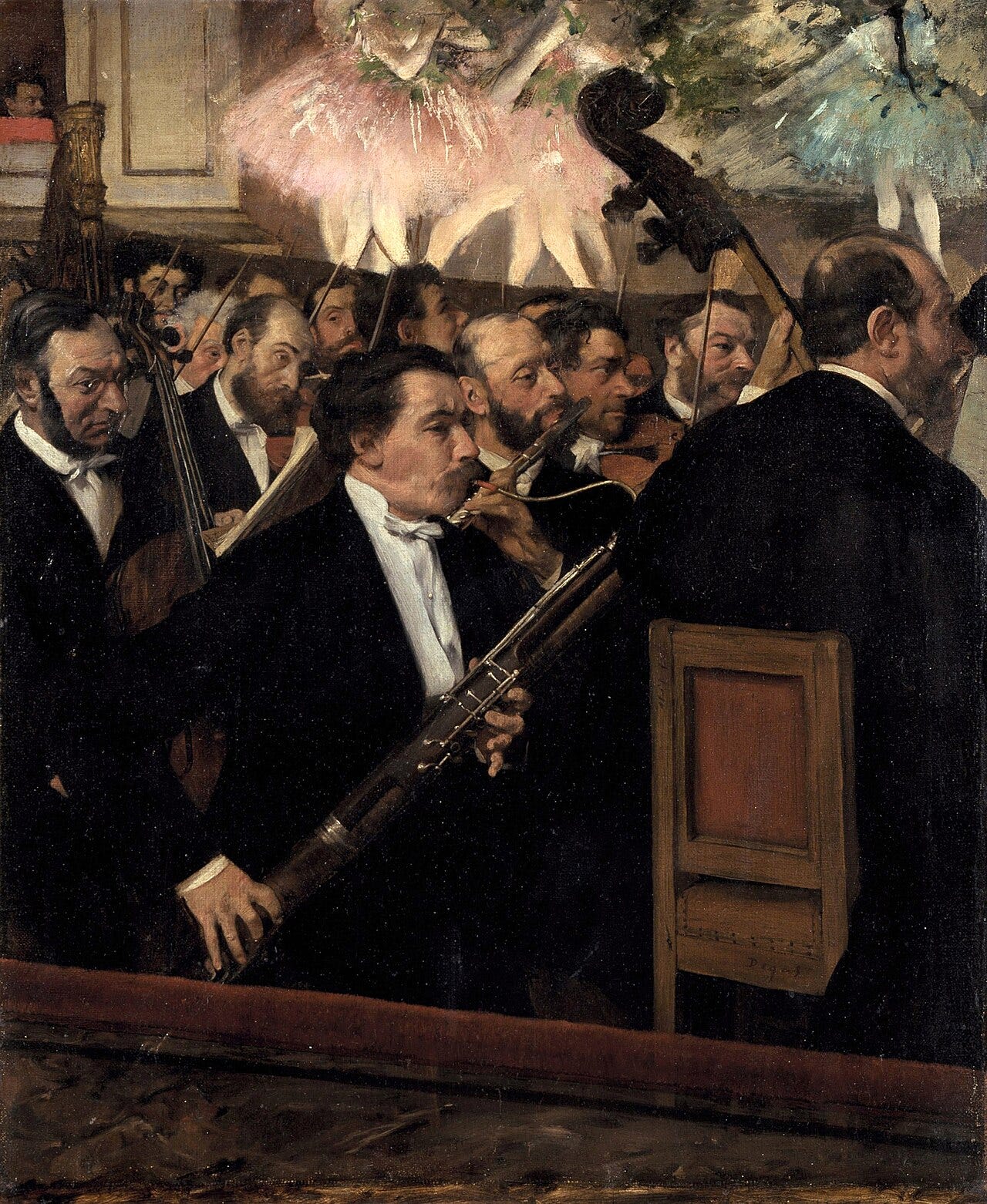
Everyone remembers Degas for dancers. Fewer know he was just as obsessed with horses.
From the early 1860s he painted French racing scenes, jockeys in bright silks, thoroughbreds pacing before the start. His racing pictures came before similar scenes by his friend Edouard Manet.
He loved the racetrack for the same reason he loved the dance studio. Both gave him bodies in motion, tense and disciplined, waiting or straining, that he could freeze from a surprising angle.
So the idea that Degas only painted ballerinas is false. Across his career he also painted laundresses at their irons, milliners trimming hats, singers in cafes, and women bathing.
His true subject was the human body at work.
The Little Dancer that unsettled Paris
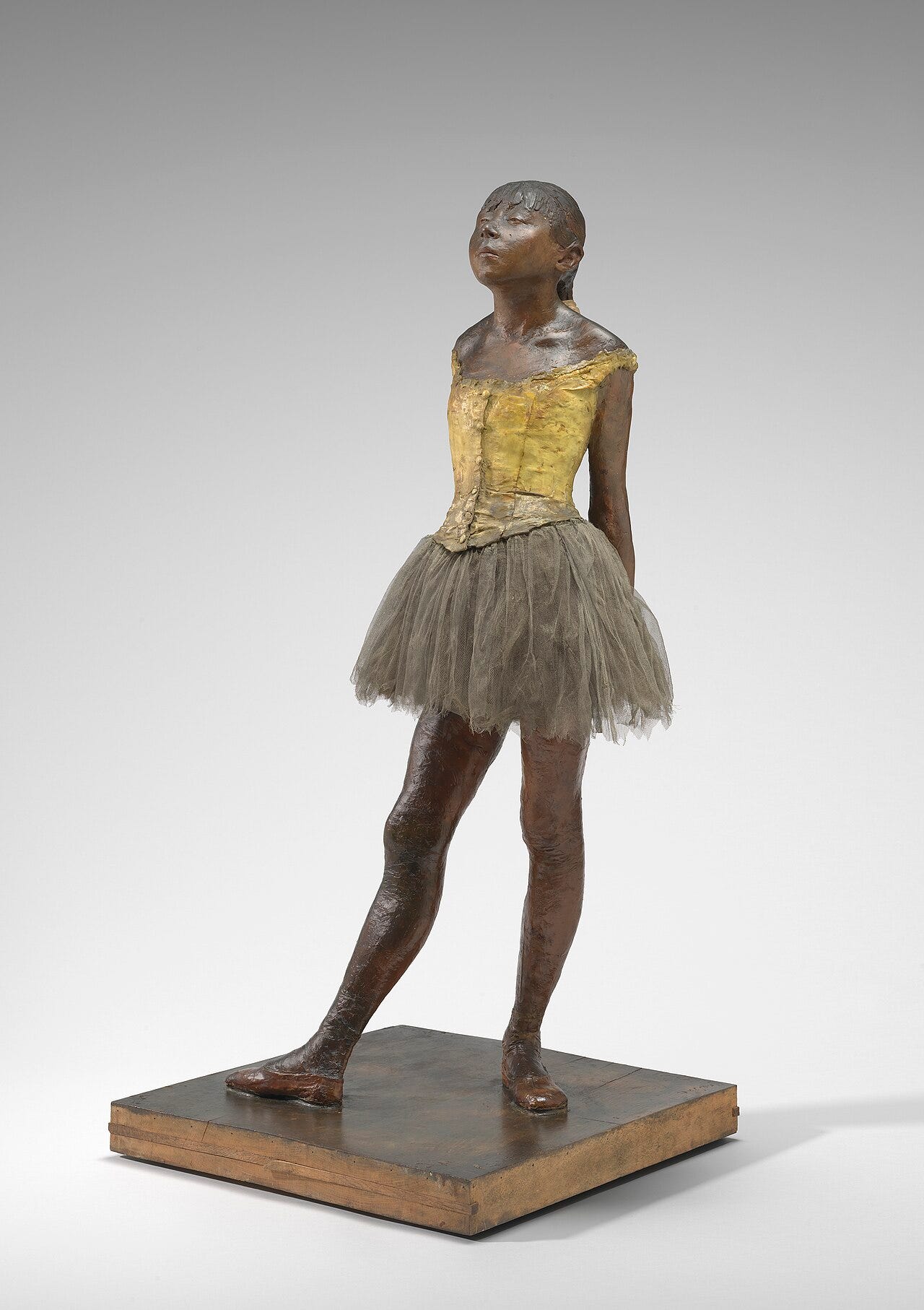
In 1881 Degas showed a single sculpture in public, and it caused a stir for the wrong reasons.
The Little Dancer Aged Fourteen was a wax figure of a young ballet student, made between 1878 and 1881. Degas dressed her in a real cloth tutu, real ballet slippers, a wig of human hair, and a silk ribbon.
The realism went too far for many. Viewers expected polished marble or bronze and got what looked like a real girl behind glass. Several critics recoiled, calling her coarse.
This is worth stressing. The Little Dancer was not celebrated in its day. It disturbed people. It was also the only sculpture Degas ever exhibited while alive.
The rest were found in his studio after he died, and cast in bronze later.
More secrets to unlock


The Edgar Degas questions that keep coming up
What is he known for? Paintings and pastels of ballet dancers, and scenes of modern Paris life.
Why did he paint ballerinas? The Opera gave him bodies in motion to study, and a hidden world to expose.
Was he an Impressionist? He exhibited with them but rejected the label, calling himself a Realist.
How did he die? Of old age in 1917, aged 83, nearly blind.
Where was he from? Paris, born into a wealthy banking family.
Was Degas an Impressionist? He exhibited with the Impressionists and helped organize their shows, but he rejected the term. He preferred to call himself a Realist or an Independent, and worked in the studio from drawings and memory rather than outdoors.
What was Degas's real name? He was born Hilaire Germain Edgar De Gas, into a Paris banking family. The family used the aristocratic looking spelling de Gas, which he simplified to Degas as a young man.
A strange aside: Was Edgar Degas Jack the Ripper?