Edouard Vuillard: The Complete Story

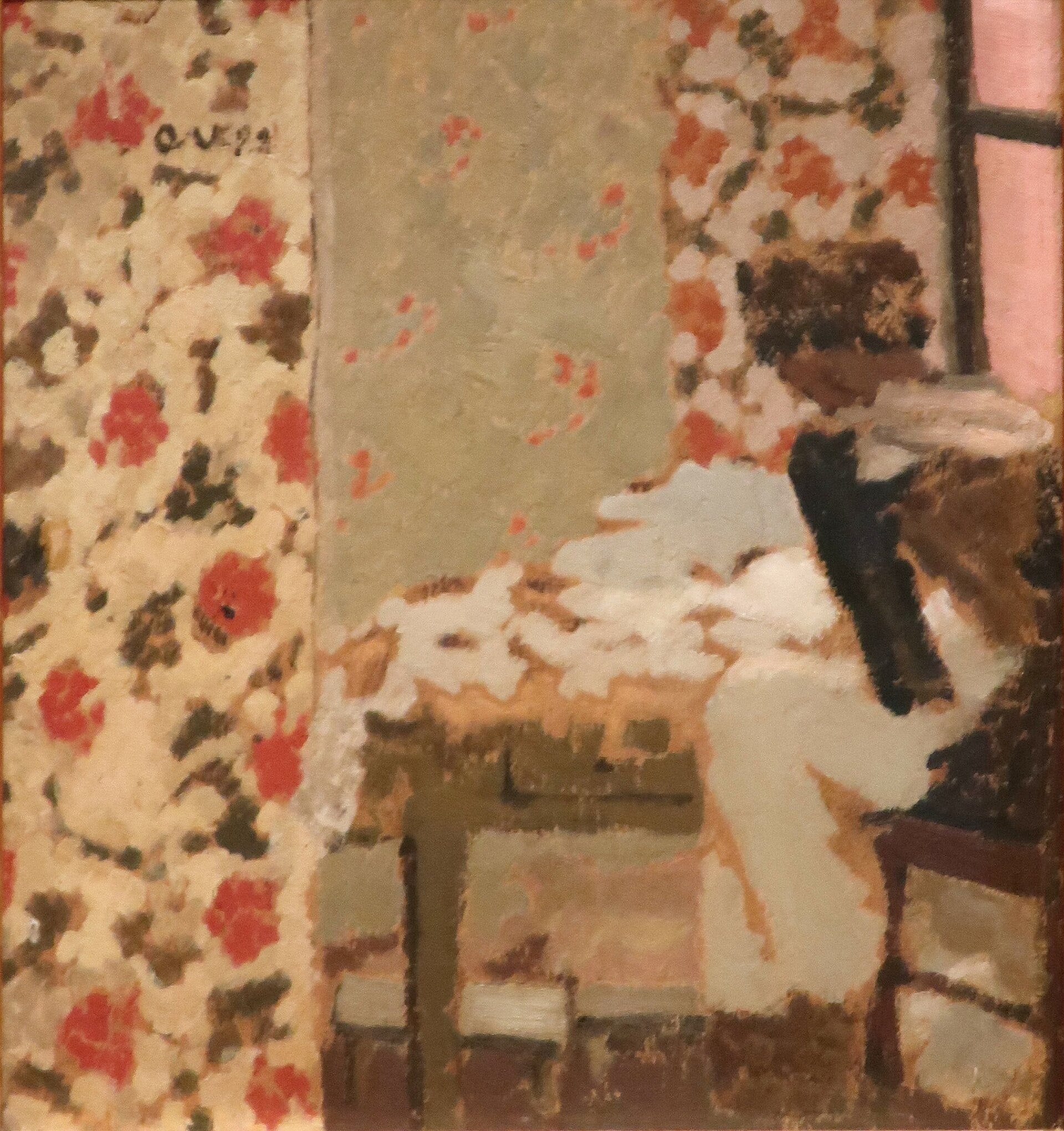
Edouard Vuillard was the quiet poet of the patterned room. A member of the Nabis alongside Bonnard, he painted small, hushed interiors where figures almost vanish into wallpaper, rugs and fabric.

His subject was the everyday life of his own family, above all his mother, watched with tenderness and a strange, dreamy calm.

Interior by Vuillard
Edouard Vuillard, an intimate interior.

He lived with his mother for most of his life, and her dressmaking workshop fills his art with cloth.

  • Born: Cuiseaux, France, 1868

  • Known for: intimiste interiors, the Nabis, patterned domestic scenes

  • Died: La Baule, France, 1940


Hooked on Edouard Vuillard? Get more art secrets and stories in your inbox, free.


For anyone who wants more than a caption

Three that changed how I look at a picture:


Figures lost in pattern

Vuillard's interiors are crowded with pattern: striped wallpaper, flowered dresses, patterned carpets, all pressed flat against the surface.

A person can almost disappear into the decor, a head emerging from a field of dots. See what is post-impressionism.

It sounds like a trick, but it carries real feeling. The figures merged into their rooms suggest how much a home shapes and hides the people inside it.

The dressmaker mother

Domestic scene by Vuillard
Edouard Vuillard, a domestic scene.

His widowed mother ran a corset and dressmaking business from the family apartment, and Vuillard grew up surrounded by bolts of fabric and women at work. That world of cloth and quiet labour became his deepest subject.

He painted her hundreds of times, sewing, pouring tea, sitting in lamplight. He called her, fondly, his muse, and lived at her side until she died.

The Nabi decorator

Public garden by Vuillard
Edouard Vuillard, a public garden panel.

With the Nabis, Vuillard treated a painting as a flat decorated surface rather than a window. He often worked in distemper, pigment bound with glue, which dries to a soft, matte, fresco like finish ideal for large decorative panels.

See what is oil painting.

He also took thousands of photographs, snapshots of family life that fed the offhand, intimate framing of his painted rooms. See what is pastel.

The stage and the painted room

Portrait by Vuillard
Edouard Vuillard, a portrait.

Vuillard worked closely with the experimental theatre of 1890s Paris, designing programmes and stage sets. The flat, patterned look of his paintings owes something to the painted backdrops of that stage.

He also made large decorative panels for the walls of wealthy friends, such as his Public Gardens series, turning a single room into a world of dappled light, children and trees. For Vuillard, painting could be furniture for the soul.

Common questions about Edouard Vuillard

What is Edouard Vuillard famous for?

Intimate, pattern filled interiors of family life, painted as a leading member of the Nabis.

Who did he paint most?

His mother, a dressmaker, whom he painted hundreds of times across his life.

What is distemper?

Pigment bound with glue that dries soft and matte, which he used for large decorative panels.

When did he die?

In 1940, in western France.

Why the hush still holds

Vuillard never chased drama, and for a while that made him seem minor beside louder modern painters. Look closely and his rooms are quietly radical, a whole world of feeling built from wallpaper and lamplight, the most intimate art of its age.


More than 110,000 people read these art stories. Come along, free.


One last detail. As he grew older Vuillard turned to society portraits set in their owners crowded rooms, but the magic faded a little. His greatest work remains the small early interiors, made when the subject was simply home.


Curious for more? The next art story is on us. Sign up free.