Elisabeth Vigee Le Brun: The Complete Story

Elisabeth Vigee Le Brun, who lived from 1755 to 1842, was the favorite portrait painter of Marie Antoinette and one of the most successful women artists in history.

When the French Revolution destroyed her world, she fled and rebuilt her fame across Europe, then lived to tell the story herself.

Vigee Le Brun self portrait in a straw hat
Elisabeth Vigee Le Brun, Self Portrait in a Straw Hat, about 1782

The fast version

  • Born in Paris in 1755, the daughter of a pastel portraitist.

  • Became Marie Antoinette's favorite painter in her twenties.

  • Fled France the night the royal family was seized in 1789.

  • Spent twelve years painting the courts of Europe in exile.

  • Came home, wrote her memoirs, and died famous at 86.


Hooked on Vigee Le Brun? Get more art secrets and stories in your inbox, free.


What sits behind the paywall

If this is the kind of art history you want more of:


A prodigy in a man's profession

Vigee Le Brun self portrait at sixteen
Elisabeth Vigee Le Brun, self portrait at about sixteen, in pastel

She was born in Paris in 1755. Her father, a pastel painter, gave her first lessons and died when she was twelve. Largely self taught after that, she was selling portraits to support her family while still a teenager.

In 1776 she married the art dealer Jean Baptiste Pierre Le Brun, who handled, and often pocketed, her growing income. Her talent, not the marriage, drove her rise.

The queen's favorite painter

Vigee Le Brun Marie Antoinette and her children
Elisabeth Vigee Le Brun, Marie Antoinette and Her Children, 1787

Around 1778 she was called to Versailles, and Marie Antoinette took to her at once. Over the next decade she painted the queen roughly thirty times, shaping her public image.

One portrait showed Marie Antoinette in a simple muslin dress and caused a scandal, since a queen was supposed to look like a queen. In 1783, with royal pressure, Vigee Le Brun was admitted to the Royal Academy, a door almost shut to women.

She fled the night the monarchy fell

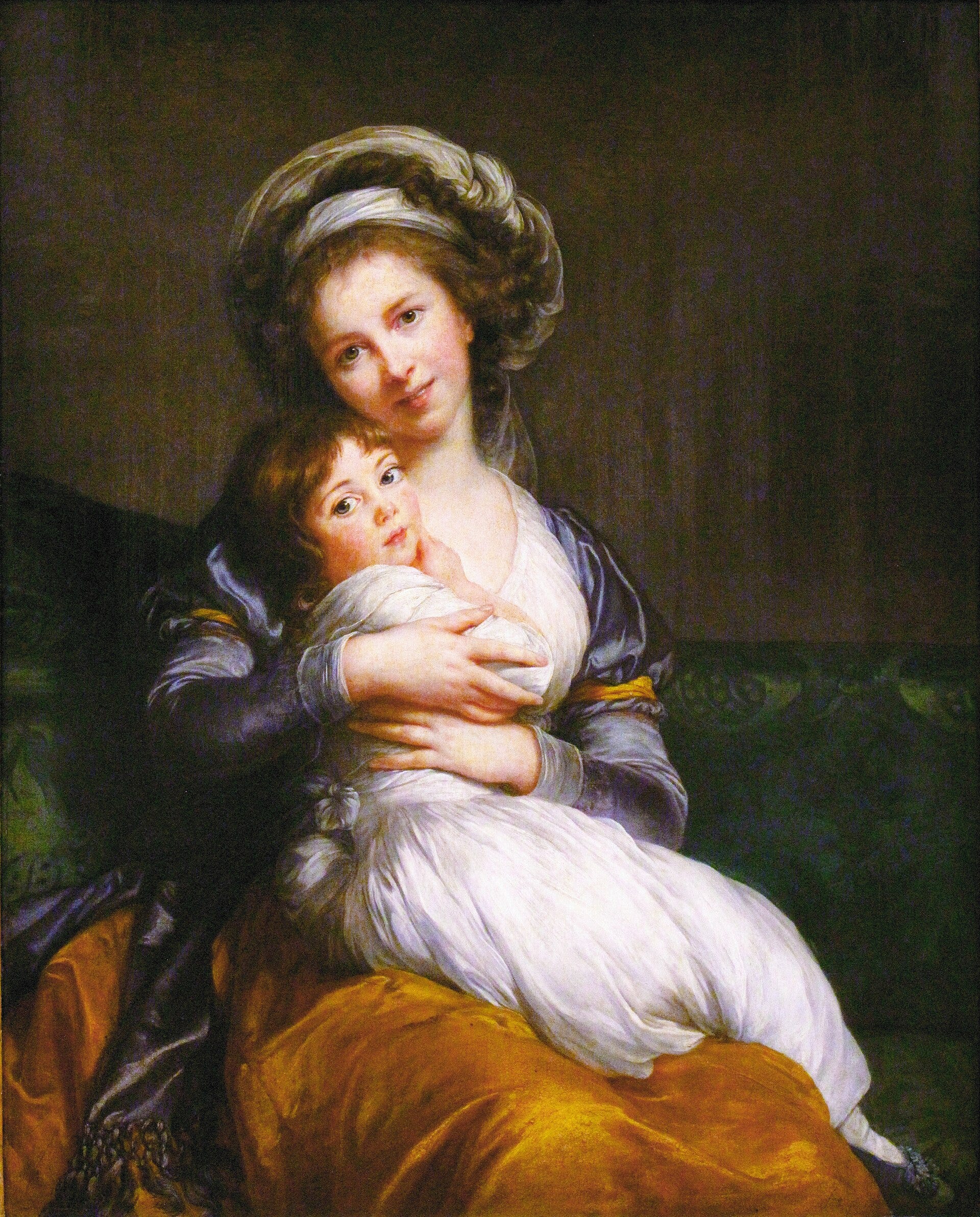
Vigee Le Brun self portrait with her daughter
Elisabeth Vigee Le Brun, self portrait with her daughter Julie, 1789

Being the queen's painter became dangerous fast. In October 1789, as the royal family was marched from Versailles, Vigee Le Brun slipped out of France in a public coach with her young daughter.

She left behind her home, her clients and her country. She would not see Paris again for twelve years.

Twelve years as a wandering star

Vigee Le Brun portrait painted in Russia
Elisabeth Vigee Le Brun, Empress Elizabeth Alexeievna, painted in Russia, 1795

Exile turned into a triumph. She painted her way across Italy, then Vienna, then the Russian court in St Petersburg, then Berlin, welcomed everywhere as a celebrity.

Aristocrats lined up for her brush. Few painters of either sex were as sought after across so many countries, and she kept her own fortune this time.


Join 150,000 readers who learn art the fun way.


Home at last, and her own story

Vigee Le Brun Lady Hamilton as the Persian Sibyl
Elisabeth Vigee Le Brun, Lady Hamilton as the Persian Sibyl, 1792

She finally returned to France around 1802 and lived on for forty more years. Late in life she wrote her memoirs, a lively account of kings, queens and the world that vanished in the Revolution.

She left some six hundred portraits and around two hundred landscapes, including many self portraits that helped fix her own legend. Her smiling self portrait in a straw hat is one of the most copied images of its kind.

Readers often ask about Vigee Le Brun

Who was Elisabeth Vigee Le Brun?

A French painter, the leading portraitist of her age and the favorite artist of Marie Antoinette.

When and where was she born?

In Paris in 1755.

Who did she paint?

Above all Marie Antoinette, plus much of the nobility of France, Italy, Austria, Russia and beyond.

Did she flee the Revolution?

Yes. As the queen's painter she escaped France in 1789 and spent twelve years abroad.

How and when did she die?

She died in Paris in 1842 at the age of 86, of natural causes.

Where can you see her work?

In the Louvre, the Palace of Versailles, and major museums across Europe and America.

She outlived them all

Vigee Le Brun painted a queen who lost her head, fled a revolution that killed her patrons, and then lived another fifty years to die quietly in her own bed at 86.

As a portraitist of the old order, she also became its last great survivor. She features among the greats in The Old Masters Were Women Too and 10 Women Artists You Need to Know.


One great art story at a time. No spam, no lectures, free.