Ellsworth Kelly: The Complete Story

Ellsworth Kelly (1923-2015) was the American painter of pure shape and colour, panels of single hues that look invented from nothing and never were: every one began as something he saw, a shadow, an arch, the curve of a leaf.

He also spent the war fooling the German army with inflatable tanks, which is not a bad training for an abstractionist.

Ellsworth Kelly Red Yellow Blue White and Black Google Art P
Ellsworth Kelly Red Yellow Blue White and Black Google Art Project

Ellsworth Kelly at a glance

  • 1923. Born in Newburgh, New York.

  • 1943. Drafted into the Ghost Army, the deception unit that fooled the Germans with inflatable tanks.

  • 1948. Moved to Paris on the GI Bill and stayed six years.

  • 1959. Shown in MoMA’s Sixteen Americans, alongside Johns, Rauschenberg, and a 23 year old Frank Stella.

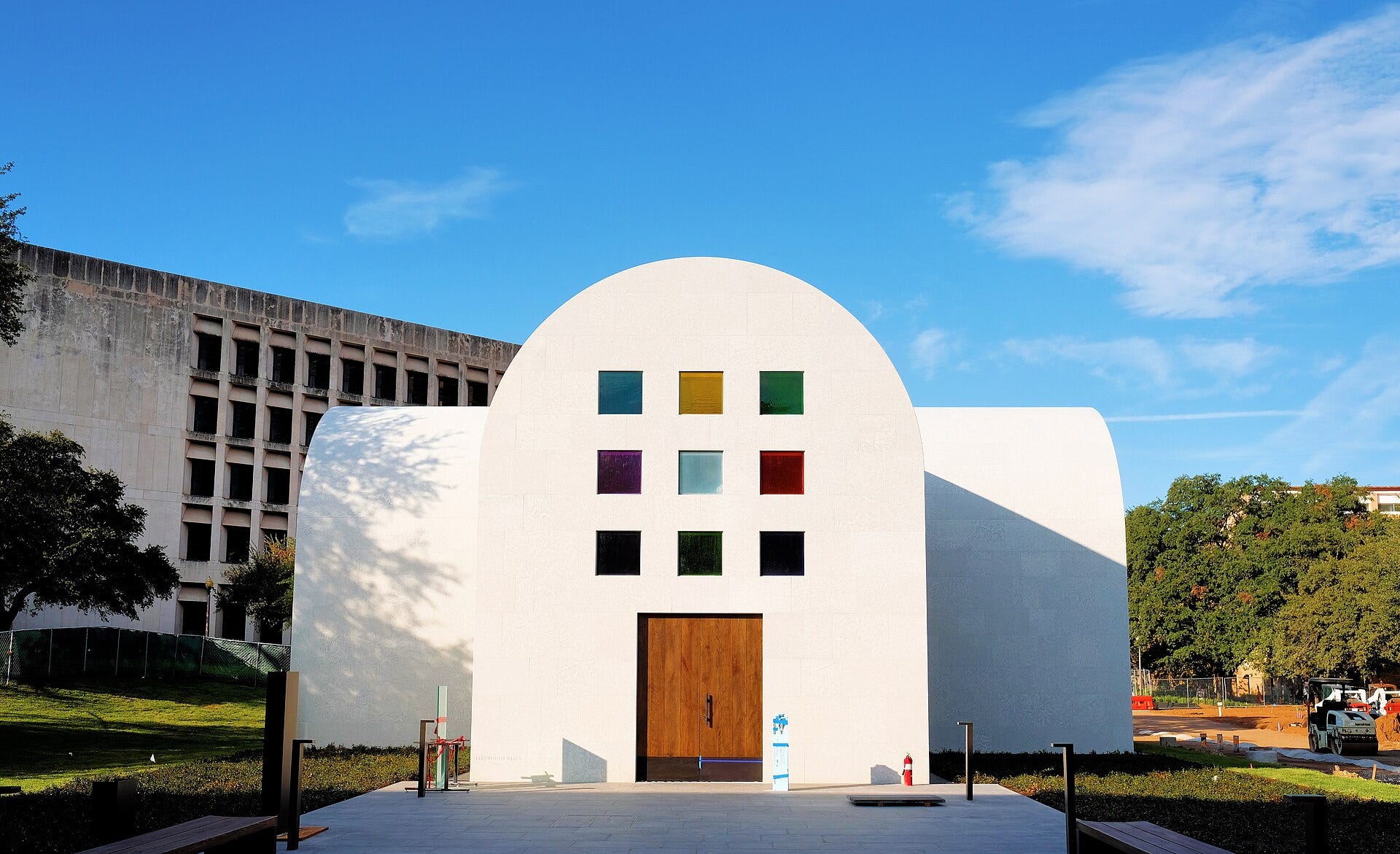
  • 2018. Austin, his stone and glass building in Texas, opened twenty-six months after his death.

The Ghost Army

Drafted in 1943, Kelly served in the 603rd Camouflage Engineers, part of the so-called Ghost Army that staged phantom battalions with inflatable tanks, sound trucks and fake insignia to mislead German intelligence. He spent the war making illusions read as real from a distance, then spent a career making real things read as pure shape.

Paris, 1948

On the GI Bill he moved to Paris in 1948 and stayed six years.

The breakthrough was not in a studio but on the street: he stopped inventing compositions and started copying what was already there, the grid of a window, shadows on a staircase, reflections in the Seine.

Window, Museum of Modern Art, Paris, from 1949, is exactly what its title says, remade as two joined panels.


130,000 readers get the story behind the art every week. Join free.


More incredible painter stories

If Ellsworth Kelly pulled you in, you will love these too:


The plant drawings

In 1949, in his Paris hotel room, Kelly drew a hyacinth in a single contour line. He kept drawing plants that way until 2015.

No shading, no eraser, no second try. Just the edge of a leaf, followed slowly, the way his paintings follow the edge of a shape.

He treated them as private practice, like scales for a pianist. MoMA gave them their own exhibition in 1992.

Chance, borrowed from Arp

In 1951 Kelly cut up his own drawings and rearranged the pieces by chance, following the example of Jean Arp.

The result became Spectrum Colors Arranged by Chance, eight collages of colored squares made with scissors, paper, and numbered slips.

They look machine generated. They were built by hand, one square at a time.

The postcards

For decades Kelly tested ideas on postcards, gluing a single shape over a tourist view of Paris or New York.

They were sketches he could mail. Some became paintings thirty feet wide.

The Blanton Museum gathered around 150 of them in 2022, the first show devoted to this pocket sized studio.

The myth to retire

Cold, cerebral, geometric: the labels miss the method. Kelly drew plants all his life, hundreds of sheets of single-line leaves and stems, and insisted his art was found, not designed.

The red curve on the wall is the hard shadow of a hill road he once saw. Abstraction, in his hands, was observation with the subject removed.

Spectrum, and sixty years of colour

Back in New York from 1954, he built the vocabulary he never abandoned: shaped canvases, joined panels, and the Spectrum paintings that run colour across the wall like a scale. He kept at it for six decades, and museums competed for the results; SFMOMA alone devotes a whole wing of galleries to him.


130,000 readers get the story behind the art every week. Join free.


Where to see Kelly

His last work is the best door in: Austin, the luminous stone chapel of colour he designed for the Blanton Museum in Texas. MoMA, SFMOMA and the Whitney hold deep collections, and his giant curves stand in sculpture parks worldwide.

The Ellsworth Kelly questions that keep coming up

  • What is Ellsworth Kelly famous for? Hard-edged panels of pure colour and shape, drawn from things he actually saw.

  • Was Kelly in the Ghost Army? Yes, he served in the WWII deception unit that faked armies with inflatable tanks.

  • What is Austin? The chapel-like building of coloured glass and stone he designed for the Blanton Museum in Texas.

  • Where can I see his work? Austin at the Blanton, plus MoMA, SFMOMA and the Whitney.

Where did Ellsworth Kelly find his shapes? In things he saw: a window in Paris, a shadow on a staircase, the curve of a road. He kept the shape and dropped the description.

How long did Kelly draw plants? From a hyacinth in Paris in 1949 to the end of his life in 2015. Sixty-six years of single line drawings, no shading, no eraser.


More secrets to unlock


The sunrise he never saw

Austin opened in February 2018, twenty-six months after his death at 92. The man who spent a lifetime turning seen things into pure colour never saw the building where the sun now does it for him, every morning, through his windows.


The story behind the great work, in your inbox. Free.


Ellsworth Kelly Red Yellow Blue White and Black Google Art P
Ellsworth Kelly Red Yellow Blue White and Black Google Art Project
Ellsworth Kelly no San Francisco Museum of Modern Art, SFMOM
Ellsworth Kelly no San Francisco Museum of Modern Art, SFMOMA 30
Ellsworth Kelly no San Francisco Museum of Modern Art, SFMOM
Ellsworth Kelly no San Francisco Museum of Modern Art, SFMOMA 30