
Emphasis in art is the deliberate creation of a focal point, the spot your eye hits first. Painters build it with light, converging lines, isolation, or a burst of color. Here are twelve paintings, where your eye lands in each, and why.
Emphasis in 30 seconds
Light: the brightest patch in a dark picture wins, every time.
Convergence: perspective lines and pointing hands are arrows. You follow them without noticing.
Isolation: one figure set apart from the crowd, or one color note alone in an empty field.
Color: a patch of saturated color pulls harder than anything gray around it.
The test is simple: glance at a painting, close your eyes, and name the first thing you saw. That was the emphasis, working.
Leonardo, The Last Supper (1495-1498): convergence
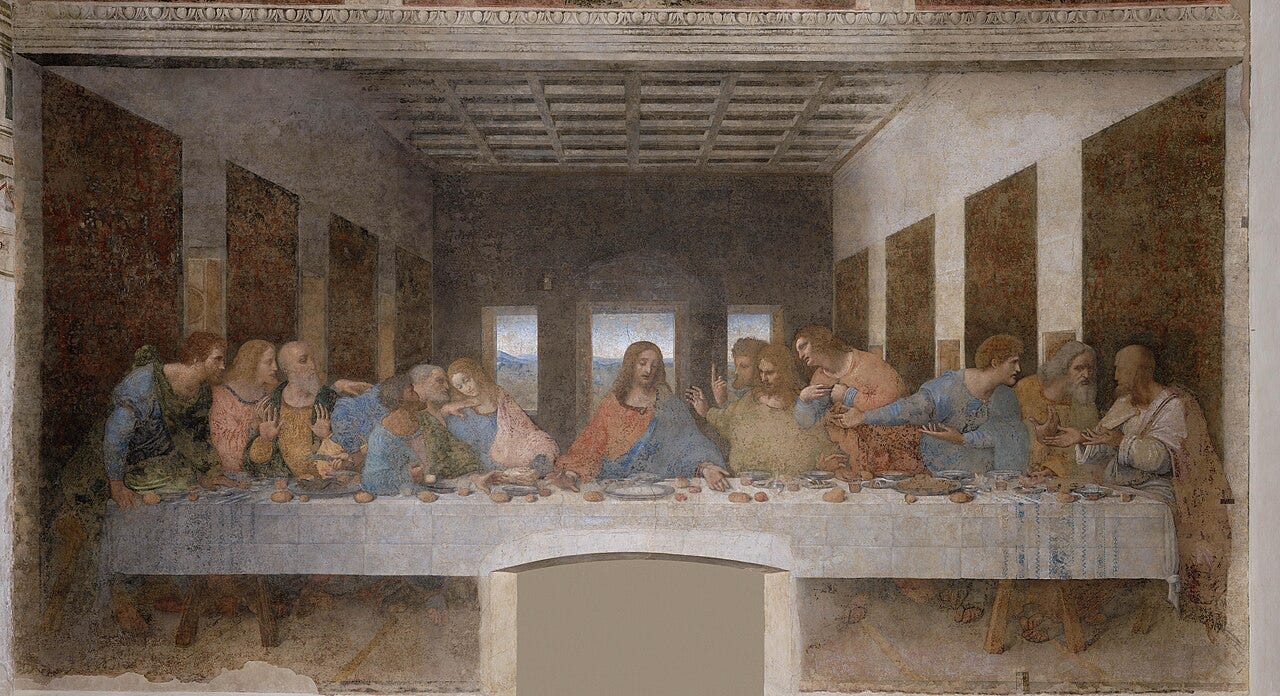
Every perspective line in the room, ceiling beams, wall panels, table edge, converges on one point: Christ’s right temple. Twelve agitated apostles cannot compete with geometry. Leonardo aimed the entire architecture at one calm head. We took the wall apart detail by detail in our story on The Last Supper.
Rembrandt, The Night Watch (1642): the spotlight
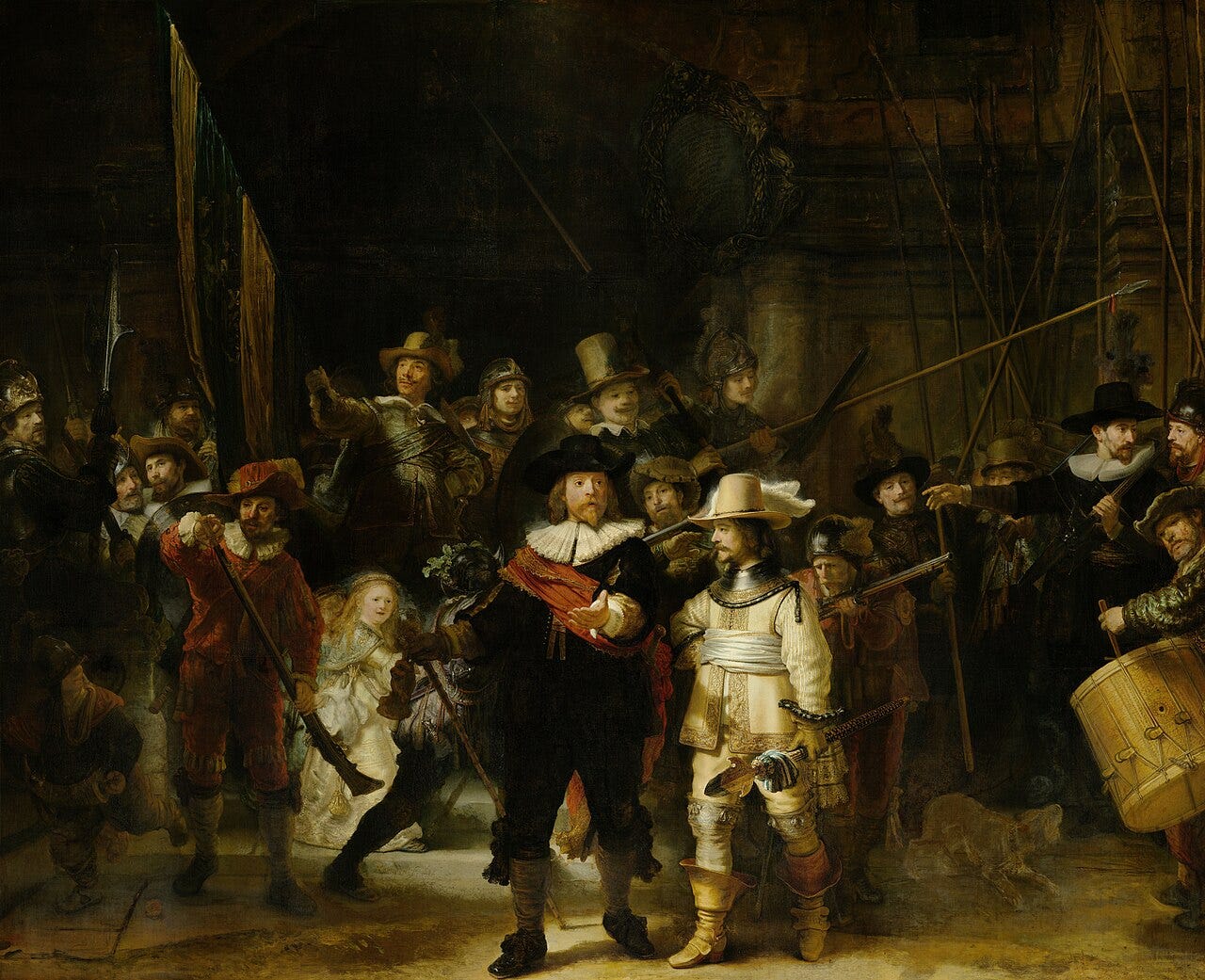
Out of eighteen paid portrait sitters, the light chooses two, the captain in black and his lieutenant in gold, plus one small girl nobody ordered. Rembrandt even paints the captain’s hand throwing a shadow across the lieutenant’s coat, light proving it has direction.
The glowing girl carries a dead chicken at her belt, the claws being the emblem of the militia company. Emphasis, in 1642, could also be an inside joke.
Caravaggio, The Calling of Saint Matthew (1599-1600): the pointing beam
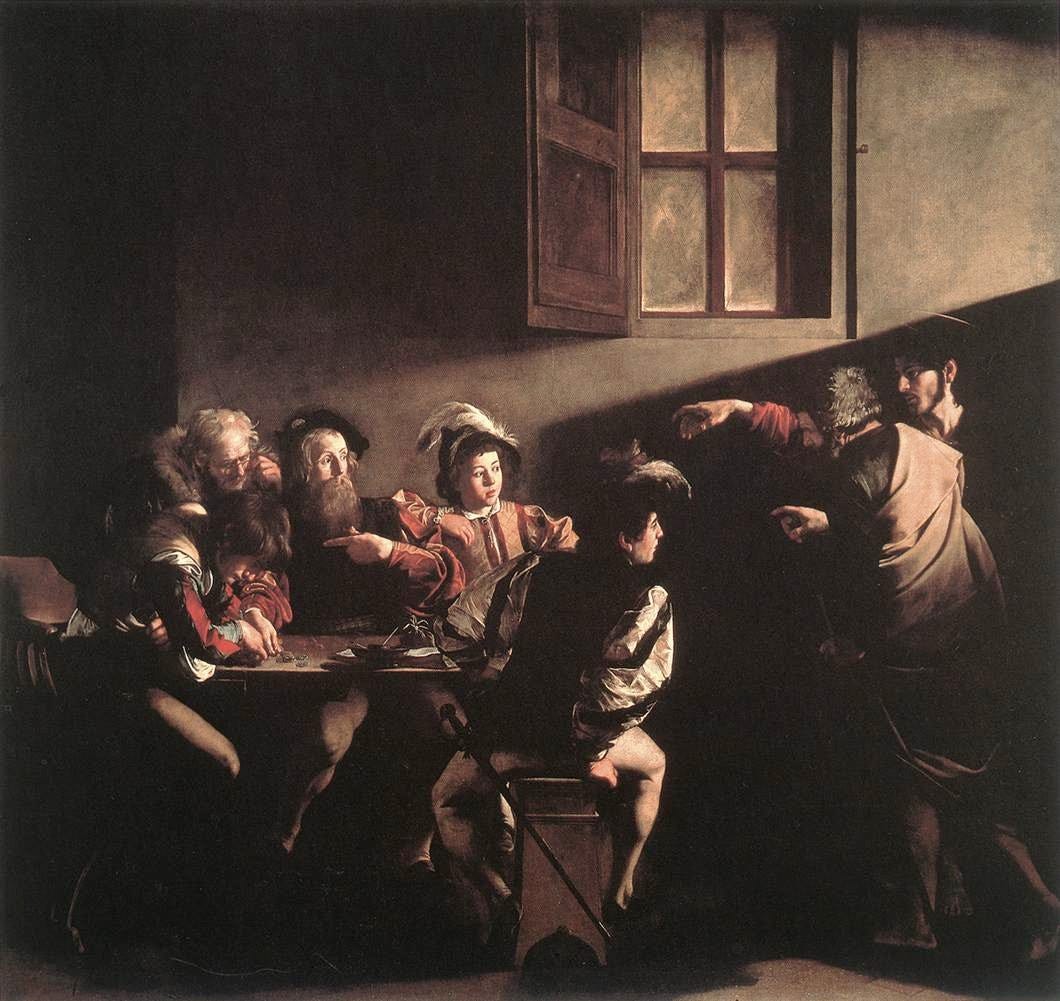
A shaft of light and Christ’s outstretched hand aim at the same table of tax collectors, and the beam does the naming. Caravaggio borrowed the gesture: the hand is an echo of Adam’s from the Sistine ceiling.
Four centuries on, scholars still argue over which man at the table is actually Matthew: the bearded one pointing, or the young one counting coins with his head down.
Vermeer, Girl with a Pearl Earring (c. 1665): the bright face
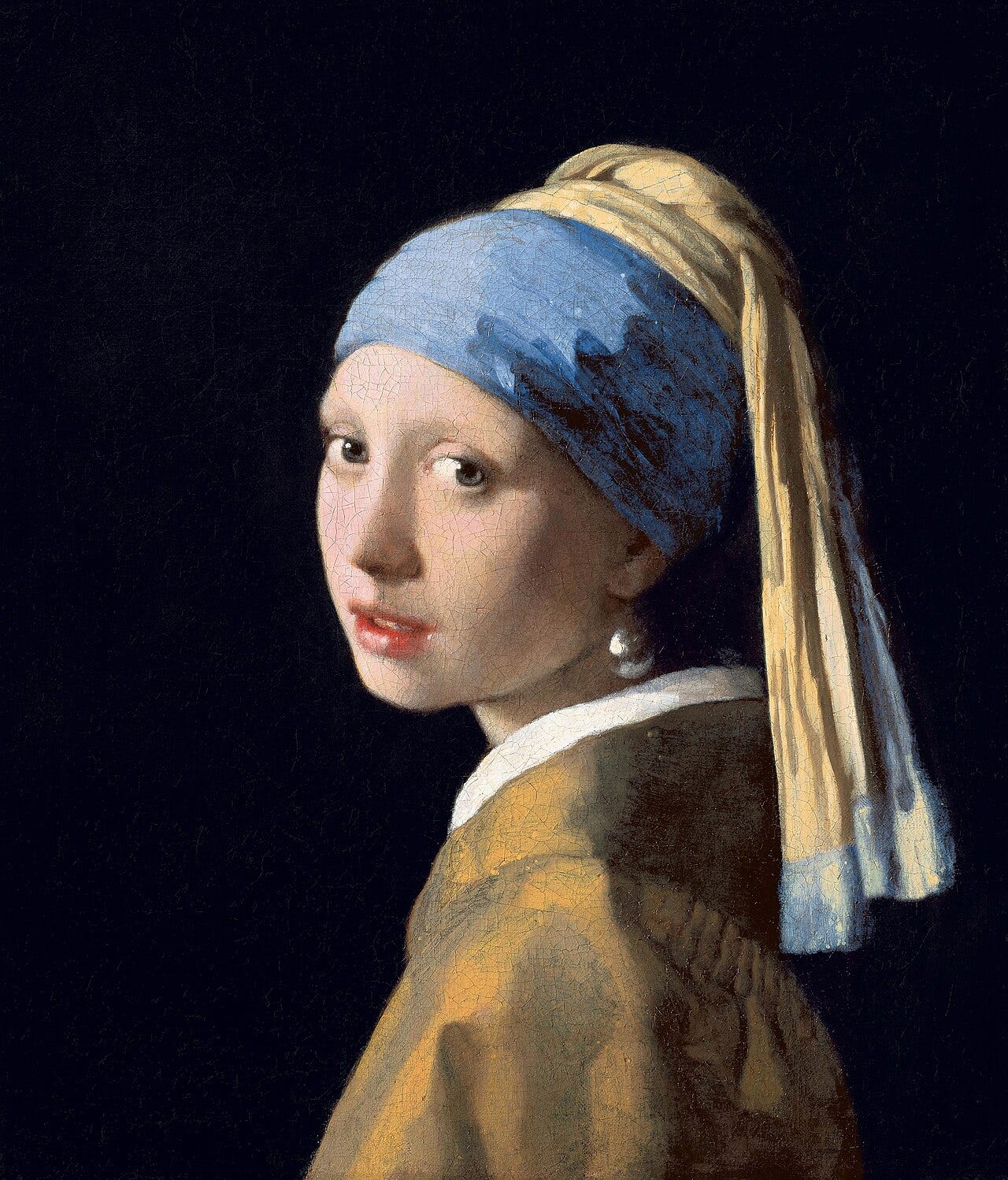
A luminous face turns out of a dark field, and one pearl catches the only sparkle. Vermeer isolated everything that matters in two patches of light.
Examinations in 2018 showed the pearl is an illusion: a few strokes of white with no hook to the ear. And the black background was originally a deep green glaze that has darkened with time.
Learn art the fun way


Jacques-Louis David, The Death of Marat (1793): the empty half
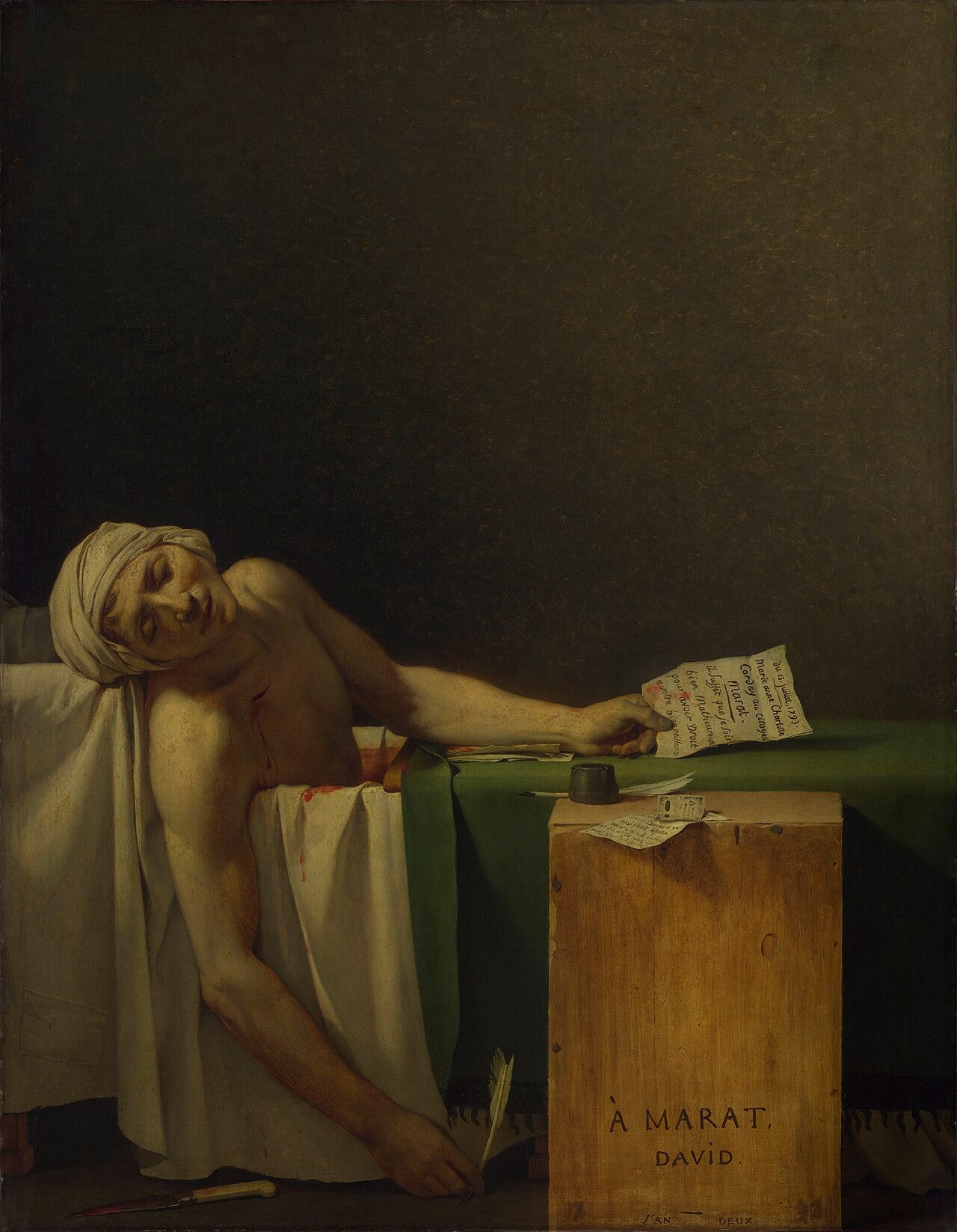
The murdered writer slumps in his bath, lit like a saint, while the entire upper half of the canvas is nothing: a flat, dark wall. David made emptiness point at the body.
He painted it within months of the assassination and signed it on the wooden crate: À Marat, David. A dedication where a signature should be.
Van Gogh, The Bedroom (1888): the burst of color
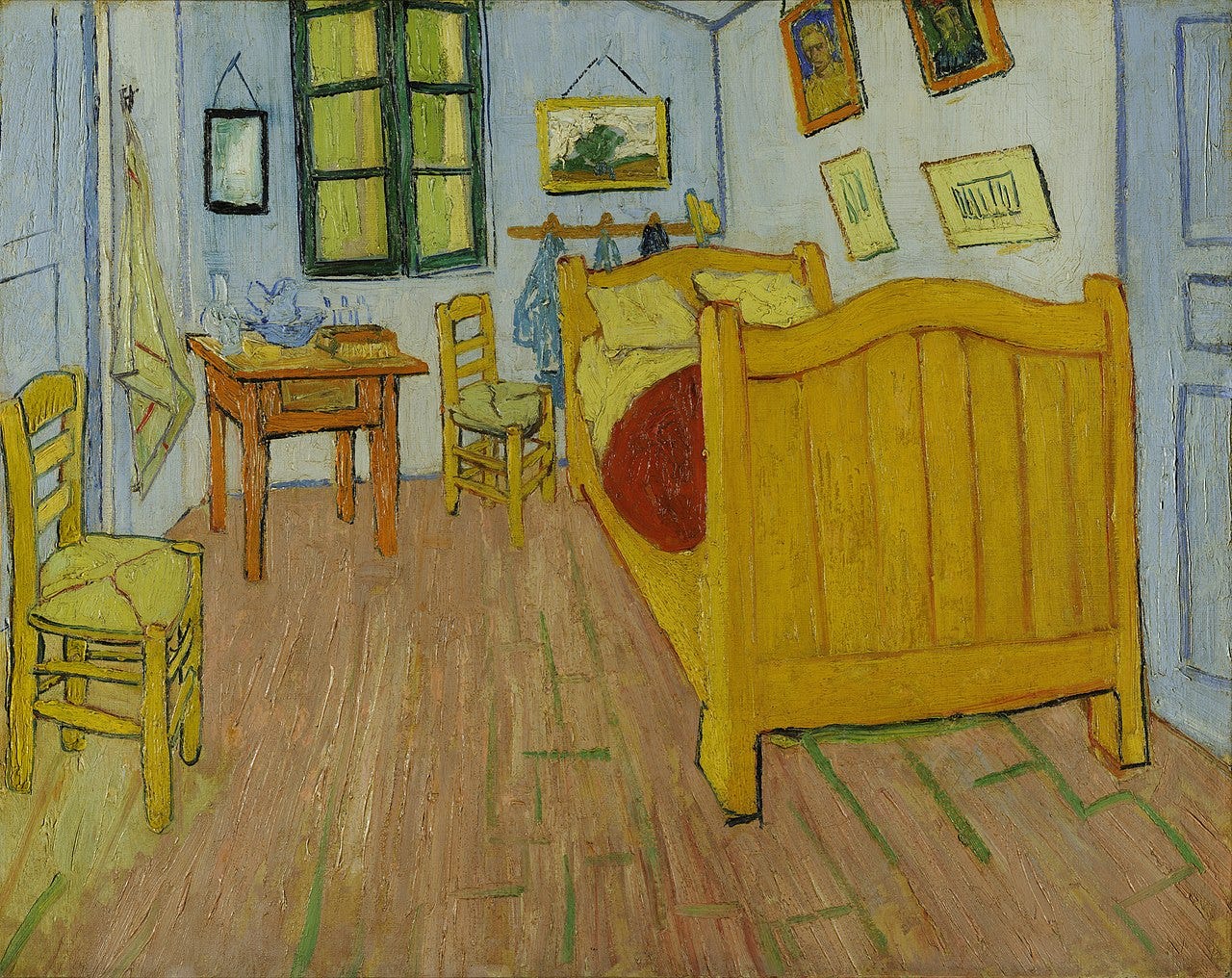
Saturated reds, blues, and yellows drag your eye straight to the bed and its two pillows. Van Gogh wanted the room to say rest, and used color as the loudest word in the sentence.
The walls were painted violet, not blue: the red pigment in his violet has faded over a century, quietly rebalancing the whole picture.
Whistler, Nocturne in Black and Gold (1875): the lone note
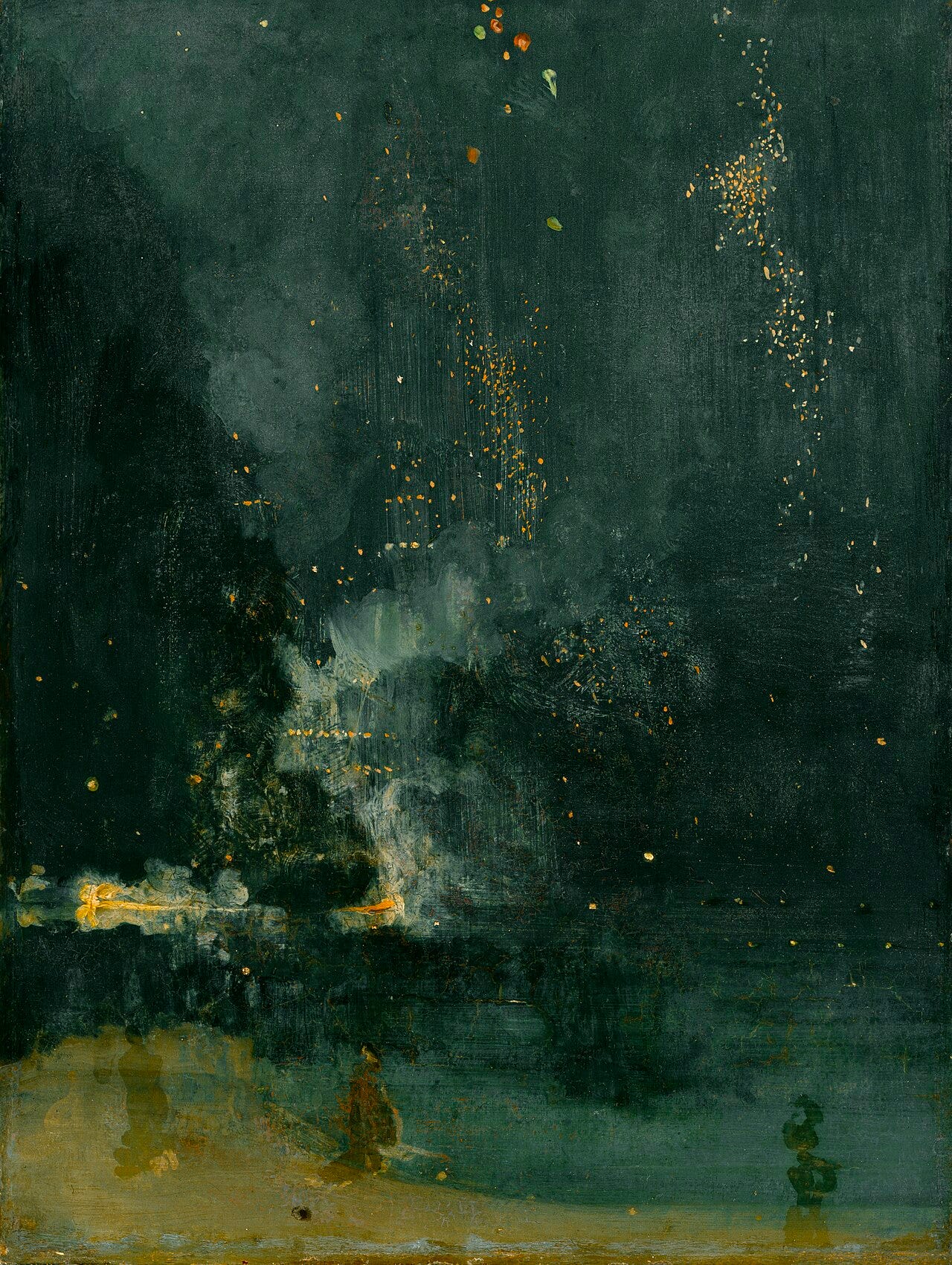
In a field of near-black, a scatter of gold sparks is the only event, so it owns the picture. Whistler proved emphasis needs no crowd: one note, played once, in silence.
Munch, The Scream (1893): everything bends toward the face
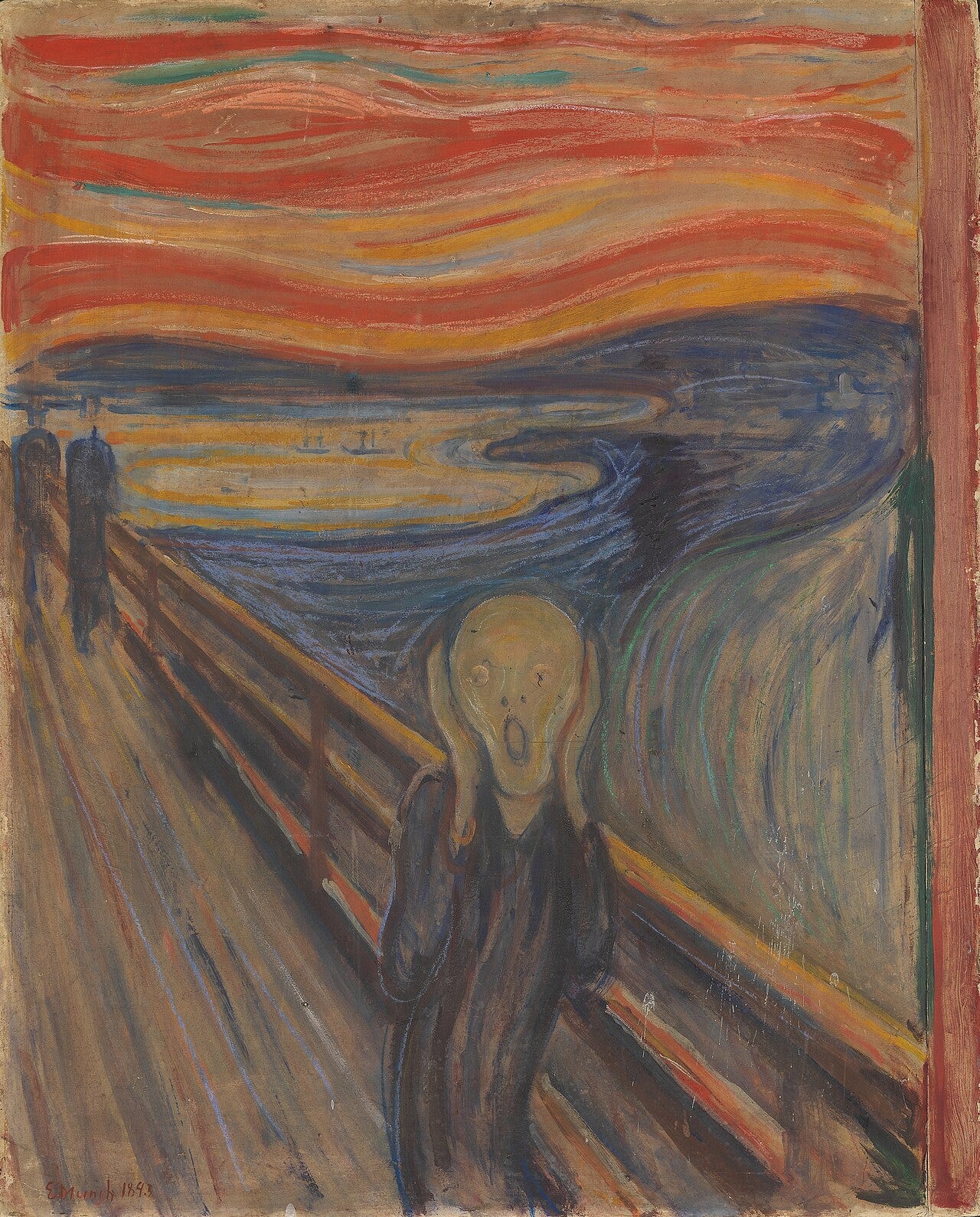
The fjord, the road, the sky: every line in the landscape warps toward the pale almond head at the center. Munch turned the whole world into arrows aimed at one open mouth.
In one corner there is a faint pencil line: Could only have been painted by a madman. In 2021, infrared analysis confirmed the handwriting is Munch’s own.
Ingres, La Grande Odalisque (1814): the pale figure
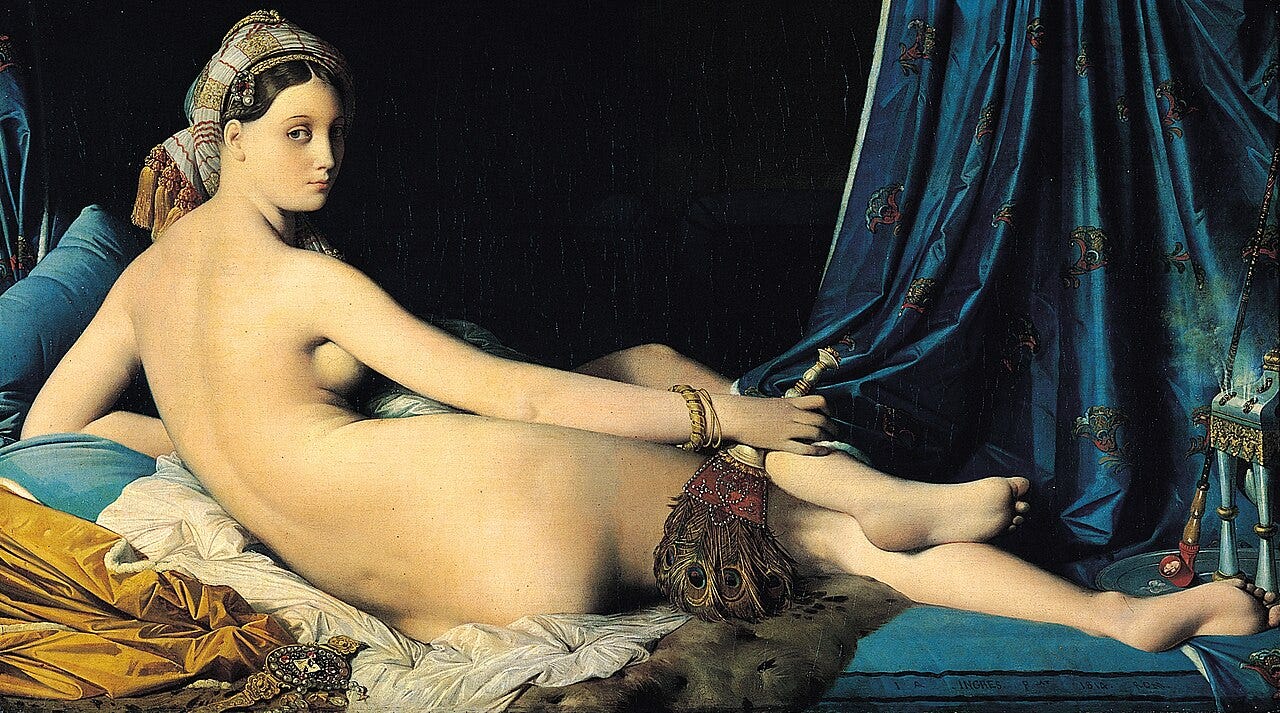
One long stretch of cool, pale skin detaches from deep blue drapery like moonlight on velvet. Ingres sacrificed anatomy to keep that unbroken line: critics protested that his odalisque had three vertebrae too many.
Joseph Wright of Derby, An Experiment on a Bird in the Air Pump (1768): the lamp
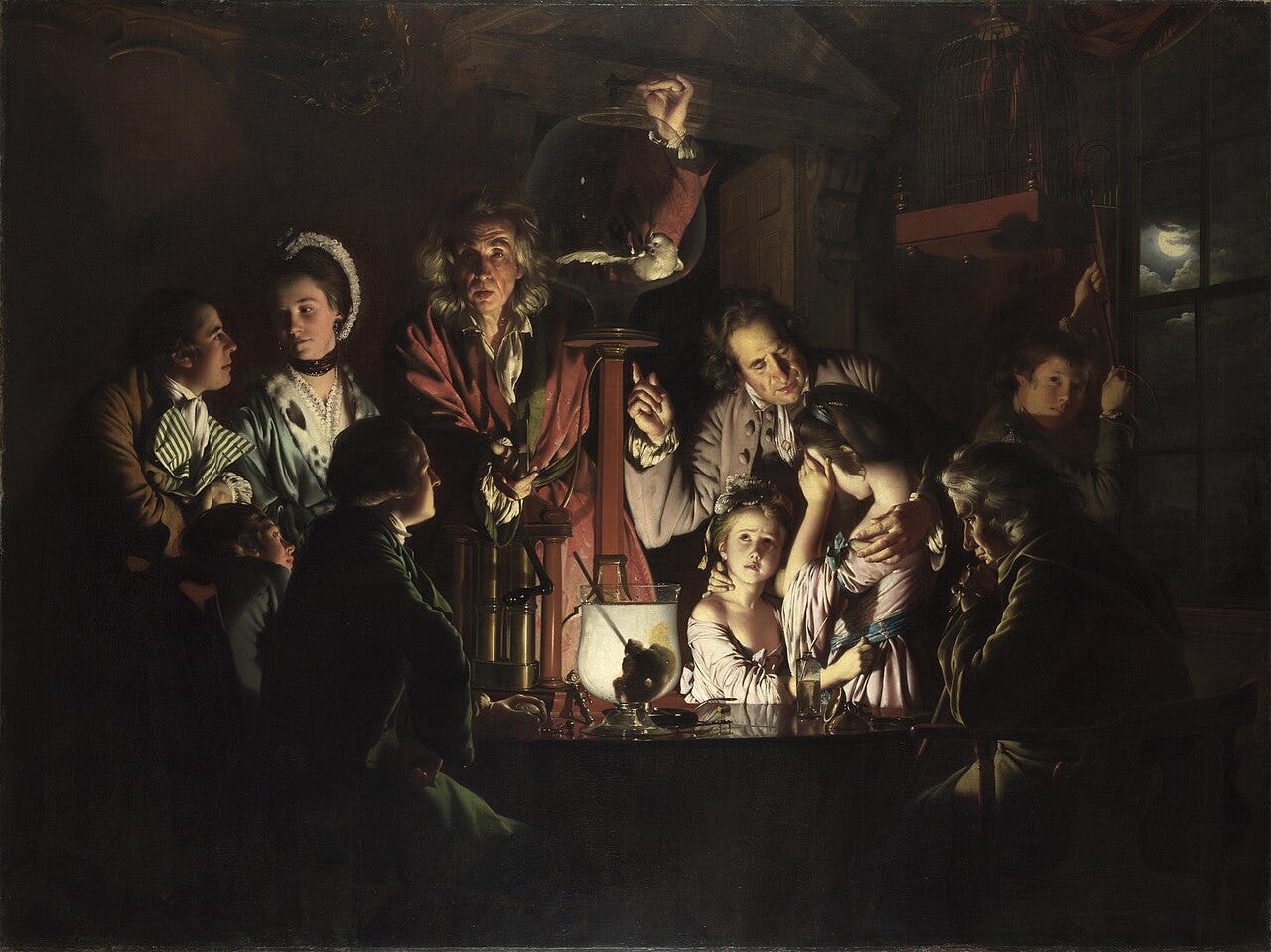
A single lamp inside the circle lights every face from below, and the brightest thing in the room is the white cockatoo dying in the glass globe. Science as candlelit theater, with the light casting the roles.
Wright made a specialty of these single-source night scenes, and nobody in London quite knew what to call them: not portraits, not history, something new.
Goya, The Third of May 1808 (1814): the white shirt
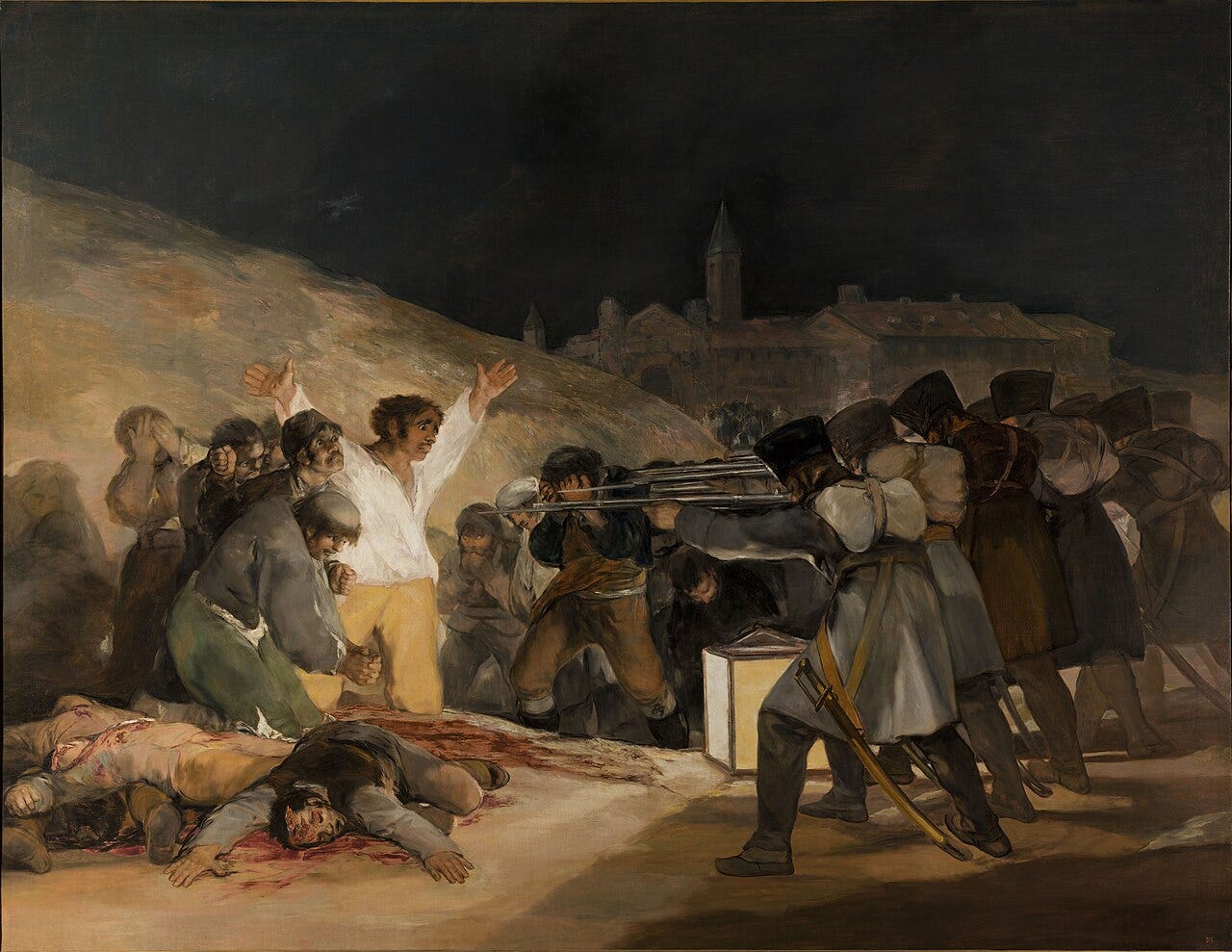
One kneeling man in a white shirt, arms flung wide, takes all the lantern light while the firing squad stays faceless and dark. Goya gave the picture one target, and made it the victim.
Botticelli, The Birth of Venus (c. 1485): the isolated center
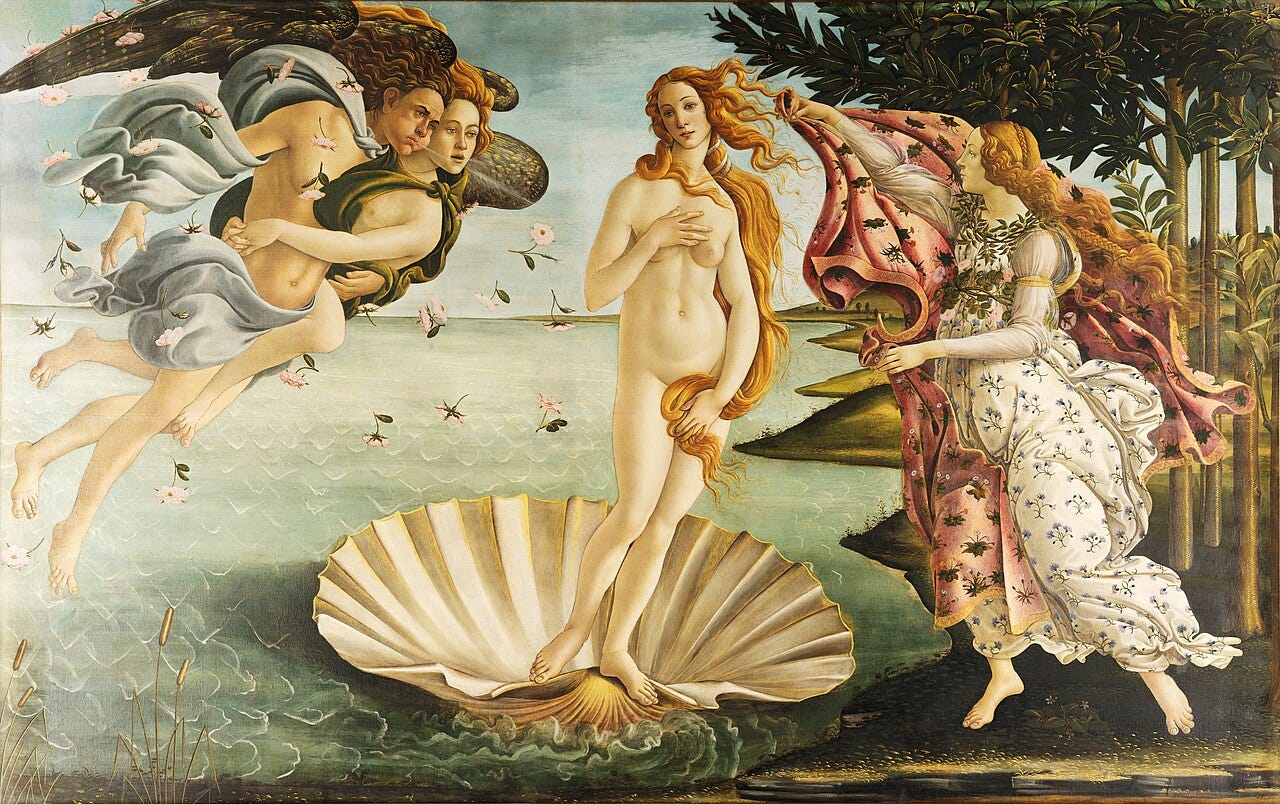
Venus gets the center, the pale skin, and the breathing room; winds and attendant crowd the edges and gesture inward. Botticelli emphasized by placement: everything else in the picture exists to deliver her.
You Might Also Like


Emphasis is one of eleven principles that organize a composition. See how it connects to the rest in the elements and principles of art guide. It connects closely to contrast in art. It also relates to value in art.
Quick answers
What is emphasis in art? The technique of making one part of a work dominate your attention first: the focal point, built with light, lines, color, or isolation.
What is a focal point? The exact spot your eye lands on first. Most strong paintings have one primary focal point and a path of smaller ones that keep you circulating.
How do artists create emphasis? Four main levers: aim light at it, converge lines toward it, isolate it from the crowd, or give it the most saturated color in the frame.
What is the difference between emphasis and contrast? Contrast is the raw difference between elements, light against dark. Emphasis is what that difference is for: steering your eye to a chosen spot. Contrast is the tool, emphasis is the goal.
Where to see these paintings
The Last Supper is in Milan, by timed ticket, and The Night Watch in the Rijksmuseum. The Calling of Saint Matthew hangs free of charge in San Luigi dei Francesi in Rome, and Girl with a Pearl Earring in the Mauritshuis in The Hague.
The Death of Marat is in Brussels, The Bedroom at the Van Gogh Museum in Amsterdam, The Falling Rocket in Detroit, The Scream at the Nasjonalmuseet in Oslo, La Grande Odalisque in the Louvre, the Air Pump in the National Gallery in London, The Third of May in the Prado, and The Birth of Venus in the Uffizi.
One last fact
In the plaster of The Last Supper, at Christ’s right temple, there is still a small hole. Leonardo drove a nail there and snapped strings from it to rule his perspective lines: the focal point of the most famous wall in art is, literally, a nail hole.