
Erotic art is older than every religion still practised today. It was painted on Roman dining room walls, printed in Japanese bestsellers, locked in a secret museum cabinet for a century, and hung openly in the Louvre. Here is the whole history, period by period, and what each culture actually allowed.
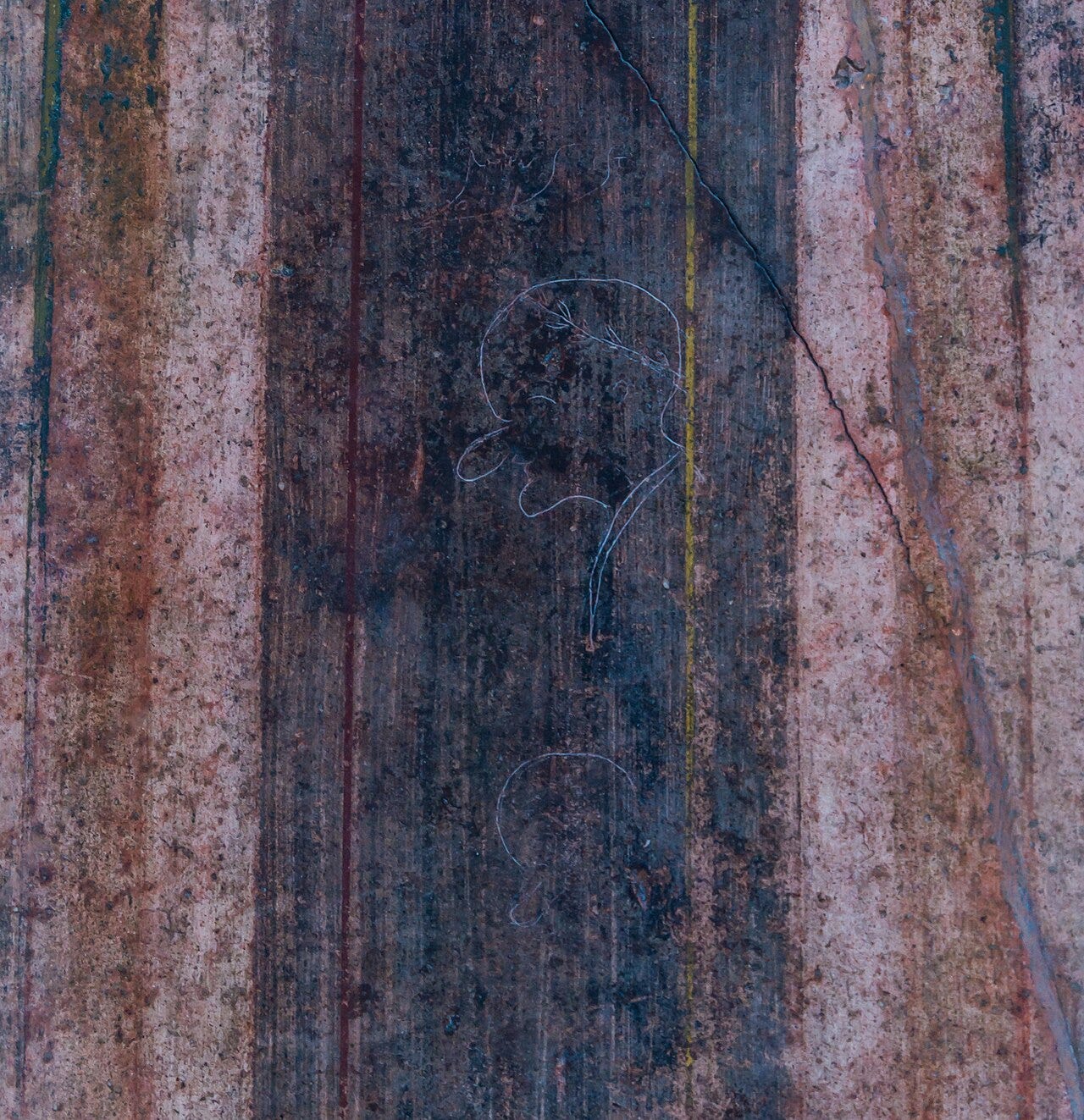
The word erotic does the work of hiding a simple fact: for most of history this material was not a genre apart. It was decoration, instruction, satire or worship, depending on who was looking.
Learn art the fun way
Antiquity: on the walls of ordinary houses
Greek vases carried explicit scenes on drinking cups meant to be passed around at parties. Roman houses in Pompeii and Herculaneum had them frescoed on bedroom and bathhouse walls.
When Bourbon excavators uncovered these in the 18th century, they were so alarmed that the objects were locked away in Naples in a room called the Gabinetto Segreto, the secret cabinet. It opened to the general public only in 2000.
The classical nude that grew out of this world became the foundation of Western art: what is the nude in art.
The Middle Ages: in the margins, literally
Church art kept the body covered, but the margins of manuscripts filled with obscene jokes, hybrid creatures and scenes no sermon would allow.
Pilgrim badges from the 14th century survive showing genitals on legs walking in procession. These were mass produced souvenirs, not underground objects. The books are covered in what is an illuminated manuscript.
The Renaissance: mythology as an alibi
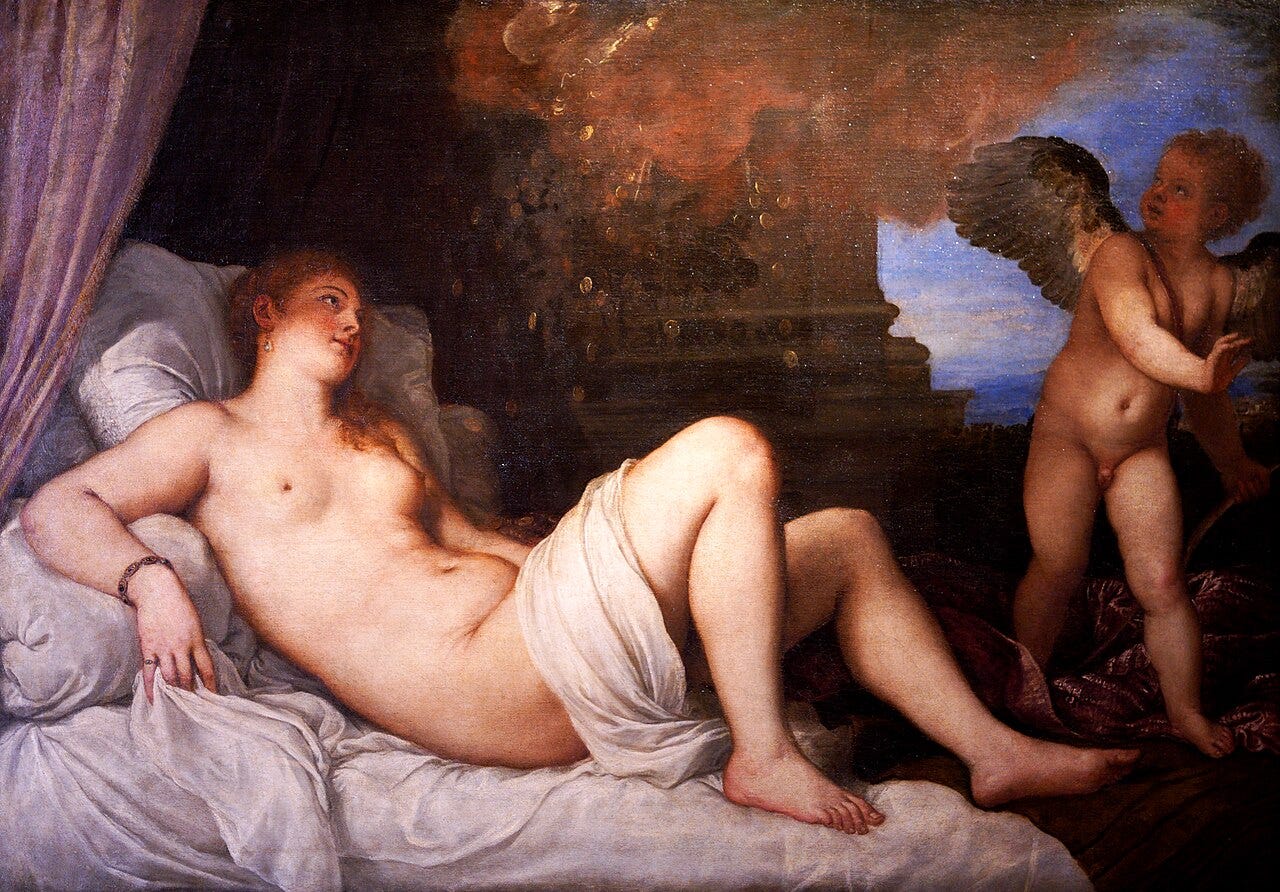
Painters rediscovered the nude and needed a permit. Mythology provided it. A naked woman was acceptable if she was Venus, and a violent seduction was acceptable if the attacker was Jupiter in disguise.
The system was efficient enough that Titian could send a series of frankly erotic canvases to the king of Spain and call them poesie. I go into his whole story in Titian.
The women who painted in the same centuries were written out of the story. I put some of them back in the old masters were women too.
1524: the print that invented pornography as a legal problem
Giulio Romano drew sixteen sexual positions, Marcantonio Raimondi engraved them, and the Vatican jailed the engraver and ordered every copy destroyed.
Almost none survive. What survives instead is the format: printed, portable, reproducible, cheap. That is the moment erotic imagery stopped being decoration and became contraband. The medium itself is explained in what is engraving.
Edo Japan: shunga, and a completely different rulebook
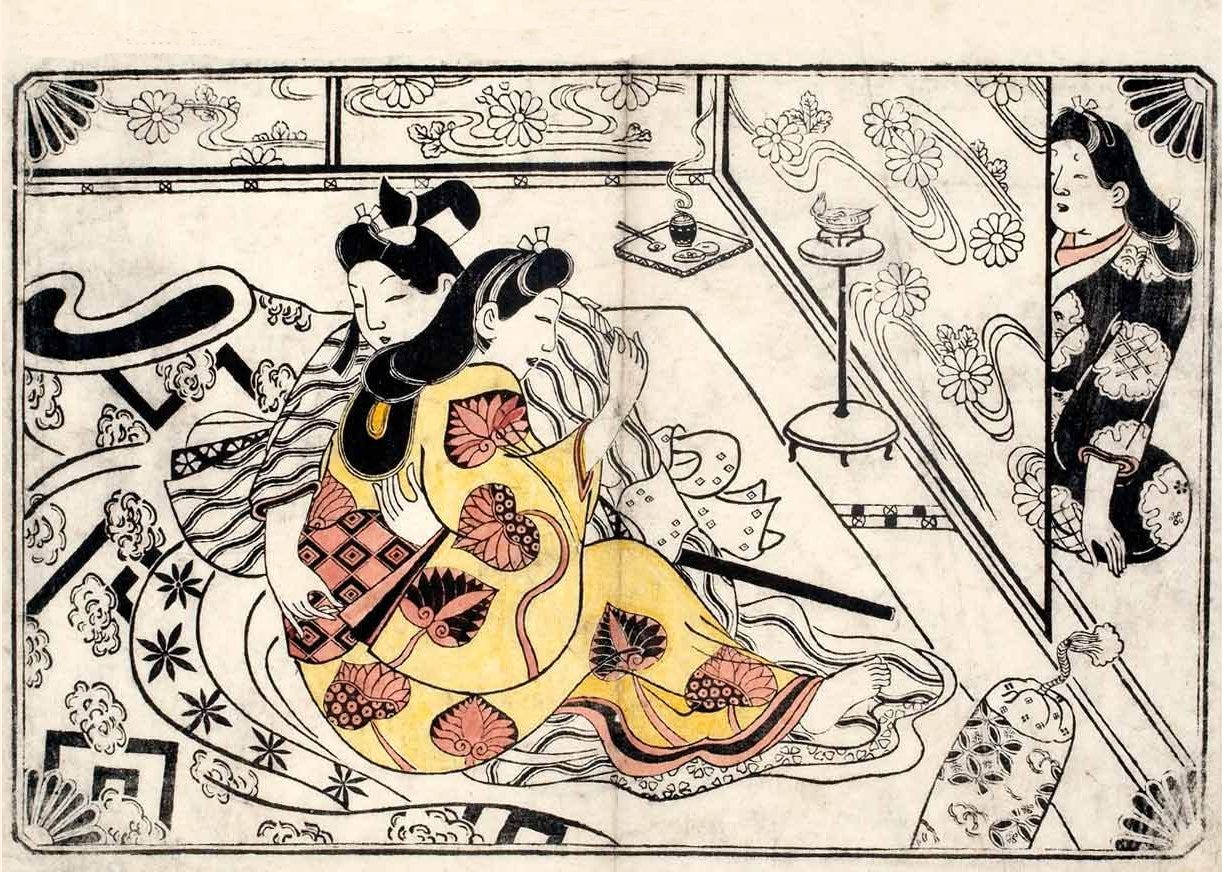
Japanese shunga prints were produced by the same great names who made landscapes, Hokusai and Utamaro among them, and were owned by ordinary households as gifts and instruction.
They were periodically banned by the shogunate, which mostly changed how they were sold rather than whether they existed. Western collectors bought them heavily in the 19th century, and museums then hid them for a century. Hokusai More of it in Katsushika Hokusai.
The Rococo: everything is a metaphor and everyone knows it
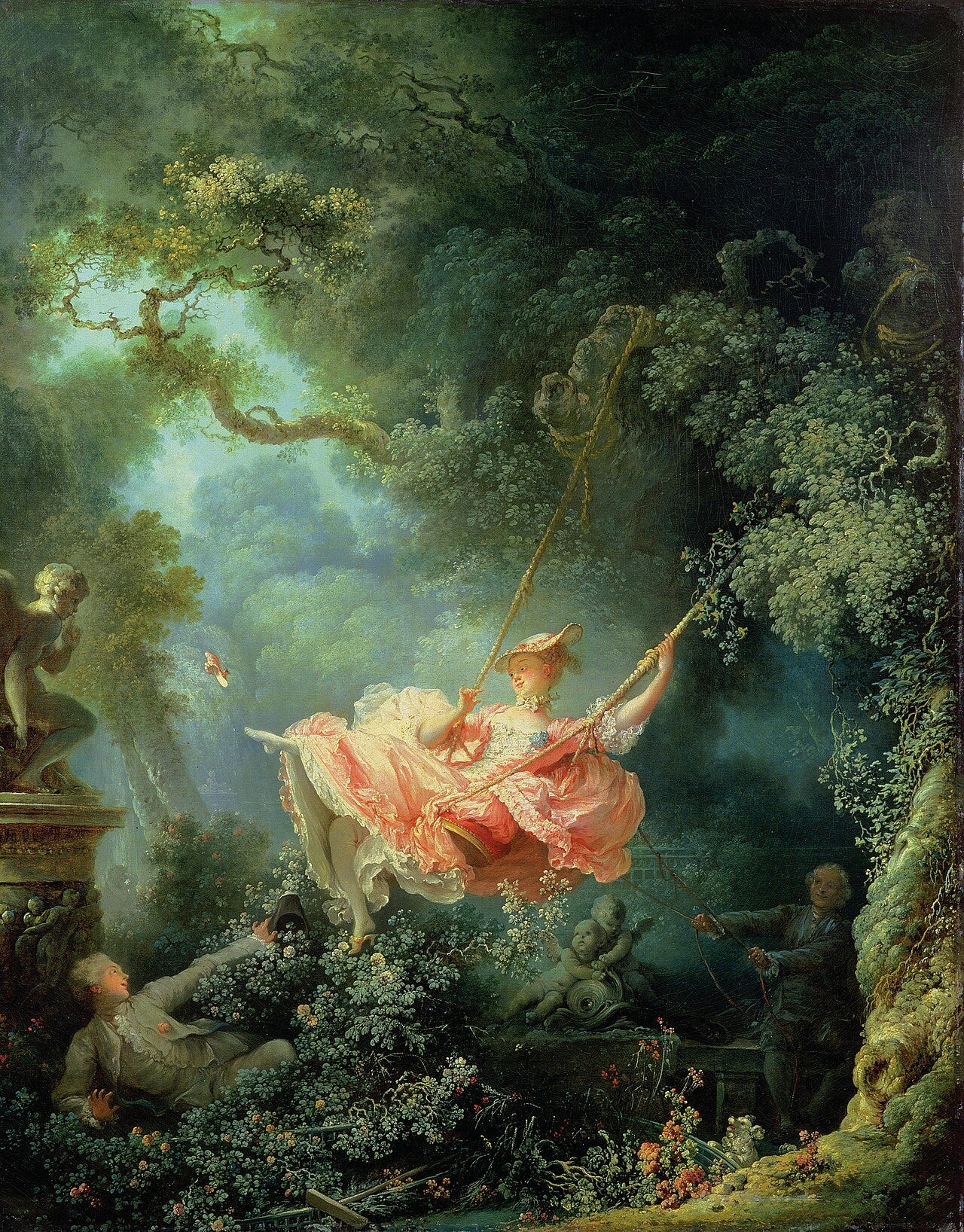
Fragonard's Swing has a lost slipper, a hidden lover and a statue putting a finger to its lips. Nothing is shown and nobody was fooled.
Boucher painted royal mistresses as goddesses so a court portrait could pass as allegory. The whole century ran on deniability.
The 19th century: the double life of the Victorians
Victorian Britain bought more nudes than any generation before it, provided they were set in Greece, Rome or the Orient. Same body, different postcode.
The British Museum kept its own locked collection, the Secretum, from 1865. I go through twelve of the paintings this culture produced in Victorian erotic art.
1866: the painting nobody could show
Courbet painted The Origin of the World for a private Ottoman collector. It disappeared for over a century, at one point behind a sliding panel owned by Jacques Lacan, and entered a public museum only in 1995.
It is still removed from social platforms today. The full history of that instinct is in censored art.
The 20th century: Schiele, Picasso and the end of the alibi
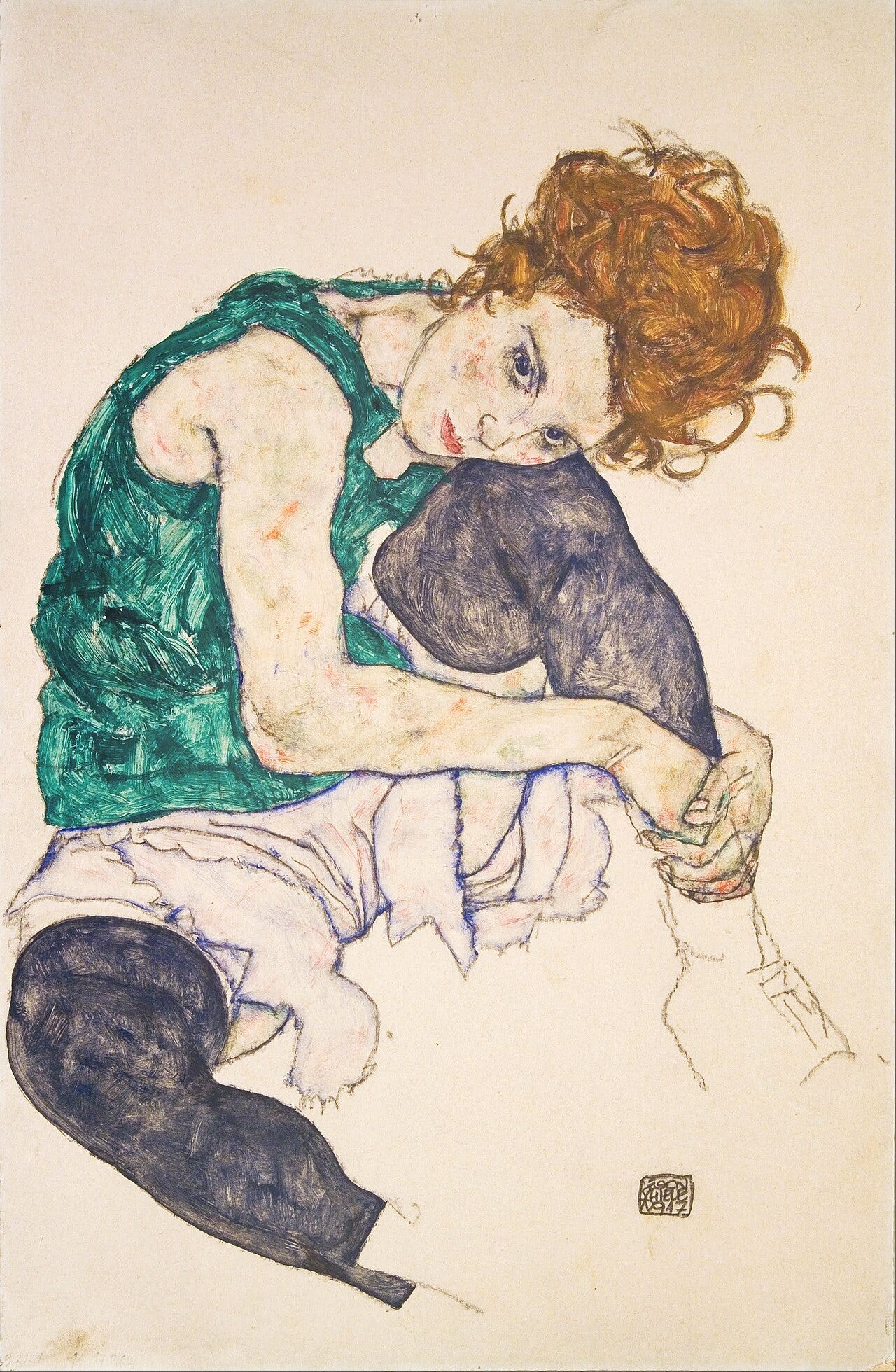
Schiele was jailed briefly in 1912 and a drawing was burned by a judge in front of him. Picasso produced explicit etchings into his nineties. Neither bothered with mythology.
Once the excuse was gone, the argument moved from what may be shown to who is looking and why. Schiele The full account is in Egon Schiele.
In the same Paris years, the Danish illustrator Gerda Wegener made erotic watercolors for private books while her fashion drawings ran openly in Vogue and La Vie Parisienne under her own name. Gerda Wegener: The Complete Story tells that career in full.
The questions people actually ask
What is the oldest erotic art? Prehistoric carvings, but the oldest large surviving body is Greek vase painting and Roman wall painting, especially at Pompeii.
Why did the Renaissance paint so much mythology? It was the permit. A nude was acceptable as Venus or Danae, and unacceptable as a named contemporary woman.
What is shunga? Japanese erotic woodblock prints of the Edo period, made by major artists including Hokusai and Utamaro, and owned by ordinary households.
Was erotic art always hidden? No. It was on Roman house walls and Greek drinking cups. Hiding it was largely an 18th and 19th century decision, not an ancient one.
Where can I see it in a museum today? Naples for the Roman material, the British Museum and the Met for Japanese prints, the Musee d'Orsay for Courbet.
Where the collections are
The Met catalogues its material openly with scholarly notes, and the Rijksmuseum holds the mythological end of the story where most of it hid for three centuries.
The Naples secret cabinet was walled up in 1849, reopened briefly, closed again, and did not admit the ordinary public until 2000. Roman householders had these images in their dining rooms. It took the modern world 150 years to agree to look at them.
Courbet's choice is the more radical of the two. Titian needed Venus as a permit for a naked body, while Courbet dropped the myth entirely three centuries later and left the body as the entire subject.
The Vatican's crackdown on Giulio Romano's positions worked in the short term: almost nothing from that edition survives today. Shunga faced comparable bans under the shogunate and still reached the Met and the British Museum in bulk, which suggests destruction erases more of a tradition than prohibition ever does.
Schiele was jailed and had a drawing burned by a judge in 1912, while Picasso made explicit etchings into his nineties and faced nothing like it. The gap between the two careers has more to do with an established reputation Schiele hadn't yet built early in his career than with anything in the drawings themselves.